Everyday Carry
Best Budget Pocket Knives 2026: Five Standout Picks Under $50
Five budget-friendly folding knives that get the fundamentals right, plus the criteria that separate a great buy from an easy return.
Introduction
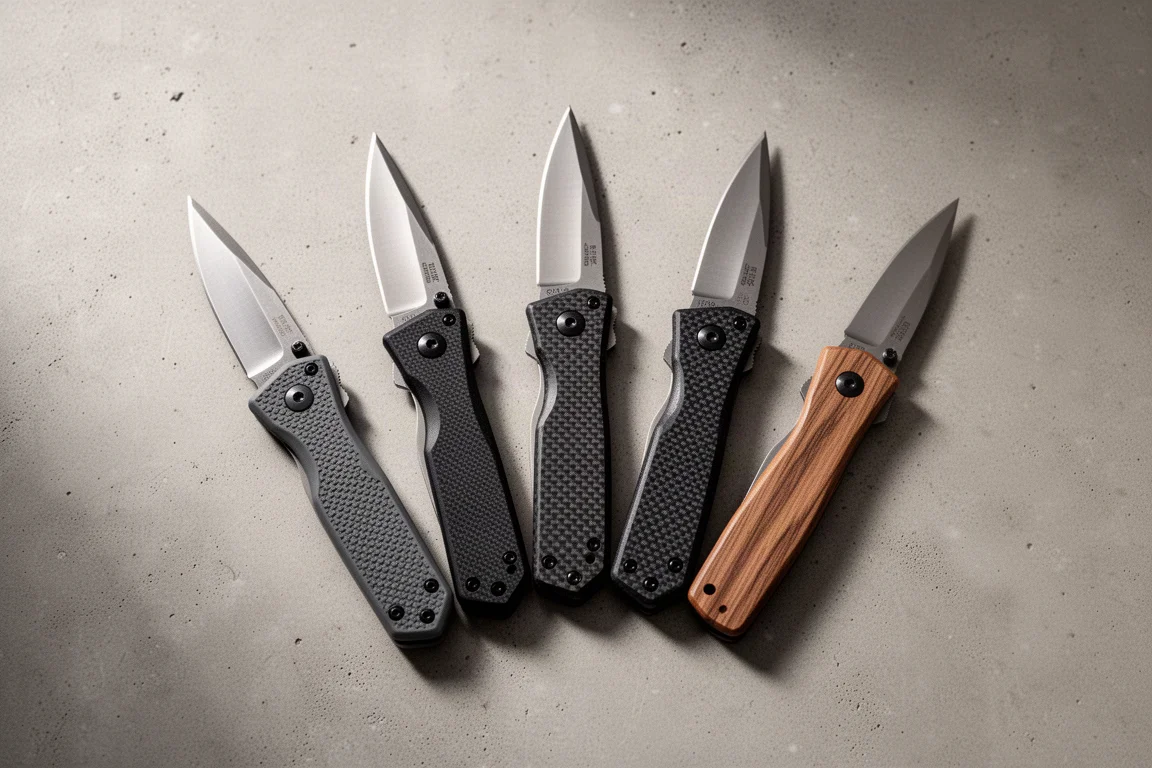
Thousands of folding knives are available online at any given moment, and the frustrating part is that you usually have to want a knife before you have ever held it. The good news: a handful of characteristics can be evaluated from photos and a little research, and they work at every price point. This guide walks through five criteria, starting at the back of the knife and working forward, then applies them to five budget-centric picks under $50 that hit most of the marks.
All five criteria carry equal weight, but some are easier to judge from a picture than others. Learning what to look for is the difference between becoming a genuinely good shopper and paying return shipping over and over.
1. Handle Geometry: Fit Beats Looks
Handle geometry is the easiest thing to evaluate, because you can judge most of it just by looking at an image. The first question: how many finger cutouts are there? If a knife has more than one, do not buy it unless you have handled it and know your fingers actually fall into each groove. If they do not, that pointed area lands right in the middle of a finger, and that is far less comfortable than it sounds.
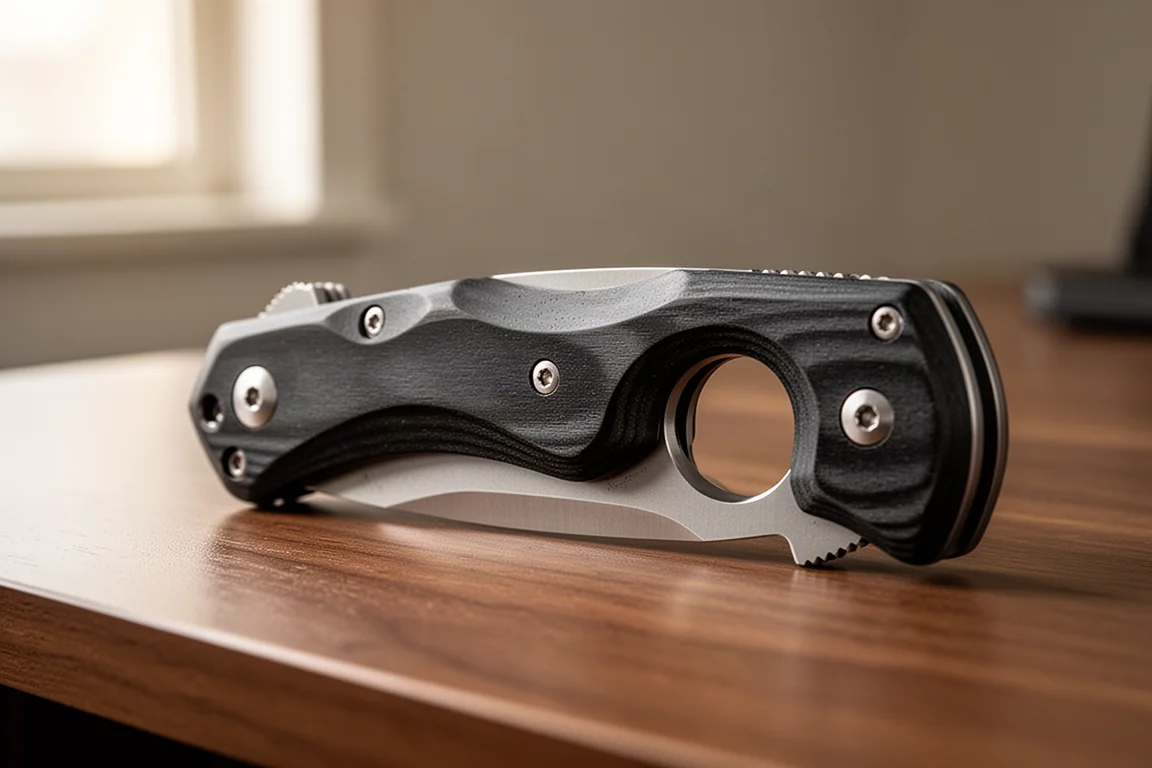
Even a single cutout can be a problem if the transition is abrupt. A smoother, gradual transition is far more likely to fit just about anyone. A well-executed cutout does have a benefit: when you choke up on the handle, it locks your hand into position.
Beyond cutouts, look at the contouring of the handle. A contoured handle is always better than a flat one, without exception. One more subtle detail: if the steel protrudes beyond the handle scales, you can end up with more pronounced hot spots. Scales that wrap fully over, or liners inset beneath the contour, avoid that.
2. Handle Texture: Grip You Can Trust
Texture is harder to judge from a listing photo, but if you use a knife daily it matters enormously. The tricky part is that some texturing exists for looks, not grip. Budget knives with low texture are not necessarily bad knives, but if yours will be a work knife exposed to sweaty, wet, or oily hands, that slick finish is worth avoiding. And since smooth handles do not always look smooth from the top, a bit of extra research helps.
The Buck 110 Slim Select is a good example of hidden capability. Made in America and priced around $35, it might appear smooth, but the plastic carries a micro texture that adds genuine grip, and the cutouts do an acceptable job as well.
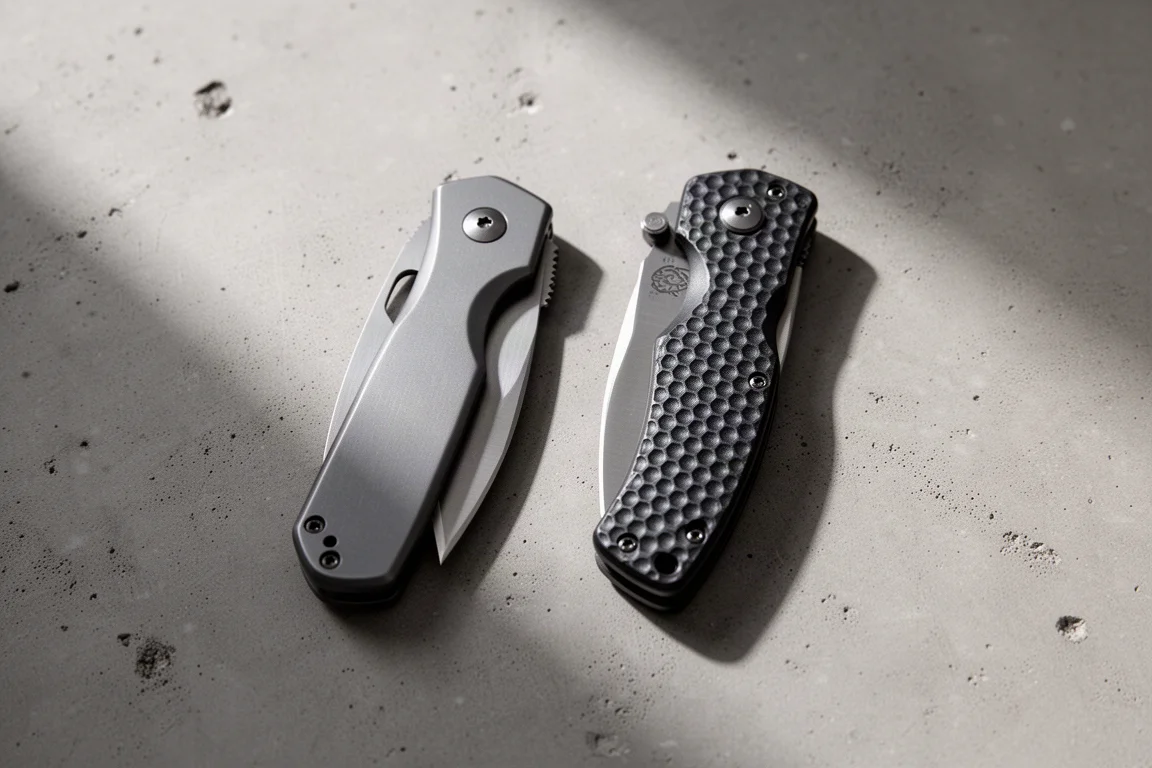
Honey Badger knives sit somewhere in the middle: the honeycomb pattern has raised surfaces that could grip, but the FRN plastic softens at the edges as it cools, which makes the handle very comfortable without being as grippy as it could be. That knife makes up for it elsewhere.
At the top of the grip rankings, several knives stand out. The Kizer Dozer has a gunstock-style crosshatch pattern, a recessed pocket clip so it does not shred your pocket, and the texture stops just short of the edge where your palm presses. The SRM 9201, at only $22, has some of the most distinctive and grippy handle texture available, flat on the edges for comfort and grippy everywhere else. The Spyderco Para 3 Lightweight’s FRN texture is phenomenal: flat edges angle toward the pocket-clip spot from both directions, so your grip is constantly pushed toward a secure position. And Cold Steel takes grip seriously above everyone else; the Voyager’s texture is so aggressive it will chew up your pockets, and the company clearly does not mind, because the point is keeping the knife in your hand.
For other materials: carbon fiber is almost always slick. Untextured aluminum is slippery, especially when wet. Titanium can go either way depending on the finish, and texture always wins over smooth, especially on frame locks where only one side may be textured. Steel handles are the slipperiest of all and suboptimal in weight. Wood is a middle ground: it gets surprisingly sticky when wet and holds up well with sweaty hands. Micarta is easy to judge from photos; visible fibers sticking out mean grip, it stays grippy wet or sweaty, and it can be smoothed later if you prefer. G10 is the toughest call, because smooth and micro-textured versions look nearly identical in photos. Two knives from the same company at $30 each can differ dramatically. With G10, the embedded fibers add a level of grip most materials cannot match, so inspect texture up close whenever possible.
3. Jimping: The Detail That Signals Quality
Jimping, grip texturing on the blade spine or deployment mechanism, turns out to be a surprisingly strong indicator of how thoughtful a designer is. Knives with the best jimping consistently turn out to be some of the best knives overall.
Jimping on the spine is somewhat overrated. Security of grip in the hand matters far more than spine texture for most tasks. But jimping on any deployment mechanism, whether a flipper tab or thumb ramp, really matters, especially with slippery hands.
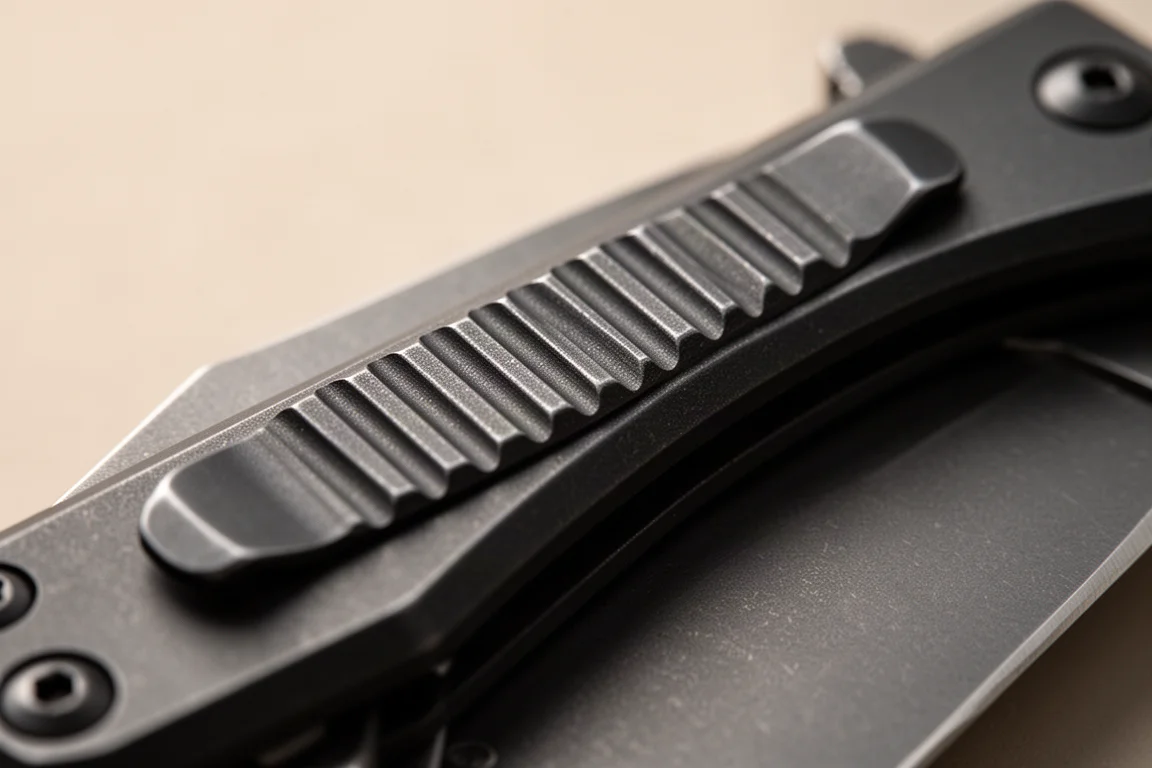
Placement matters as much as presence. Jimping that stops short of the spot where your thumb actually presses does little, even if the pattern itself is good. The Honey Badger knives have excellent jimping almost everywhere, with the curious miss of none at the tip point that matters most. Larger, widely spaced jimping also does little unless it is sharp enough to actually grip a fingertip.
The ideal execution is aggressive in the direction of pull but rounded on the sides so it never catches on anything. Spyderco applies this consistently: jimping at the blade’s finger ramp prevents sliding up onto the edge, spine jimping prevents pushing over the top, and they keep it sharp. The Demko Shark Lock knife is another standout, with sharp, aggressive jimping that locks the finger solidly in place. The Baby Banter is a great all-around example, with tight spine jimping plus jimping on the forward finger choil so your hand does not slide forward in use.
4. Deployment: How Many Ways Can You Open It?
If a knife is purely a work tool, a single opening method is perfectly fine. But if knives are part of your enjoyment, the way you manipulate the blade becomes part of the experience, and some designs offer far more than one way to open them.
A thumb-stud knife with a cutout can be flicked with the thumb or reverse-flicked with the middle finger. A crossbar lock supports thumb flicking, reverse flicking, and manipulation through the lock itself, all while staying strong, and examples exist for as little as $22. The combination of a lanyard hole and a back flipper enables back flips, thumb flicks, and reverse flicks. A fuller can function like a cutout for reverse flicking. The Honey Badger combines a cutout with a flipper tab for multiple options. The Baby Banter offers a front flipper, a back flipper, and a fuller, which is nearly too much in the best way. The Spyderco compression lock is fun and enjoyable to manipulate on its own terms. And the Demko Shark Lock offers a huge number of deployment methods, along with a satisfying sound that matters more than you would think if your knife doubles as a fidget toy.
Ask yourself how many ways a knife can be deployed and whether that matters to you. If it does, a little research will usually surface how strong the detent is and how easy each method feels in practice.
5. Cutting Geometry: What the Blade Is Actually For
If you research only one category deeply, make it cutting geometry. It is what makes or breaks a knife for specific tasks.
Start with how roughly you treat your blades. The more hard use you expect, the thicker you want the area behind the edge. The Cold Steel Voyager in most of its varieties, for example, has a stout saber-style grind suited to tougher work.
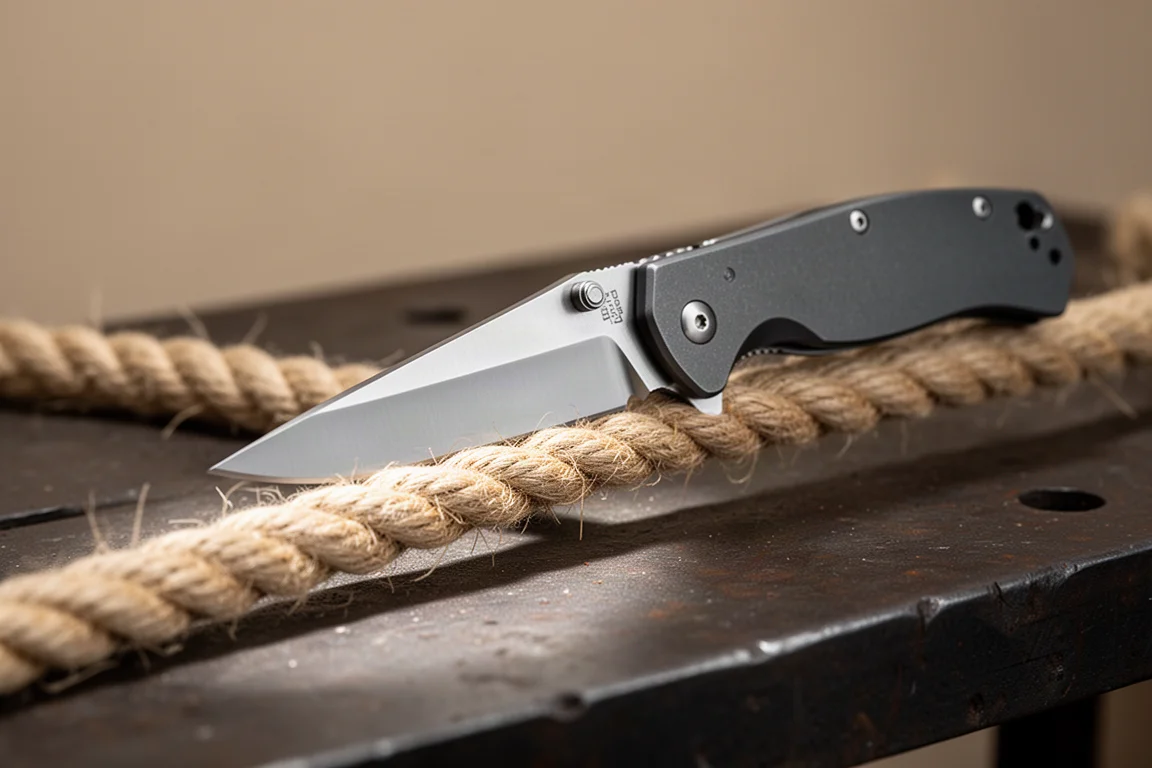
Blade shape matters too. A sheepfoot-style blade with slight curvature excels at draw cutting. For general use that touches many tasks rather than one repeated task, a drop point with a small amount of curvature is the safer bet: it draw-cuts decently and keeps your hand out of the way as you rotate, because the curve keeps contact with the material.
On grinds, a well-executed hollow grind is the most slicey edge available, and it has an unfairly bad reputation from badly done gas-station examples. The Buck 110 and 112 family, designed with no choil specifically for outdoor use and skinning, shows how good a proper hollow grind can be. Hollow grinds are ideal primarily for soft materials. If you have to pick just one do-everything grind, the full flat grind is the sensible middle ground: not as slicey as a hollow grind, not as tough as a saber, but a bit of everything, which is a large part of Spyderco’s broad appeal. Blade thickness is the final variable; a thin full flat grind can approach hollow-grind sliciness.
The Five Budget Picks Under $50
Applying all of these criteria, these five knives earn a two-thumbs-up in the budget range.
Buck 110 Slim Select
A made-in-America option around $35 with a hidden micro texture that offers more grip than its smooth appearance suggests, plus a hollow grind heritage designed for outdoor use with no choil catching material as you cut.
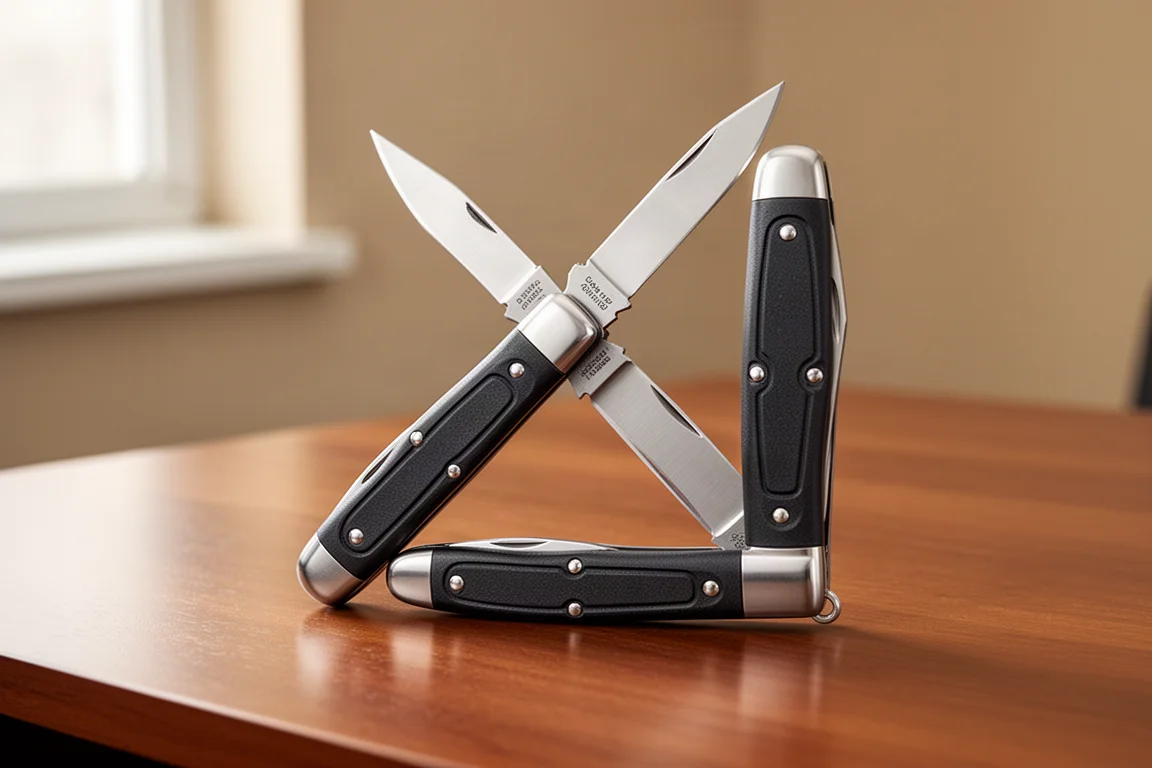
SRM 9201
At only $22, this crossbar-lock folder offers some of the best handle texture at any price, a great full flat grind with plenty of sharpening choil, multiple ways to manipulate it, and a reversible pocket clip, though the clip has no recess to sit in.
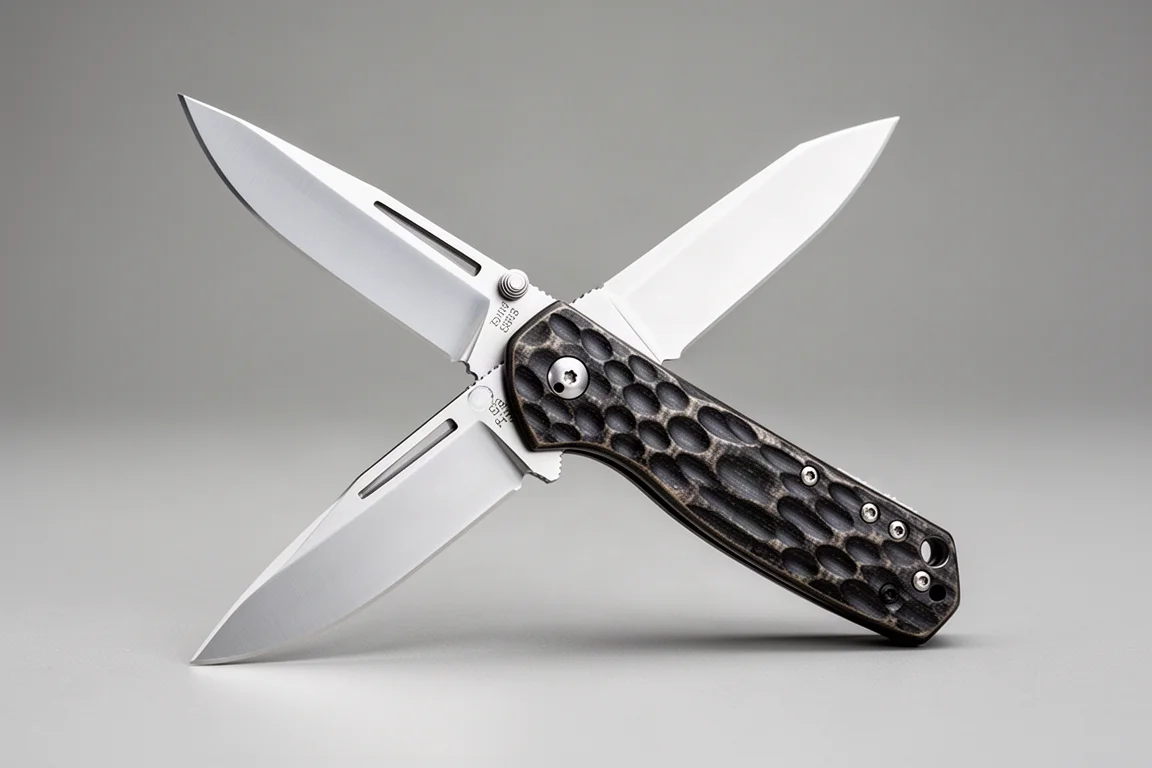
Cold Steel Voyager
A large knife with roughly a 4-inch blade and the most aggressively grippy texture in the group, built for hard use where the knife must never slide out of your hand. Its stout grind backs that up, and it will tear up your pockets unless you smooth the area under the clip.
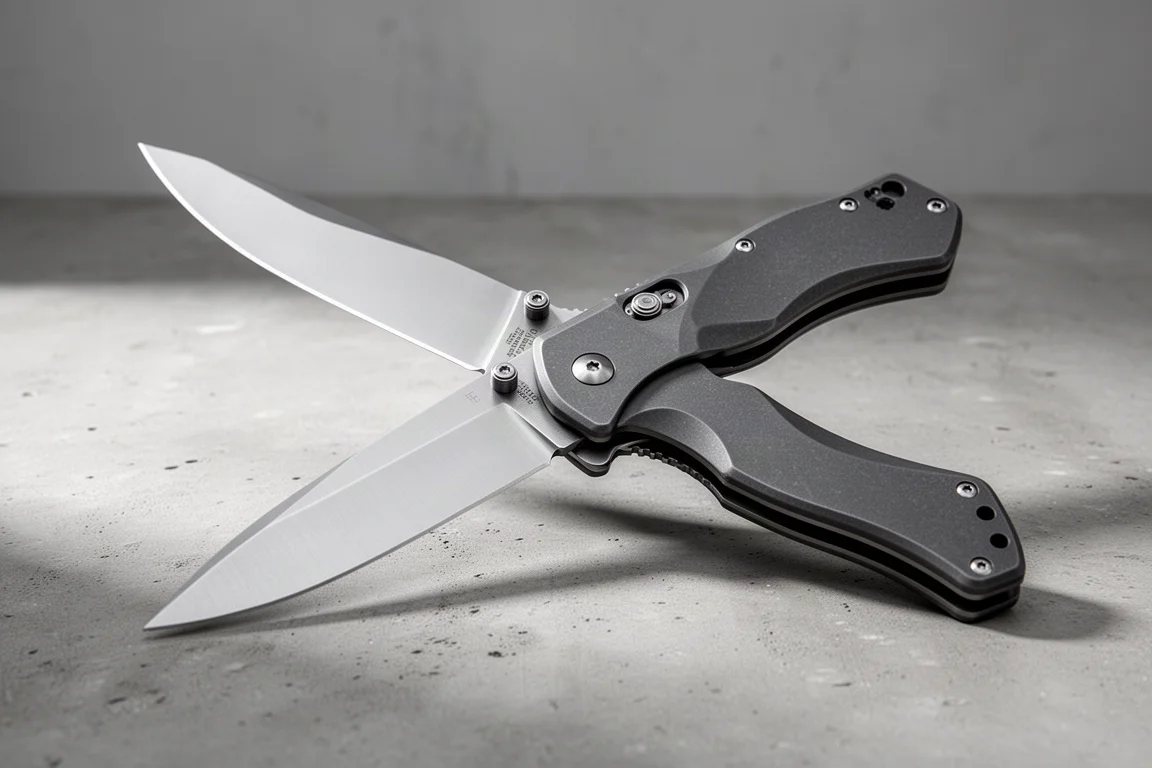
Spyderco Para 3 Lightweight
The quintessential example of perfect FRN handle texture, with everything angled toward the pocket clip for a constantly secure grip, a full flat grind suited to nearly any task, sharp and thoughtfully placed jimping, and the fun compression lock.
Honey Badger Knives
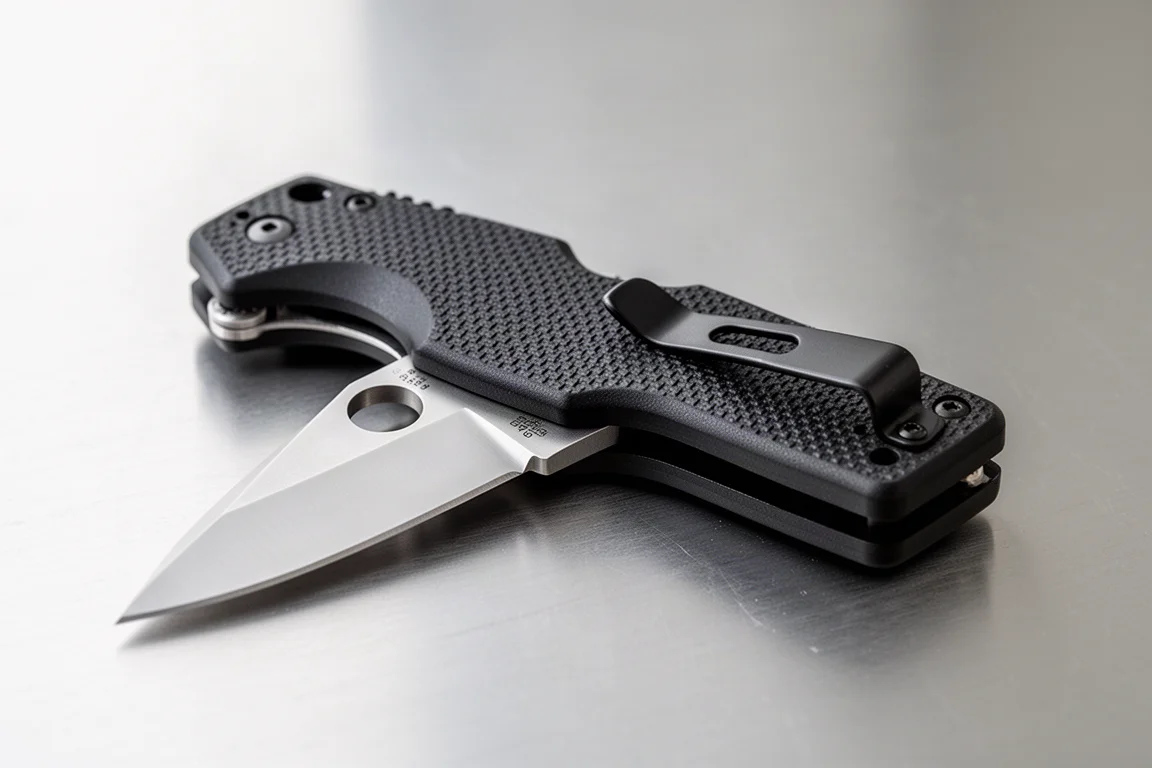
The Honey Badger line hits nearly every criterion: a beautifully contoured handle, generous jimping across the grip and spine, a cutout plus flipper tab for multiple deployment methods, and a versatile, hardworking full-flat-style grind kept slightly stout toward the tip. Its only misses are jimping right at the tip point and slightly softer-than-ideal handle texture, and it still ranks among the best all-around knives in this price range.
Buying Advice
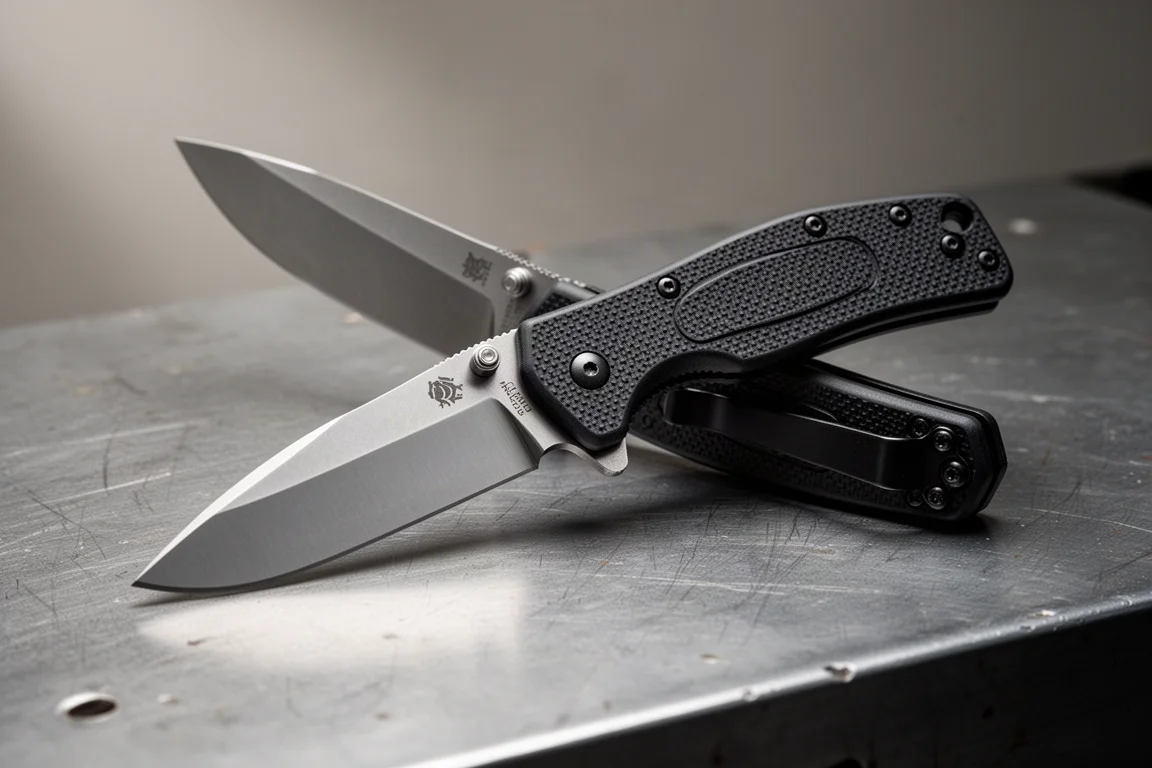
The biggest takeaway: texture, contouring, jimping placement, deployment options, and grind are all visible or researchable before you buy. Spend your time picking the right tool instead of returning the wrong one. For hidden traits, like a micro texture you cannot see in photos, look for hands-on impressions before committing. And at these prices, a calculated risk is usually worth taking.
Conclusion
A great budget knife is rarely the flashiest one on the page. It is the one whose designer sweated the small stuff: a contoured handle, honest grip, jimping exactly where your fingers land, and a grind matched to the work you actually do. The Buck 110 Slim Select, SRM 9201, Cold Steel Voyager, Spyderco Para 3 Lightweight, and Honey Badger Knives all clear that bar, and now you have the criteria to spot the next diamond in the rough on your own.
Further reading
Related Reviews

Everyday Carry
Everyday Gear That Deserved a Second Look
A roundup of solid everyday carry items: watches, pens, a pencil, a knife, and a smart ring that each earned a place on the table.

Everyday Carry
KORE Tactical Bifold Wallet Review: A Durable Everyday Carry Option
A close look at the KORE Tactical Bifold Wallet, a reinforced nylon wallet with magnetic closure and room for cards, cash, and IDs.

Everyday Carry
Krabby Wallet Review: A Slim, Simple Carry That Has Stood the Test of Time
A closer look at the Krabby Wallet, a slim canvas and elastic design with a loyal following and a simple, functional approach to everyday carry.