Power Tools
Budget Cordless Ratchets Tested: Husky, Durofix, and Hercules Compared
Three affordable, non-brushless cordless ratchets went through load testing, torque checks, and real-world use. The results do not follow the spec sheets.
Introduction
Budget cordless ratchets are tempting. Top-tier brands have already proven the category works, and their entry-level 12V models often score surprisingly close to each other in testing. That raises an honest question: does the brand actually matter at the lower end of the market, or are the specs all you need to shop by?
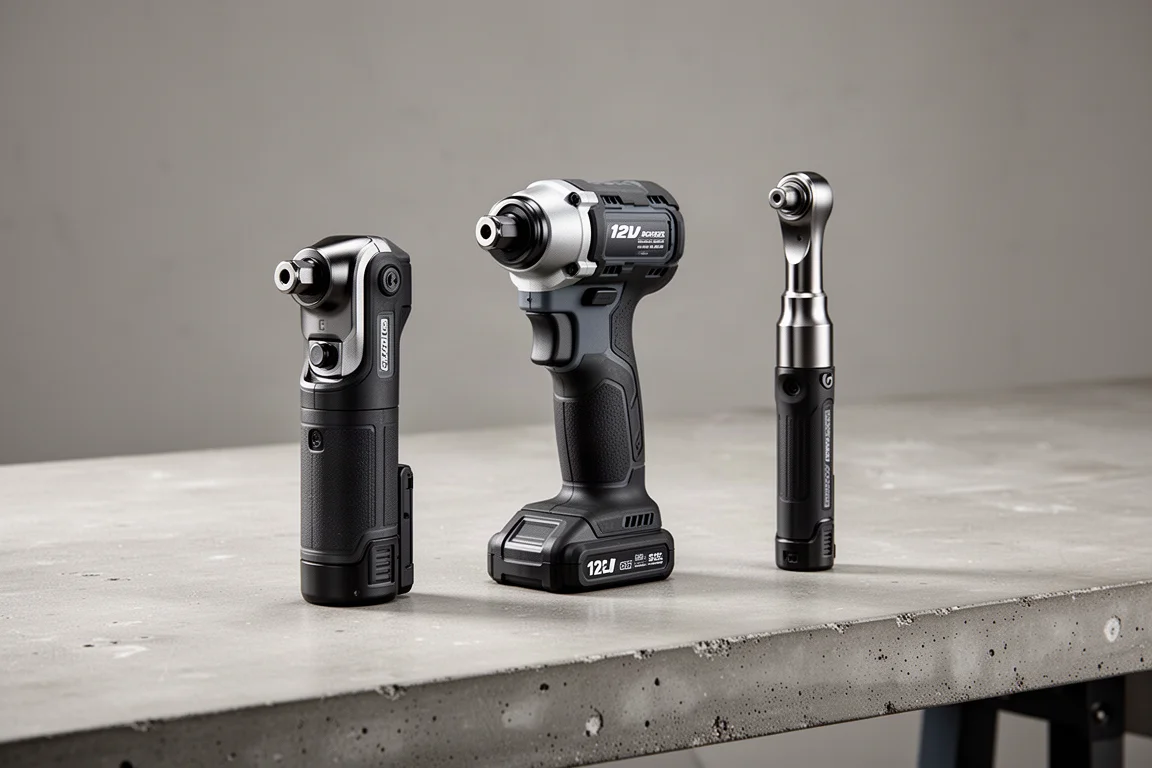
To find out, three affordable, non-brushless cordless ratchets went through the same testing routine: a loaded-speed gauntlet, calibrated torque checks, and scoring on weight, head size, and price. Some results were pleasant surprises. One was a genuine letdown.
Husky 12V Cordless Ratchet
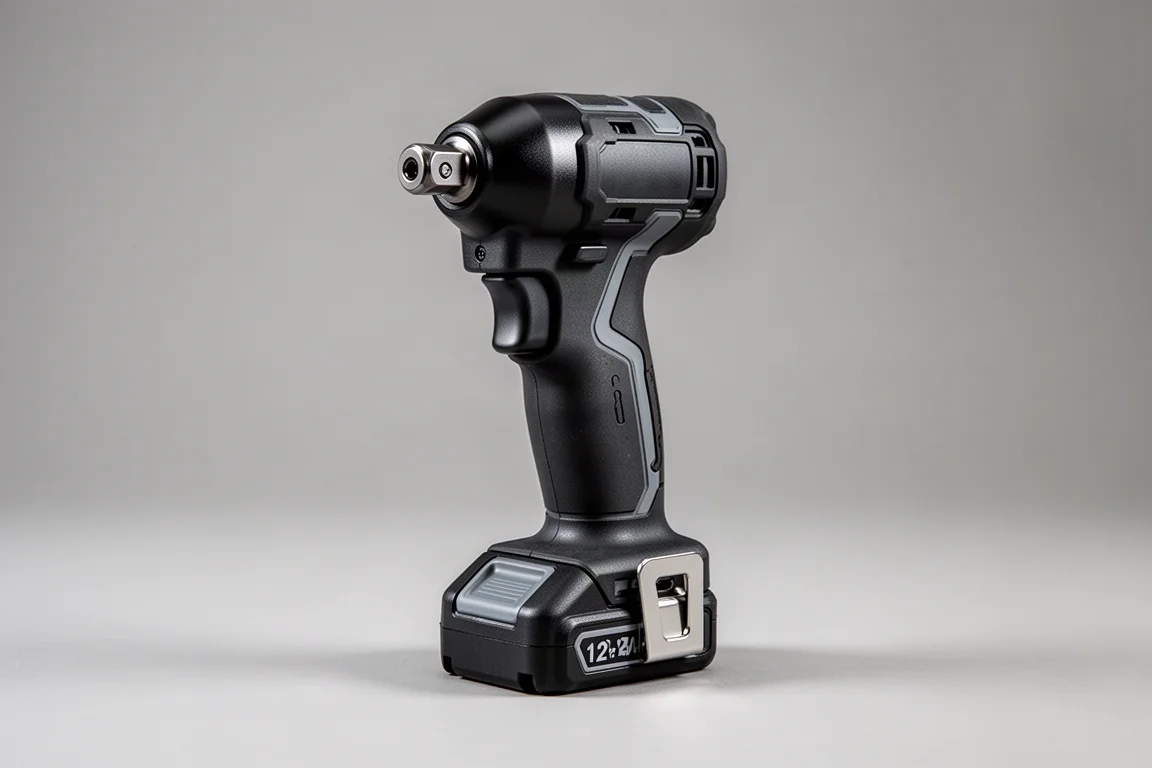
The Husky 12V cordless ratchet costs $96 with a battery included, which makes sense since the battery is a fixed, built-in package rather than removable. Despite that dense, solid feeling in the hand, it is lighter than most of its competitors at 2.2 pounds. It is rated for 30 foot-pounds of torque and 230 rpm.
Two things stand out in daily use. The integrated battery appears to translate to roughly a 5 to 6 amp-hour pack at 12 volts, which is generous; it ran through most of a workday without needing a recharge. On the downside, the trigger has a slightly delayed action on both squeeze and release, which can feel awkward at times. It also vibrates noticeably when working against larger 19mm hex nylon lock nuts.
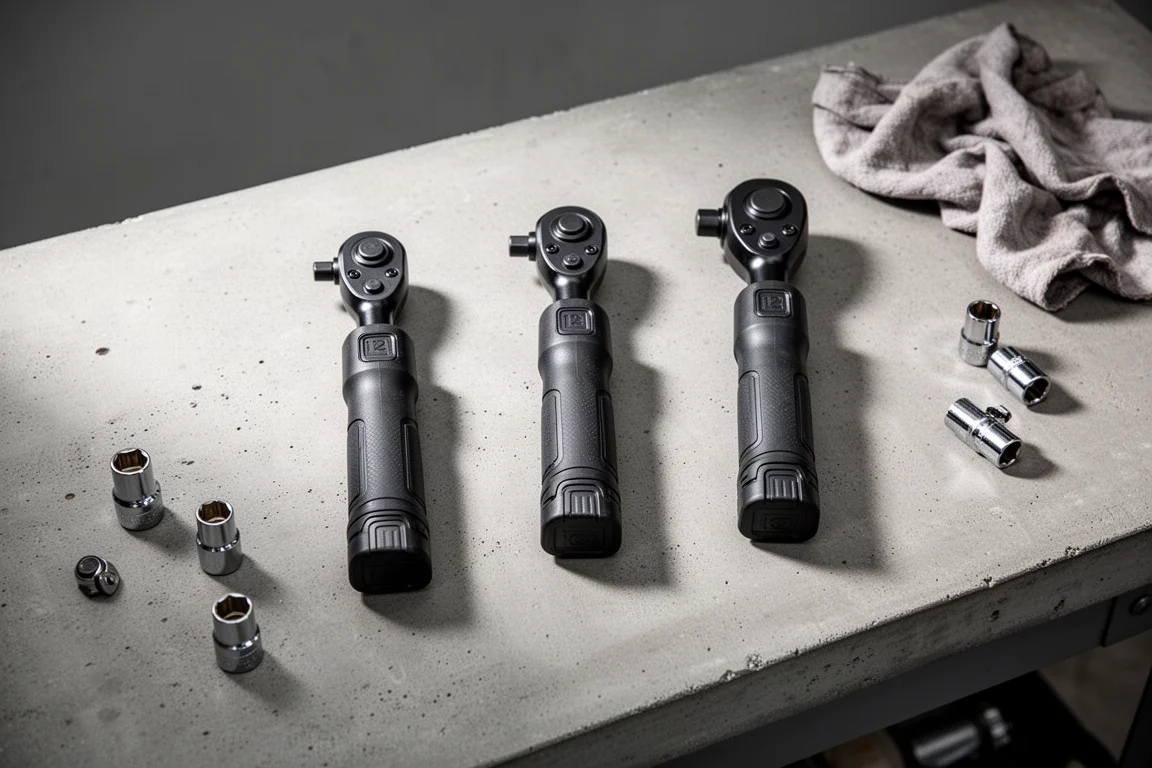
In the gauntlet, it held its own against a slower-rated but higher-torque competitor, finishing in 3 minutes and 12 seconds, and in torque testing it registered 34 foot-pounds against a 30 foot-pound rating. By hand, it was coaxed up to 143 foot-pounds, plenty for a 3/8 drive, without any damage. It looks like a decent buy, especially during sales, but it has limits on bigger fasteners.
Durofix RW1216-3P Cordless Ratchet
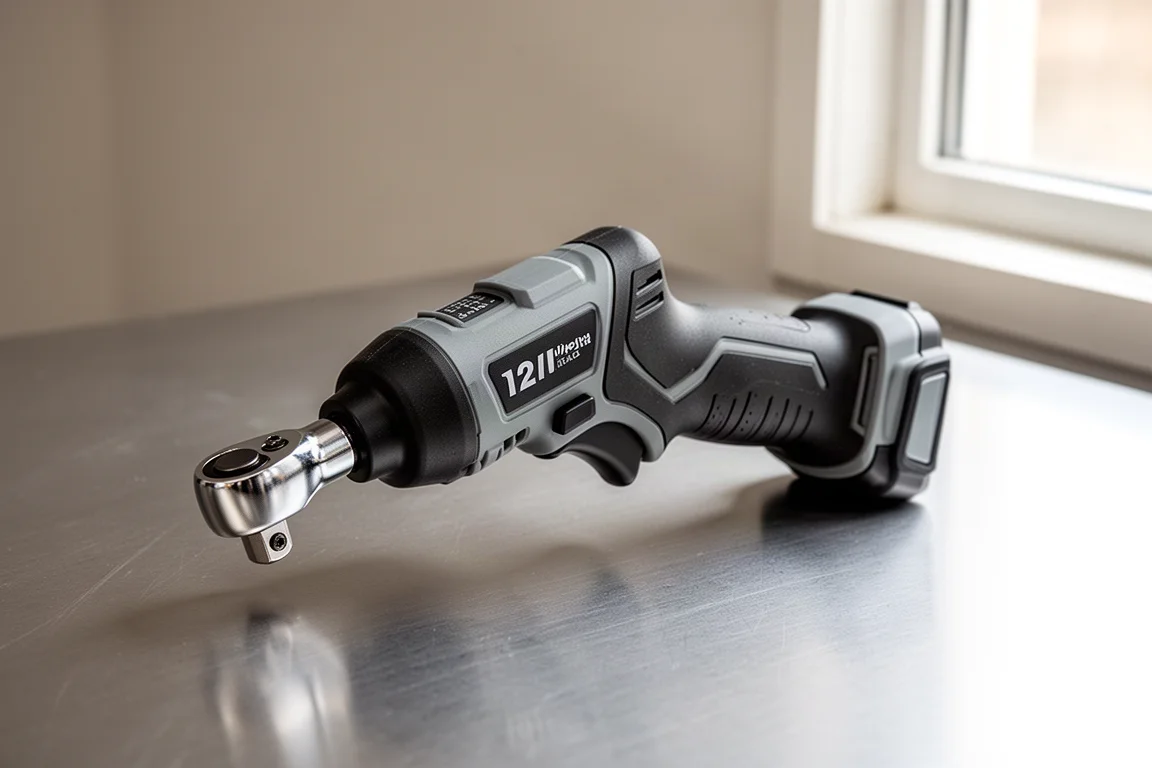
On paper, the Durofix RW1216-3P is the ringer of this group. It boasts 260 rpm and 65 foot-pounds of torque, more than double the Husky’s rating, which puts its specs up against the strongest 12V ratchets from major brands. It should, in theory, beat them on power, speed, and price, with the same convenient removable battery style. Pricing sits around $140, or roughly $110 without a battery and charger.
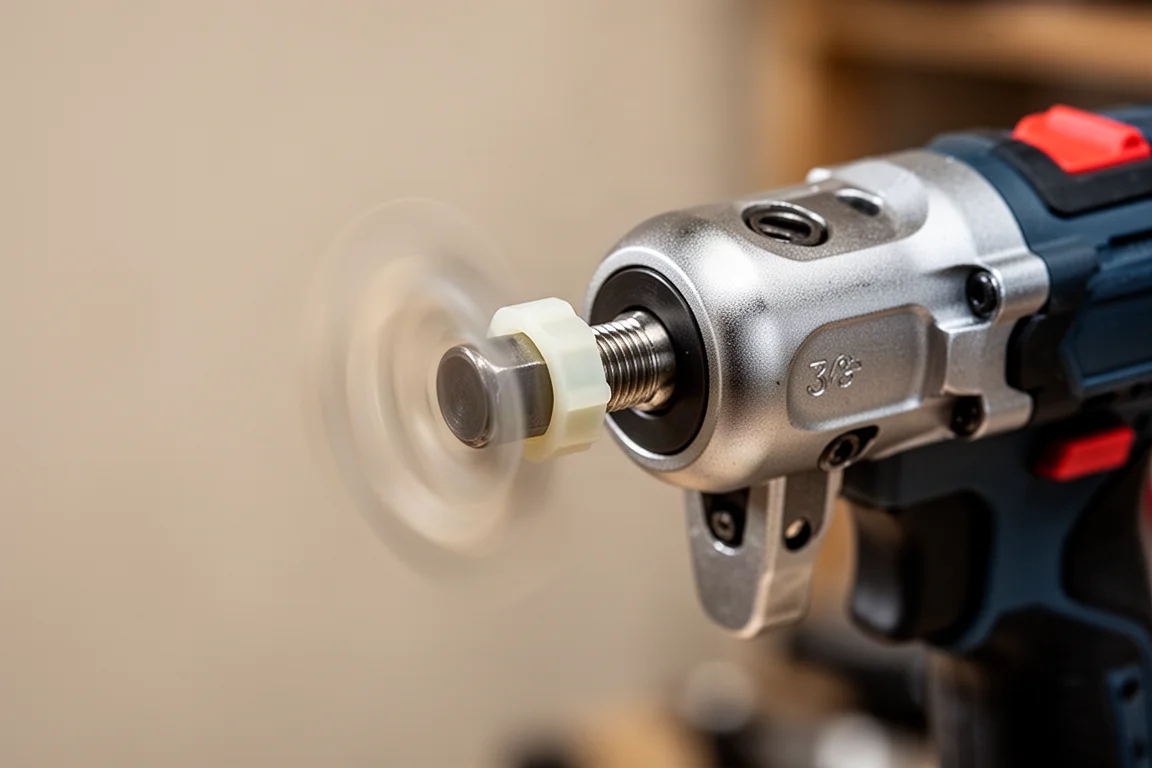
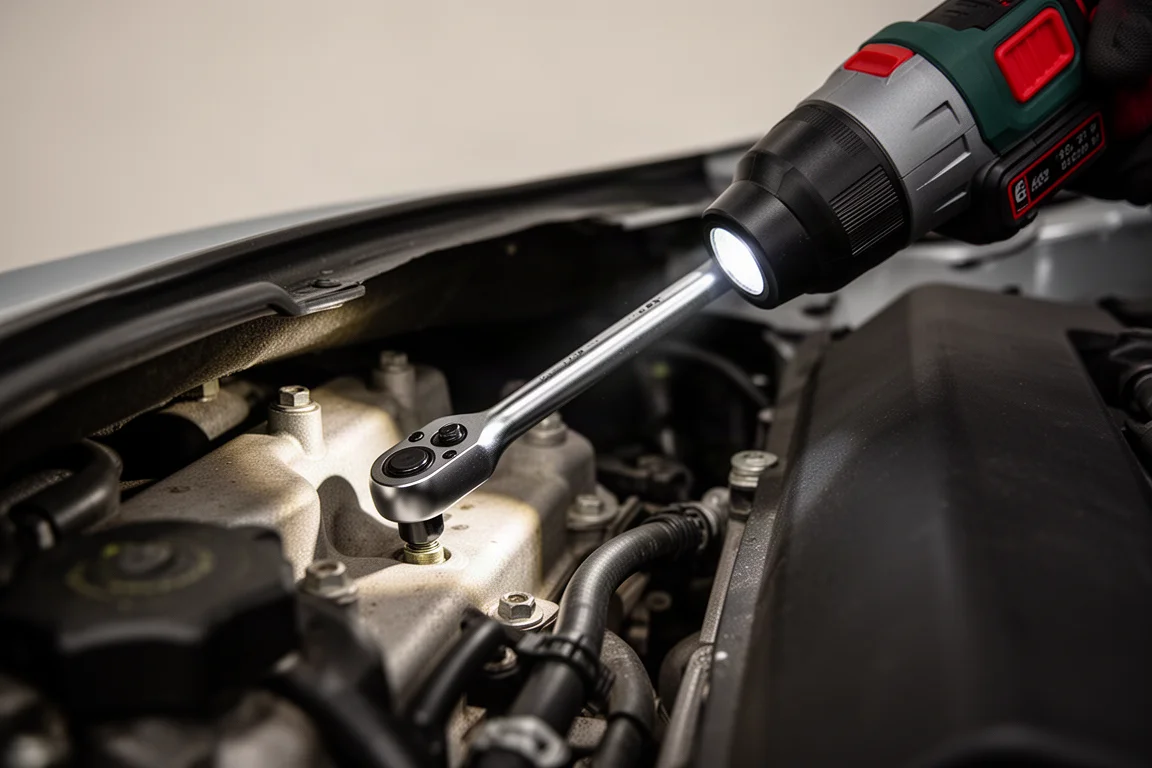
Real testing tells a different story. In the gauntlet it fell behind a 200 rpm-rated competitor almost as soon as it hit fasteners larger than a quarter-inch thread, and the gap widened as bolt sizes grew. It also struggled with a 35 foot-pound nylon lock nut, finishing in 3 minutes and 43 seconds. The biggest disappointment came in powered torque testing: with a fully charged battery it reached only about 32 to 33 foot-pounds, roughly half of its advertised 65. By hand, however, it is a stout tool, and it survived up to 230 foot-pounds of manual force despite packaging advising not to exceed 120. Just do not buy this one for its spec sheet alone.
The Gauntlet: Speed Under Real Load
Free-speed rpm ratings only tell part of the story. The gauntlet test spins threaded studs with fresh nylon lock nuts, which create 4 to 15 foot-pounds of resistance throughout the spin, roughly simulating rust and imperfect threads in real work. Under that kind of load, rated rpm can change dramatically.
The pattern across all three was clear. The Husky dropped some pace but stayed competitive. The Hercules slowed significantly under load, sometimes to a fraction of its free-speed rating, yet stayed just one bolt behind a much more expensive competitor. The Durofix fell furthest, seeing as much as a 150-fold reduction in rpm under load. Rated speed means very little unless the tool can carry it with real torque.
Torque Results: Promises Versus Reality
Calibrated torque testing separated these tools sharply. The 30 foot-pound-rated Husky delivered 34. The 40 foot-pound-rated Hercules delivered 42, which is exactly what you want to see. The 65 foot-pound-rated Durofix managed only 33, matching a rating less than half of what is printed on the box.
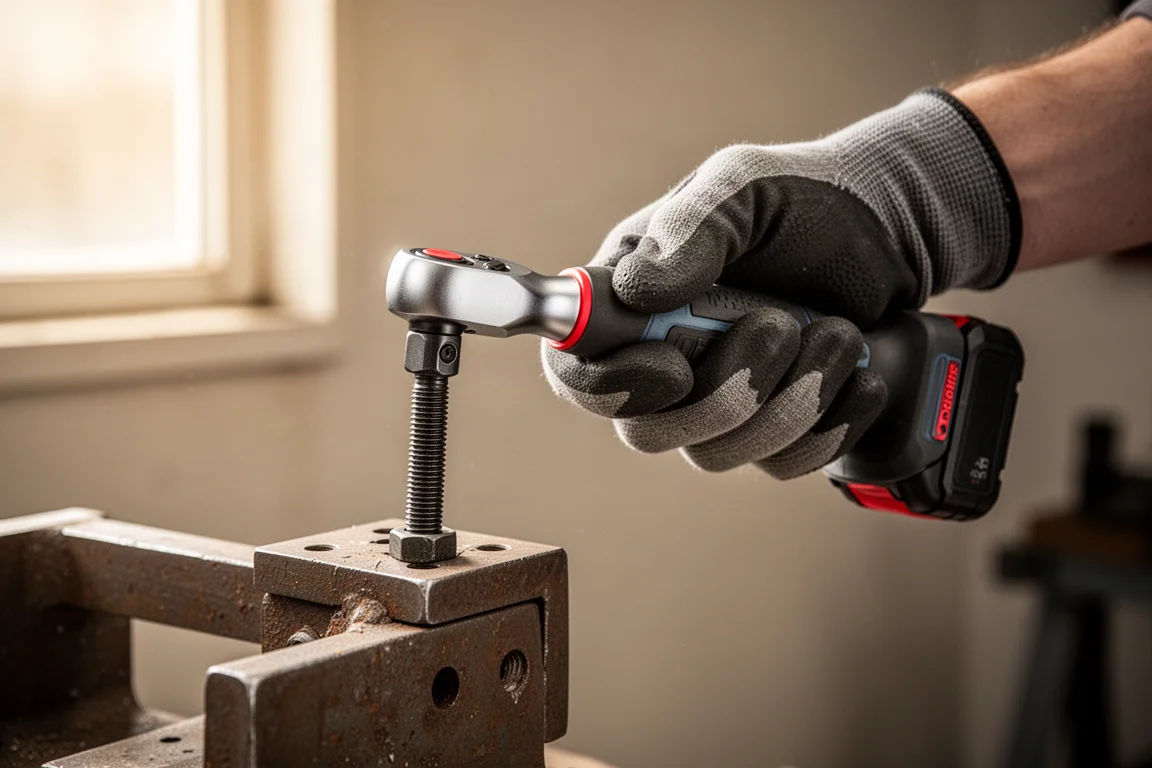
By hand, the story flips for the Durofix: its hefty head gives good leverage and it proved genuinely strong, breaking past 200 foot-pounds. The Hercules showed the first mechanical hiccup of the group, skipping teeth around 150 foot-pounds of manual force, though it kept working and still produced the same torque afterward. Head size appears to be the limiting factor at higher torque levels for most brands in this class.
Hercules Extended-Reach Cordless Ratchet
The Hercules extended-reach model sells for $99, with a standard-length version around $90 carrying the same specs: 40 foot-pounds of torque and 275 rpm, the highest in this test. Its head is dramatically smaller than the Durofix’s, which is immediately noticeable in use, and that slim profile opens up access to fasteners the others simply cannot reach.
In hand it felt the most comfortable of the three, with the least vibration, and it loosened the most bolts without manual assistance. It also accepts larger capacity battery packs, such as a 4 amp-hour pack, something neither of the other two brands can offer, and that bigger pack nudged its powered torque output from 39 up to 42 foot-pounds.
In the gauntlet it finished in 3 minutes and 26 seconds, between the Husky and the Durofix, and it scored the best of the three on the day with 42 foot-pounds delivered. Of the three, this is the one that felt best to use in person.
Overall Buying Advice
Final scores, where lower is better, landed close together: the Husky at 226, the Hercules at 232, and the Durofix at 283. All three still ranked below the slowest major-brand reference model, even with scoring advantages on price, head size, and weight. The spread between budget and premium ratchets turned out to be smaller than hoped, but it is real.
The practical takeaway: specs alone do not decide performance in this category. rpm ratings mean little if a tool cannot back them up with torque under load, so treat published numbers with some skepticism and, where possible, favor tools with proven real-world results.
Conclusion
The Husky is a solid value pick for light-duty work, with strong battery life and honest torque output, just expect some quirks on larger fasteners. The Durofix looks like a spec-sheet champion but delivered roughly half its rated torque in powered testing, making it hard to recommend over alternatives. The Hercules was the most pleasant to use, pairs the smallest head with the highest rated speed, and delivered slightly above its rated torque. If access and comfort matter to you, it is the strongest of the three.
Further reading
Related Reviews
Power Tools
Best 1-Inch Pistol Impact Wrenches: Three Heavy-Duty Options Compared
We compare three 1-inch pistol impact wrenches, from a budget-friendly Harbor Freight model to a premium Caterpillar unit, to help you choose the right one.
Power Tools
Best 3/4-Inch Impact Wrenches 2026: Five Contenders Compared
We compare five 3/4-inch impact wrenches across price and performance, from a budget Amazon option to Snap-on's most powerful model yet.
Power Tools
Best Budget Cordless Tools 2026: Walmart Finds That Punch Above Their Price
We tested five cordless tools from Walmart, including a high-torque impact wrench that trades blows with Milwaukee and a $35 duster that outperforms its price class.