Power Tools
Best Budget Circular Saws for Cutting Vinyl Plank Flooring: HiKOKI vs DeWalt
Two compact circular saws that handle vinyl plank flooring, wood, aluminum, and tile, with trade-offs to weigh before buying.
Introduction
Vinyl plank flooring has made DIY home improvement far more approachable, but getting clean, safe cuts still comes down to the tool you use. Social media is full of flooring-cutting hacks, many of them unsafe, and a heavy-duty flooring knife can cost a couple hundred dollars, which is a tough sell for a one-off project.
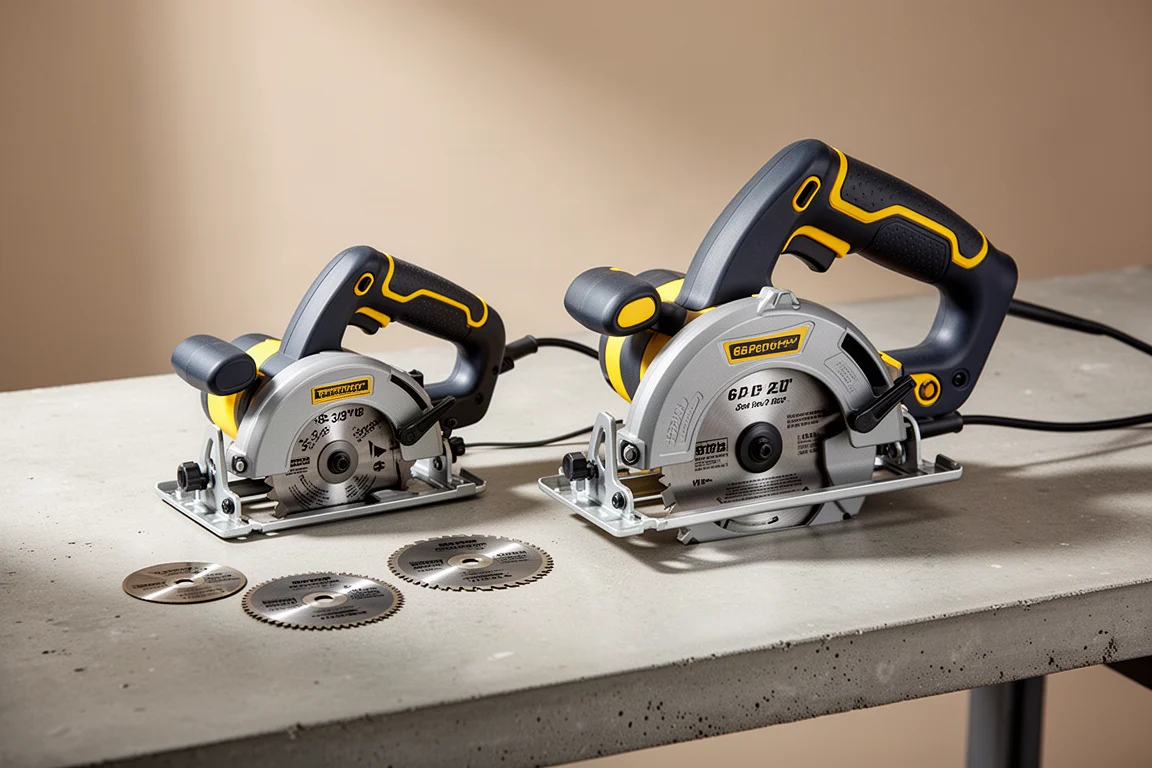
A compact circular saw is a more practical answer, especially for vinyl plank, standard wood flooring, and general small-project cutting. Two options stand out for different buyers: an affordable HiKOKI 3-3/8 in saw that includes multiple blades and a laser, and a DeWalt 6-1/2 in saw for anyone who wants a more conventional, easier-to-handle tool.
Why a Small Circular Saw Beats a Utility Knife
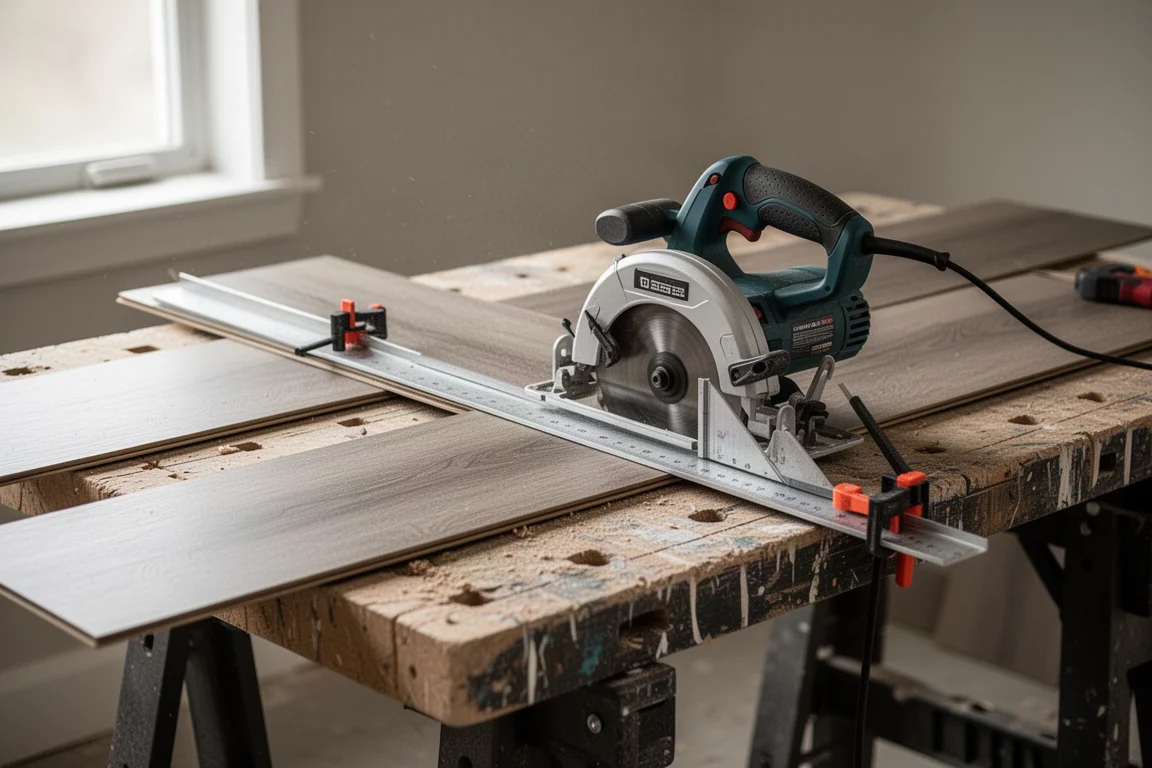
Score-and-snap knife techniques work for some vinyl cuts, but they are fiddly and can be risky when you are applying heavy pressure near your hands. A small circular saw lets you make straight, controlled cuts with a guide, and both of the saws here can cut vinyl plank cleanly with only minor chipping that trim will cover.
The HiKOKI sits in the $50 range with over a thousand Amazon reviews, which makes it an easy low-commitment choice. The DeWalt costs a bit more but offers a larger, more familiar grip.
HiKOKI 3-3/8 in Circular Saw Review
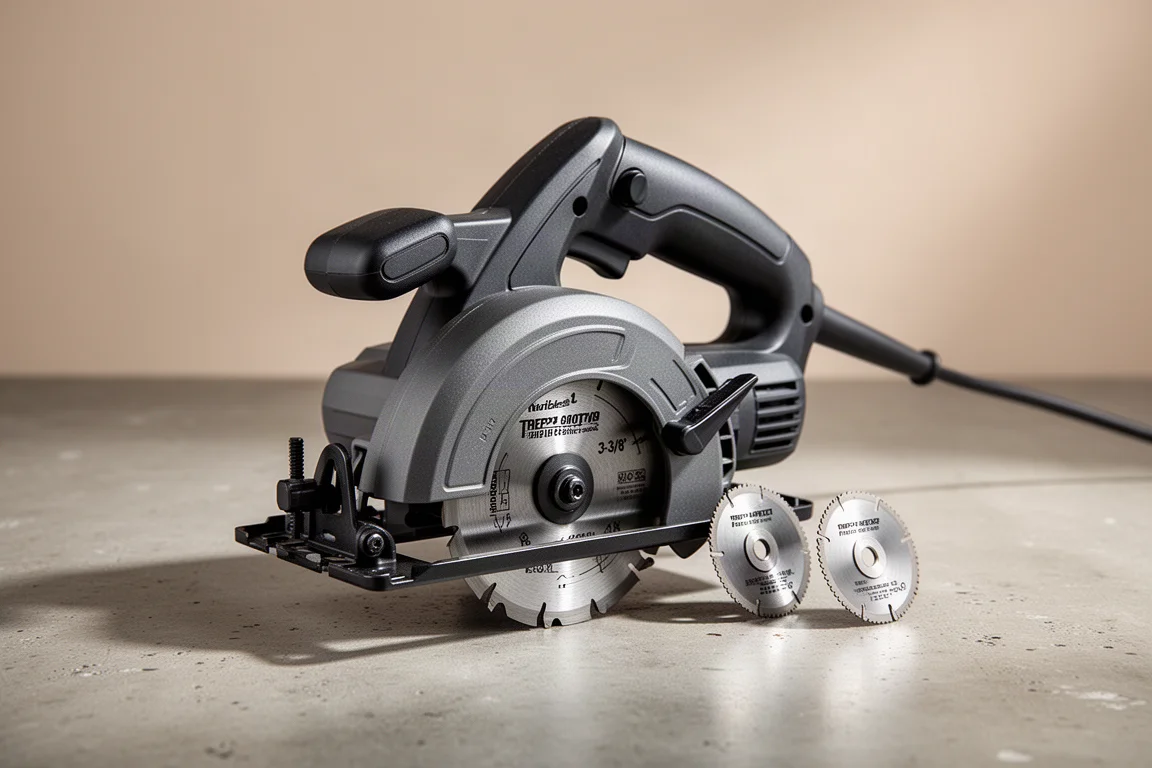
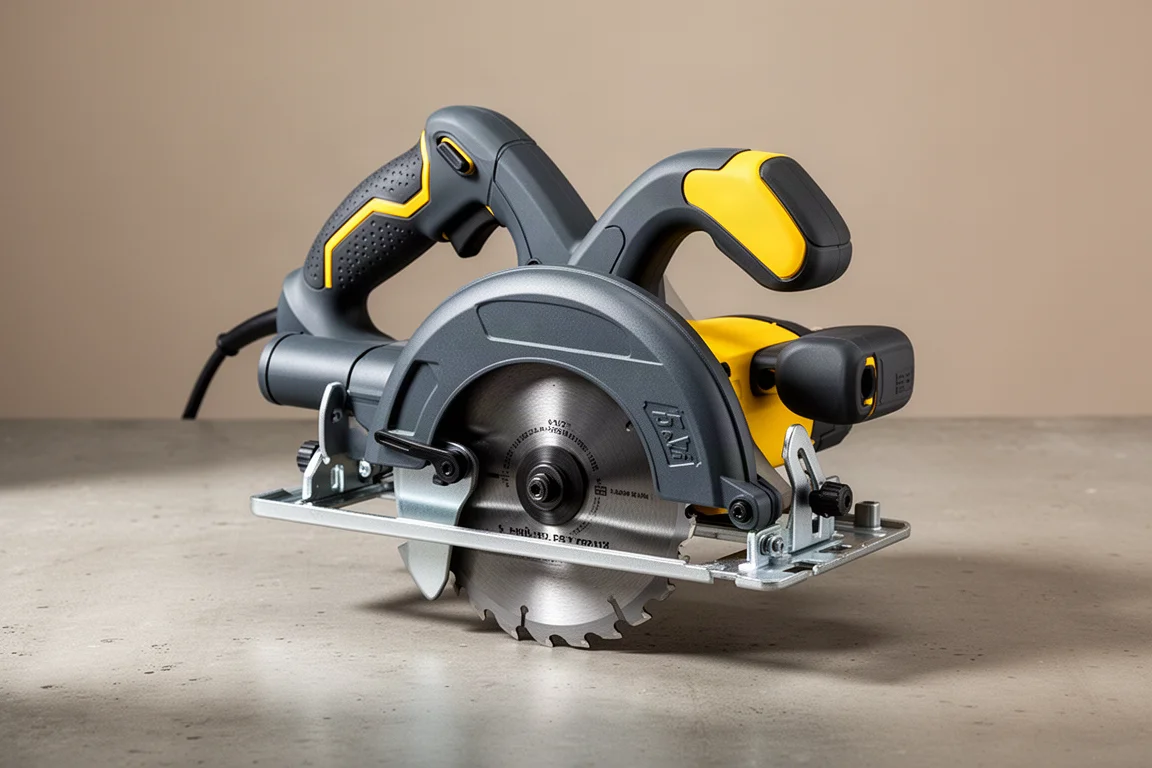
The HiKOKI 3-3/8 in circular saw is built around a 1 in maximum depth of cut, which is plenty for vinyl plank and 3/4 in oak when set to full depth. It includes three blades: a carbide wood blade, a blade for soft metals like aluminum, and a tile blade. A red laser is built in and runs off two batteries, with spares included in the kit, though leaving the laser on drains them faster.
Operation is unusual. The blade guard doubles as the fence, the depth stop is marked entirely in centimeters, and starting a cut means holding a two-finger trigger while pressing the safety down, or pressing the safety first without the blade touching the work and then pulling the trigger. It takes practice but becomes manageable after a few cuts. The included edge guide slides into the front and is also metric, which helps with straight cuts.
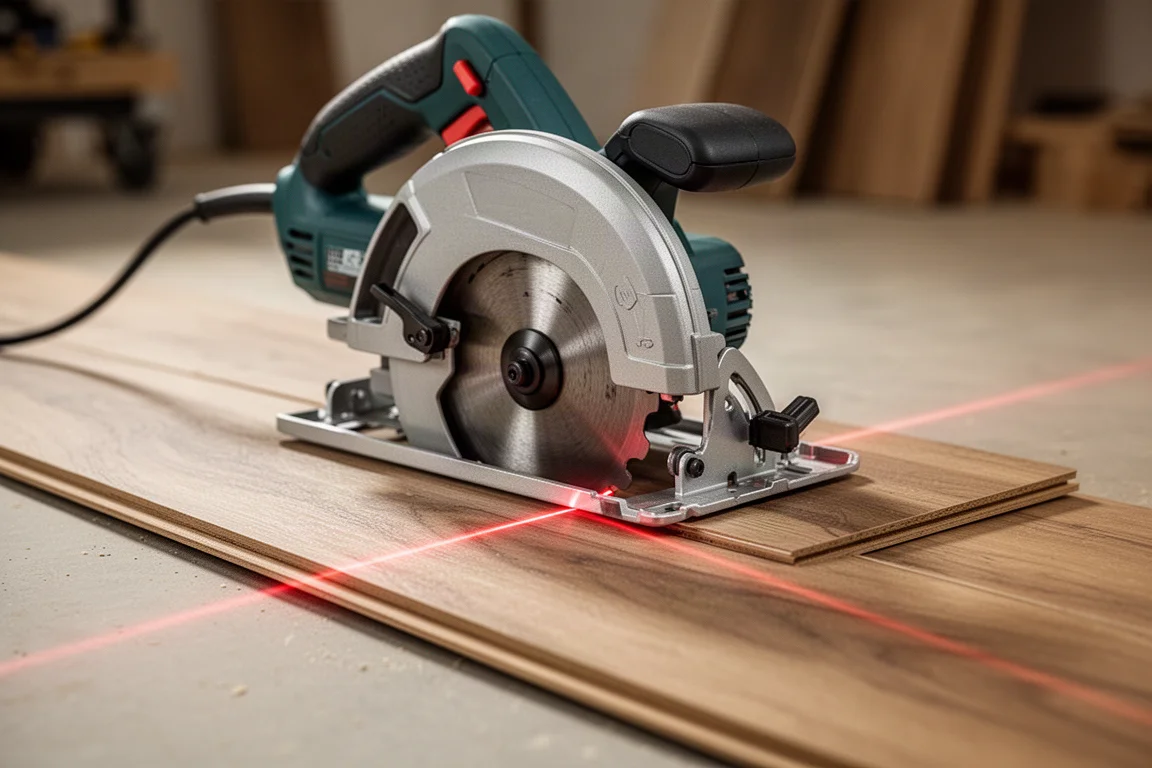
Cut quality is good where it counts: vinyl plank cuts came out essentially perfect, and tile cuts with the diamond blade showed very little chipping when going slow. Oak cuts were rougher, with some tear-out and a slowdown partway through, so expect to sand fine wood cuts. Blade changes use an arbor lock and Allen key and are slightly awkward because of how the blade sits inside the plunge-style guard.
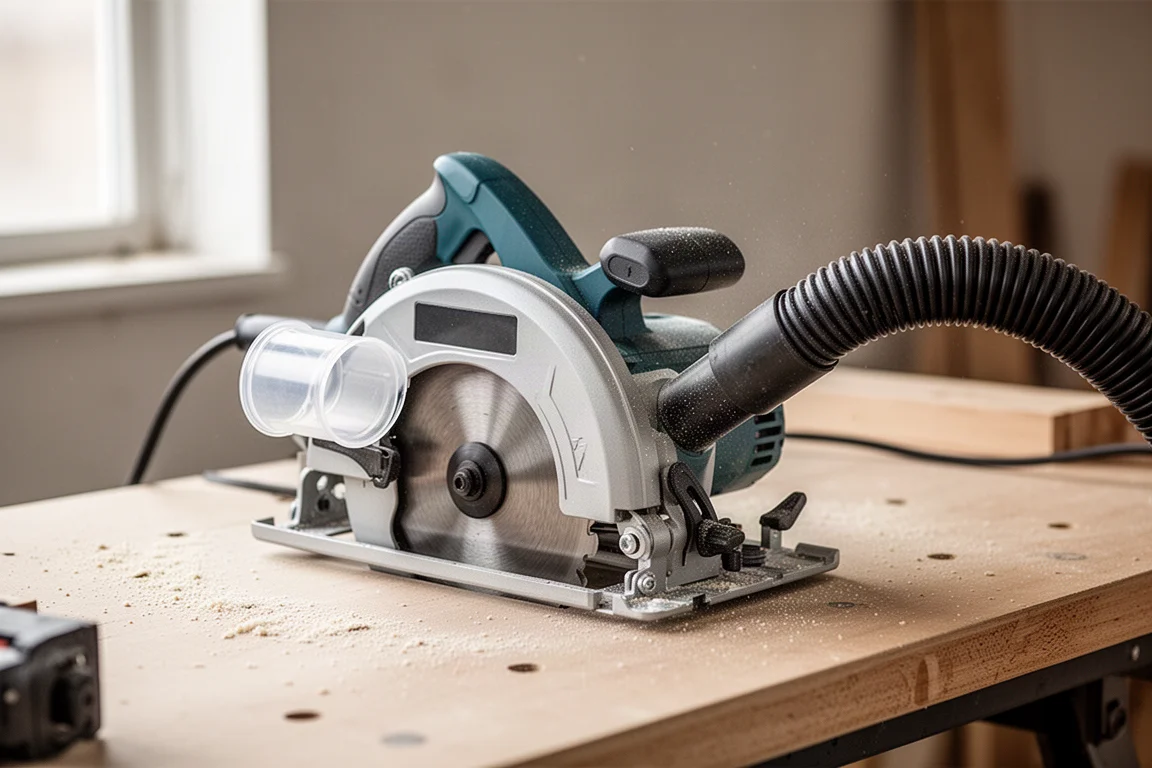
The dust port is included but works only mediocrely: the small opening fits a vacuum nozzle, yet it tended to pop out of one shop vacuum and the short length means cuts must be near a stationary vacuum. It is worth hooking up for dusty tile cuts, less useful for wood.
DeWalt 6-1/2 in Circular Saw Review
The DeWalt 6-1/2 in circular saw is the more conventional choice. It will cut through a 2x4, so it handles standard wood flooring as well as vinyl plank with ease. It has a place for two hands on the body, and the larger 6-1/2 in blade and full-size grip make it comfortable to hold even for people with smaller hands, which is where the smaller HiKOKI can feel awkward.
It may cost a little more, but for anyone uncomfortable with the HiKOKI’s compact, angle-grinder-like form factor, this saw is simply easier to hang on to and operate like a normal circular saw. It cut vinyl plank well too, with some minor chipping similar to the smaller saw.
Cutting Tile, Metal, and Other Materials
One of the HiKOKI’s biggest advantages is material flexibility thanks to the included blades. With the metal blade, it cuts soft aluminum smoothly, which suits shower enclosure trim and carpet or tile transitions, though it is not for steel or anything harder. Visibility is limited on metal cuts, so you rely on the laser and the front guide notch and feed slowly.
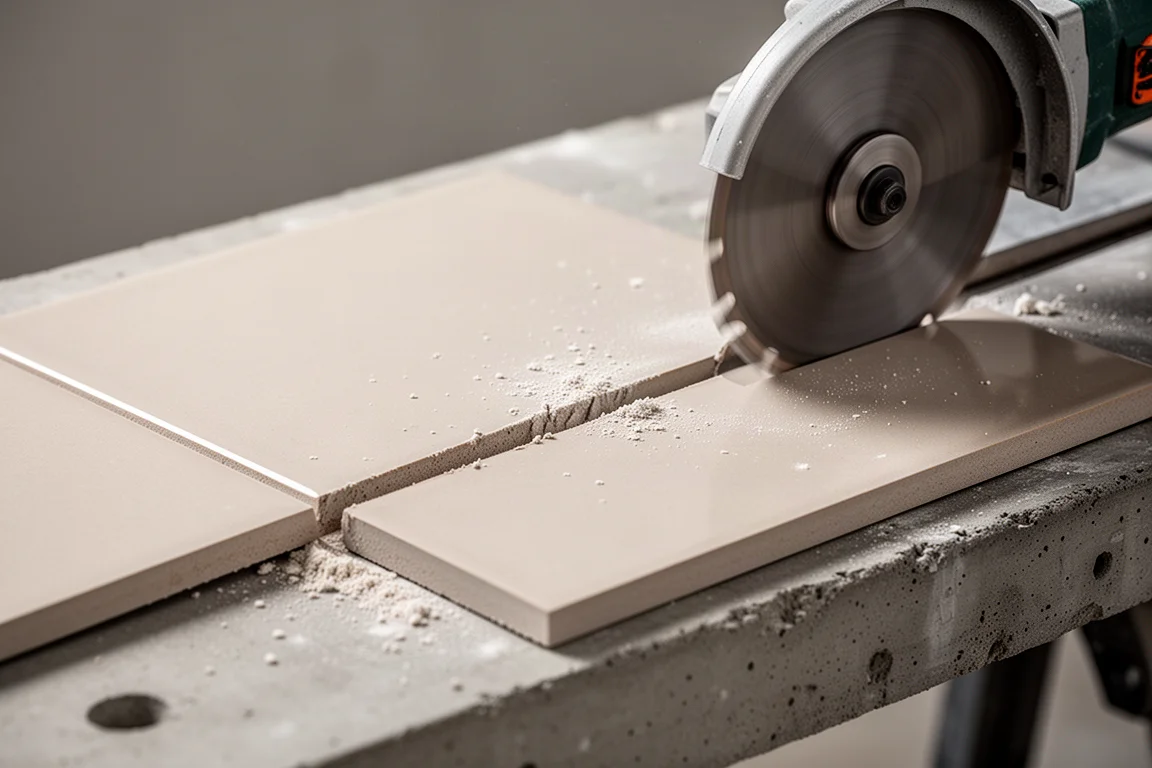
With the diamond tile blade, the maximum depth of cut is 3/8 in, and it handles straight tile cuts and even plunge cuts into the middle of a tile, useful for cutouts around shower fixtures. It is a dry cut, so it gets very dusty, and the laser and rear line help you keep track of the cut. Go slow and expect the tile to be the dusty, demanding use case.
Things to Consider Before Buying
The HiKOKI has some longevity question marks, most notably the plastic depth stop. If it breaks, you would simply be limited to the full 1 in depth of cut, so it is not catastrophic, but handle it gently. The blade guard safety can also become harder to work with when dirty, and the saw body is fairly large in the hand, closer in feel to an angle grinder, so smaller hands may find it less comfortable. Keep hands well away from the blade path: kickback on a saw like this is a real hazard.
Overall, the HiKOKI makes sense for a small project, a single flooring job, or anyone who wants wood, aluminum, and tile capability for around $50 backed by over a thousand reviews. The DeWalt makes sense if comfort and familiarity matter more than price or accessory blades.
Conclusion
For most DIY vinyl flooring projects on a budget, the HiKOKI 3-3/8 in saw offers remarkable versatility for the money, with included wood, metal, and tile blades and a workable but quirky safety system. If you would rather have a comfortable, conventional saw that handles 2x4s and flooring without a learning curve, the DeWalt 6-1/2 in is the safer bet. Either way, both deliver clean vinyl plank cuts that trim will hide.
Further reading
Related Reviews
Power Tools
Best 1-Inch Pistol Impact Wrenches: Three Heavy-Duty Options Compared
We compare three 1-inch pistol impact wrenches, from a budget-friendly Harbor Freight model to a premium Caterpillar unit, to help you choose the right one.
Power Tools
Best 3/4-Inch Impact Wrenches 2026: Five Contenders Compared
We compare five 3/4-inch impact wrenches across price and performance, from a budget Amazon option to Snap-on's most powerful model yet.
Power Tools
Best Budget Cordless Tools 2026: Walmart Finds That Punch Above Their Price
We tested five cordless tools from Walmart, including a high-torque impact wrench that trades blows with Milwaukee and a $35 duster that outperforms its price class.