Cycling Bikes
Best Bikes for Mixed Off-Road Terrain: Three Approaches Tested
A steel cross-country hardtail, a lightweight full suspension cross-country bike, and a mountain-bike-leaning gravel bike compared for long mixed off-road days.
Introduction
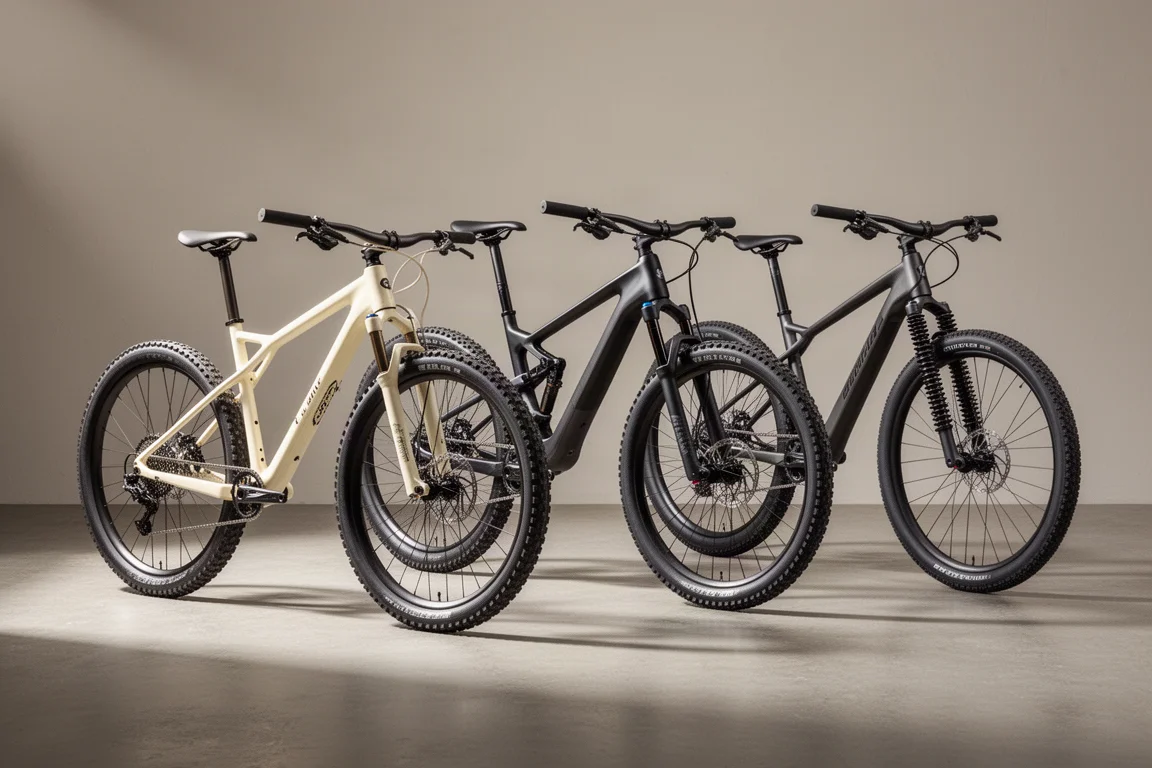
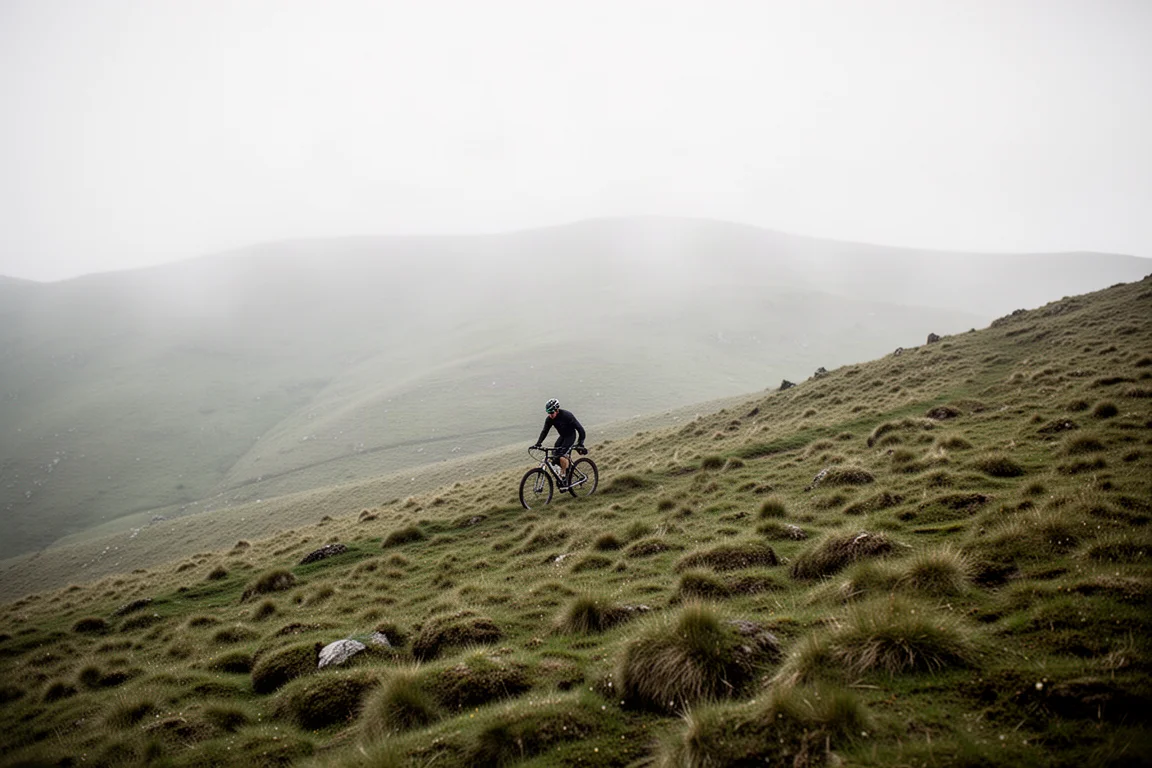
The Trans Cambrian Way is a mostly off-road route that crosses Wales from one side to the other, and riding it in a single push asks a bike to handle almost everything: long grass drags, rocky traverses, open hillside, fast chattery gravel, and stretches of flat tarmac where you simply want to hold speed. Three bikes covered that ground, and each took a different approach to the same problem. One is a steel cross-country hardtail. One is a lightweight full suspension cross-country bike. One is a gravel bike that leans further toward mountain bike territory than most.
This guide walks through what each bike does well, where each one gives something up, and who each is genuinely suited to.
How These Bikes Were Judged
The criteria that mattered most on a route like this were straightforward. Descending control came first: the ability to stay composed on fast, loose, rocky descents without arm pump or wrist pain. Climbing comfort came second, because long seated drags on rough surfaces reward a frame that absorbs vibration and a riding position that stays efficient once cadence drops. Gearing range mattered too, since the route mixes steep technical pitches with long rolling road sections. Weight, tire clearance and suspension travel all feed into those three priorities.
Then came the practical detail work: tire choice, drivetrain reliability, and whether the bike stayed fun when the clock was not in your favour.
Fairlight Halt: Steel Cross-Country Hardtail
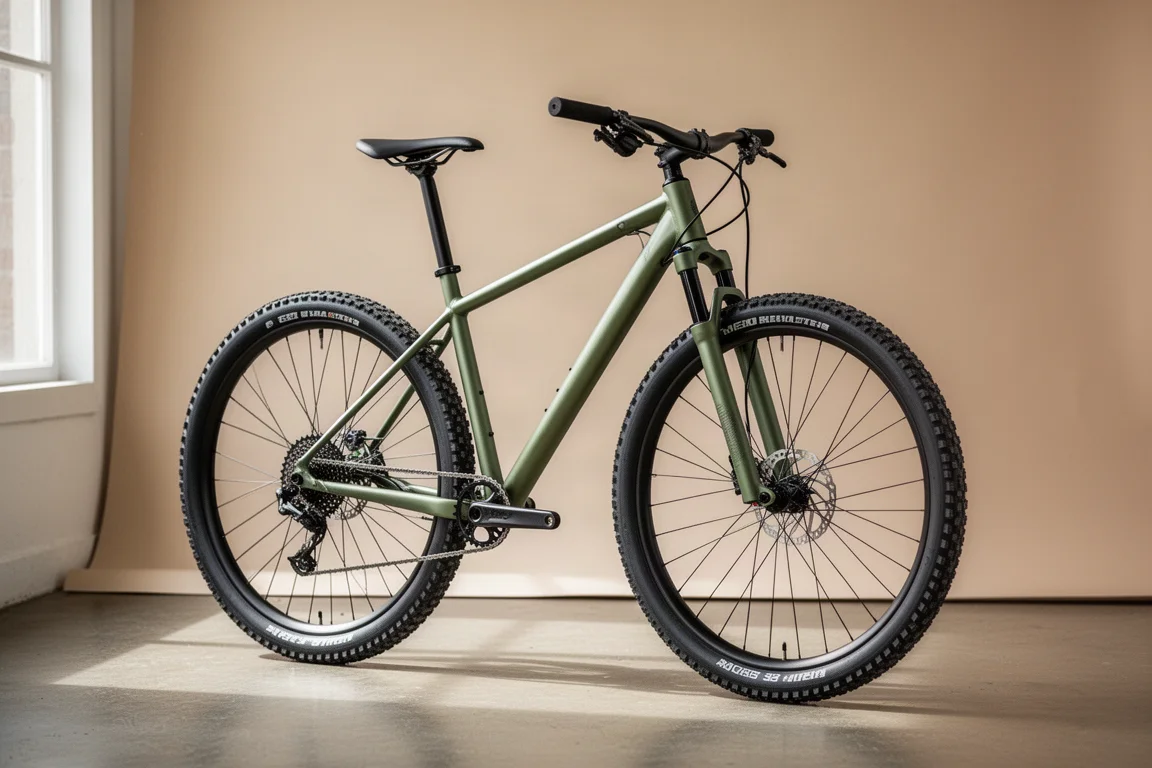
Fairlight builds every one of its bikes in steel, and the Halt is the brand’s cross-country hardtail. The frame uses heavily shaped tubing with pronounced S-bends, and that tube work, combined with a fairly exposed seatpost and a dropper post, adds up to a genuinely noticeable amount of passive comfort at the rear. On rough seated climbs and long days out, that flex does real work.
The build here ran a Shimano XT 12-speed drivetrain with a 10-51 tooth cassette and a 34 tooth chainring. The wide cassette range made the steepest pitches manageable, and on sustained climbs the bike often ended up near the top of the block. On the descents, the steel frame plus front suspension gave a confidence a rigid setup would not match, even with a relatively traditional cross-country geometry. Tires were a Vittoria Barzo up front and a Mezcal at the rear, both shallow cross-country treads with lightweight casings that roll fast, set up tubeless with no fuss.
Specialized Epic EVO Expert: Full Suspension Cross-Country
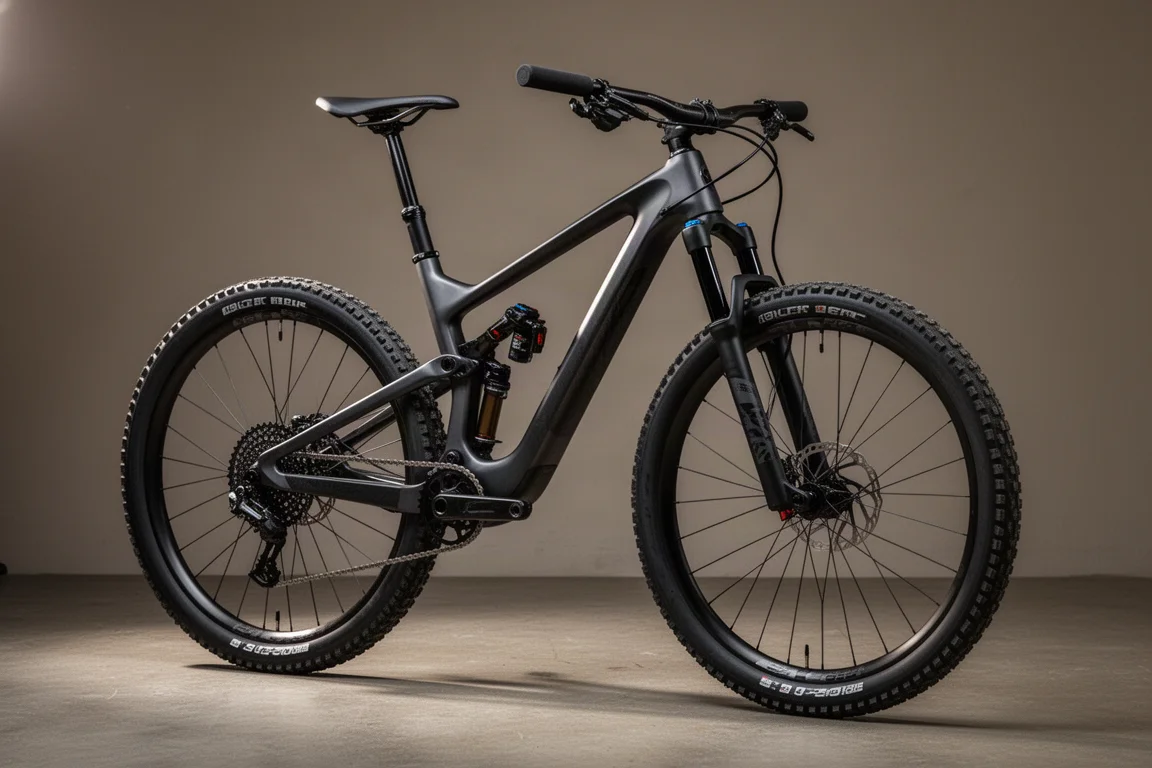
The Epic EVO Expert is a full suspension cross-country bike with a FACT 11m carbon frame, 120 mm of travel up front and 110 mm at the rear, rolling on 29-inch Roval Control carbon wheels with 2.3 inch tires. At around 11 kg for a full suspension bike it never feels sluggish, and the suspension gives it a far more capable descending character than the travel numbers alone suggest. The fork needed almost no setup beyond setting pressure to the recommended figure and a small rebound adjustment, and it stayed composed and largely bob-free on seated and standing climbs.
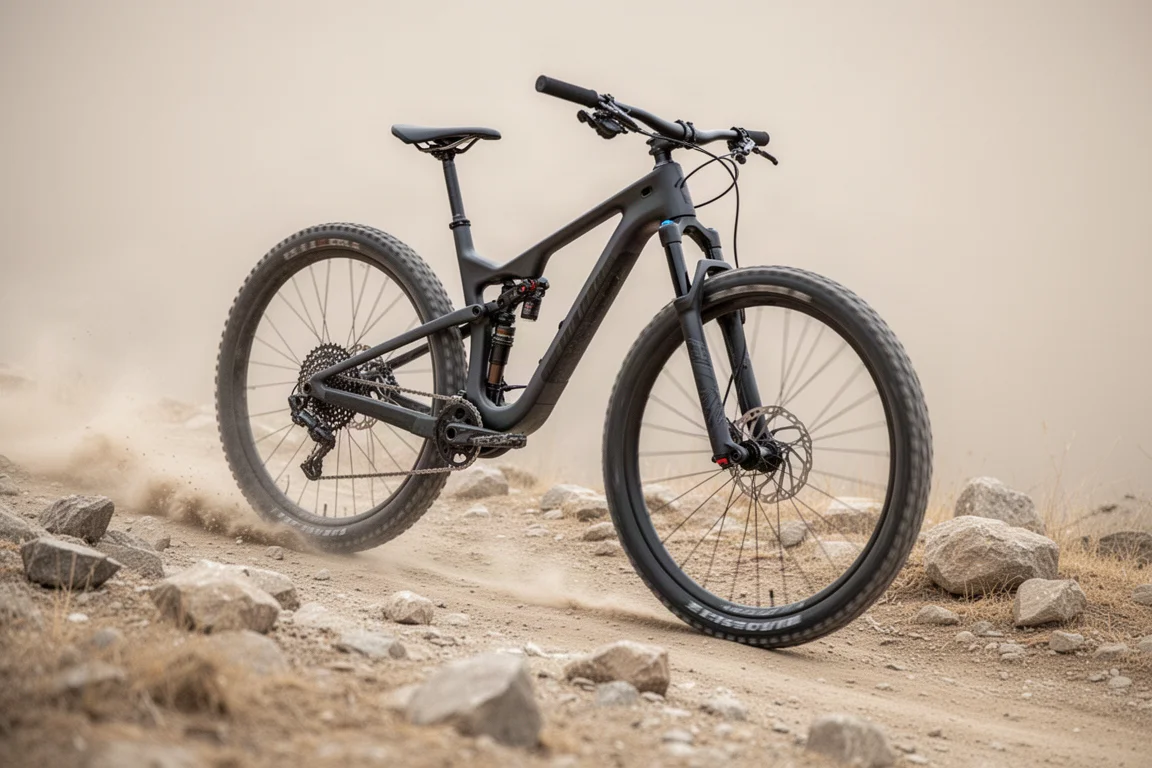
Gearing is a 12-speed SRAM setup with a 10-50 tooth cassette, which gives a very wide spread and a low enough gear for most climbs, though the top end felt a little short during a long flat road sprint. Shifting was quick, quiet and responsive throughout. A power meter is included, and the suspension lockouts firm things up nicely for climbing and flat sections. On rocky, bumpy ground the 2.3 inch tires grip well, at the cost of extra drag on tarmac.
Lauf Seigla: Gravel With Mountain Bike Instincts
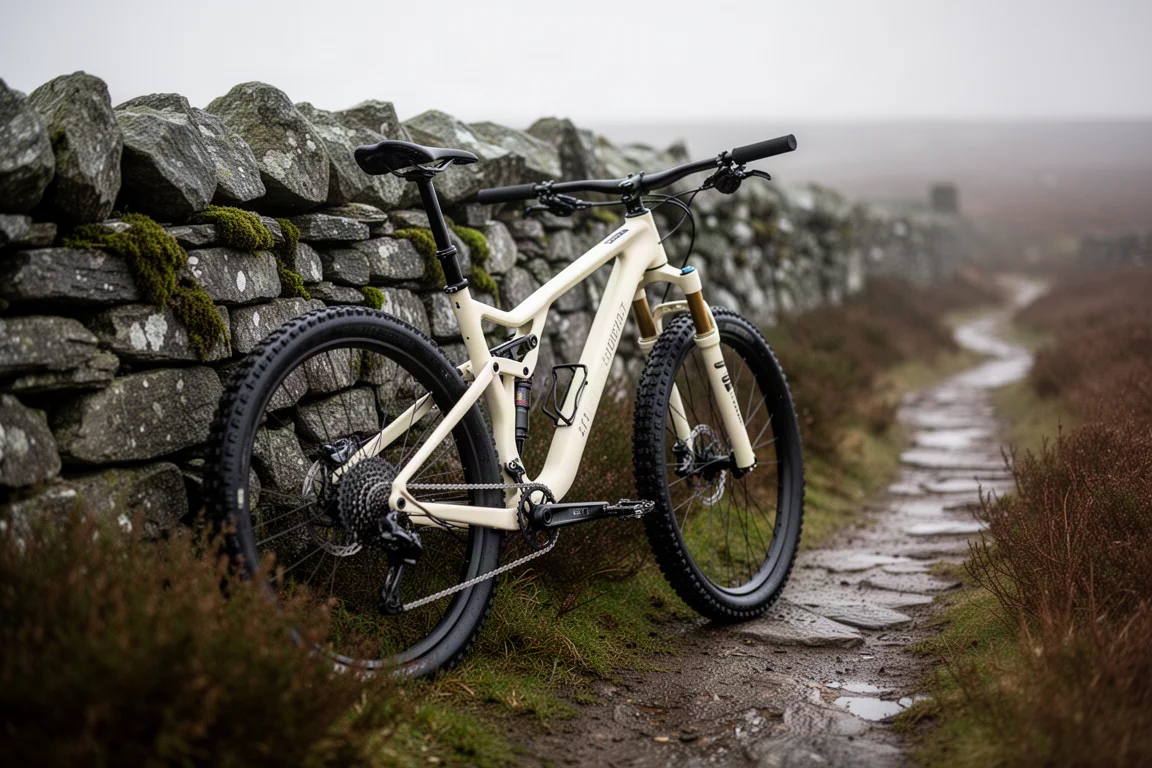
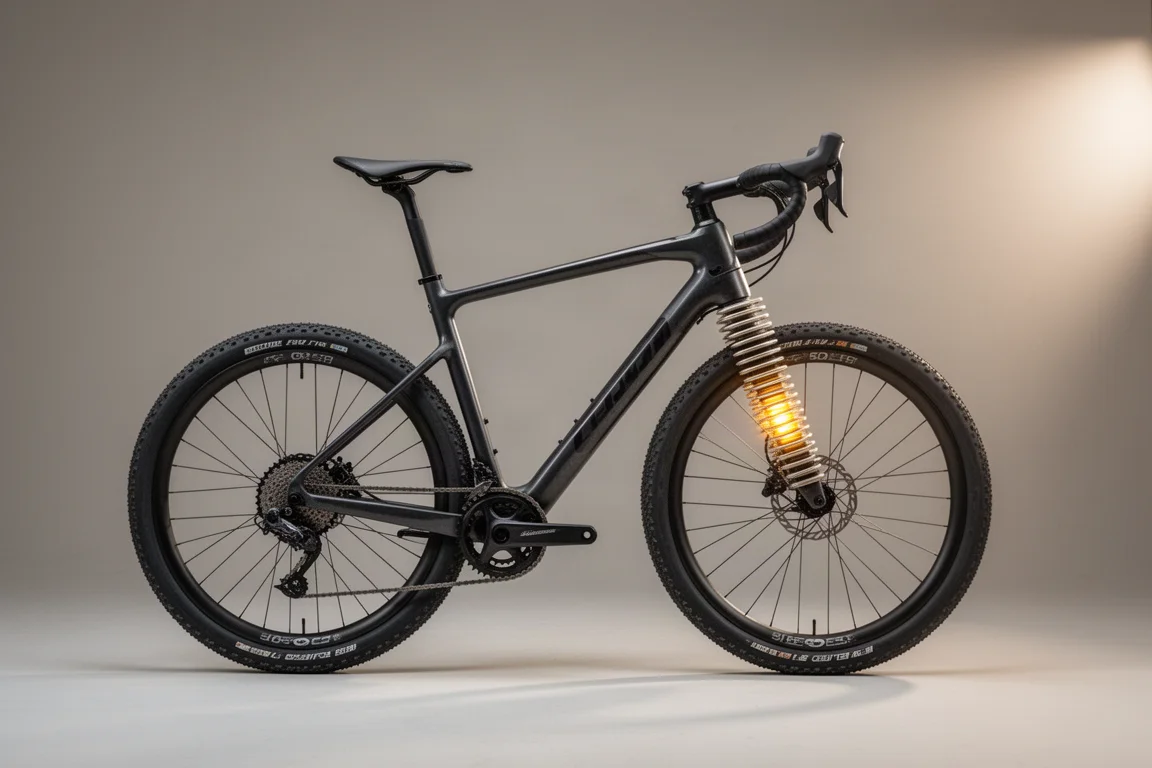
The Seigla is a carbon gravel bike, but it sits firmly on the mountain bike side of the spectrum. Tire clearance runs up to 29 x 2.5 inches, the bottom bracket area is notably stiff for putting power down, and the frame is built with compliance in mind. All of that adds up to a little over nine kilograms. The headline feature is the Lauf Grit SL leaf sprung fork, which uses 12 glass fiber leaf springs to deliver 30 mm of travel. It is not tunable, and it bobs slightly on steep climbs, but it floats over rocks and trail lumps far more effectively than 30 mm would suggest, and it stays very light.
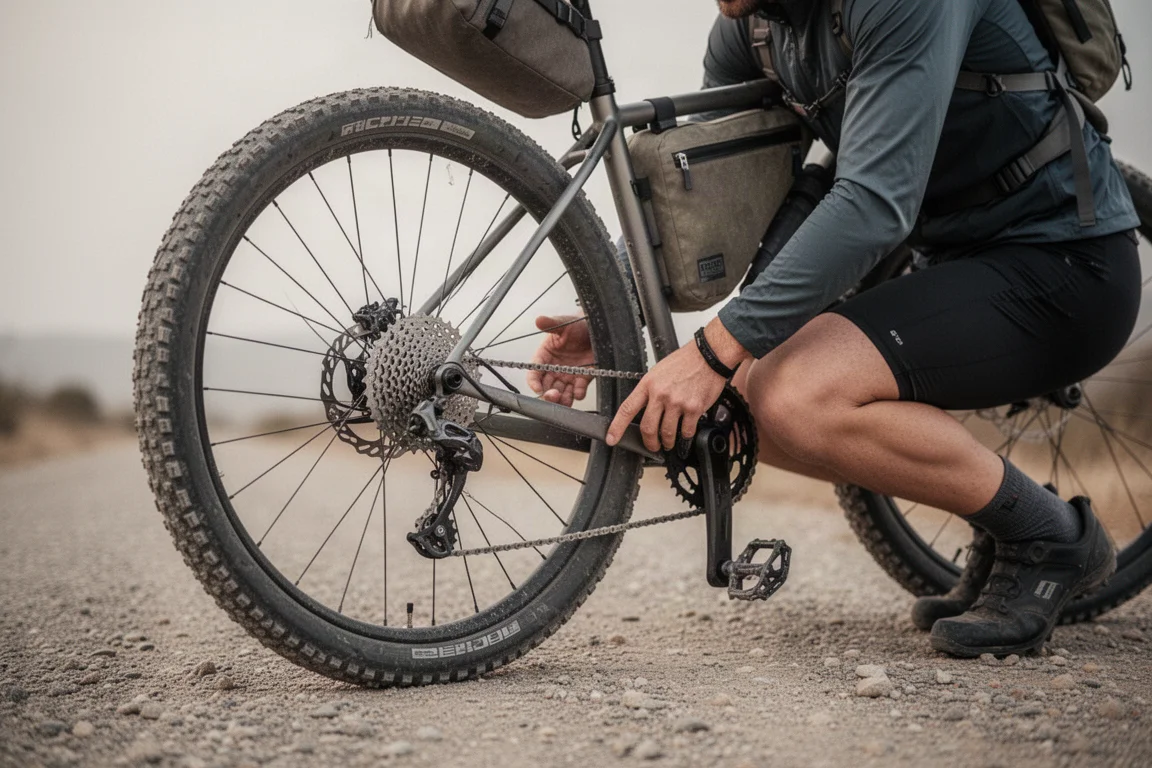
The build used SRAM Rival AXS Explorer, a gravel-specific wireless electronic drivetrain with a 10-44 tooth cassette and a 42 tooth chainring. Shifts were reliable throughout and never missed a beat, even while mashing up and down the block, though there is a slight delay between pressing the shifter and the derailleur moving, which is noticeable when riding against the clock. A single-sided power meter is fitted, and the Rival brakes were tested hard on repeated fast approaches into gates. Tires were Maxxis Ramblers in 700 x 50c with 120 TPI casings and EXO sidewall protection, run tubeless, and they held up without punctures or sidewall cuts on rough ground.
Buying Advice
The right answer depends on what you value most on mixed terrain.
If descending fun and all-day comfort are the priorities, a hardtail mountain bike like the Fairlight Halt is the sensible pick. Wide tires and front suspension provide control on fast descents that a gravel bike cannot match, while the steel frame keeps the ride comfortable over long distances. It is also the least demanding option if you want to enjoy the route rather than race it.
If you want to travel quickly across rough ground and still have suspension at both ends, the Specialized Epic EVO Expert is the more capable speed machine. It climbs efficiently, locks out for road sections, and feels composed well beyond its travel figures. The trade-offs are tire drag on tarmac, a slightly short top gear, and the simple fact that a full suspension bike is more machine than a flat road section needs.
If you want one bike that covers gravel and a lot of trail without going full mountain bike, the Lauf Seigla is the standout. It is fast, light and confident on descents, and it holds speed when you need to eat up miles. It is not perfect, and on longer road stretches the suspension bob and the electronic shift delay are mildly frustrating, but for balancing speed and control over mixed terrain it is hard to beat.
Conclusion
No single bike is perfect for a route this varied. For anyone who wants to enjoy the descents, stay comfortable through a long day, and cover ground safely, a hardtail mountain bike remains the most pragmatic choice. Riders whose priority is raw pace across rough ground will get more out of a lightweight full suspension cross-country bike. And riders who want most of that capability in a lighter, faster package will find the mountain-bike-leaning gravel bike the most rewarding compromise of the three.
Further reading
Related Reviews
Cycling Bikes
Best Bikes by Budget 2026: What £1,000, £3,000 and £5,000 Buys
A practical guide to the bikes worth considering at three price points, from aluminum gravel bikes to carbon road machines, with the trade-offs explained.
Cycling Bikes
10 Road and Gravel Bikes Worth Knowing: Workshop Favorites
Ten road, gravel and all-road frames that hold up in daily workshop use, from Italian stainless steel to titanium, steel and hand-woven carbon.
Cycling Bikes
Best Road and Gravel Bikes: Eight Standout Models Worth Considering
A practical look at eight road, endurance and gravel bikes that stand out, with the strengths, trade-offs and value notes worth checking before you buy.