Workshop Tools
Best Budget Belt Grinder/Sanders Compared: Vevor, Bauer, and Buck Tool
Three affordable combo belt grinder/sanders put through the same tests to see which one earns a spot on your bench.
Introduction
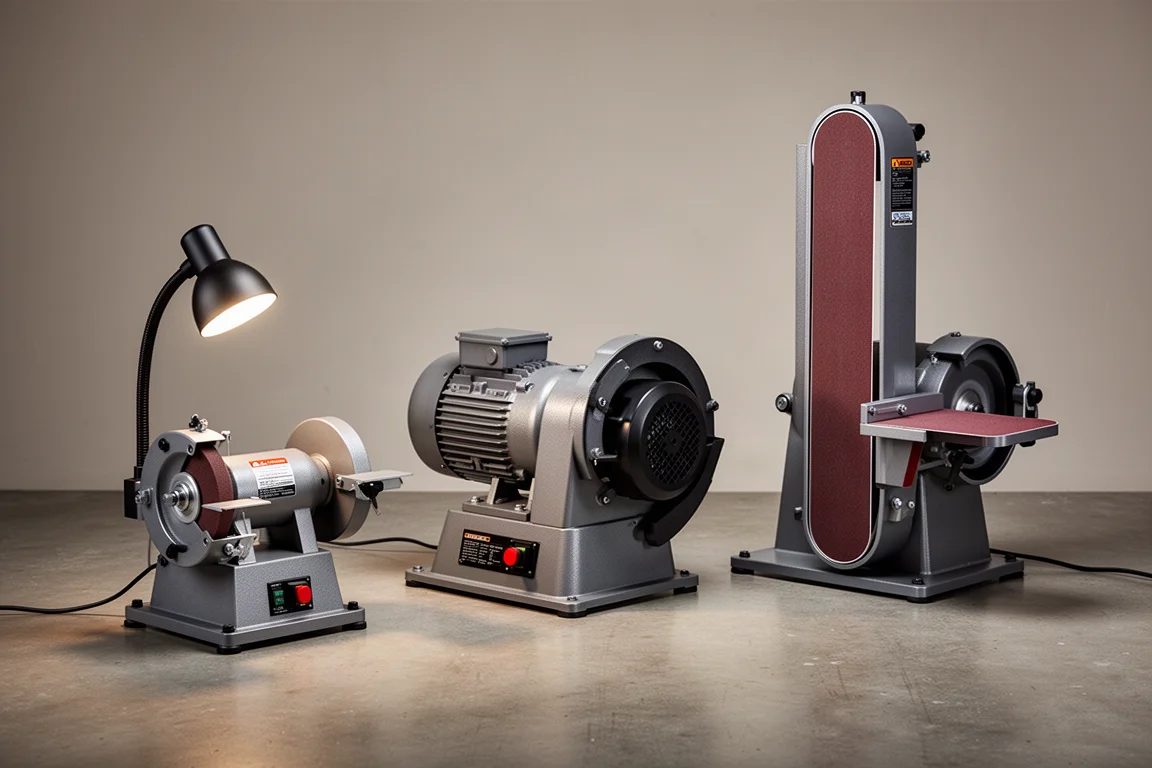
Combo belt grinder/sanders fill a useful niche: one machine that does belt sanding and wheel grinding in a small footprint, without the price of a full knife-making grinder. Three contenders cover this space well: the Vevor 6-inch 2x28, the Bauer 8-inch 2x28 from Harbor Freight, and the Buck Tool 2x42. All three were put through the same tests, grinding the same stock with matching 80-grit belts where possible, to see which one actually deserves your money.
One note that applies to all of them: none of these machines is really a great woodworking tool. If belt sanding wood is your main goal, a dedicated oscillating belt sander such as the WEN or Harbor Freight oscillating models, or a Grizzly, Triton, or Ridgid unit, will generally serve you better. These combo machines make the most sense for metal work, light fabrication, and blade work.
Vevor 6-Inch 2x28 Belt Grinder/Sander
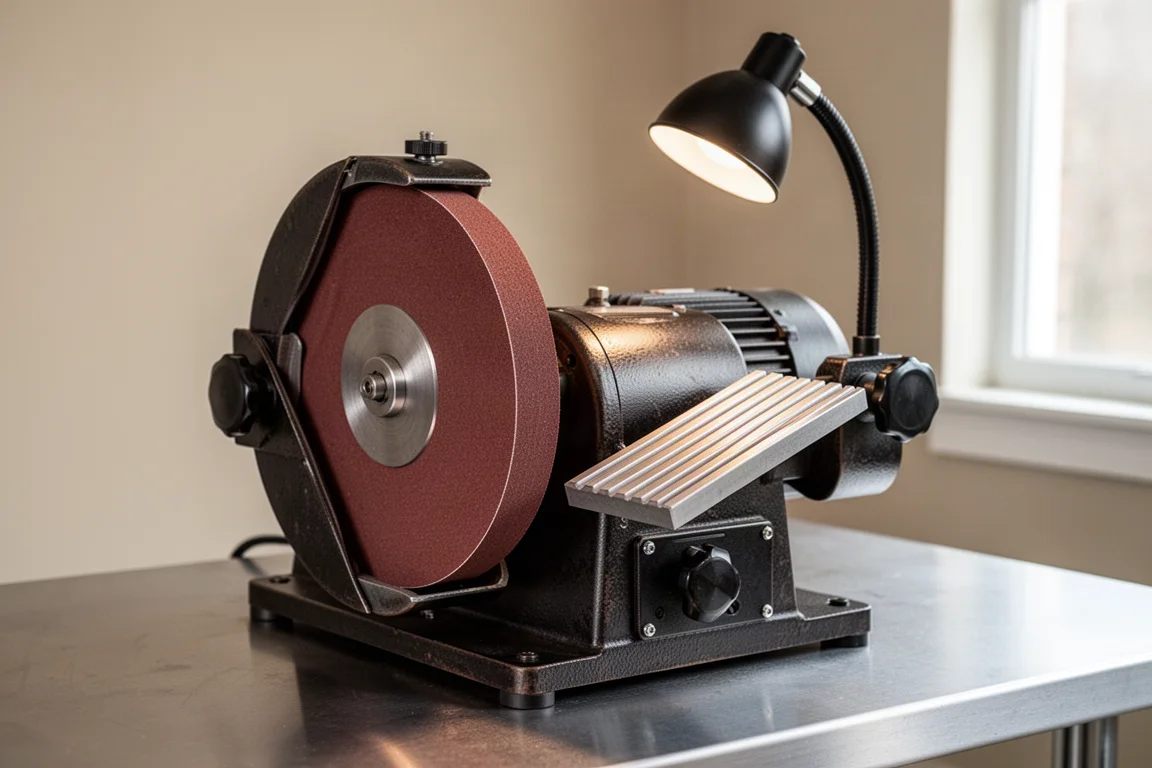
The Vevor is a basic, simple six-inch grinder with a 2x28 belt. It includes a gooseneck light housing, though no bulb came with it, and the small cooling tray and dust catcher shown in the listings were missing from the package. On the plus side, it is cheap, and it stayed planted on the bench even without being bolted down.
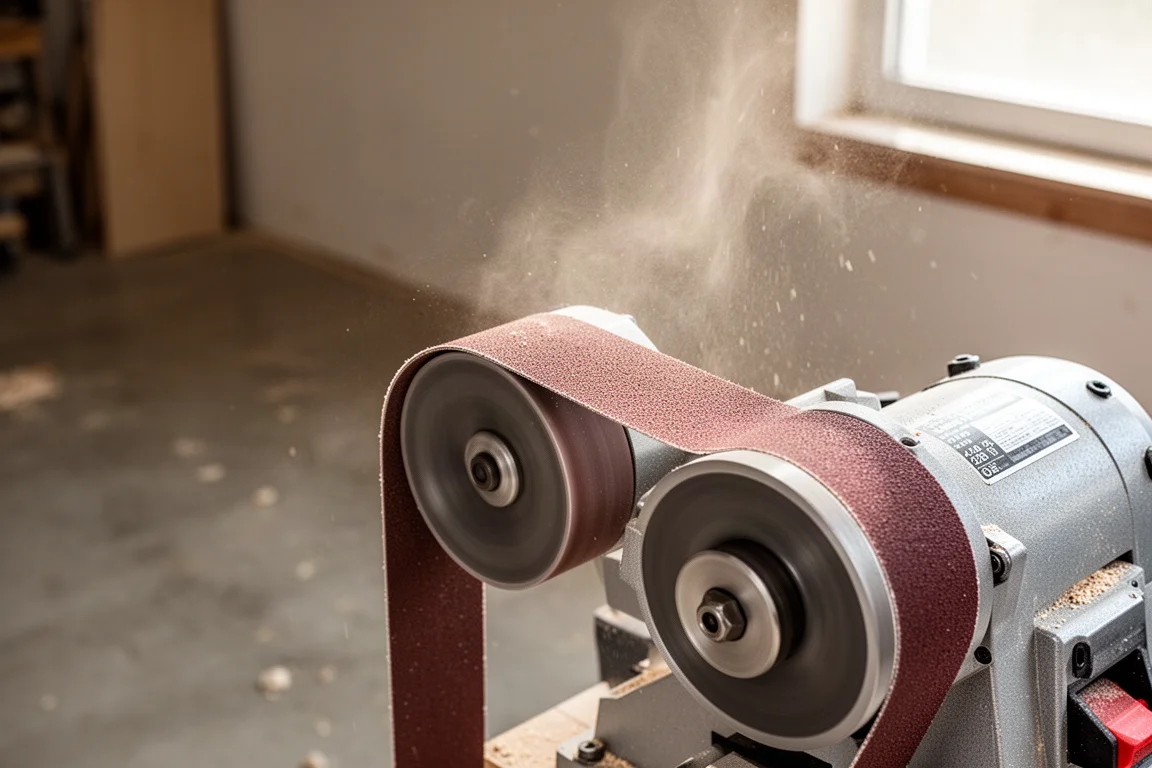
There are real annoyances, though. The unit rests on its mount no matter how much you tighten it, the assembly bolts are all on the inside where they are hard to reach, and the belt tension release handle sits behind a side plate that has to come off before you can access it. The tool rest is small, and the machine stalls fairly easily under pressure. The grinding side performed better than the belt side. At around $153 for a 250-watt (roughly one-third horsepower) motor, the value is there, but the quality control is a lottery: you might win one, you might lose one. And unlike buying locally, sorting out problems with Vevor directly is more difficult.
A practical tip if this is still the machine for you on a tight budget: the identical machine is sold on Amazon under the Happybuy name, and buying that version gets you Amazon’s customer protection if something arrives wrong.
Bauer 8-Inch 2x28 Belt Grinder/Sander
The Bauer is a noticeably beefier machine. It runs a larger motor, an eight-inch wheel, and the same 2x28 belt as the Vevor, with a very similar but not identical mechanism. In the tests it was simply fast, cutting through the wood stock with impressive speed, and it took real effort to get it to feel stressed. The claimed motor is around three-quarters of a horsepower, and it feels like it.
The details are mostly thought through. The dust collector comes included. The belt release actually works while the unit is assembled, unlike the Vevor’s. The gooseneck light comes with a working light in it, and everything advertised in the box actually arrived. The tool rest is much better: angled, grooved, and well suited to sharpening drill bits and chisels. The shield is better too.
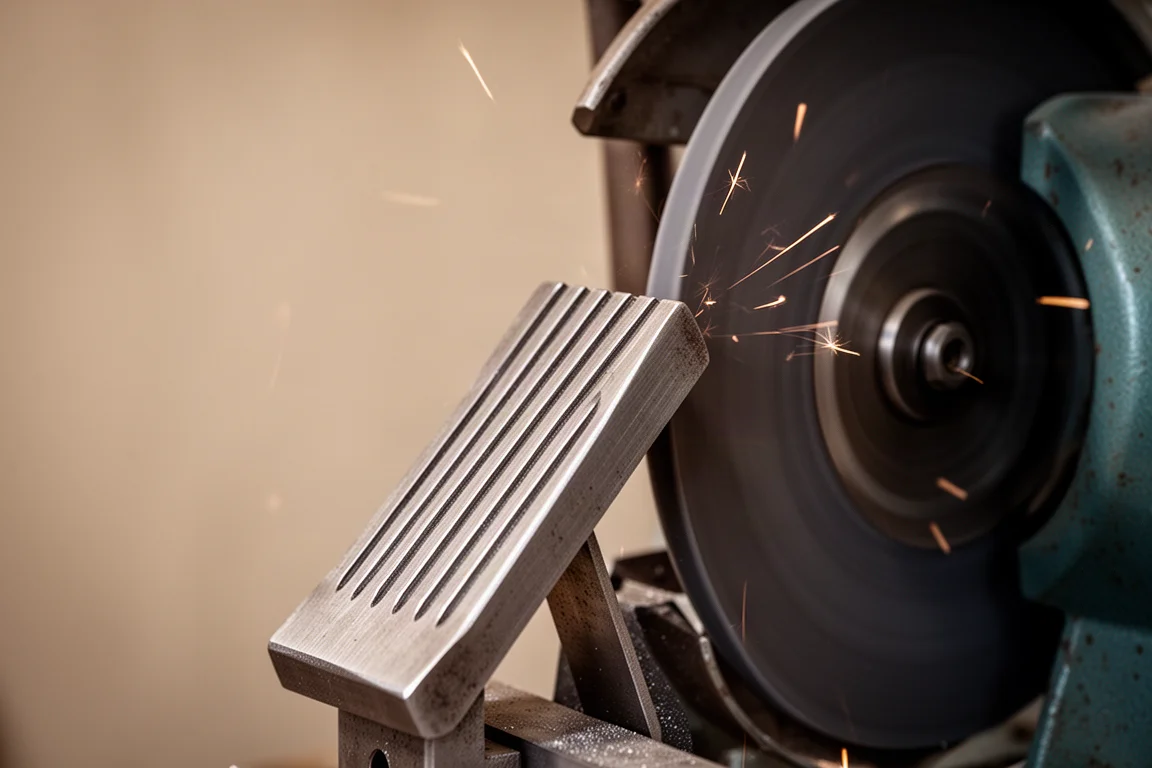
The main quibble is a plate that overlaps the edge of the work area and wants to sit over wider pieces; you will want to adjust or modify it back. The tool rest is not interchangeable, so flat grinding on the rest side is awkward, though a homemade rest would fix that. Belt selection for aggressive metal work in 2x28 is also thinner on the ground than in other belt sizes, which matters if you plan to push hard work onto it.
Buck Tool 2x42 Belt Grinder/Sander
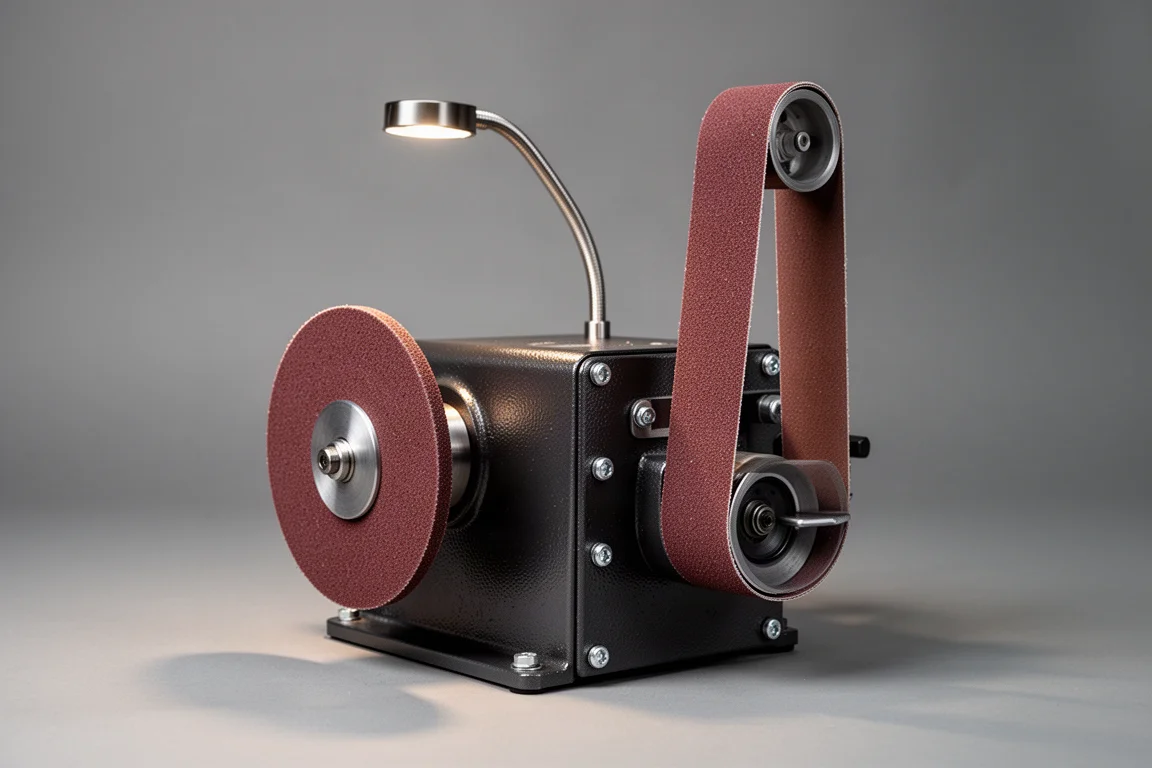
The Buck Tool is the big brother of the bunch. The motor is honestly similar in size to the Vevor’s, listed at one-third horsepower, but it felt stronger than the Vevor in use: it took serious force to try to stall it, and the wheel did a great job, likely helped by a more aggressive abrasive. The belt is the key difference, running a much longer 2x42, which opens up a far wider range of aftermarket belts.
It is also the most feature-rich. It comes with two rests, a woodworking rest and a beefy, nicely made metalworking rest, and a safety lock on the switch. Belt tension release and tracking adjustment are accessible without disassembly, lowering the plate is a simple two-bolt job, and a solid stand on the back keeps it level and stable in the horizontal position.
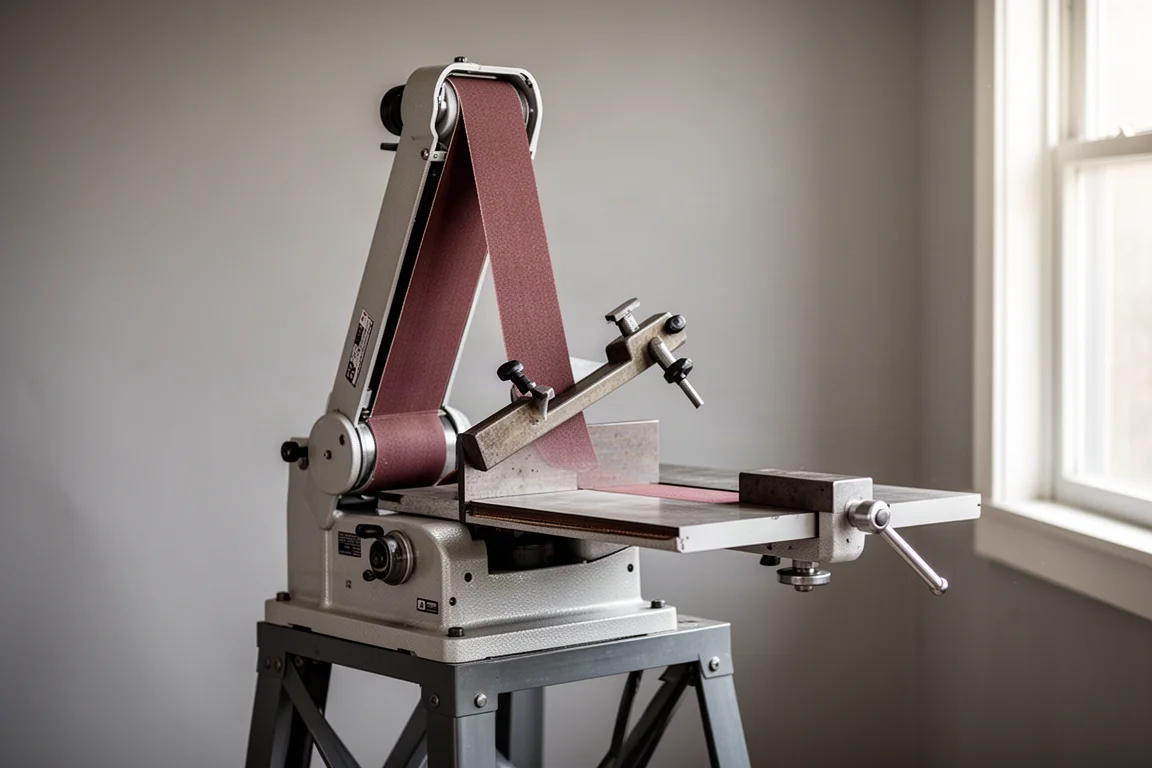
Not everything is perfect. The wheel shield was missing from the packaging, and the light is a small LED unit that runs on a couple of AAA batteries, which feels under par for the machine. It is frequently recommended as a great entry-level option for knife making, and that is exactly where the 2x42 belt ecosystem shines: finding high-quality, aggressive belts is far easier than in 2x28. If you want one machine that can grow with blade work and general metal tasks, this is the strongest pick of the three.
Which One Should You Buy?
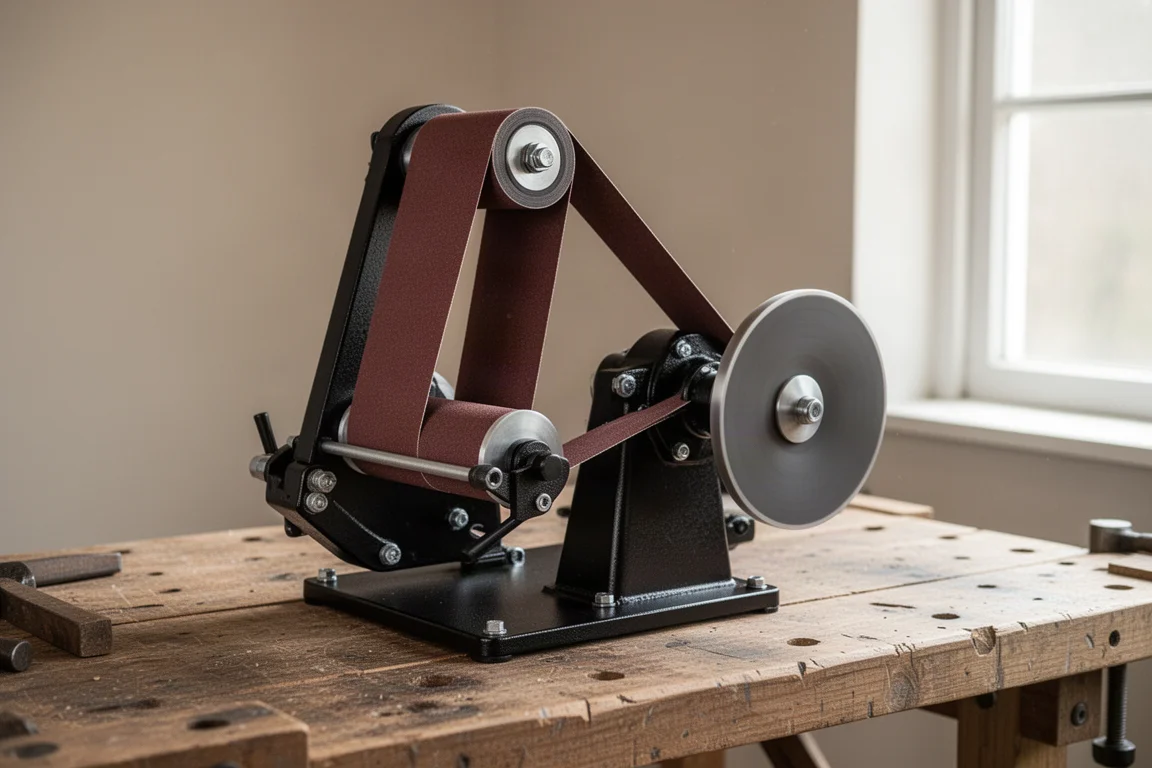
If money is the only constraint and you accept the quality lottery, the Vevor is the cheapest entry, but consider the identical Happybuy version on Amazon for buyer protection. If you want raw performance per dollar in a 2x28 platform, the Bauer was the standout: powerful, complete in the box, and well detailed. If knife making or serious metal work is the goal, the Buck Tool’s 2x42 belt, dual rests, and accessible adjustments make it the most capable and most expandable.
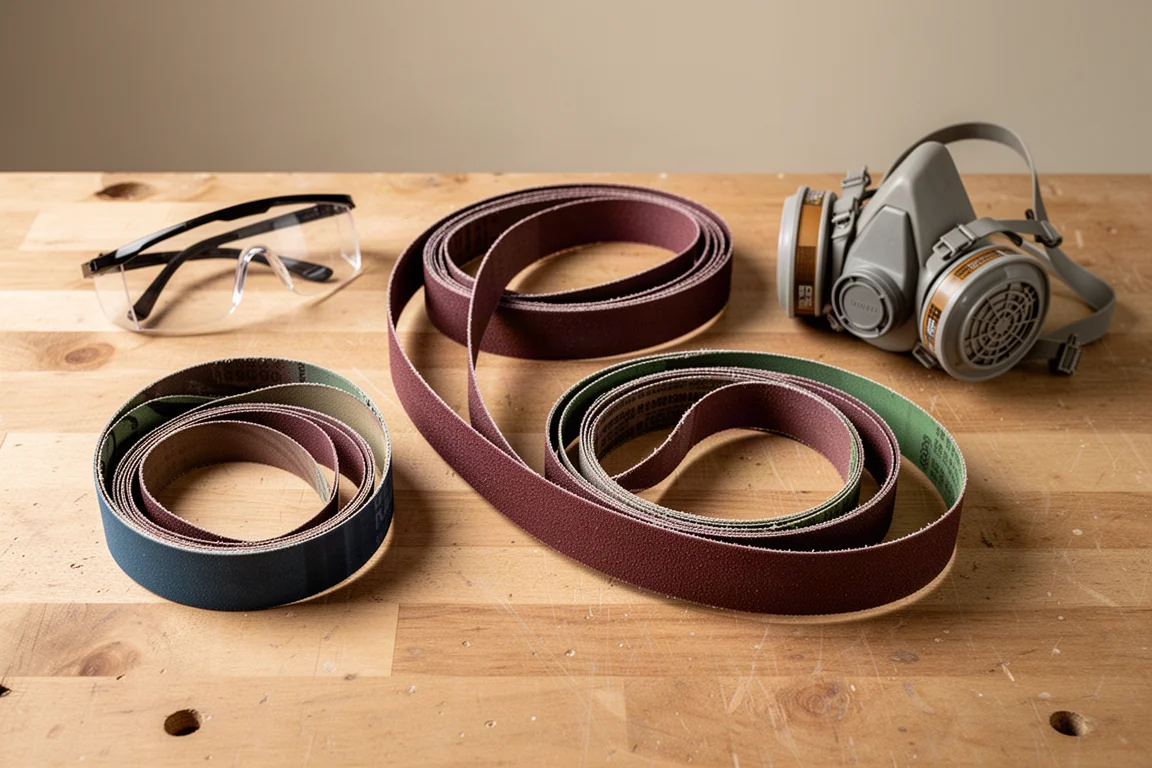
Belt availability is worth repeating before you commit. Aggressive 2x28 belts for metal work are harder to find in good quality, while 2x42 has a deep aftermarket. Whatever you choose, wear eye protection and a respirator when grinding, and remember that none of these machines is a real substitute for a dedicated woodworking belt sander.
Conclusion
The Bauer delivers the best all-round performance and completeness for the money, the Buck Tool is the best choice for anyone eyeing knife making thanks to its 2x42 belt and thoughtful hardware, and the Vevor only makes sense as a rock-bottom budget buy, ideally through a channel with easy returns. Match the machine to the work you actually do, and any of them can earn a place on a small bench.
Further reading
Related Reviews

Workshop Tools
Best Drill Tap Sets 2026: Top Picks Tested for Speed and Strength
We tested 17 drill tap sets to find the fastest drilling, strongest threading, and most durable options for your workshop.

Workshop Tools
Cool Shop Tools 2026: Five Clever Upgrades Worth a Closer Look
A practical look at five workshop tools that solve real problems, from smarter drill bits to a safer table saw guard.

Workshop Tools
Cool Tools for the Workshop: Five Smart Upgrades Worth Trying
A practical look at five workshop tools that make measuring, drilling, marking, and sawing easier, from a clever square to a top-tier bandsaw fence.