Telescopes
Best Beginner Telescopes: Apertura AD8 Dobsonian vs ZWO Seestar S30 Pro vs Askar 71F
Three beginner-friendly telescopes, three very different astronomy experiences. Here is how each one performed on the moon, Jupiter, and the Orion Nebula.
Introduction
Not every beginner wants the same thing out of amateur astronomy. Some people dream of leaning into an eyepiece and taking in the view. Others want a device that finds and shows deep sky objects on a phone screen in minutes. And some already know they want to capture and process images of nebulae.
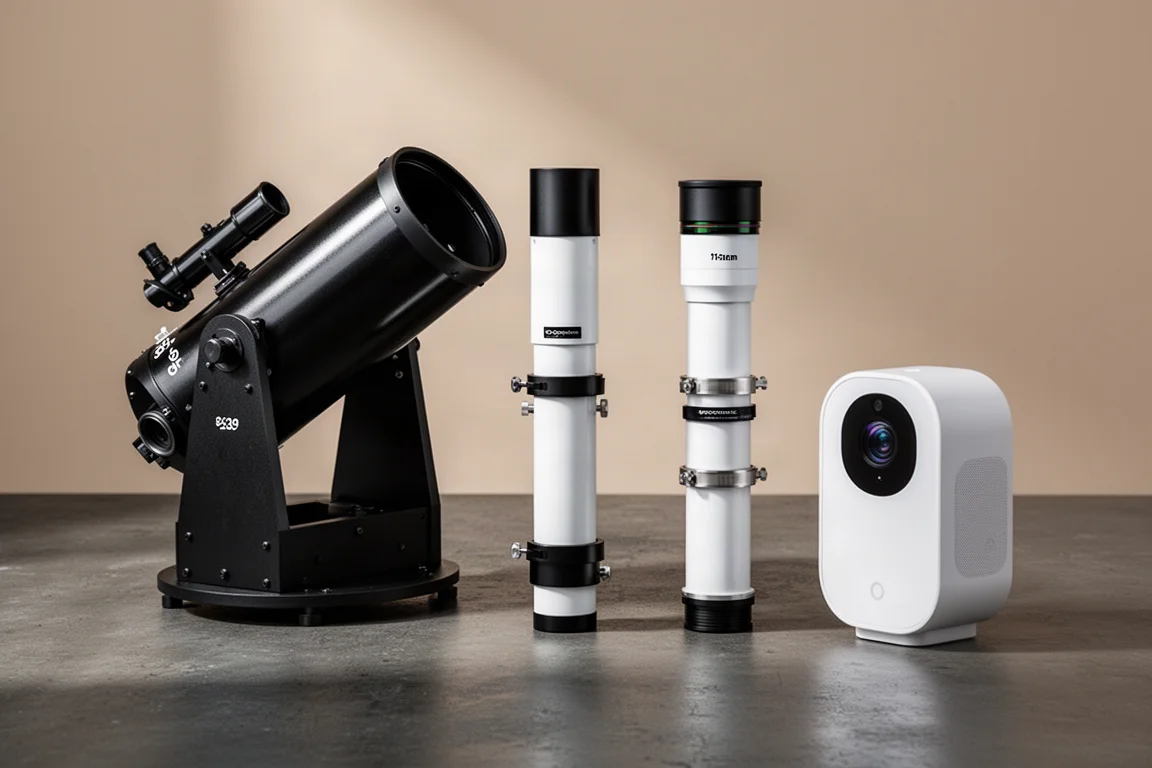
This comparison looks at three telescopes that map neatly onto those three experiences: the Apertura AD8 8-inch Dobsonian for classic visual astronomy, the ZWO Seestar S30 Pro for electronically assisted astronomy (EAA), and the Askar 71F refractor for serious deep sky astrophotography. Each was put through the same practical tests on the three best beginner targets: the moon, Jupiter, and the Orion Nebula, observed from a dark Bortle 3 sky.
How the Three Experiences Differ
Visual astronomy means looking directly through an eyepiece. Electronically assisted astronomy uses a camera instead of an eyepiece, stacking the image live so you can watch the night sky develop on a screen with no additional processing. Astrophotography goes further: many frames are captured, then stacked and processed on a computer, where processing becomes a large part of the hobby and the learning curve.
Understanding which of these you actually want is the single most important buying decision here, because each of these three telescopes excels at a different one.
The Moon: Where Aperture Wins
The moon is the ideal first target for any beginner. It is the brightest object in the night sky and delivers a great view through every kind of telescope.
Visually, the 8-inch Dobsonian was the favorite. It offers the most detail, with no false color like refractive optics can introduce, and with a stool it is the most comfortable of the three for extended viewing. Once magnification is pushed up, you can really study fine crater detail for a long time. One caveat: on a nearly full moon, the view through a big fast Dobsonian is uncomfortably bright without a filter. A variable polarizing filter darkens the image by rotation without shifting color, and it also works well on Jupiter for seeing the planet’s true color. Apertura includes a moon filter with the telescope, though it turns the view slightly green.
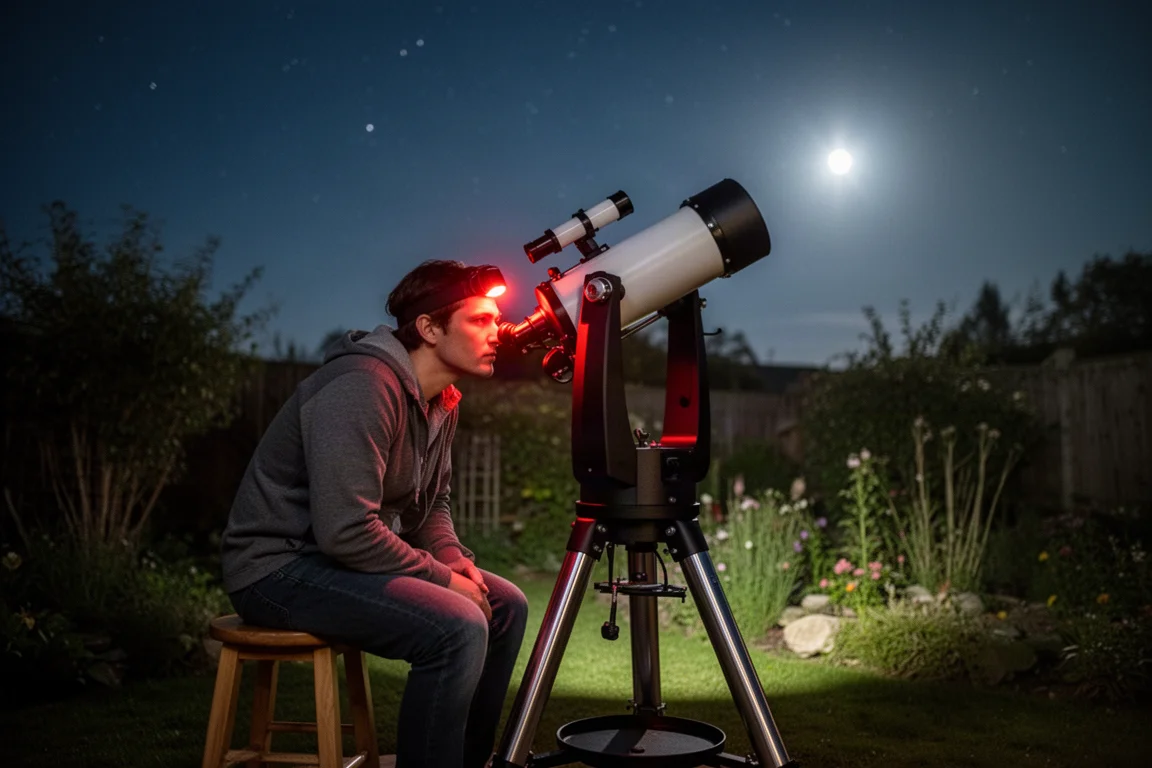
For EAA, nothing was easier than the Seestar S30 Pro. You turn it on, tell it to go to the moon, it finds and autofocuses, and you watch a live video on your phone, with 2x and 4x zoom for closer views. On a cold night, that simplicity is worth a lot.
Jupiter and the Planets: A Clean Sweep
The 8-inch Dobsonian won every category on Jupiter, and the reason is simple: aperture is king for planetary viewing and imaging.
At the eyepiece with an 8mm eyepiece, the Dobsonian showed the cloud bands plus real variation in surface color, with a noticeably more 3D feel than the refractor, whose view of Jupiter looked slightly flat with a touch of color fringing around the planet’s edge. Through the Seestar’s binocular add-on, the Galilean moons were easy to see but there was no surface detail at all.
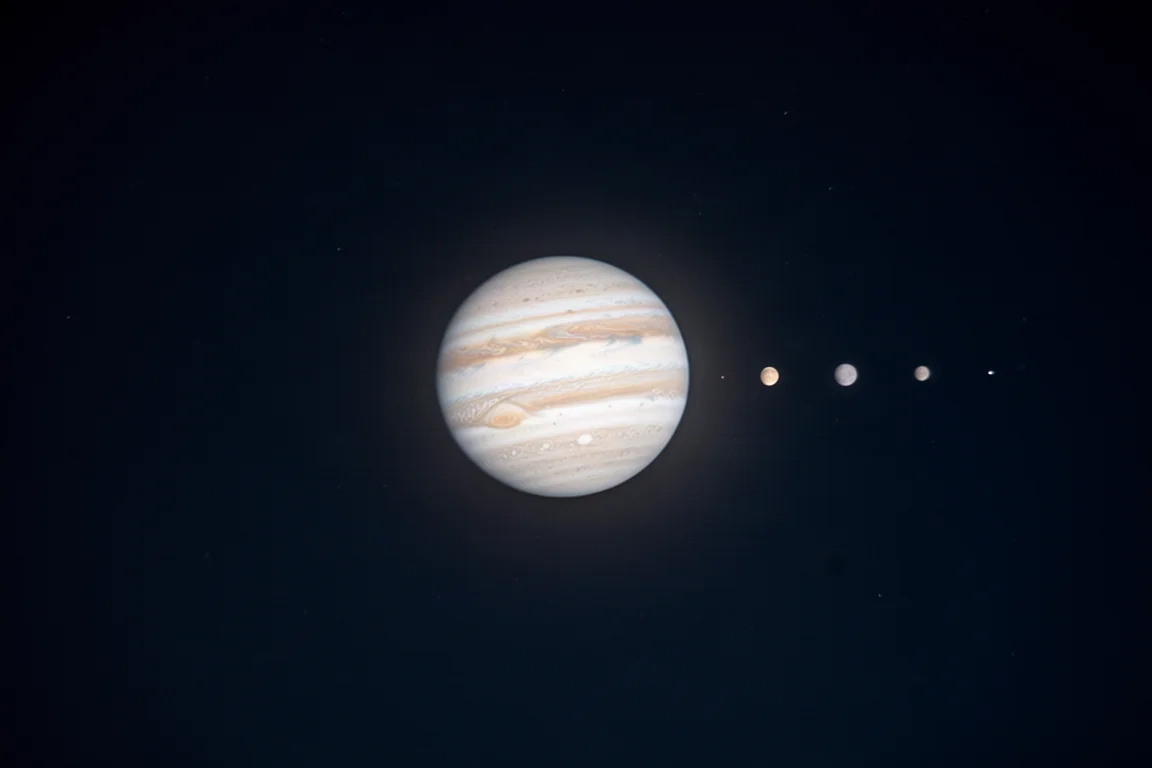
For planetary imaging, the best practice is recording a high frame rate video and stacking the best frames, sometimes called lucky imaging, to beat atmospheric seeing. The Dobsonian’s 203mm of aperture clearly outperformed the 30mm and 71mm options here. The Seestar can observe Jupiter’s moons, but it is simply too small to resolve surface detail on the planets.
View more details for ZWO Seestar S30 Pro
Deep Sky: The Orion Nebula Test
Observed from a dark Bortle 3 sky, the Orion Nebula revealed each telescope’s true character.
Visually, the Dobsonian was again the winner. With a zoom eyepiece it was easy to spend half an hour at different magnifications, and over time subtle color variations appeared: greens and reds, rich nebulosity, and a clearly visible Trapezium cluster. The 71mm refractor showed much of the same structure but with some detail missing, a flatter feel, and a mostly gray appearance. The Seestar’s binocular view offers a much wider field of view, which makes the nebula less prominent but fun to see in the broader context of surrounding stars, especially switching quickly between naked-eye and binocular views.
For EAA, this is where the Seestar S30 Pro really shines. Within a few minutes of switching it on, you get a beautiful live-stacked view of the Orion Nebula on your phone that keeps improving for the next twenty minutes as you watch. For anyone brand new to astronomy, nothing is easier for electronically viewing deep sky objects.
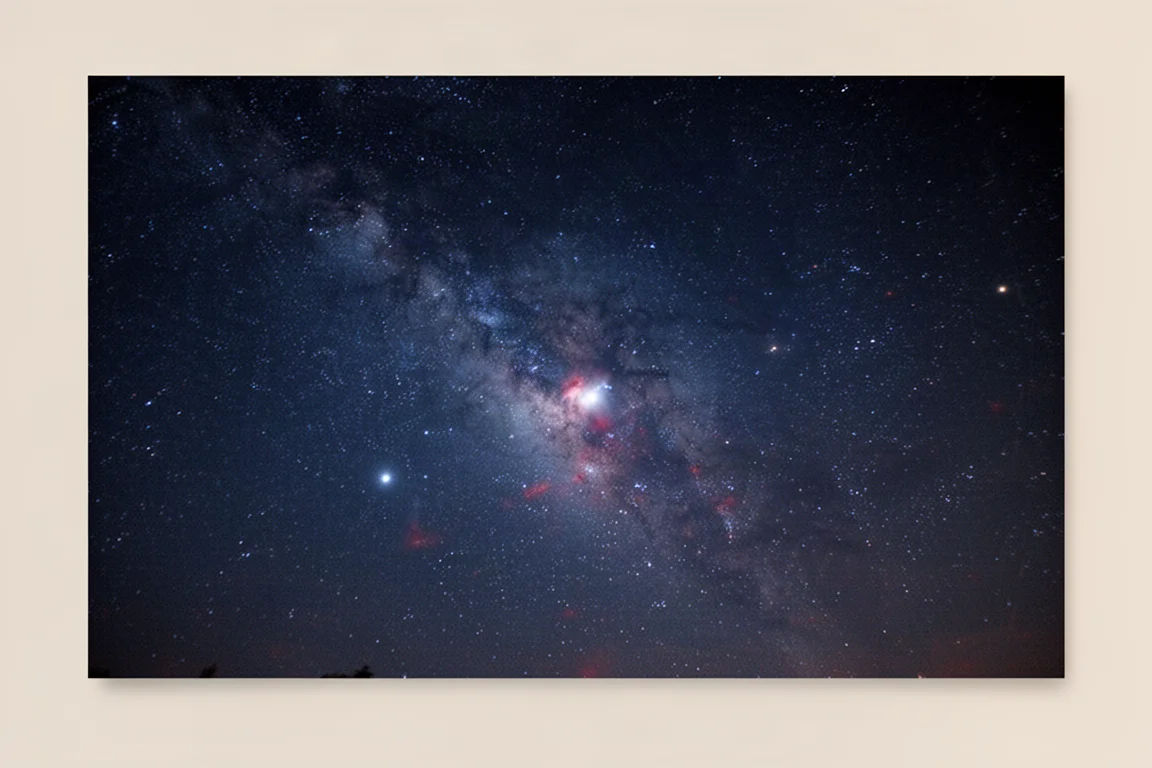
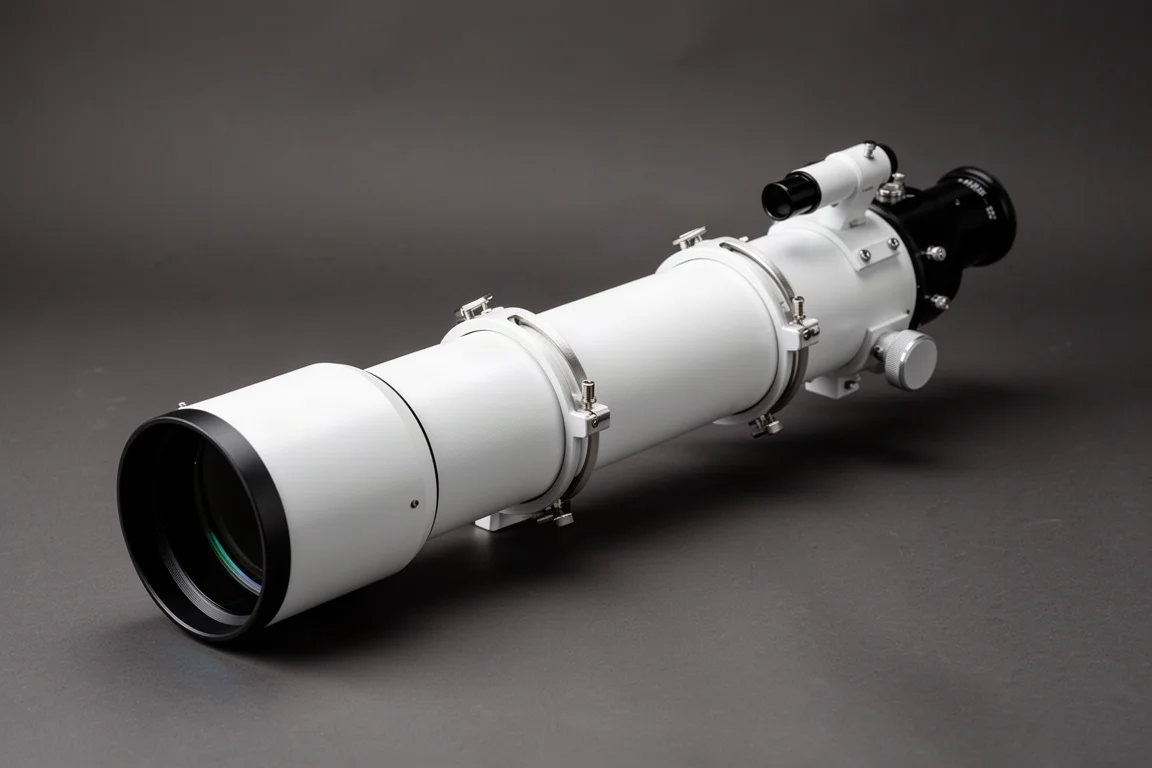
For astrophotography, the Askar 71F on an equatorial mount is the specialist rig built for exactly this, and it produced the best final stacked images. The Seestar S30 Pro was a respectable second, especially in EQ mode for longer exposures. The Dobsonian was the least favorite experience here: it is hard to use for deep sky and limits camera choice, since DSLRs cannot easily reach focus without a barlow lens. Using a mirrorless camera with a low-profile T-adapter, very short exposures, and manual recentering about every ten seconds, roughly 270 frames at 0.4 seconds each produced a surprisingly good result, but it still could not match the refractor or Seestar.
Prices and Total Cost of Ownership
The Seestar S30 Pro is currently on pre-order sale for $549. The binoculars add $69, and the EQ tripod head with the better tripod adds $149, putting the full Seestar route somewhere between $549 and $770 depending on accessories. That makes it the budget-friendly option for astrophotography-style results.
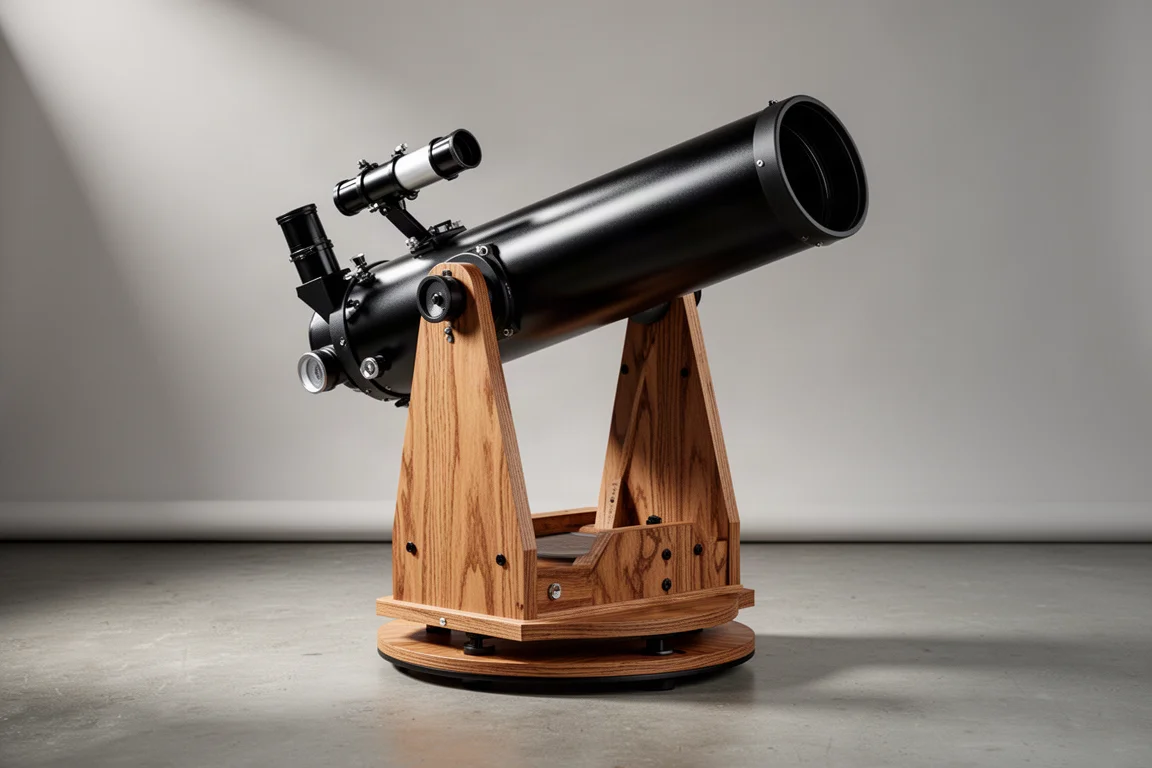
The 8-inch Dobsonian is currently on sale for $699 and includes two eyepieces, a laser collimator, a right angle finder scope, and the mount, so it is complete for visual astronomy out of the box. Adding a stool and a zoom eyepiece brings it to roughly $850. If you want to do photography with it, expect to add around $300 for a planetary camera, and possibly $500 for a laptop.
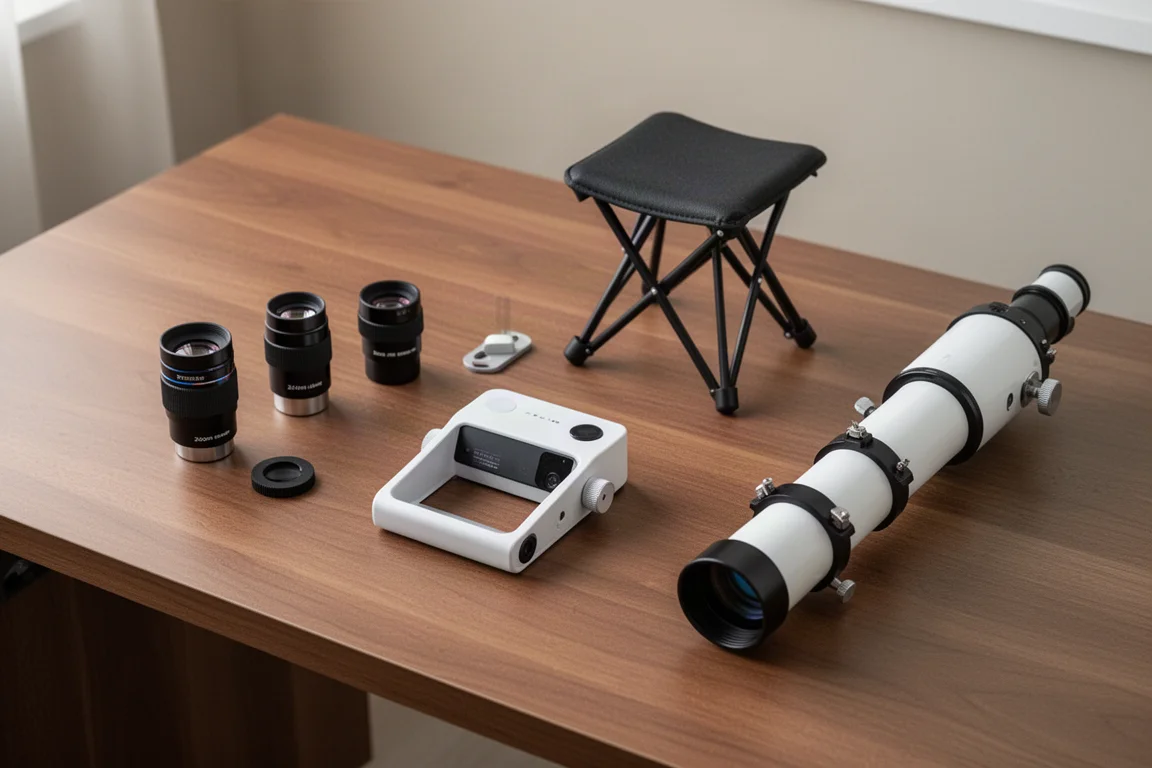
The Askar 71F has a base price of $659, including the telescope, rings, mounting gear, two eyepieces, and an erecting prism, but no mount. Adding a basic alt-az mount and tripod brings visual use to around $900. For astrophotography, which is what this telescope is really meant for, a minimum setup with a Sky-Watcher EQAL55i mount at $845, plus a camera, guide setup, and an ASIAir, comes to roughly $2,300. That is a serious investment for a starter setup, but the components hold a fair amount of value on the used market, and the rig can be upgraded piece by piece over time.
Which One Should You Buy?
If you want the richest, most comfortable views through an eyepiece, especially of the moon and planets, the Apertura AD8 is the clear choice. If you want to see a lot of cool objects quickly through your phone or tablet with zero fuss, the Seestar S30 Pro is the smart, app-controlled option that just takes care of everything. And if deep sky astrophotography is the goal, the Askar 71F is the right starting point: at 490mm focal length it has enough reach for popular deep sky targets while staying small and light enough for a mount under $1,000, and it can be built upon for years.
View more details for Apertura AD8 8-inch Dobsonian
Conclusion
These three telescopes are not really competitors so much as three different doors into the hobby. The Dobsonian wins on visual astronomy and planetary performance, the Seestar S30 Pro makes EAA effortless, and the Askar 71F is the natural home for deep sky astrophotography. Match the telescope to the experience you want, and any of these three is a great place to start.
Further reading
Related Reviews

Telescopes
Sightron SJ75 UF and Sky-Watcher HS125: Two Telescopes Worth Watching
A look at two notable telescopes from a recent camera and optics expo: a sharp new astrograph from Sightron Japan and a compact fast reflector from Sky-Watcher.

Telescopes
SV503 102ED Review: A Budget 102mm Refractor That Surprises
The SV503 102ED is an affordable 102mm doublet refractor that delivers surprisingly decent star shapes and a smooth focuser, despite some chromatic aberration and light falloff.

Telescopes
SVBony MK127 Review: A Compact Maksutov-Cassegrain That Surprises
The SVBony MK127 is a 127mm Maksutov-Cassegrain telescope with a unique 0.65x reducer, making it a versatile option for visual astronomy and even some deep-sky imaging.