Power Tools
Best Battery Framing Nailers Compared: Milwaukee, AEG and Ryobi
Three battery framing nailers from the same parent company go head to head on power, penetration, recoil and everyday usability.
Introduction
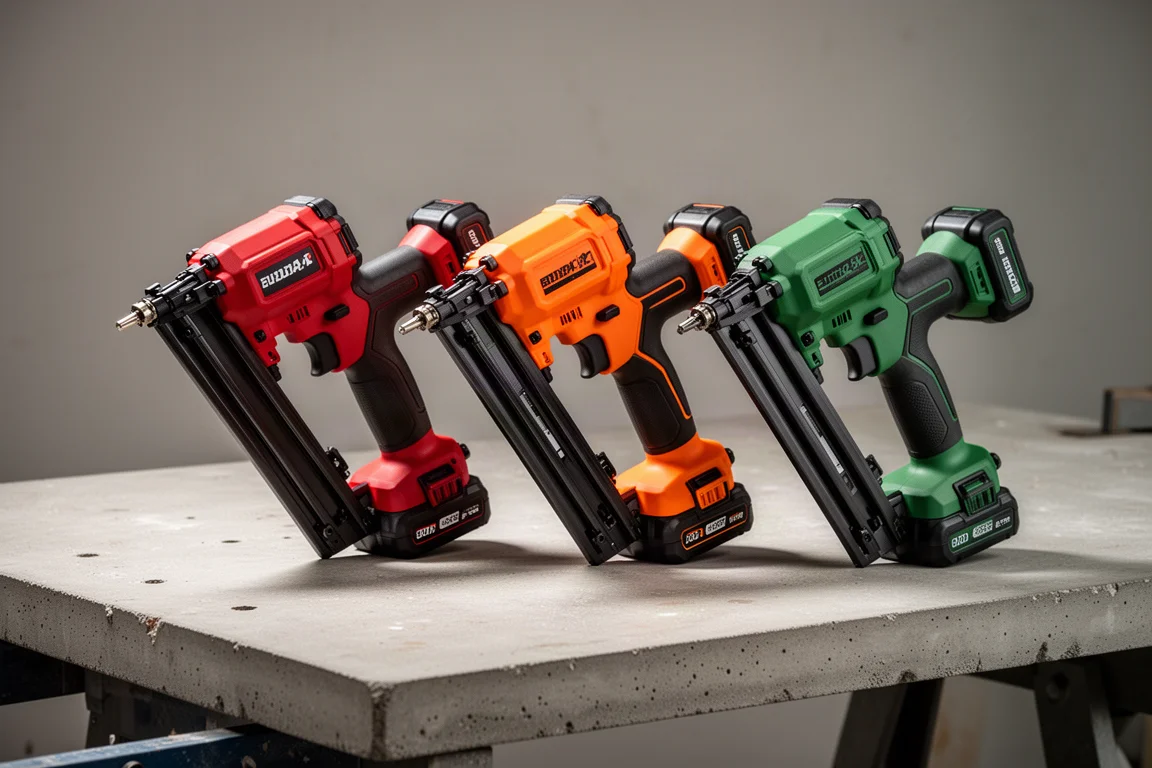
Battery framing nailers have come a long way, and three of the most interesting options on the market happen to come from the same parent company, Techtronic Industries. Milwaukee sits at the pro end, Ryobi covers the DIY bracket, and AEG (sold as Ridgid in the US) slots in between as a high-end DIY or entry-pro tool. In practical terms, that puts roughly a $100 jump in price between each step up, though pricing varies around the world.
All three are very good nailers. The question is not really whether any of them can do the job, but which one suits the way you work. This comparison looks at shared features, then digs into the differences: design, handling, penetration depth, recoil and the small details that matter over a long day on site.
What All Three Nailers Have in Common
The shared DNA is extensive. All three take 90 mm framing nails at a 30 to 34 degree angle, fire them with the same ear-piston type system, and will drive nails from 50 mm up to 90 mm (2 to 3.5 inches). Each one comes with a belt hook on one side, a rafter hook on the other, and a no-mar tip included in the box.
Weight is remarkably close across the range. All three land around 4.4 kg with a 6 amp-hour battery fitted, with the AEG the lightest by just 10 g, the Ryobi in the middle, and the Milwaukee the heaviest by another 10 g. None of them are light, but that is simply where the current technology sits for cordless framing.
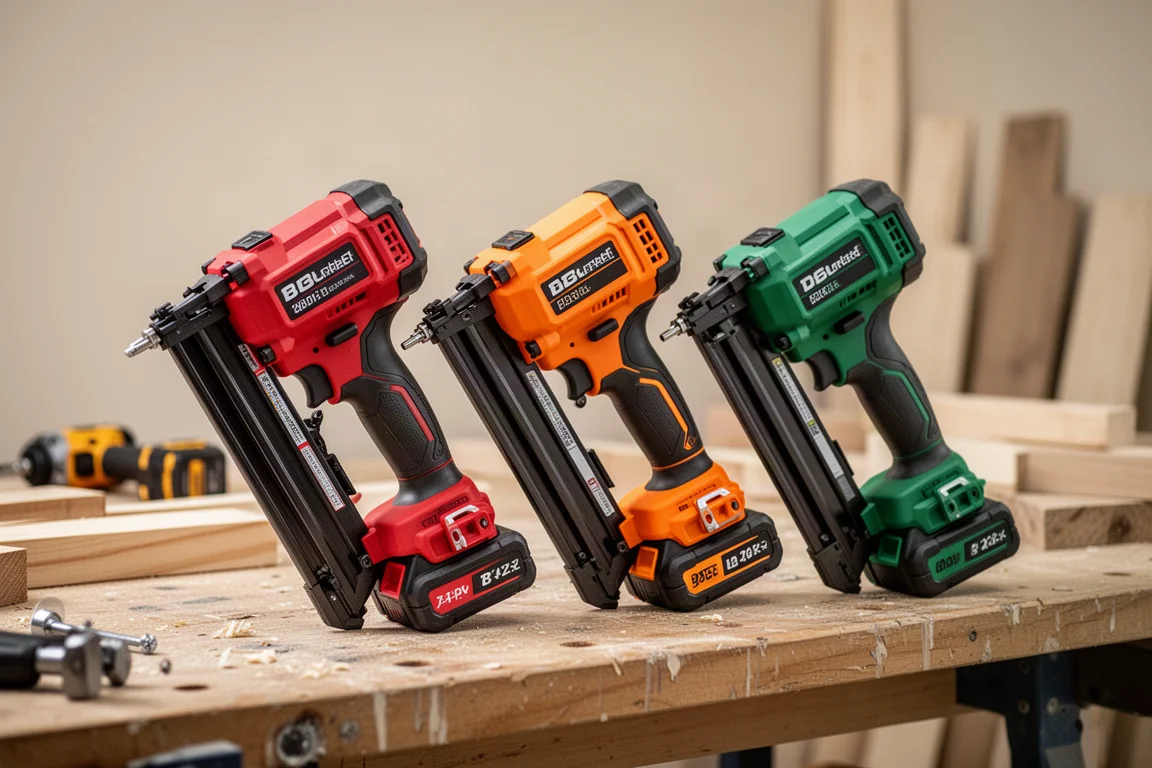
Magazine loading works the same way on all three: slide the nails in from the back, pull the lever forward, let it go, and the spring pushes them into place. In short, these are siblings with different price tags, and the real differences start with the Milwaukee.
Milwaukee Framing Nailer: The Premium Option
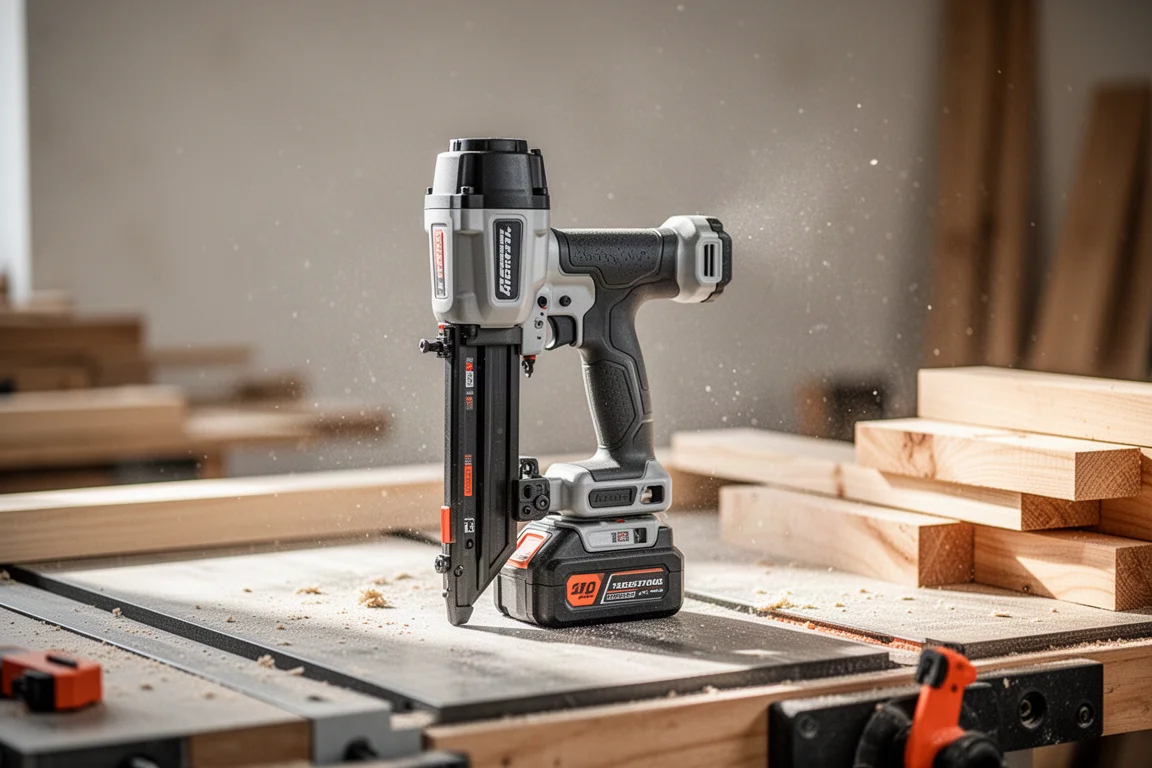
Pick the Milwaukee up and it immediately feels the most solidly built of the three. It is slimmer and less tall and chunky than the other two, which makes it easier to work into tight angles and confined spaces. The nose design is noticeably different too, with a thin, distinctive work-contact tip compared to the round tips on the Ryobi and AEG.
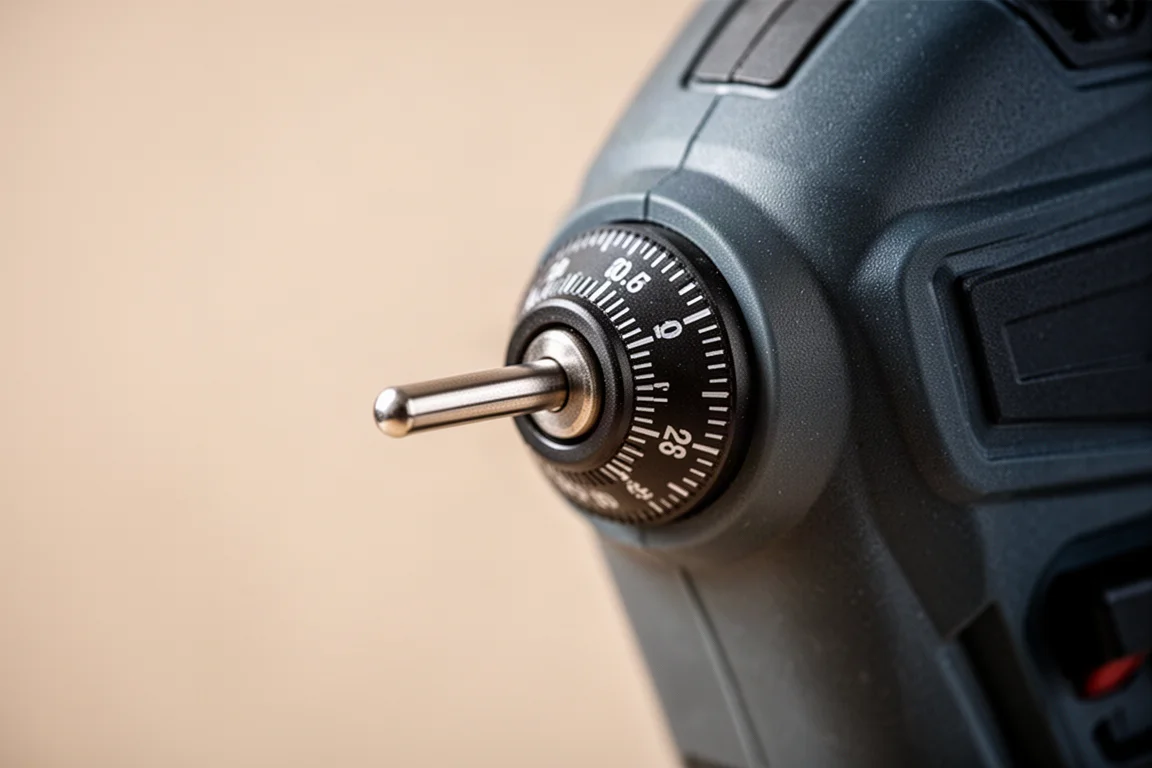
Unloading nails is also easier here: there is nothing at the back of the magazine to stop them sliding straight out, whereas the Ryobi and AEG require you to push in a small metal tang first. The Milwaukee does have a slightly better depth adjustment dial for setting your drive depth.
The trade-offs are small but real. You have to press the power button for a few seconds to turn it on, and while it stays on for a long time, it is not as convenient as the pick-up-and-go activation on the other two. It also will not balance upright on its battery the way the Ryobi and AEG do, sitting at a slant that always looks like it is about to topple over.
AEG Framing Nailer: The Middle Ground
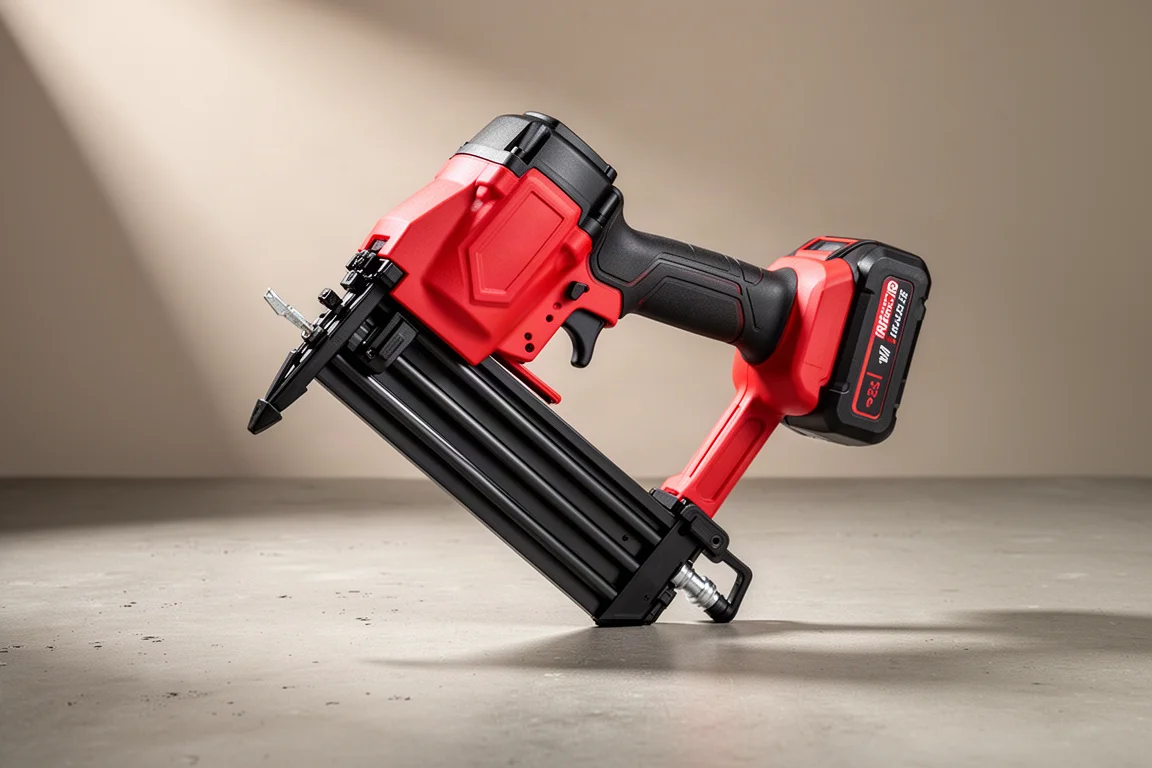
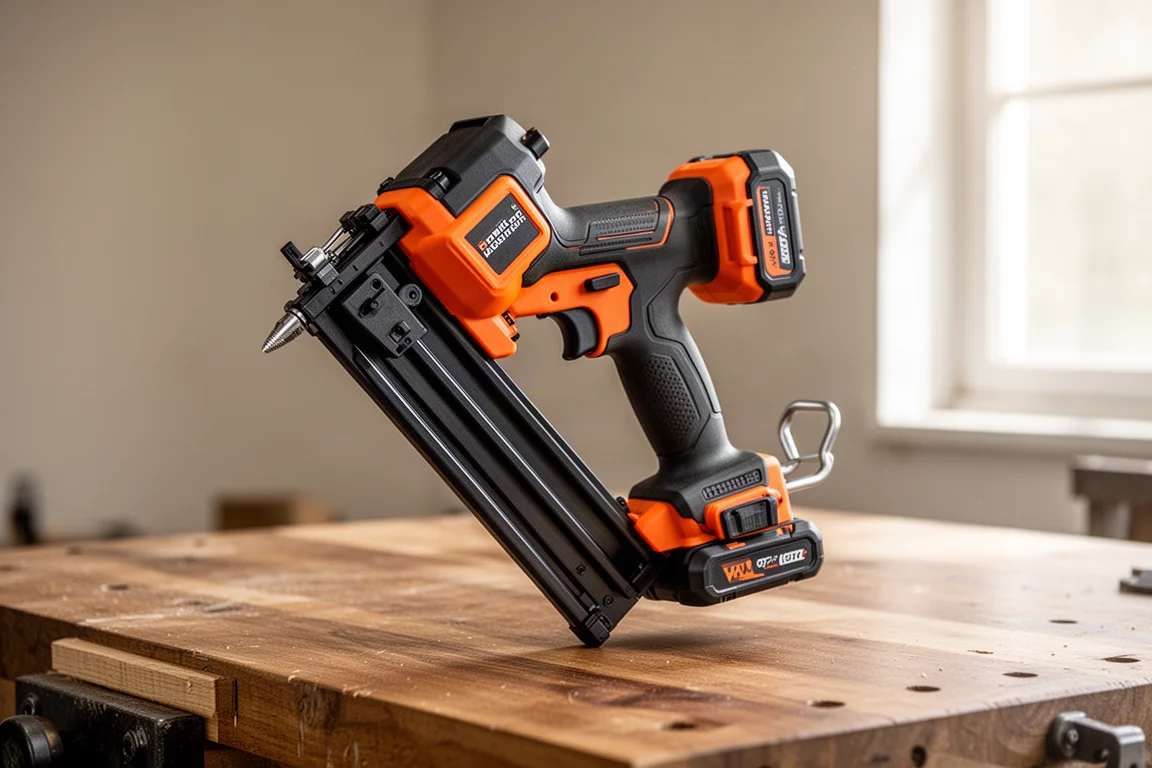
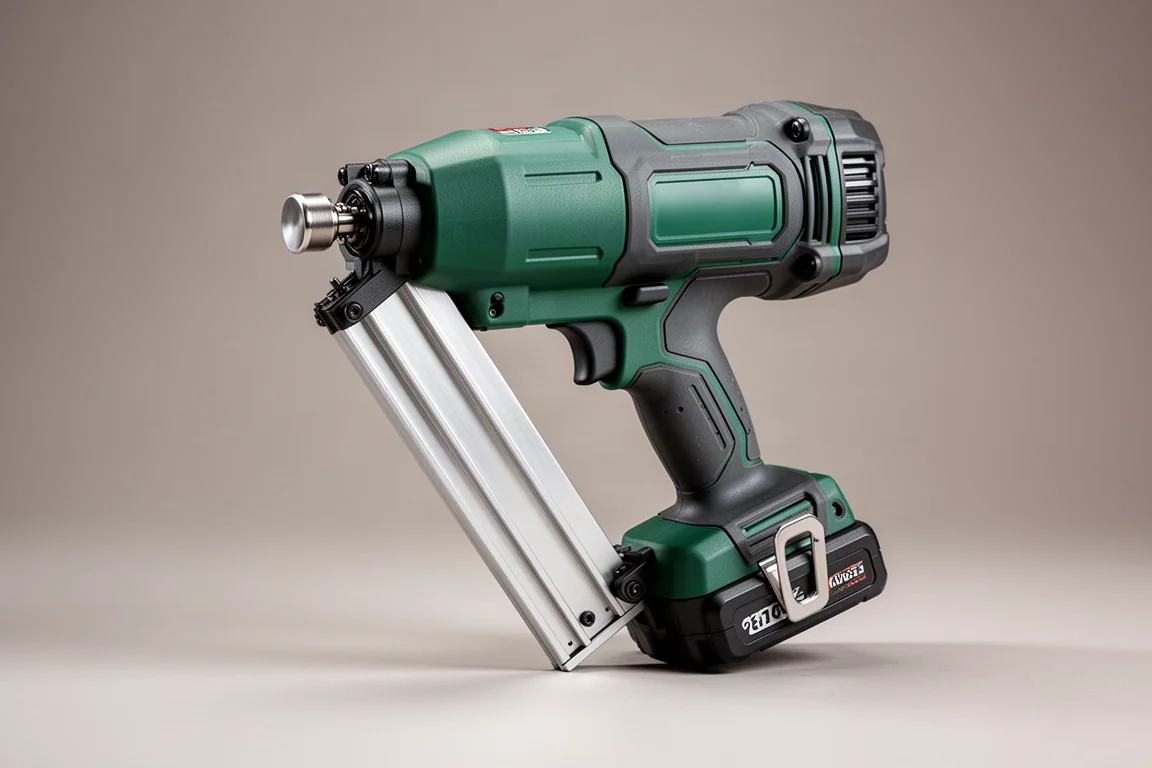
The AEG is, in most respects, nearly identical to the Ryobi. Same magazine design, same round firing tip, same overall shape; the orange colour scheme and a couple of exposed bolts are the most obvious giveaways. The aluminum magazine is black on the AEG versus silver on the Ryobi, with the branding omitted from the Ryobi version.
What AEG gets over the Ryobi is a status light at the base of the tool, easy to see when you are working, showing green when ready, red for low battery or maintenance, and flashing red for a jam. In testing, the AEG triggered its warning light far less often than the Ryobi, which occasionally wanted a ten-second break when fired at awkward angles for long stretches, despite no actual jams or battery issues.
Ryobi Framing Nailer: The DIY Pick
The Ryobi is the newest of the three and brings one feature the others do not: an obvious shock absorber in the battery area, an unusual and welcome touch. Its status lights live in a less visible spot than the AEG’s, but they serve the same purpose.
Like the AEG, it uses the grip-activated trigger system, which is genuinely one of the best features here. The moment you pick the tool up and grip it naturally, it is active and ready to fire once the tip is pressed to the timber. No fumbling for a power button while holding a board at an awkward angle. Both the Ryobi and AEG also balance easily on their battery packs head-up, which makes grabbing them again quicker.
In penetration testing the Ryobi came in slightly behind the AEG, which is surprising given how similar the tools are, but it still drove consistently and handled every test thrown at it without complaint.
Power and Penetration Test
Firing full clips of 90 mm framing nails into LVL, all three performed well. The AEG delivered consistent, deep drives with only minor pauses when the firing pace outran the tool. The Ryobi managed the full clip too, with an overload light appearing after roughly 30 nails before resetting to green.
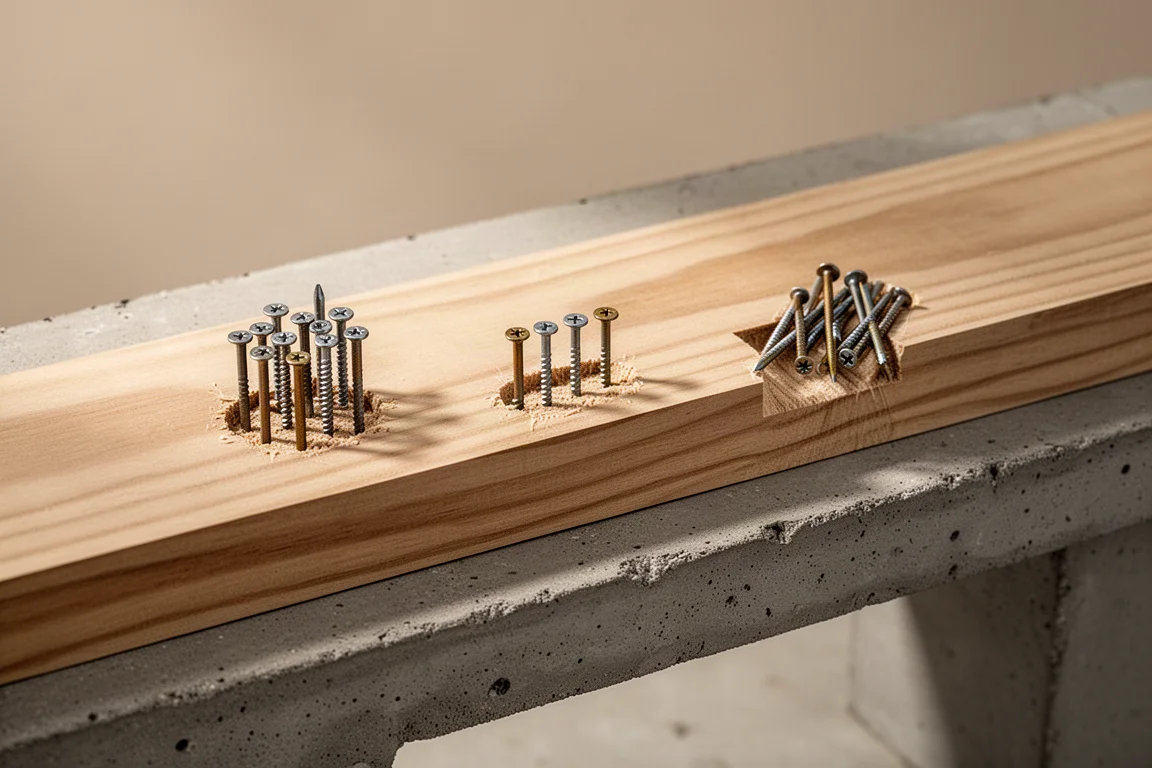
On penetration depth, the ordering is exactly what you would expect. The Ryobi drove nails to just short of flush through 90 mm LVL, the AEG went a little deeper, and the Milwaukee, once the depth dial was wound to maximum, buried the nails so completely they could not be seen at all. On 45-degree angle shots the pattern repeated: the Ryobi left nails slightly proud, the AEG did a little better, and the Milwaukee drove everything clean and deep.
All three also drove 50 mm nails straight through joist hanger brackets without hesitation, and all three punched through three sheets of 18 mm structural ply, 0.55 mm colorsteel flashing, and into the timber beneath. Notably, the Milwaukee achieved all of this with noticeably less recoil and kickback than the other two, which matters a great deal when your elbow is already complaining after a long day.
One more underrated difference: in a tip timeout test, where the tool stops firing if you press the tip and wait too long before pulling the trigger, the Milwaukee lasted roughly twice as long as the Ryobi and AEG before timing out. If you work alone and often hold timber in place while lining up in tight gaps, that extra window is genuinely handy.
Which One Should You Buy?
Most buyers will simply choose the platform they already own batteries for, and none of these will disappoint. But if you are starting fresh, the decision comes down to how you work.
For apprentices and builders who frame every day, the Milwaukee is the clear pick. It has the most drive depth, the best angles of access thanks to its slimmer body, the lowest recoil, the longest tip timeout window, and the deepest feature set. For serious DIY use, the AEG is a strong middle path with pick-up-and-go activation and a more visible status light. For occasional around-the-house framing, the Ryobi gets the job done at the friendliest price, and its newer design brings a battery shock absorber the others lack.
All three brands offer a solid nailer range across the broader platform, and availability varies by region, with these models commonly found through major retailers such as Bunnings in Australia and New Zealand.
Conclusion
Three nailers, one company, three very different price brackets. The Ryobi is a capable DIY tool, the AEG adds refinement and slightly better performance for a modest step up, and the Milwaukee justifies its premium price with superior penetration, handling and comfort. Whichever bracket you land in, you are buying a genuinely good framing nailer.
Further reading
Related Reviews
Power Tools
Best 1-Inch Pistol Impact Wrenches: Three Heavy-Duty Options Compared
We compare three 1-inch pistol impact wrenches, from a budget-friendly Harbor Freight model to a premium Caterpillar unit, to help you choose the right one.
Power Tools
Best 3/4-Inch Impact Wrenches 2026: Five Contenders Compared
We compare five 3/4-inch impact wrenches across price and performance, from a budget Amazon option to Snap-on's most powerful model yet.
Power Tools
Best Budget Cordless Tools 2026: Walmart Finds That Punch Above Their Price
We tested five cordless tools from Walmart, including a high-torque impact wrench that trades blows with Milwaukee and a $35 duster that outperforms its price class.