Power Tools
Best Battery Chainsaws Tested: Speed, Torque and Runtime Compared
Nine battery chainsaws went head to head in speed, torque, runtime and noise tests against a gas saw. Here are the four that earned a recommendation.
Introduction
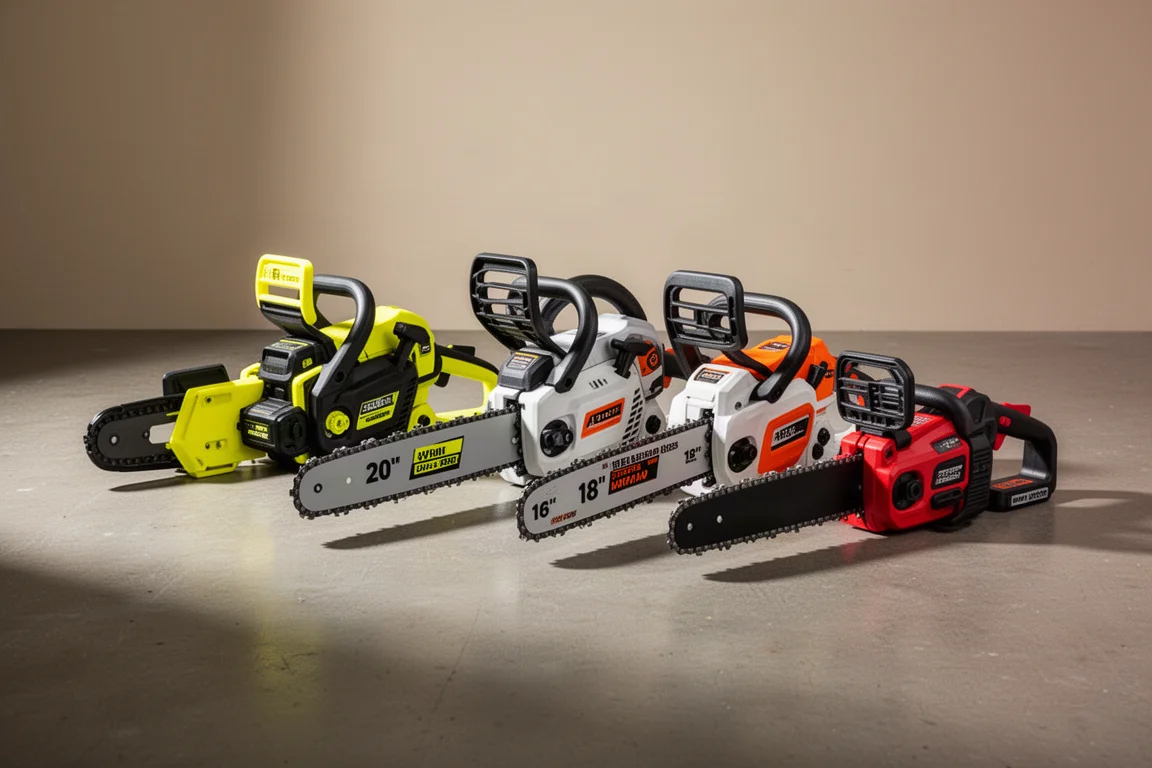
Battery powered chainsaws have come a long way in a short time, and a fresh round of head-to-head testing confirms that the gap to gasoline has narrowed dramatically. Nine cordless saws were put through the same gauntlet: cutting speed on softwood and hardwood, torque under load, runtime per charge, weight, and noise. A gasoline Stihl MS250, a previous gas-saw test winner, was included as the benchmark. For most homeowners, the results show that gas no longer has a clear edge. Here are the four saws that stood out from the field.
How the Testing Worked
Every saw made three timed cuts through a test log built from stacked 2x10s, then tackled a piece of osage orange with a Janka hardness score of around 2,500, roughly twice as hard as white oak. Downward force needed to stall each chain was measured by adding weight to the bar, runtime was tracked until each battery died, and sound levels were logged in decibels. The Stihl 45cc gas saw ran the same tests with a full tank of fuel.
The Lineup at a Glance
The field covered everything from a $145 light-duty KIMO kit with two batteries and two bars, to a $440 Husqvarna 40V with a 7.5Ah pack. Weights ranged from 9.78 lb for the KIMO to about 15.2 lb for the DeWalt, and no-load chain speeds spanned from around 5,500 RPM on the Greenworks to 12,353 RPM on the Ryobi. Cutting performance, not raw RPM, turned out to be the real differentiator.
Fastest Overall: DeWalt 60V Chainsaw
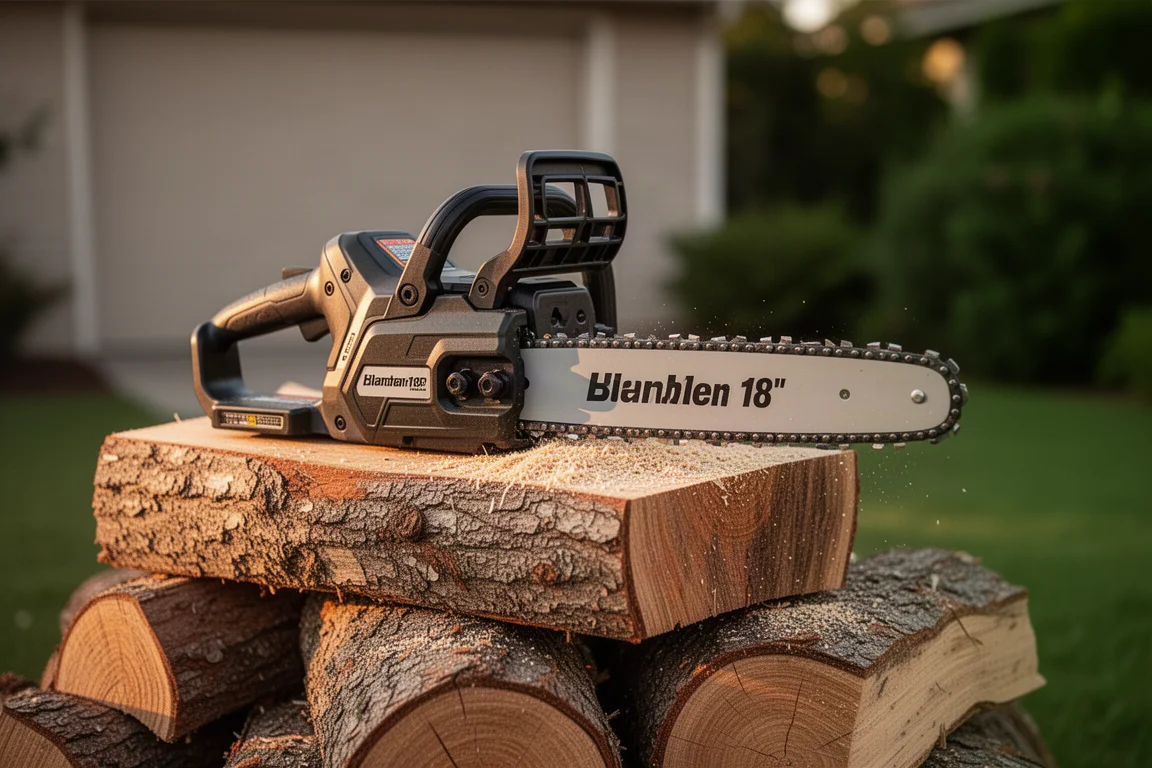
The DeWalt 60V was the standout cutter of the entire test. With a 20-inch bar, a 4Ah battery, and a 60V brushless motor, it posted the fastest cut of any saw, gas included: 12.49 seconds on the softwood log and 11.51 seconds through the brutal osage orange, comfortably beating even the Stihl. The maker claims twice the torque of a 50cc gas chainsaw, and the torque testing backed that up, tying for the most initial stalling force at 66 lb.
It reached peak RPM in just 0.7 seconds, held chain speed under sustained pressure better than anything else tested, and ran relatively quietly at 101.7 dB. Onboard wrench storage is a nice touch, though the trigger lever requires pushing down to activate, which is awkward for left-handed users, and at roughly 15.2 lb it is the heaviest saw in the lineup. Its powerful motor also drains the battery quickly, at around 6 minutes of continuous runtime from the 240Wh pack.

Best Value Cutter: EGO Battery Chainsaw
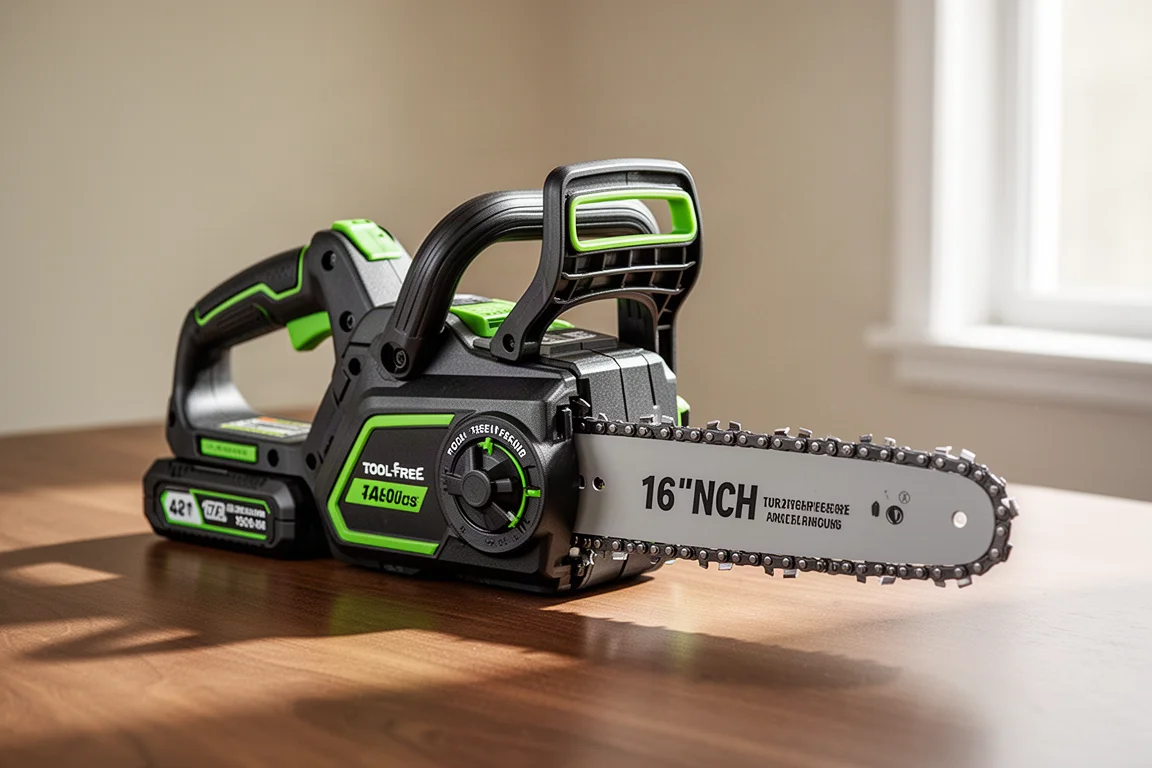
The EGO delivered the best balance of price, speed, and usability. Claimed as equivalent to a 40cc gas saw, it cuts a 16-inch bar with a 4Ah battery and a tool-free tensioning system that makes bar adjustments genuinely quick. It hit full speed in 0.7 seconds and turned in a 14.4 second first cut on the softwood log, more than five seconds faster than the number two saw at that point in testing, then kept its composure through all three passes without powering down.
On the hardwood test it finished third overall at 16 seconds, and torque measured a respectable 47 lb. Noise came in at 107.4 dB, on the louder side for a battery saw, and the design is light duty with a single stud holding the bar. But at $300 for the saw, battery, and charger, with a claimed 220 cuts through a 4x4 per charge and 13.45 lb weight, it is arguably the smartest pick for a typical homeowner.
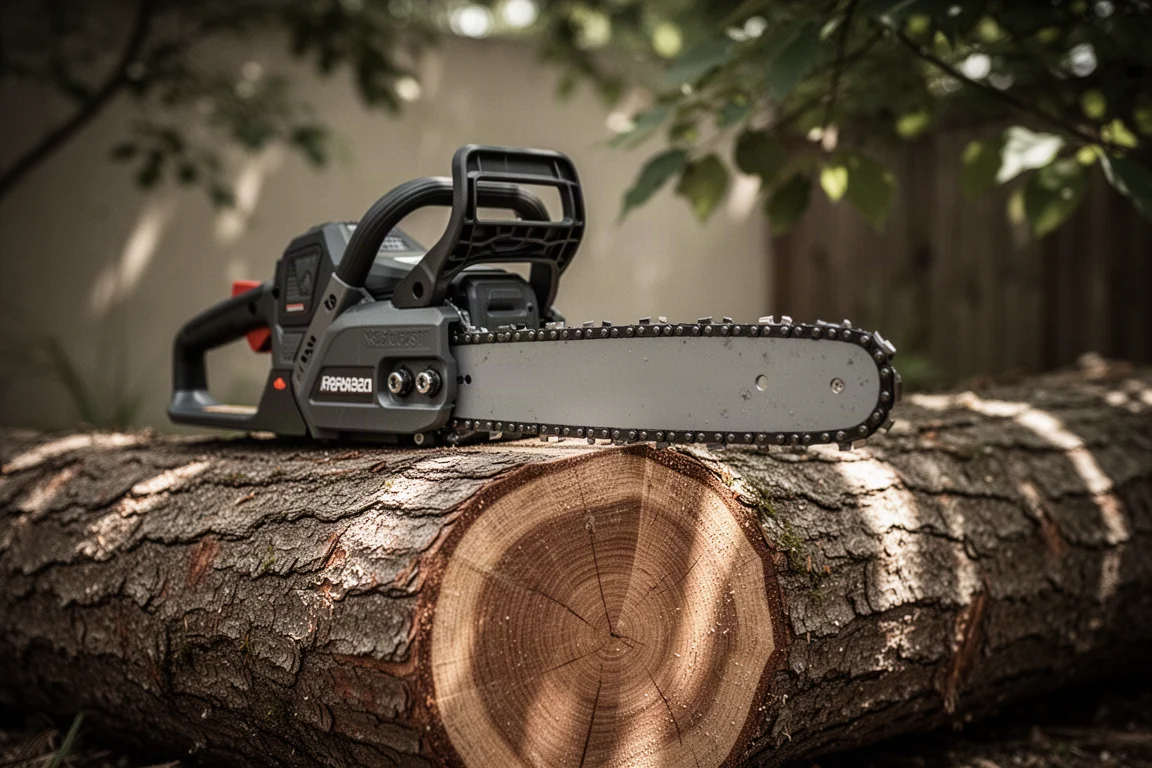
Best Runtime: Husqvarna 40V Chainsaw
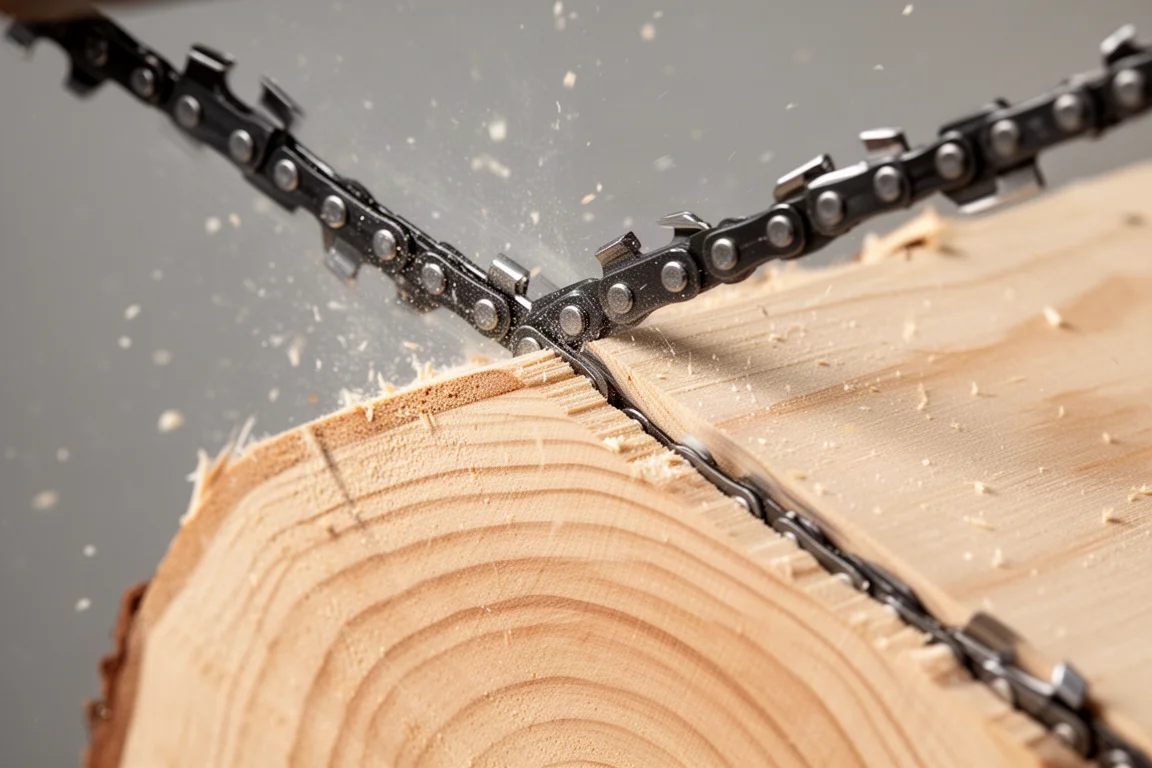
The Husqvarna 40V won the endurance contest outright. Its 270Wh, 7.5Ah battery is the largest capacity in the field, and it ran for just over 15 minutes of continuous cutting, easily outlasting every other saw. A push-button boost mode adds 25 percent more power, the safety switch works for both left- and right-handed users, and the saw hits peak RPM in only half a second.
Cutting performance has improved dramatically since earlier versions: it clocked a fastest softwood pass of 17.65 seconds and placed second in the speed rankings behind only the DeWalt, while torque measured a strong 61 lb. Trade-offs include modest no-load chain speed of around 6,250 RPM, a single-stud bar mount, and a somewhat fiddly chain tensioner alignment. At $440 with battery and charger, it is the pick for long cleanup sessions.
Torque Champion: Milwaukee M18 Chainsaw
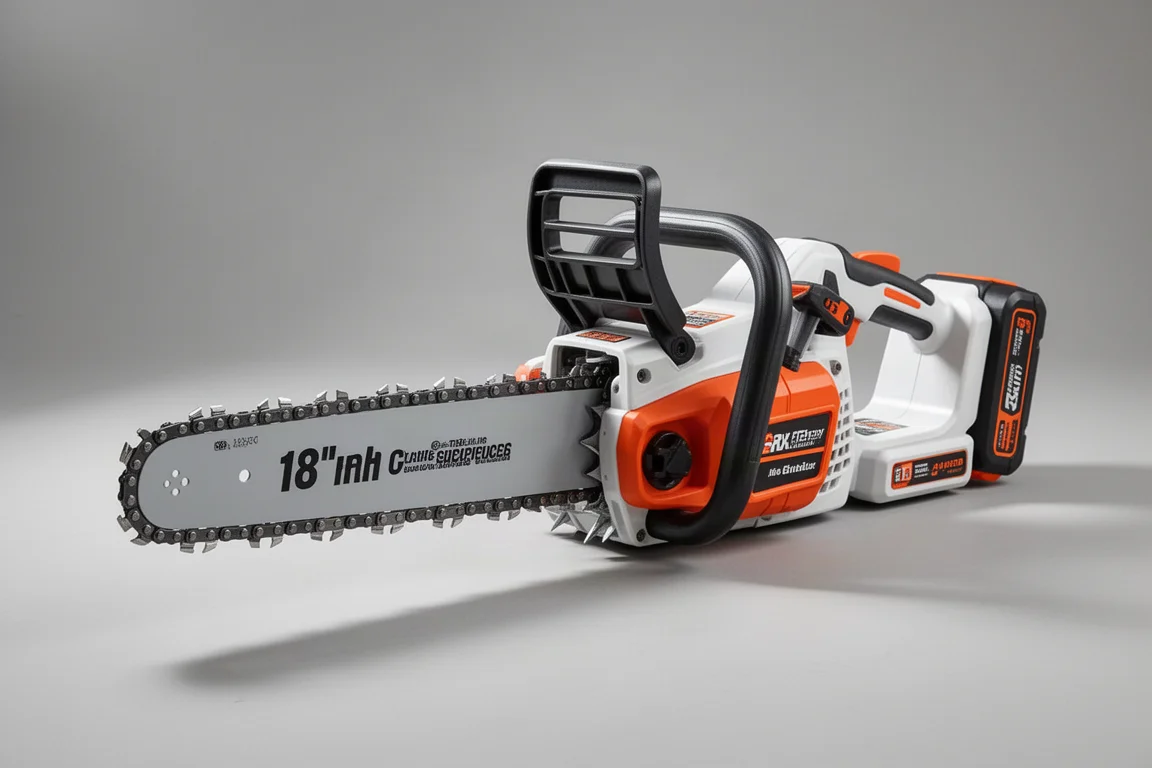
The Milwaukee is a torque beast. Using an 18V platform with a 12Ah, 216Wh battery, it builds muscle the way high-chain-speed saws cannot: it tied for second in stalling force at 65 lb and cut fastest on the hardwood log among the mid-field at 23.3 seconds. It also reaches peak RPM faster than anything else tested, at just 0.2 seconds, and held chain speed beautifully across all three softwood passes with no overheating-related slowdown, finishing with cuts just over 20.5 seconds.
The compromises are real: no-load chain speed is only just under 6,200 RPM, so the saw needs firm downward pressure to cut quickly and transmits a bit more vibration. Runtime was still excellent at around 11.5 minutes, second best at the time of testing, and it is relatively quiet at 100.9 dB. At $300 for the saw, battery, and charger, it suits owners already committed to the 18V battery platform.
How the Rest of the Field Performed
The remaining five saws each had moments but fell short of the leaders. The $145 KIMO is the lightest and quietest at 99.8 dB, but it overheated, lost chain speed badly under load, and needed over a minute for its first cut. The $179 Harbor Freight Atlas 80V has the strongest build quality and metal bucking spikes, but it powered down repeatedly under pressure. The $245 Ryobi 40V posted the highest no-load speed at 12,353 RPM and never stalled, yet it lacked the torque to convert that speed into fast cuts, and its battery overheated during the runtime test. The Greenworks 80V tied the DeWalt for most torque at 66 lb but had the slowest chain speed and the highest vibration, and the $379 Echo cut consistently well and ran 11 minutes 40 seconds but never threatened the leaders, though it was among the most comfortable saws to handle.
Buying Advice: Which Battery Chainsaw Should You Get?
If outright cutting speed matters most, the DeWalt 60V is untouchable and even beat a 45cc gasoline saw on both softwood and hardwood. If you want the best mix of price, speed, and everyday usability, the EGO at $300 is the best value in the group. For extended storm cleanup without battery swaps, the Husqvarna’s 15-plus minute runtime is in a class of its own. And if you already own 18V batteries, the Milwaukee’s torque makes it a natural fit.
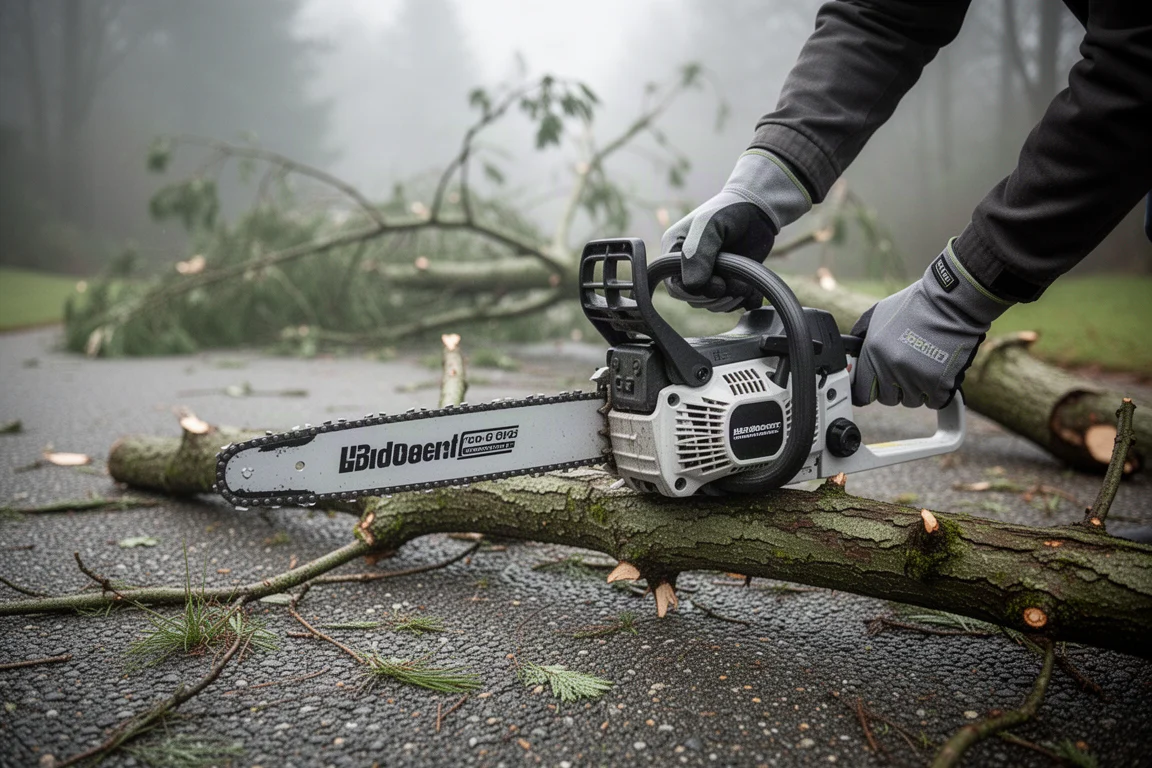
For occasional storm cleanup and yard work, the test verdict is clear: for many homeowners, gasoline chainsaws are now obsolete. Professionals who cut all day, every day will still want gas unless they are prepared to invest heavily in spare batteries, but that gap is closing fast too.
Conclusion
Battery chainsaws have graduated from novelty to genuine gas alternatives. The DeWalt 60V is the fastest cutter tested, gas or electric; the EGO is the best all-round value; the Husqvarna delivers unmatched runtime; and the Milwaukee turns 18V power into serious torque. Match the saw to how you actually cut, and any of these four will serve you well.
Further reading
Related Reviews

Power Tools
Best 1-Inch Pistol Impact Wrenches: Three Heavy-Duty Options Compared
We compare three 1-inch pistol impact wrenches, from a budget-friendly Harbor Freight model to a premium Caterpillar unit, to help you choose the right one.

Power Tools
Best 3/4-Inch Impact Wrenches 2026: Five Contenders Compared
We compare five 3/4-inch impact wrenches across price and performance, from a budget Amazon option to Snap-on's most powerful model yet.

Power Tools
Best Budget Cordless Tools 2026: Walmart Finds That Punch Above Their Price
We tested five cordless tools from Walmart, including a high-torque impact wrench that trades blows with Milwaukee and a $35 duster that outperforms its price class.