Tools & DIY
Classic As Seen on TV Tools We Actually Tested: What Holds Up and What Doesn't
Six legendary infomercial tools, from the Tool Bandit to the Hercules Hook, put through real hands-on testing with honest results.
Introduction
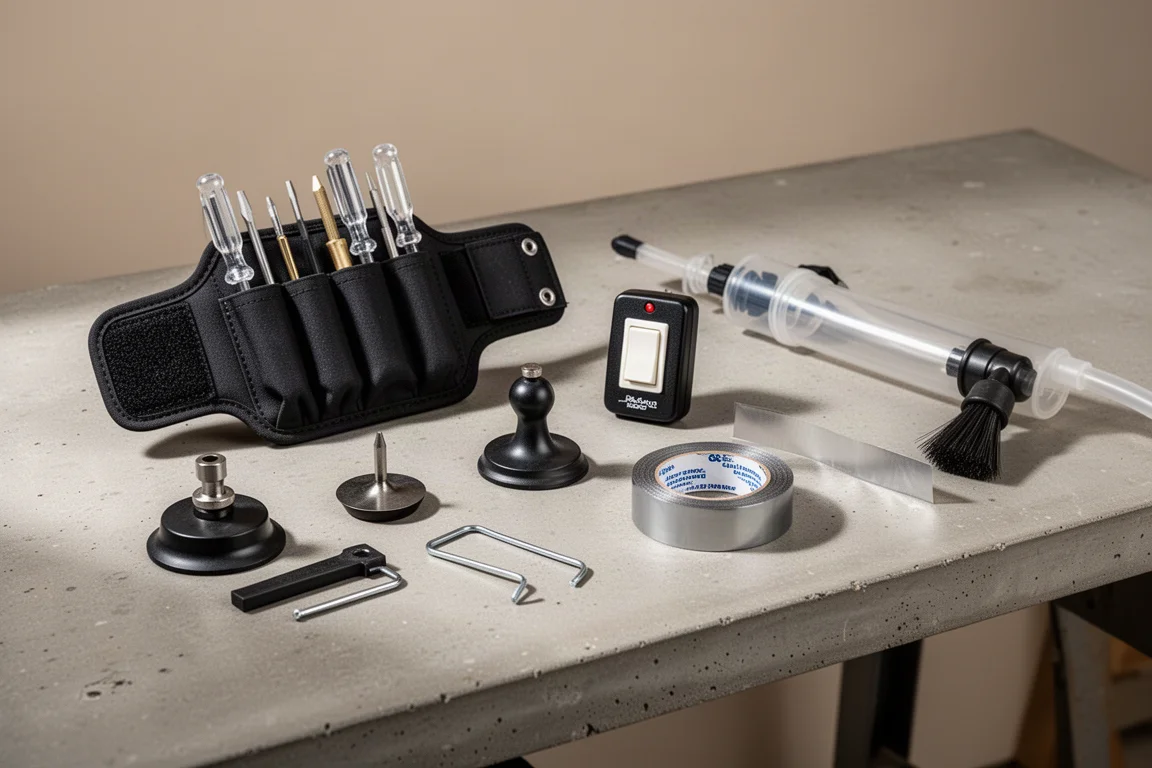
Some products are remembered because they changed a category. Others are remembered because an incredibly enthusiastic man on television yelled about them at full volume. The classic infomercial tool lineup sits somewhere in between, and decades later, plenty of these gadgets are still floating around online marketplaces and vintage listings.
We put six of the most iconic ones through real, hands-on testing to find out which ones earn their pitch and which ones belong in a museum. The results were more mixed than nostalgic memory suggests, and a couple were genuinely surprising.
How We Evaluated These Tools
Every product was tested the same way: against its own original claim. Not against modern alternatives, not against marketing hype, but against exactly what was promised in the pitch. If a tool claimed to hold a specific weight, we loaded it up. If it claimed to fix something, we broke the thing and tried to fix it.
That matters, because some of these tools are thirty-plus years old. Packaging, batteries, and adhesive backers all age, so we took condition into account while still judging the core idea.
Tool Bandit: The Magnetic Third Hand
The Tool Bandit is a magnetic armband introduced in 2009, pitched as a third hand for holding wrenches, screwdrivers, nails, and bolts while you work. The build quality feels exactly as inexpensive as it looks, but the idea behind it is genuinely clever, and honestly, the modern versions sold today prove it was ahead of its time.
In testing, it held fasteners and screwdrivers without issue, and a flathead even stayed put vertically. Heavier tools like a hammer were pushing it, and the magnets are not strong enough to hold through other metal. But for screws, sockets, and allen keys, it did the job it promised. Verdict: the concept works, and better modern versions exist if you want one today.
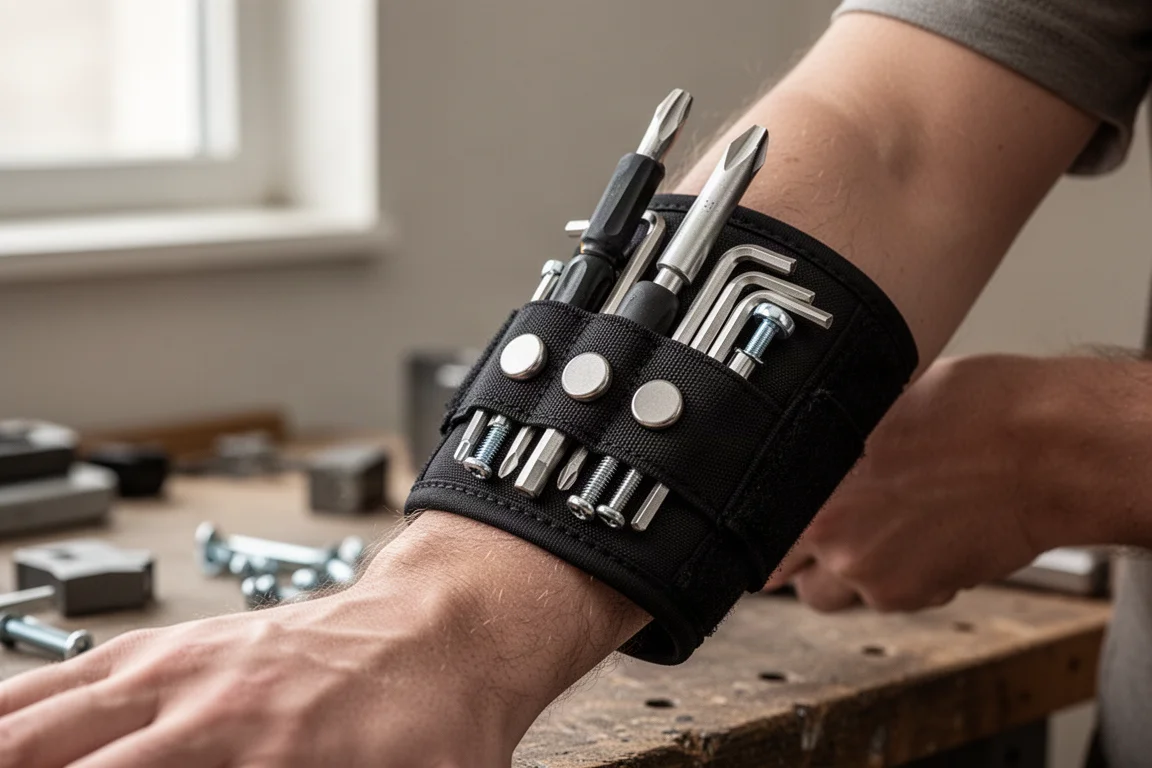
If you like the idea of keeping small metal tools and fasteners on your arm mid-project, the Tool Bandit proved the original concept is sound. Just expect a plasticky build.
Ding King: The Dent Repair Pioneer
The Ding King is credited with kicking off the entire paintless dent repair category, which is real. Professional PDR technicians still use the same basic principle today: glue a tab over the dent, pull it out, and blend the metal back.
Our testing was less glamorous. Following the directions carefully, the suction puller did lift the dent, but it also pulled metal from surrounding areas and created new dents nearby. The glue tabs and scraper worked as described, but the result left the panel worse in spots. Verdict: the concept is legitimate, but this job belongs in a professional’s hands.
Handy Switch: Turn Off the Lamp Without Getting Up
Released in 2007, the Handy Switch is a remote switch you stick near your bed so you can kill the lamp without getting up. Jokes aside, this was an early version of the smart lighting category everyone obsesses over now, and the idea aged surprisingly well.
The catch: it uses a proprietary A23 battery, weighs almost nothing, and the adhesive backer is aggressively permanent. With a fresh battery, it worked exactly as advertised, switching the lamp on and off across the room. Verdict: it works, but the oddball battery is an annoying long-term cost.

Washmatic: The Siphon Car Wash Kit That Actually Works
The Washmatic, dating back to 1989, is a brush washing kit that uses a siphon to pull soapy water from a bucket up to the brush head, no power needed. You prime the valve by moving it briskly up and down until the tube fills with water, then wash.
This one genuinely worked. Once primed, water flowed steadily to the brush head and the truck got washed with no pump, no hose pressure tricks, and no electricity. The claim about making water flow uphill is just siphon physics wrapped in showmanship, but the tool does what it says. Verdict: simple, clever, and functional even decades later.

Mighty Fix It Tape: The Self-Fusing Leak Stopper
Mighty Fix It Tape is the self-fusing silicone tape that competes directly with Flex Seal tape. It has no adhesive at all; it only sticks to itself, so you stretch and wrap it around whatever needs sealing.
We hooked a bucket up to a drill, put a hole in a hose, and wrapped the tape around the leak. It held water initially and works as a short-term fix, the same way similar self-fusing straps and tapes do. Whether it holds for an extended period is another question, so treat it as an emergency patch rather than a permanent repair. Verdict: works for what it is, with realistic expectations.
Hercules Hook: The 150 lb Wall Claim
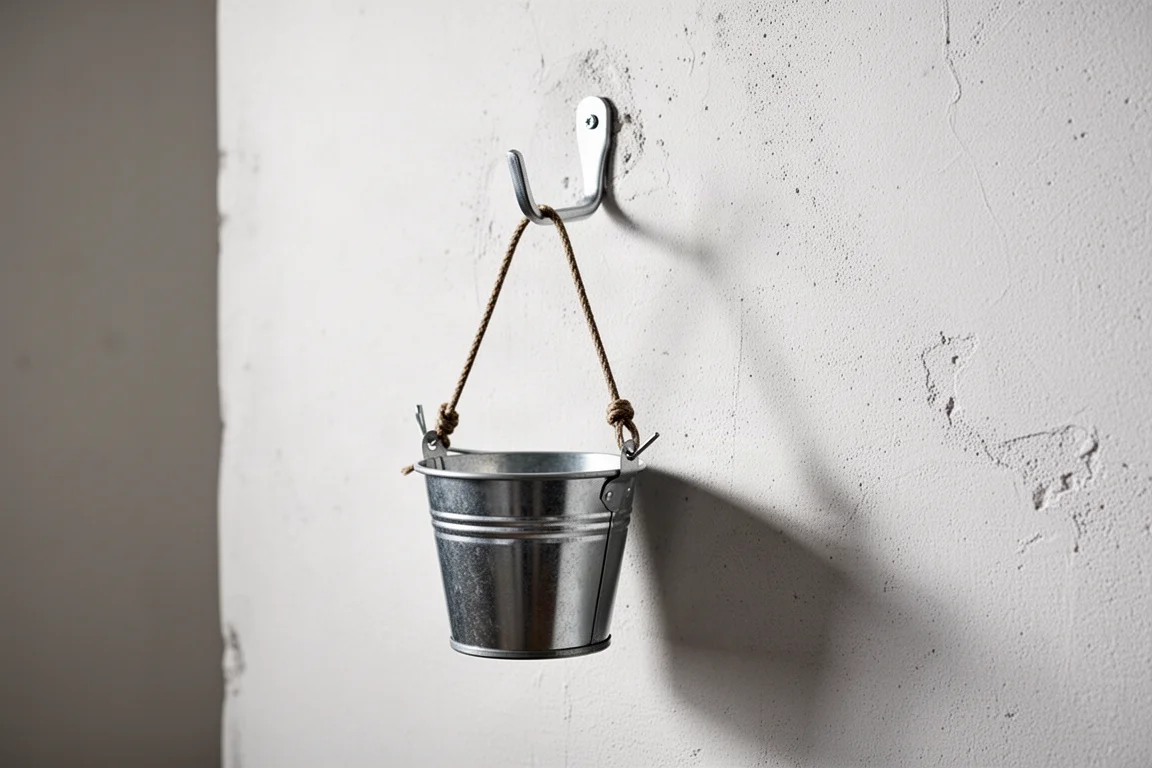
The Hercules Hook claims to hold up to 150 lbs by being pushed straight into drywall, no drilling and no anchors. It is a very thin piece of metal, which makes the claim feel wild.
Here is how it actually went. Pushing it into the wall took more effort than the pitch suggested, and the hook sticks out farther than most people would like. But under light loads it performed well: a bucket with two bottles, four bottles, and a loaded bucket totaling around 20 lbs all hung without issue. At 50 lbs it was still holding. The full 150 lb claim is where it failed, sliding out of the wall under serious load. Verdict: great for pictures and light shelving, not for the headline number.
Should You Buy Any of These?
If you want the best odds of satisfaction, the Washmatic and the Handy Switch concept deliver the most honest value for their price range, and modern versions of the magnetic tool band are widely available and better built. The Hercules Hook is worth trying for lightweight hanging tasks, but ignore the 150 lb headline. The Ding King and dent repair kits in general should be left to professionals unless you are practicing on a beater car.
A word of warning if you shop vintage: old stock means old batteries, dried adhesive, and degraded components, as we saw with several expired items that could not even be tested. Buy these for curiosity or nostalgia, and check the condition carefully.
Conclusion
The classic infomercial tools were a mixed bag: a couple of genuinely clever ideas that survived into modern products, a few honest failures, and one siphon kit that quietly outperformed everything else. Test against the claim, not the pitch, and you will know exactly which of these are worth your money.
Product link
View more details for Tool Bandit
This product is mentioned in the review. Check the specifications, options, and compatibility before buying.
View more details for Tool BanditFurther reading
Related Reviews
Tools & DIY
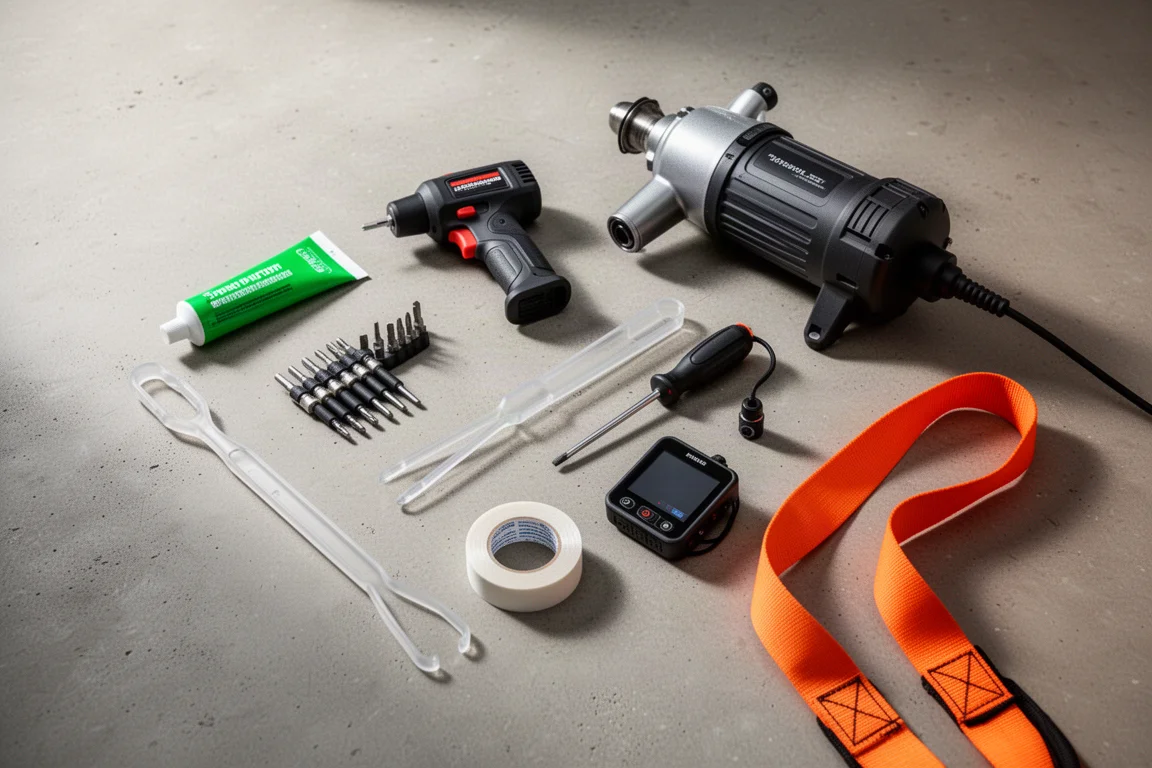
6 As-Seen-on-TV Tools Put to the Test: What Actually Works
We tested six classic as-seen-on-TV tools, from a 3-in-1 digital tape measure to Flex Tape, to find out which ones earn a spot in your toolbox.
Tools & DIY
Best Tool Deals Worth Gifting: Power Tools, Hand Tools, and Power Gear Picks
A curated roundup of tool deals across power tools, hand tools, tool sets, generators, and portable power, with practical notes on who each pick suits.
Tools & DIY
Dovu DR1 High Accuracy Laser Receiver Review: Long-Range Outdoor Laser Detection
A hands-on look at the Dovu DR1 laser receiver, a device that makes long-distance laser level alignment possible outdoors.