Hand Tools
Best Allen Wrench Sets: 8 Hex Key Sets Put Through Destructive Torque Testing
Eight L-shaped hex key sets, from bargain-bin to premium Swiss steel, ranked by ball-end access angle and how much torque they survive before rounding off a fastener.
Introduction
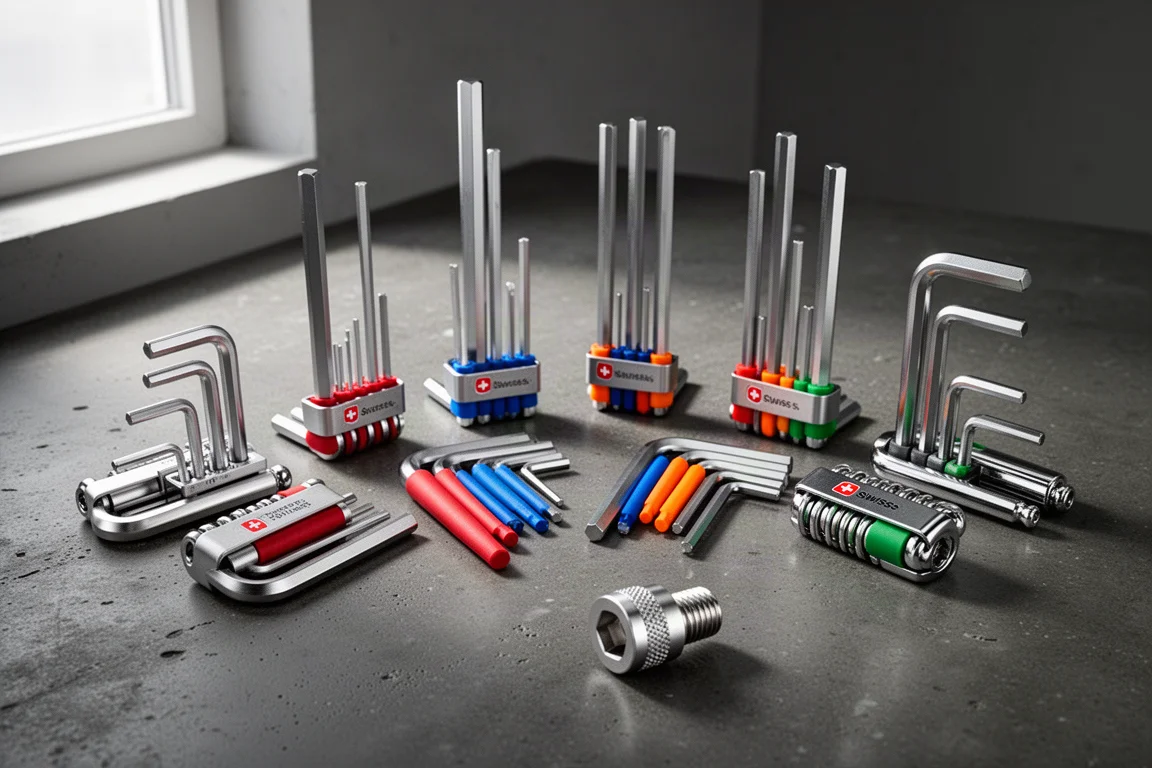
Hex keys do not look like serious tools, yet the market around them has quietly escalated. Modern sets are longer than ever, some approaching the length of ratchet handles, and several brands now ship extension bars on top of already long arms. Advertised materials run from basic alloy steel through CRV and S2 tool steel, and one brand even claims the world’s strongest steel. Price spreads are enormous too: in this comparison, examples cost as much as 10 to 14 times what others did, and shoppers still pay for the top end.
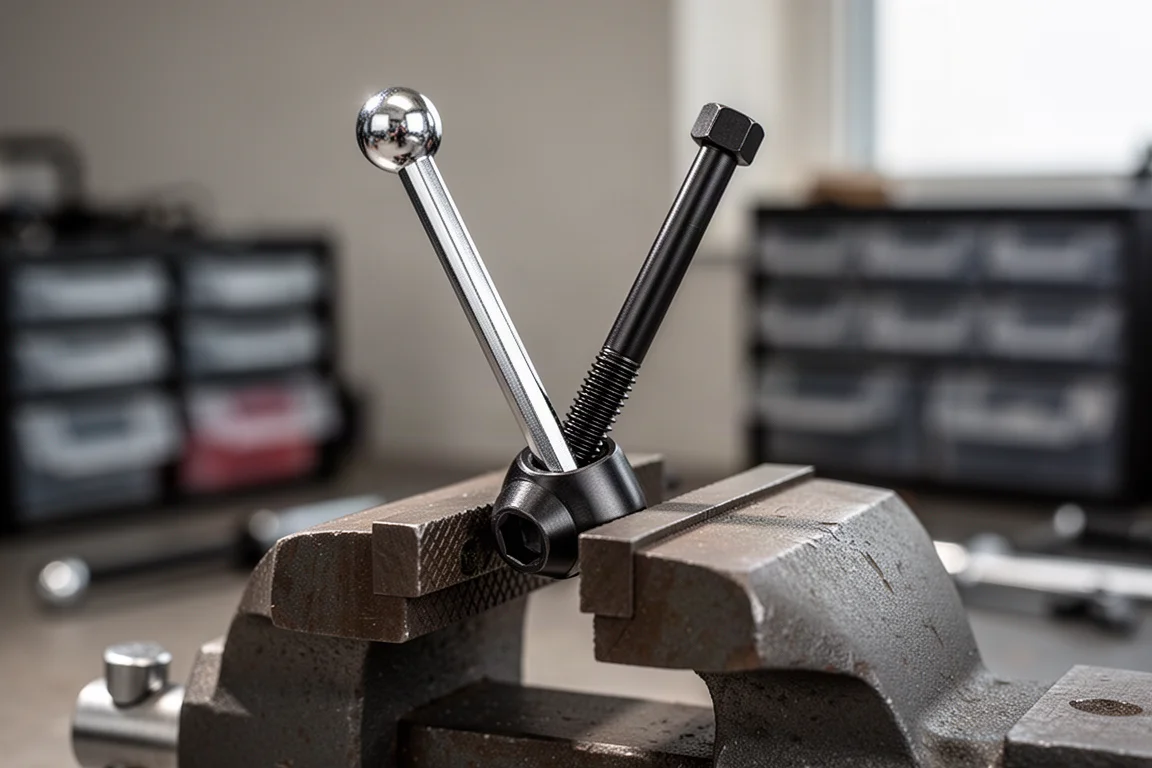
To find out whether any of that matters, this comparison tested the 6 mm, 8 mm, and 10 mm sizes of eight sets against custom machined and heat treated hex cap screw slugs designed to survive past the point where a normal bolt would strip. The goal was not raw peak numbers but a practical one: which tools give you the best chance of not making the next fastener you have to remove look worse. Two metrics drove the rankings, the access angle of the ball end when fully seated in a hex socket cap screw, and how much torque each key could carry before the fastener or the tool itself started to mangle.
Designs and materials scale down to the tiny sizes too, so a set that performs well here has implications for the small stuff, the 1.5 mm and 3/16 inch work where a stripped socket really does ruin your day.
Amazon Basics Allen Wrench Set
The Amazon Basics metric set costs $11, or $5.50 per set if you only count the metric side. It is a 26 piece combo with CRV marked on the keys, which is an acceptable but not standout material choice for L keys. The ball end swivels 18 degrees when fully seated, which is modest but usable when you lack a straight shot.
In torque testing it turned the 6 mm size to 52.5 Nm (38.7 ft-lb) before the socket wallowed into a 12-point looking shape, made 118.6 Nm (87 ft-lb) at 8 mm, and a strong 193 Nm at 10 mm. Damage was limited: the hex points simply pushed into flatter lobes rather than shredding. For the money it is oddly hard to beat, and the final ranking averaged 5.5, which is respectable for a $5.50 per set product.
Tekton Ball End Hex Key Set
The Tekton set cost $16, roughly $8 per set, and quickly revealed itself to be, in every measurable way, the same tool as the Amazon Basics. Both are 26 piece combo sets, both are stamped CRV, both advertise 25 degrees of ball swivel yet measured 18 degrees, they measured the same hardness, and they landed within 1 Nm of each other at 6 mm.
Rather than burn more test blocks duplicating a result, it was dropped from further destructive testing. If you find one of these two cheaper than the other, buy the cheaper one; functionally there is nothing to separate them.
Husky Bite Allen Key Set
The Husky Bite set from Home Depot costs $30, about $15 per set, but includes more pieces and more sizes than most competitors, so the value reads better than the sticker suggests. The storage is genuinely good, letting you try both SAE and metric candidates on an unknown bolt, and the longer pattern arms are welcome for leverage.
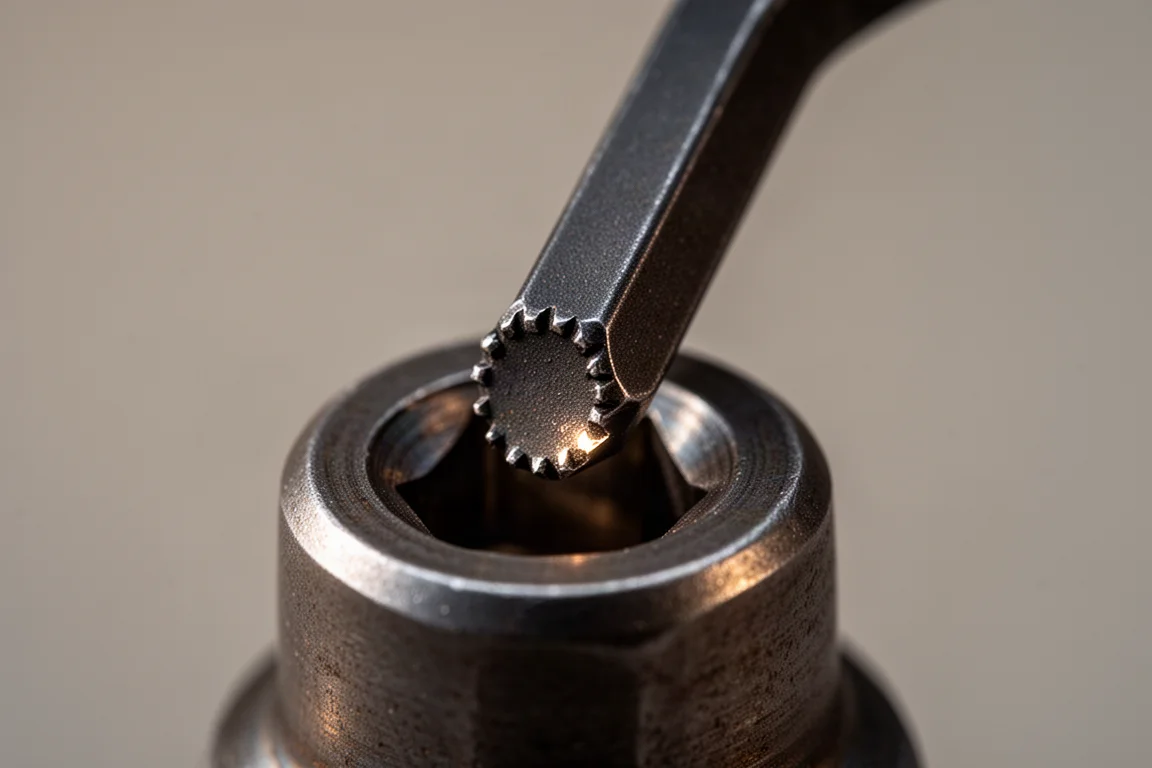
The weak point is the ball end, which manages only 16 degrees of angle, the lowest access figure here. The bite design itself produced inconsistent results: 60 Nm at 6 mm, which is very good, but only 82.1 Nm (60.5 ft-lb) at 8 mm, barely more than the smaller size, and a repeat run showed no improvement. The teeth appear to grip only three sides of the hex, and at 10 mm it pushed past 207 Nm (over 150 ft-lb) while forming something close to a three-point triangle in the socket, with some rounding visible on the tool. That triangle shaping might actually help on an already rounded fastener, which makes it worth a look as a specialty tool, but it could not deliver consistent numbers across sizes. Its ranking average came to 5.5.
Elite Hex Key Set
Elite is an Amazon house brand effort to look and perform like the PB Swiss set at a fraction of the cost: $28 bought all three sets, about $9.33 each. It mirrors the PB Swiss color coding by size, includes a handle for the short arm and an extension bar usable with other brands, and claims S2 tool steel. At this price that claim is hard to believe, though a measured 54 Rockwell hardness leaves the door open.
The ball end allows 19 degrees, the best of the budget group. Torque results were middling: 47.4 Nm (35 ft-lb) at 6 mm, 95.3 Nm at 8 mm where the tip edges started rounding to mush, and a quite good 204.4 Nm at 10 mm with no visible damage. The chrome finish held up well in use. It is not a bad set at all, just not a tier above its price.
PB Swiss Hex Key Set
The PB Swiss set is made in Switzerland and costs $80 for a single set, the most expensive here by a wide margin. The extended radius on its ball end delivers a full 28 degrees of access, blowing past everything else tested, and the keys are finished in a chip-resistant chrome that looked fantastic throughout.
Torque numbers were strong at every size: 53.8 Nm at 6 mm, 126.6 Nm at 8 mm, and 215.8 Nm at 10 mm, the best figure recorded at the time. More impressive than the numbers is the condition of the tools afterward, which looked essentially untouched after moving enormous amounts of material. That combination of access, durability, and finish earned it a ranking average of 2.5, tied for second overall. The question is simply whether the $80 price is worth it to you, and the next sections suggest you have options.
Eklind USA Allen Key Set
The Eklind set is the budget-priced USA-made option at $13.80 per set, and it is the only one in this group with a deeply machined ball end delivering 25 degrees of access, which is excellent. The design itself is more standard-length with visibly cruder bends, and the ends show the raw pinch marks from being separated rather than machined flat.
That manufacturing detail may be its downfall. In testing the points on the hex smeared and drew forward under load: 44.7 Nm at 6 mm, where the key ejected itself off the rig every single run, and 81.4 Nm at 8 mm with the same smudging. Every use degrades the tips further, which makes them less useful over time. It finished with a ranking average of 6.5, the worst of the group.
Bondus Hex Key Set
The Bondus set is USA-made, costs $21, advertises the world’s strongest steel, and comes color-coded to the tip with a coating rather than plating. It offers 21 degrees of ball-end angle and a more traditional length, though an extension can solve that.
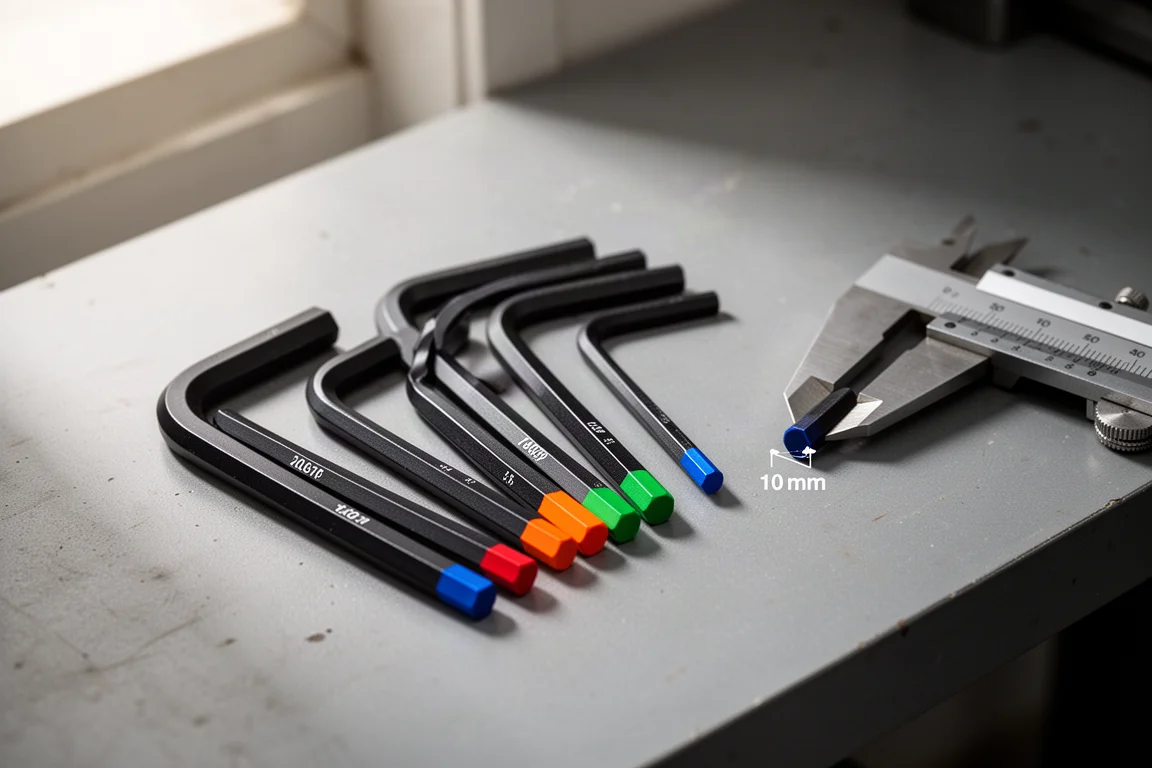
What really defines these keys is the fit. The 10 mm size measured between 9.98 and 10.02 mm, compared with 9.91 to 9.93 mm on the looser Tekton, and they feel very snug in any fastener. The trade-off is that on some new hardware they can be tricky to pull back out after use. The performance is outstanding: 62.8 Nm (46 ft-lb) at 6 mm, 120.3 Nm at 8 mm, and a massive 254.4 Nm (188 ft-lb) at 10 mm, the highest figure of the entire test, with no raised or smeared edges, only some enamel coming off the coating. It tied PB Swiss with a ranking average of 2.5 and stands as the performance bargain of this comparison.
Wera Hex Plus L-Key Set
The Wera Hex Plus set is made in the Czech Republic, costs $46, and is the second most expensive here. It arrives in arguably the best storage case of the group, with round-bodied keys that are larger in diameter than the hex itself and strangely comfortable to hold, plus color-coded polymer sleeves for quick size identification. Those sleeves can hinder some extensions, however.
The extended radius ball end measures 26 degrees of access, second only to PB Swiss. The Hex Plus geometry is not a simple hex but a carved-out bevel in the center that engages the internal socket differently, designed to resist slipping, and it works. At 6 mm it reached 70 Nm when the rest of the field was in the 40s and 50s, with no damage to the tool and only a star shape left in the socket. At 8 mm it piled up 143.9 Nm (106 ft-lb), and at 10 mm it hit 224 Nm, second only to Bondus. It posted the best overall ranking average at 1.5 and showed consistent, near-the-top results across every size, which is exactly what a well-made tool with superior design should do.
Overall Buying Advice
The results split into two clear tiers with a large gap in between. At the top sit the Wera at 1.5, and Bondus and PB Swiss tied at 2.5. Any of these three can be recommended with confidence based on your budget, and it is reassuring to know you do not have to spend top dollar to get top-end performance, because the $21 Bondus matched or beat the $80 PB Swiss on raw torque.
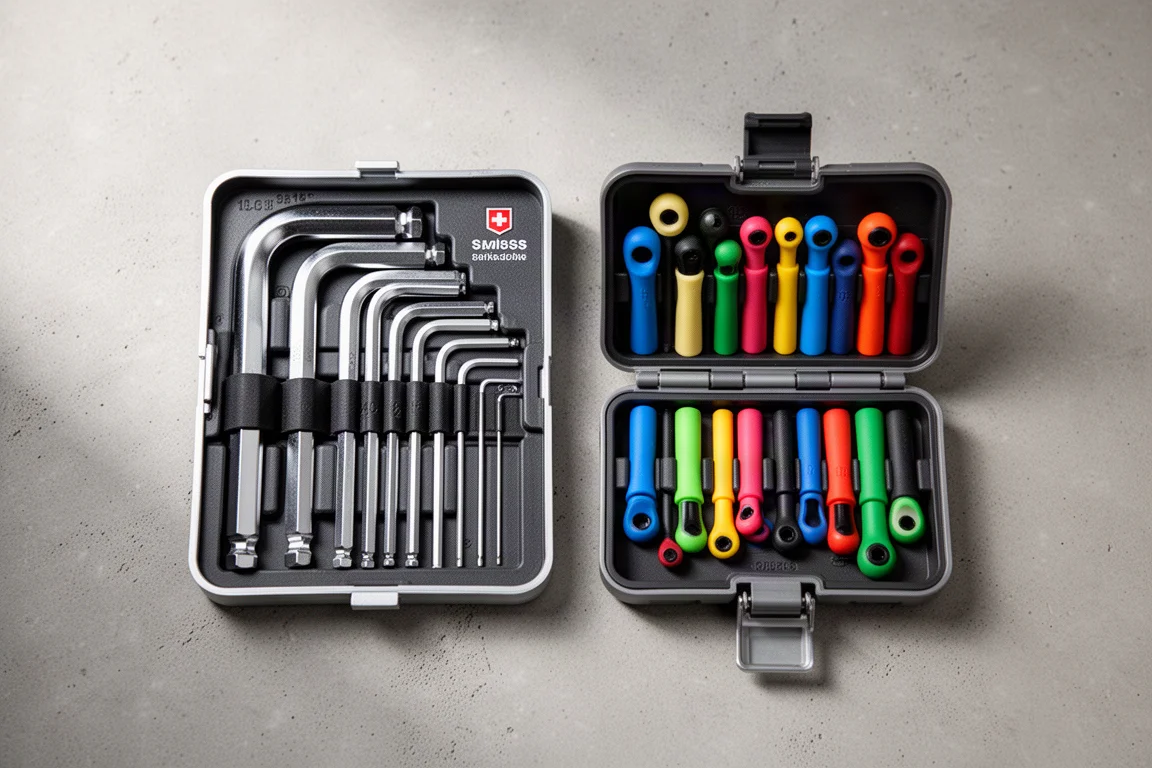
The PB Swiss does give you that extra 28 degrees of access, the best leverage-oriented lengths, and a finish that experienced essentially zero wear through brutal testing, so it remains one of the best examples on the planet. The Wera adds the nicest case and the most comfortable grip, while the Bondus wins on pure value per foot-pound. In the budget tier, the Amazon Basics at $5.50 per set is the safe default, the Husky Bite is worth a look if you specifically need to grab at a rounded fastener, and the Eklind’s fine ball-end access is undermined by tips that degrade with every use.
Conclusion
Hex keys are not all the same, and the differences are measurable. If you want the best overall performer, the Wera Hex Plus L-Key set earns it with the highest ranking, excellent access, and zero tool damage. If you want the strongest torque for the least money, the Bondus is the standout. And if you want the absolute best access angle and near-indestructible finish, the PB Swiss justifies its premium. In the budget tier, the Amazon Basics remains hard to beat for the price. Pick the one that matches what your fasteners actually demand.
Product link
View more details for Amazon Basics Allen Wrench Set
This product is mentioned in the review. Check the specifications, options, and compatibility before buying.
View more details for Amazon Basics Allen Wrench SetFurther reading
Related Reviews
Hand Tools
Best Diagonal Cutters 2026: 16 Pliers Tested for Cutting Power and Durability
We put 16 diagonal cutters through nail, screw, drill bit, and hex key tests to find the best value picks for your toolbox.
Hand Tools
Best Hex L Key Sets 2026: Nine Sets Tested for Real-World Torque
Nine hex L key sets from budget to premium, tested for torque, fit, and durability. See which sets deliver real performance and which ones to skip.
Hand Tools
Best Locking Pliers 2026: Top Picks Tested for Grip and Durability
We tested 18 brands of 10-inch locking pliers for grip strength, jaw bite, build quality, and ease of release to find the best options for tough jobs.