Camp Kitchen
Best Alcohol Stove Systems for Backpacking: Five Lightweight Options Compared
A practical look at five alcohol stove and pot options for backpackers who want to carry only the fuel a trip needs and keep camp quiet.
Introduction
For boiling water in the backcountry, the canister stove is the default answer for a lot of backpackers, and it is easy to see why. Screw a stove onto an isobutane canister, open the valve, click the igniter, and you have a reliable, consistent flame sitting on a stable base. It is plug and play, and there is nothing wrong with that.
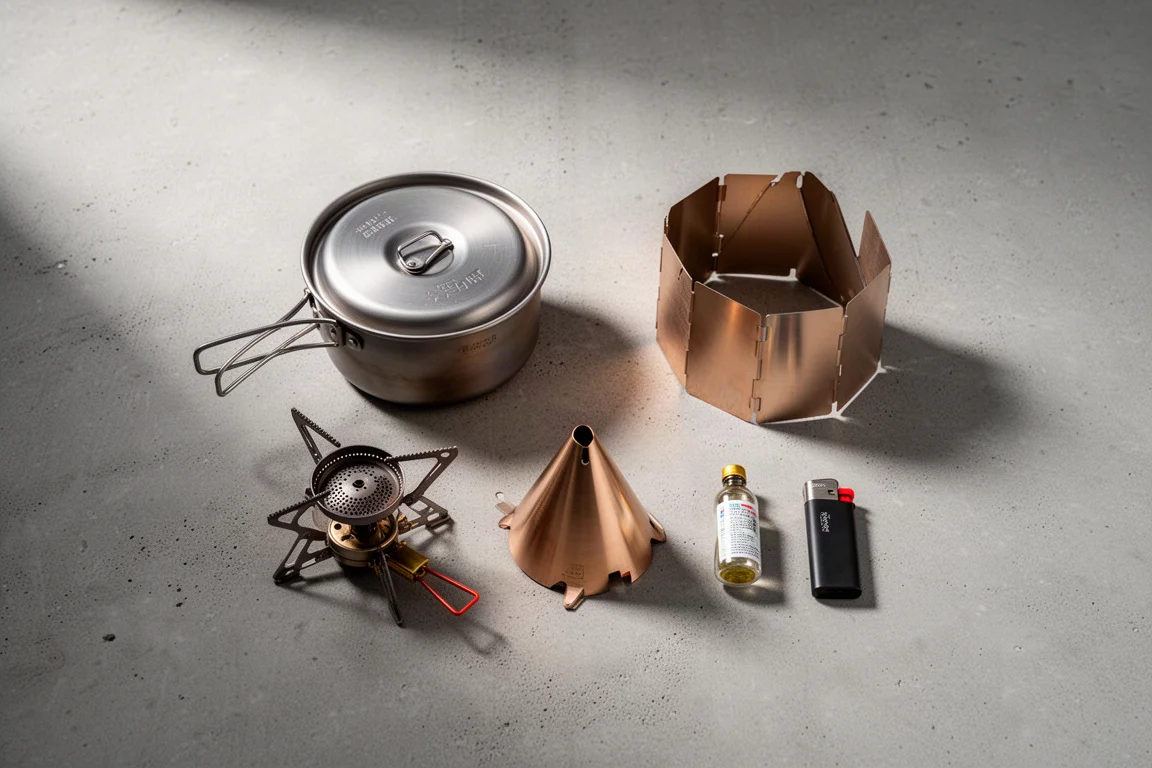
Alcohol systems ask for a little more attention. In exchange, they let you carry only the fuel a trip actually needs, they run quietly, and they pack down remarkably small. This guide looks at five pieces that make up a practical alcohol kit: two ultralight stoves, a spill-resistant stove, a matched cone system, and the small pot that holds the whole thing.
Why Backpackers Choose Alcohol Systems
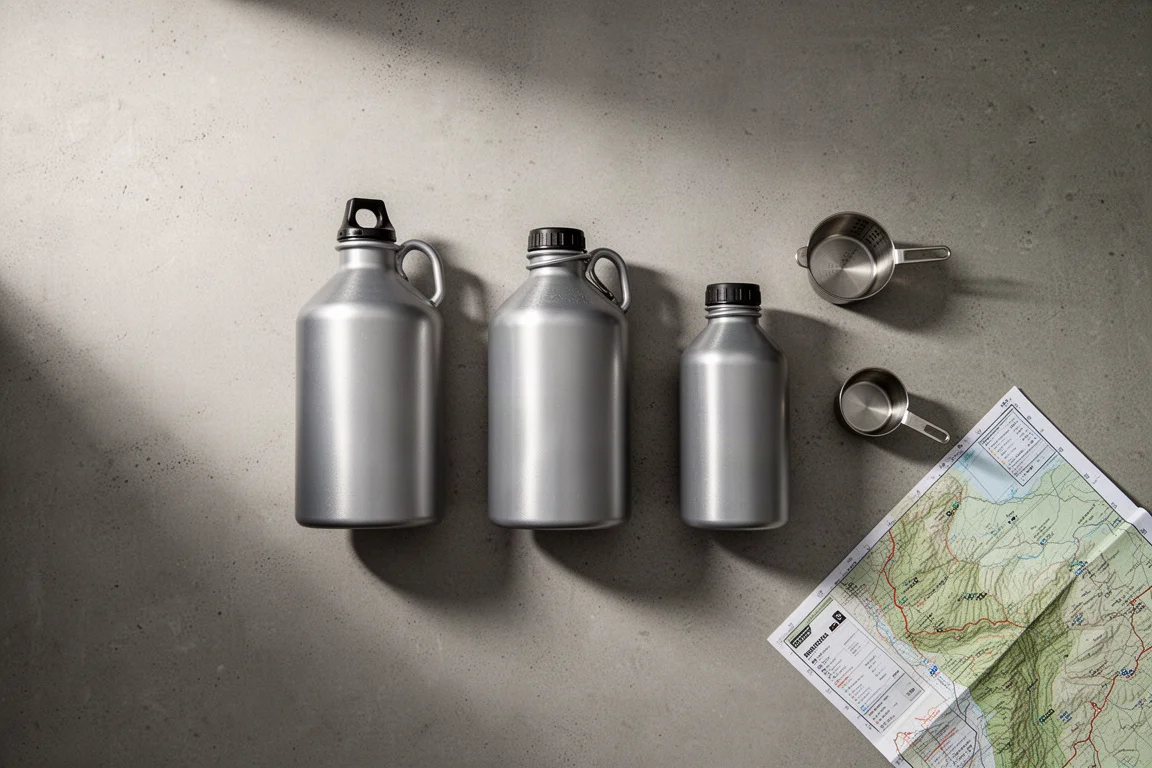
Fuel is the first argument. Denatured alcohol or yellow bottle HEET is inexpensive and widely available, including at gas stations, so topping up on the way to a trailhead is rarely a problem. Because you decant it yourself, you can carry only what the trip requires. A backpacker boiling water for five meals might take roughly five and a half to six ounces of fuel and nothing more, carried in a small bottle. Larger bottles hold up to about eight ounces, and smaller ones around three and a half to four ounces, so you can scale the carry to the itinerary.
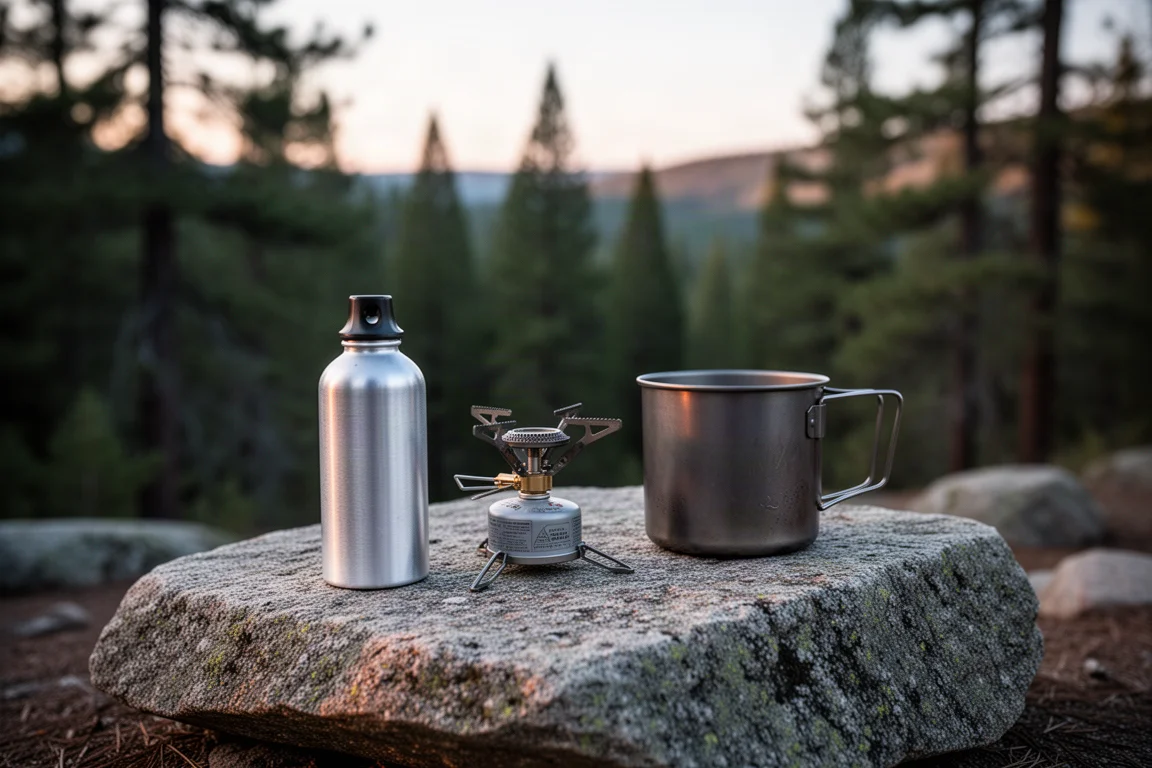
The second argument is quiet. Canister stoves announce themselves, and a group of them at a camp kitchen turns dinner into a noisy affair. Alcohol stoves simply do not make that racket.
There are trade-offs worth respecting. An alcohol stove can be knocked over on uneven ground, and spilled fuel is a genuine problem, so a level, stable spot matters far more than it does with a canister. Wind also steals heat, which is why windscreens and pot stands appear so often in these kits. On the other hand, alcohol stoves are mechanically simple, often just titanium or light aluminium, so there is very little that can fail.
One useful distinction before the list: some products are burners and some are stoves. A burner needs a separate pot stand and windscreen to work well. A stove is shaped so that a pot can sit directly on top of it.
Best Ultralight Stove: Gram Weenie Pro
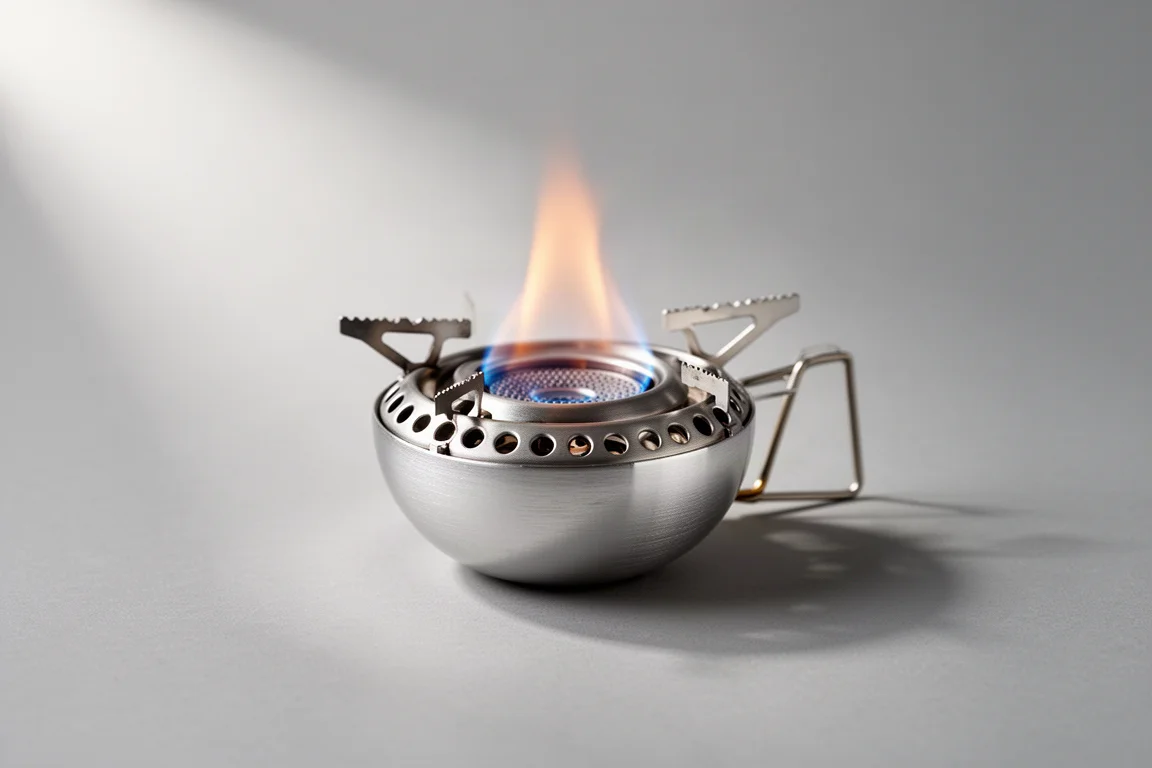
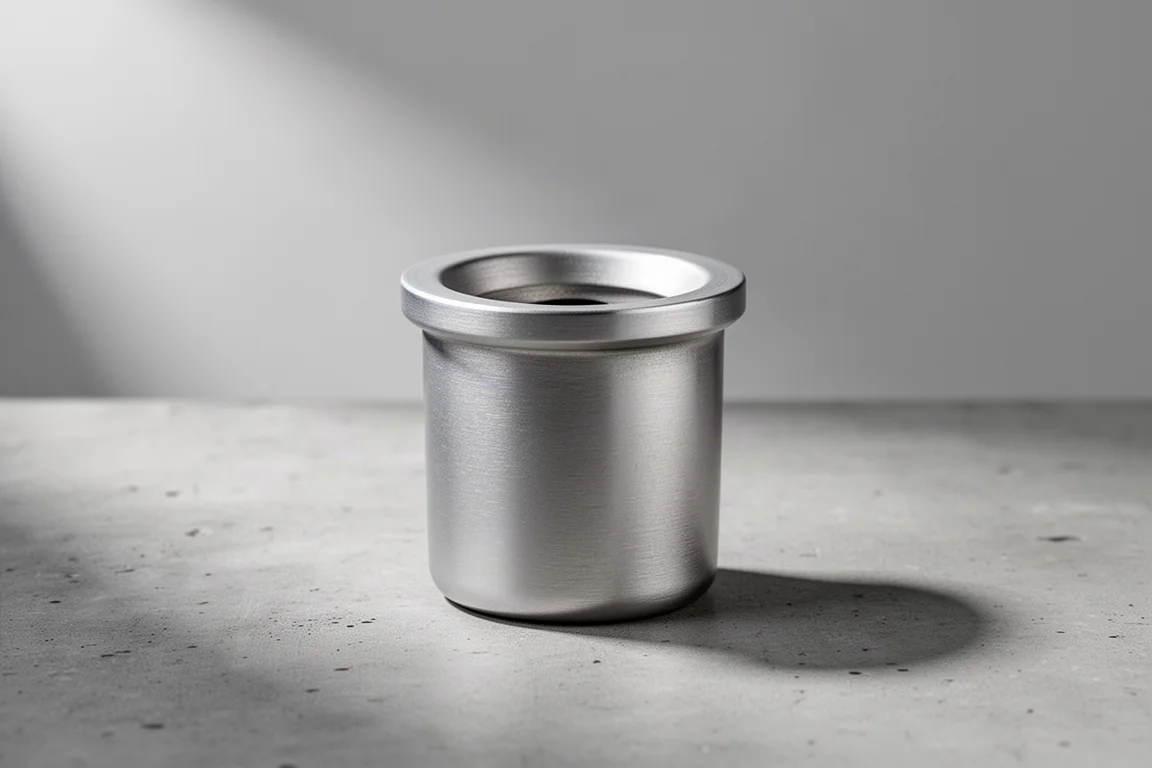
The Gram Weenie Pro is a stove in the strict sense: the flame comes out around the outside of the body, so a pot can rest directly on top of it. That removes two items from your pack at once, since no separate pot stand is required, and a small piece of foil wrapped around the body is enough to shield the flame from the breeze.
The result is a system that weighs next to nothing, disappears into a small pot, and stays very quiet while it works. It suits backpackers whose cooking is mostly boiling water for a dehydrated meal, and who would rather not fuss with a stand at the end of a long day.
Best Burner for Minimalist Setups: Toaks Siphon
The Toaks Siphon is a burner rather than a stove. Set a pot straight on top of it and the flame goes out, so it needs a pot stand to hold the pot at the right height above the burner, plus a windscreen to keep the flame from being pushed around and wasting fuel.
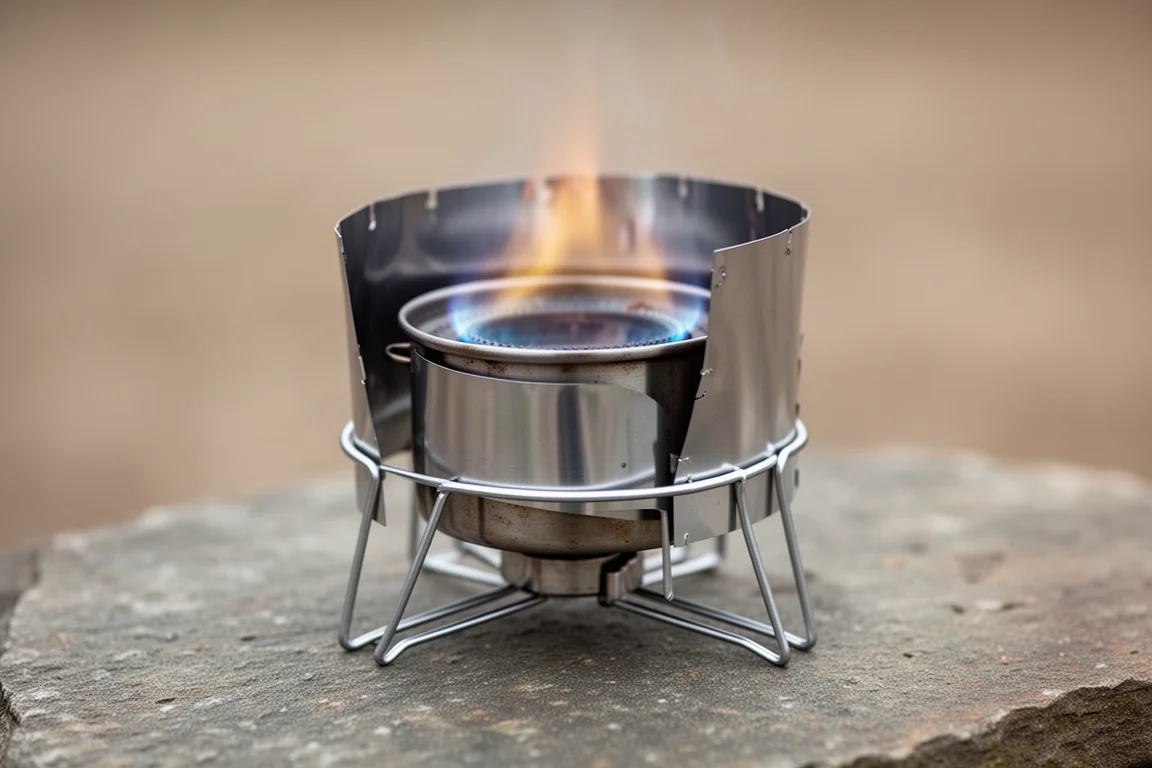
Treat it as one component of a modular kit rather than a complete answer. It is very light and disappears into a small pot alongside the rest of the system, which is exactly what makes it appealing to backpackers who enjoy tuning their setup piece by piece.
Best Spill-Resistant Stove: Trail Designs Cogen
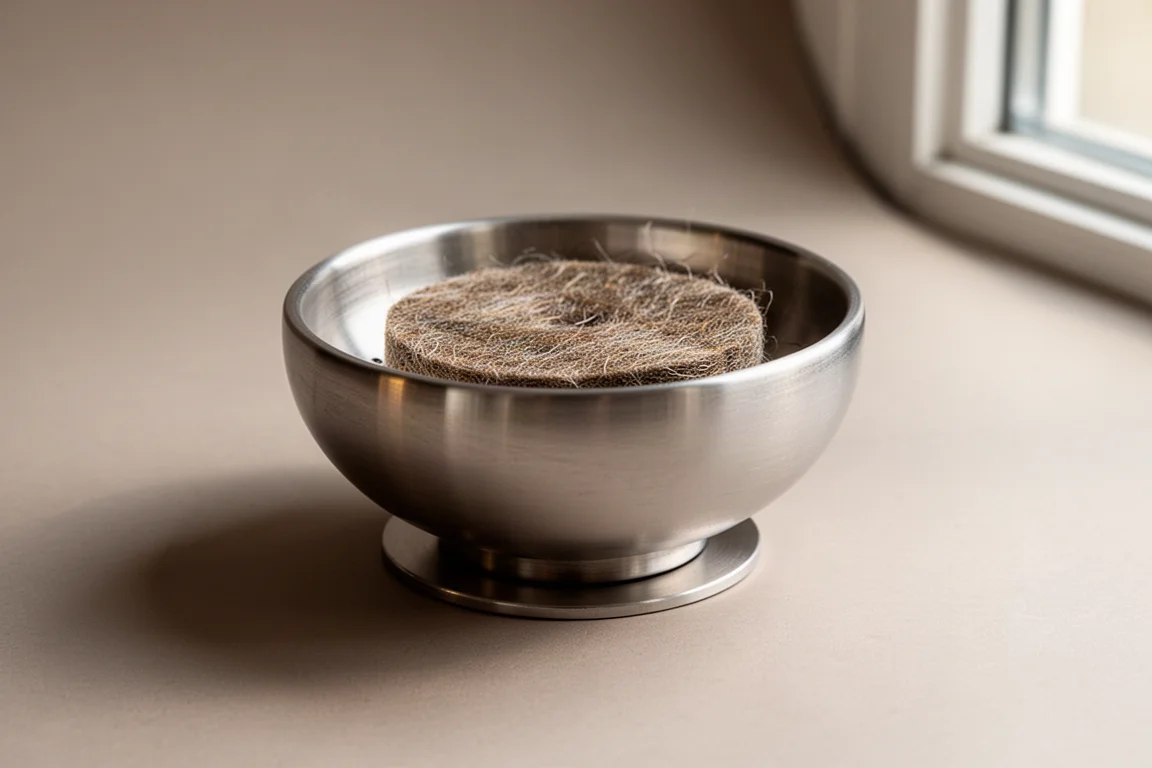
The Cogen takes a different approach to the mess problem. Inside the stove is a fiberglass-type material that soaks up the alcohol as you pour it in, so the fuel stays where it is instead of running across your camp kitchen. Once it is lit, it burns normally.
That design also makes it easier to avoid wasting fuel, because what you pour in stays in the stove rather than soaking into the ground. It is still an alcohol stove, so a level surface and some wind protection remain worthwhile, but it removes one of the more annoying failure modes of the category.
Best Integrated Windscreen System: Trail Designs Caldera Cone
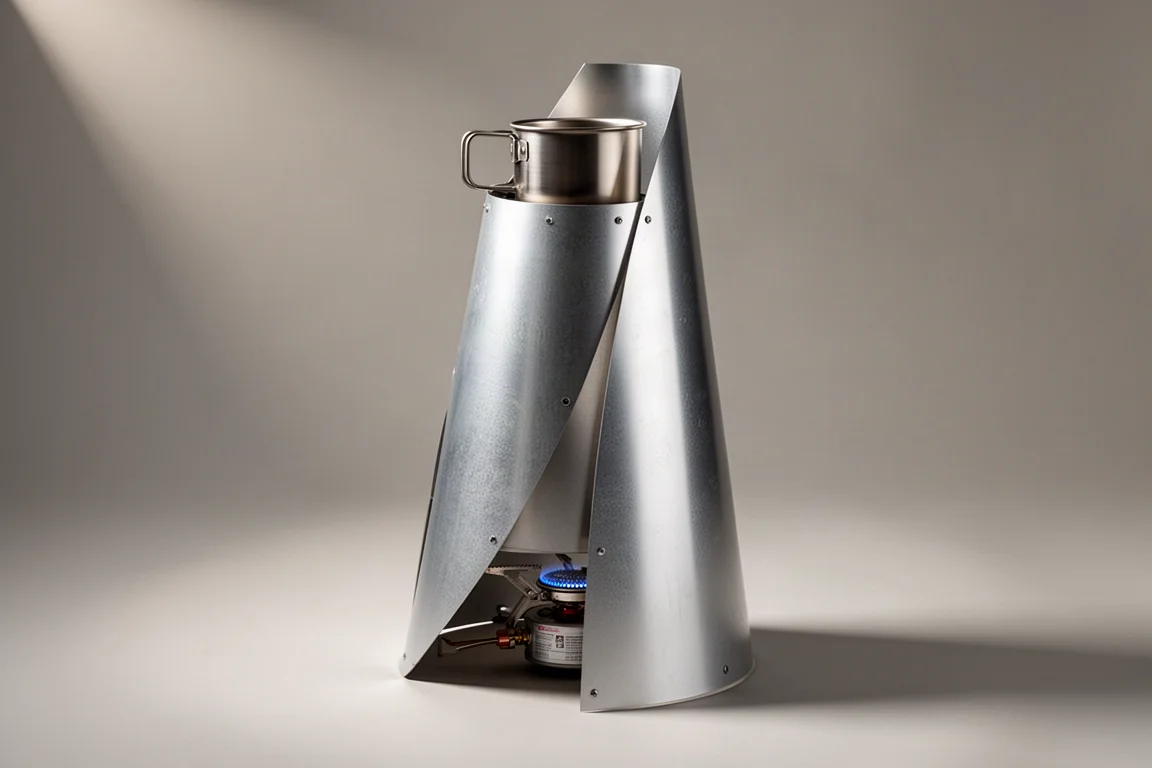
The Caldera Cone is built around a specific pot, in this case a 550ml pot, and the cone wraps that pot to create a sheltered pocket around the flame. Wind is one of the biggest reasons an alcohol boil takes longer than it should, so that protection is more than a convenience.
Just as importantly, the cone sets the pot at the correct height above the burner and gives the whole assembly a wide, stable base. Compare that with balancing a larger pot on a canister stove perched on a rock, where one nudge can send dinner sliding off. A matched cone and pot is far less likely to end in a spill.
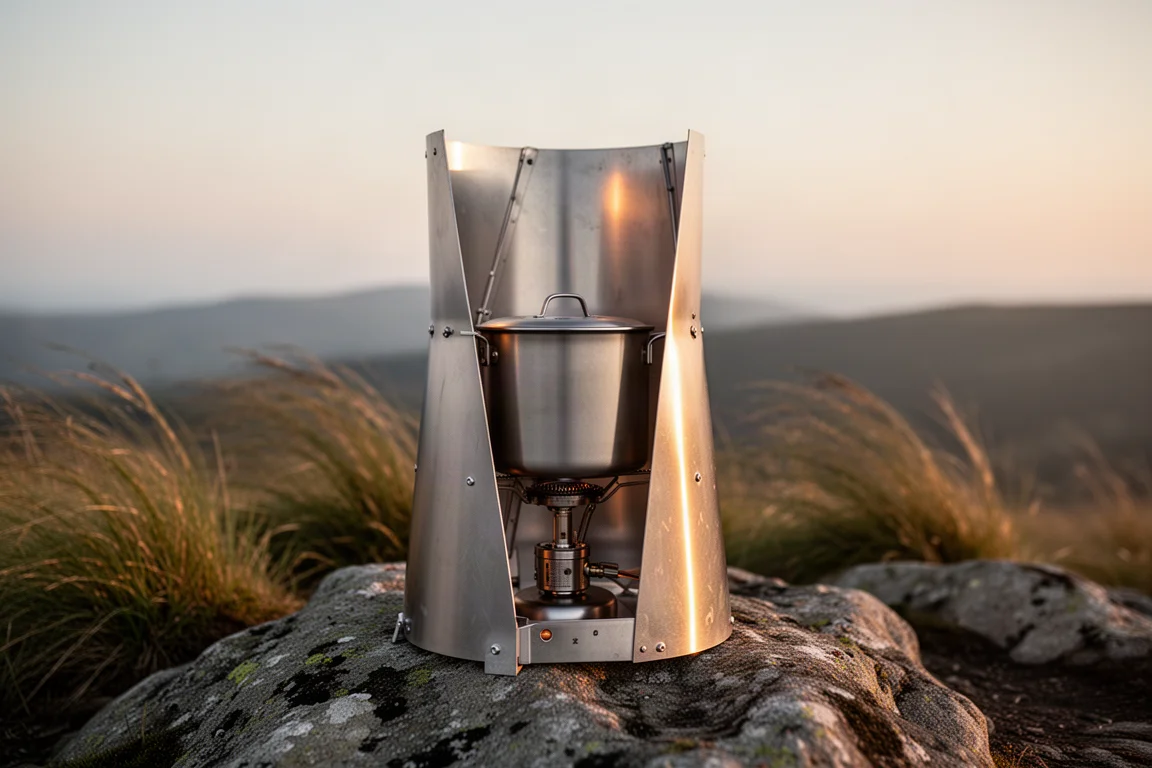
The trade-off is specificity. Because the cone is shaped for a particular pot, it is not a one-size-fits-all accessory, and it adds a little bulk compared with a bare burner.
The Pot That Ties It Together: Toaks 550ml Pot
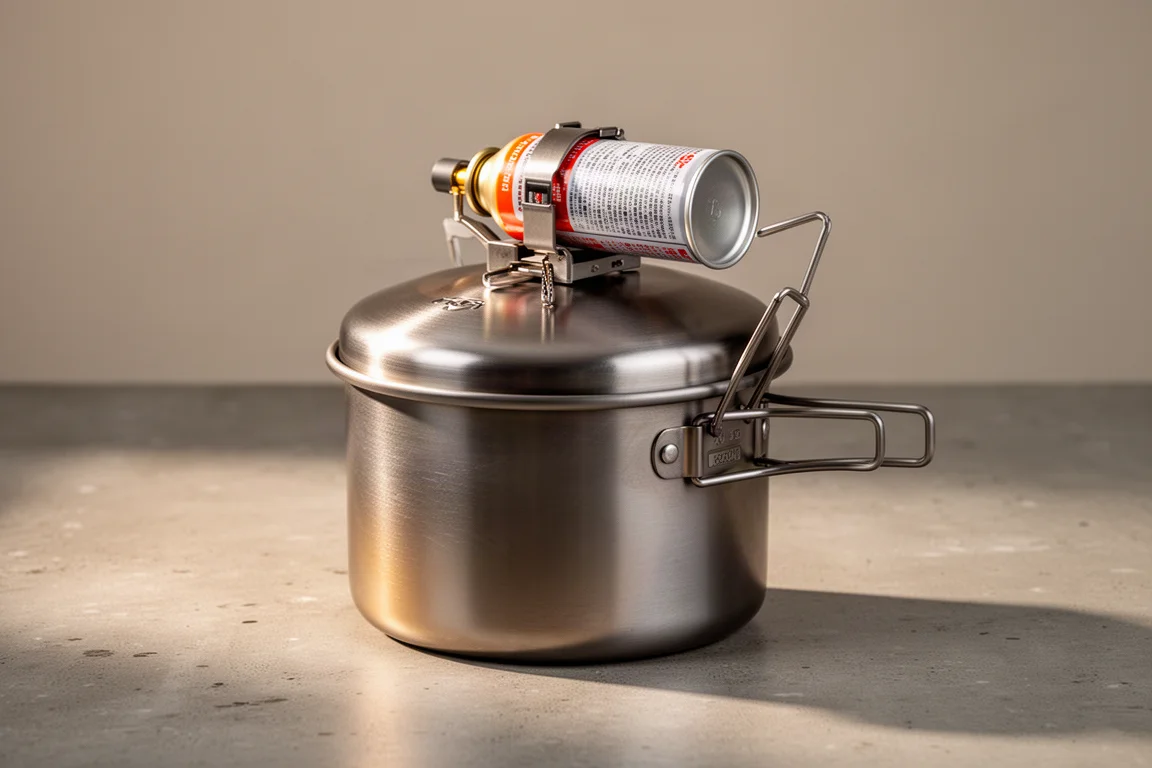
A 550ml pot looks small, and for a solo backpacker eating dehydrated meals it is the right size. It boils roughly two cups of water, enough for a typical meal in a bag, and it doubles as a container: an entire alcohol stove system, windscreen, lighter and all, can drop inside it.
That nesting is a large part of why alcohol kits carry so well. With a canister setup you can usually fit either the canister or the stove into a pot this size, not both, so something has to travel loose in the pack.
Buying Advice
Start with the trip rather than the gear. If you are out for a weekend and boiling water for a handful of meals, a small fuel bottle and a light stove cover it. Longer trips change the math, and that is where fuel bottles of different sizes, from roughly three and a half ounces up to about eight, let you carry closer to what you will actually burn.
Next, decide how much assembly you want at camp. A burner such as the Toaks Siphon rewards backpackers who do not mind carrying a stand and a windscreen. A stove such as the Gram Weenie Pro, or a matched cone system such as the Caldera Cone, trims the parts list. If fuel spillage is your main worry, the absorbent core of the Cogen is aimed squarely at that.
Finally, be honest about where you cook. Exposed ridges and hard, uneven ground are the conditions where a stable base and wind protection matter most, and where a cone system earns its place. Sheltered campsites with soft ground are far more forgiving.
A canister stove remains a fine choice, and it is still the simplest option for many trips. An alcohol kit is worth the extra attention when fuel weight, quiet, and packability are the priorities.
Conclusion
The five pieces here cover the range of what an alcohol system can be: a stove that takes a pot directly, a burner that needs a stand, a spill-resistant design, a matched cone for windy campsites, and a small pot that holds the lot. Match the choice to your meals, your fuel needs and the ground you expect to cook on, and an alcohol setup can be a light, quiet and genuinely pleasant way to boil water in the backcountry.
Further reading
Related Reviews
Camp Kitchen
Snow Peak Cutting Board and Knife Set Review: A Foldable Outdoor Prep Kit
A practical look at the Snow Peak cutting board and knife set, covering its foldable birchwood board, high-carbon steel knife, care requirements, and who it suits.
Camp Kitchen
Trangia Ultralight Kettle 30 oz Review: Light, Affordable, and One Real Catch
A 6.2 oz aluminum camp kettle for around $25 that pours beautifully and holds up well, with plastic parts that need careful handling.
Camp Kitchen
HumanGear GoBites Trio Review: A Compact Cutlery Kit That Earns Its Place
A four-piece camping cutlery kit with a locking case, a sharp serrated knife, and a $15 price tag. Here is what works, and the one thing to know before buying.