Telescopes
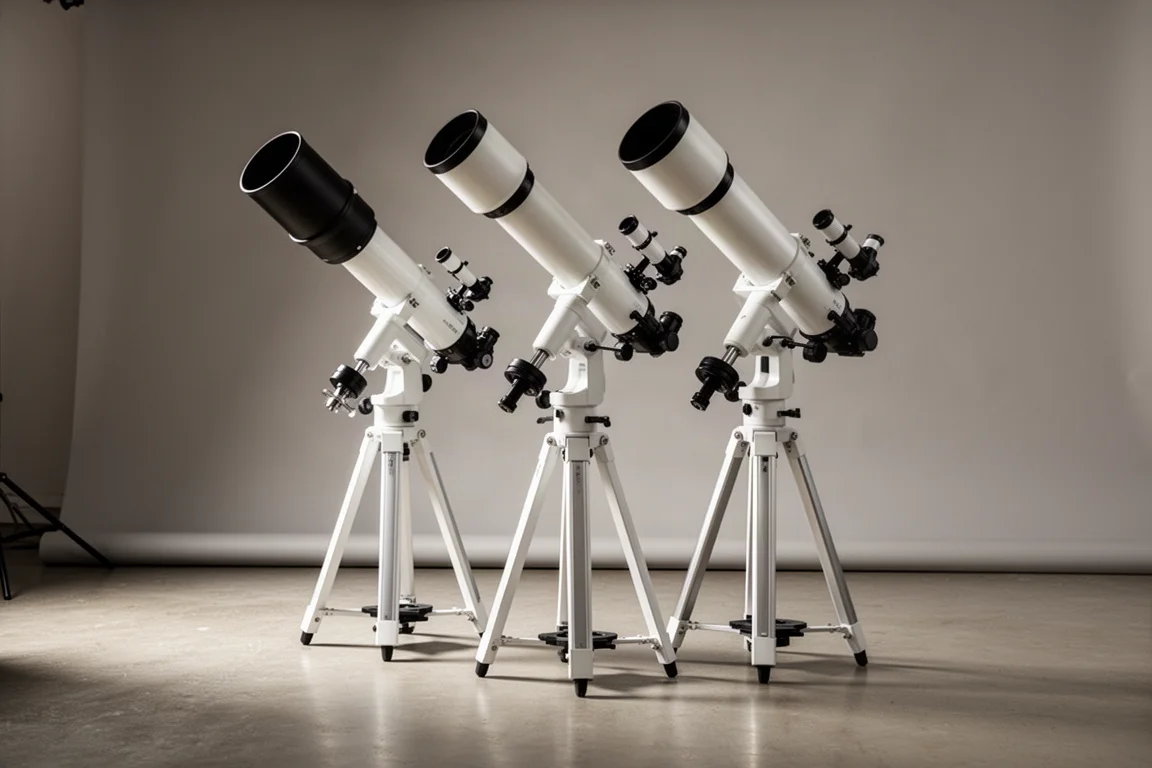
Three 5-Inch Refractor Telescopes Compared for Astrophotography
Explore Scientific AR127, Svbony 122, and Sky-Watcher Esprit 120 ED tested head-to-head for deep sky imaging.
Introduction
Five-inch (about 130mm aperture class) refractors sit in a sweet spot for deep sky imaging: large enough to gather meaningful light, small enough to live on a manageable mount. In this comparison we look at three of them at very different price points: the Explore Scientific AR127, the Svbony 122, and the Sky-Watcher Esprit 120 ED.
A quick bit of context for anyone newer to the hobby. A refractor focuses incoming light using glass lenses, and aperture simply means the diameter of the primary lens at the front of the tube. Bigger aperture means a bigger light bucket, which reveals smaller and fainter detail in deep sky objects. But for photography, other factors matter just as much, and the tracking mount is at the top of that list. Any telescope this size used for astrophotography needs a mount that can keep up, ideally with an auto-guiding system for extra accuracy.
Why Compare These Three Telescopes
This comparison was built around two specific questions. First, both the Svbony and the Sky-Watcher are apochromatic triplets using extra-low dispersion (ED) glass, but they use different types: the Svbony uses FPL-51 glass while the Sky-Watcher Esprit uses the higher-quality FPL-53. The question was how much difference that actually makes to false color fringing around bright stars, the usual yardstick for judging ED glass.
Second, there is a popular theory that an achromatic refractor, the cheapest kind, can be nearly as good as an apochromat if you shoot with narrowband filters. To test that, the budget pick here is the Explore Scientific AR127, a doublet achromat with no ED glass. It has a reputation for solar imaging with a Daystar Quark, but for this test it was paired with 5nm Astrodon narrowband filters, much wider than a solar filter but still very narrow compared to broadband imaging.
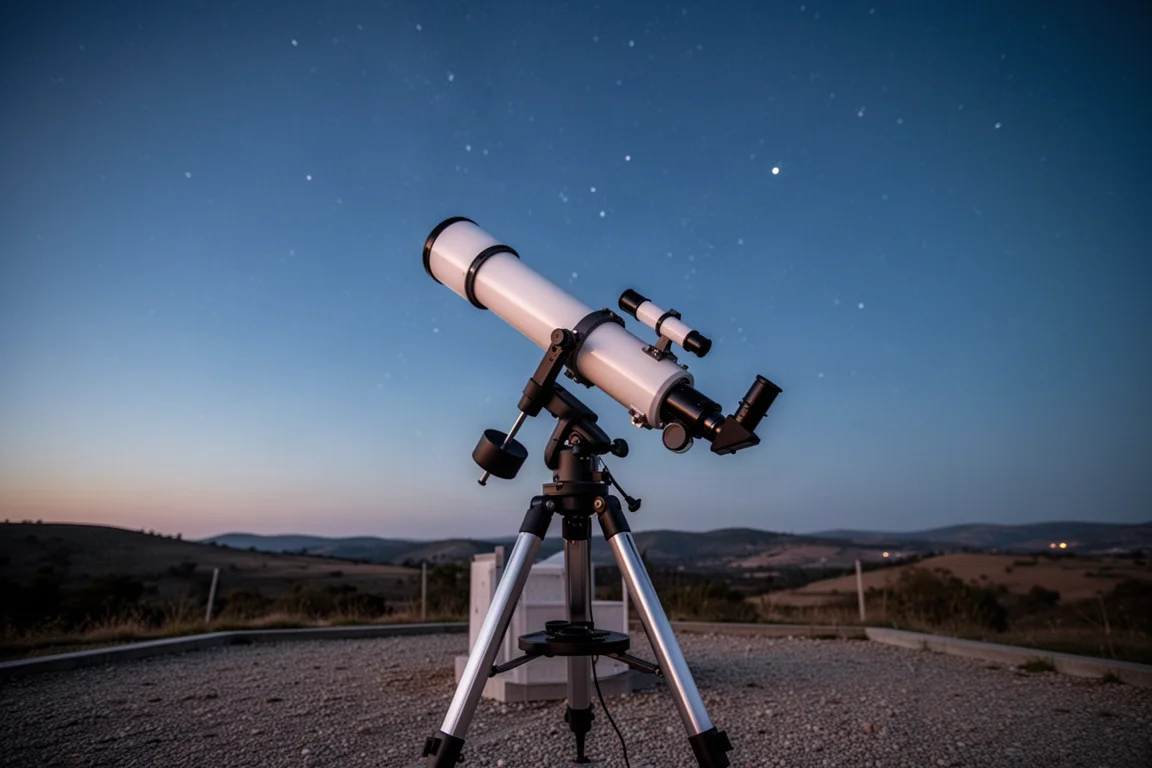
Imaging tests used both a one-shot color camera and a mono camera with narrowband filters, both full-frame with the demanding IMX455 sensor. Color tests used three-minute subframes without calibration, guided well from an observatory with the target high in the sky, to keep variables controlled.
Build and Handling
The Explore Scientific AR127 has a fixed dew shield that cannot retract, so it stores a bit longer. It is glossy white with a Vixen-style dovetail that has only two ring mounting holes, since the rings must sit a set distance apart to support the top handle. Mounting hardware feels well done overall, though a shiny metal plate screwed to one side of the dovetail made it a non-standard width on some mounts, blocking it from sliding into a saddle until removed. The finder shoe is screwed directly onto the optical tube, placed high enough to run a guide scope, with an additional channel in the top handle. The focuser is a dual-speed 2-inch unit, Crayford style, on the cheaper-feeling side, with distance markings, 48mm threads behind the compression ring, and both tension and locking knobs. It could likely be swapped for a third-party focuser. Weight with cap off, rings and dovetail installed: 13 lb 14 oz (6.3 kg).
The Svbony 122 has a retractable dew shield with three retaining screw holes (the review copy was missing the screws, likely lost by previous handlers). It is matte white with a slight sheen, and the rings and Vixen dovetail use lots of cutouts to save weight, making it a very light scope for its length. A knob at the rear rotates the entire focuser, which can put focusing knobs at awkward angles, though it also lets you place them wherever you like. It has two spots for Synta-style finder shoes; a guide scope with some height can clear the rings, though some guide scopes will not fit at the stock shoe position, so the rings’ tapped holes or a top plate are useful alternatives. The focuser is a rack-and-pinion type, a bit noisy and not the smoothest, but dual-speed with a lock and focus markings. A field flattener screws onto the end of the tube in place of the visual back, ending in M48 threads with 55mm back focus to the sensor. Weight with cap off, rings, plate and flattener installed: 14 lb 11 oz (6.6 kg).
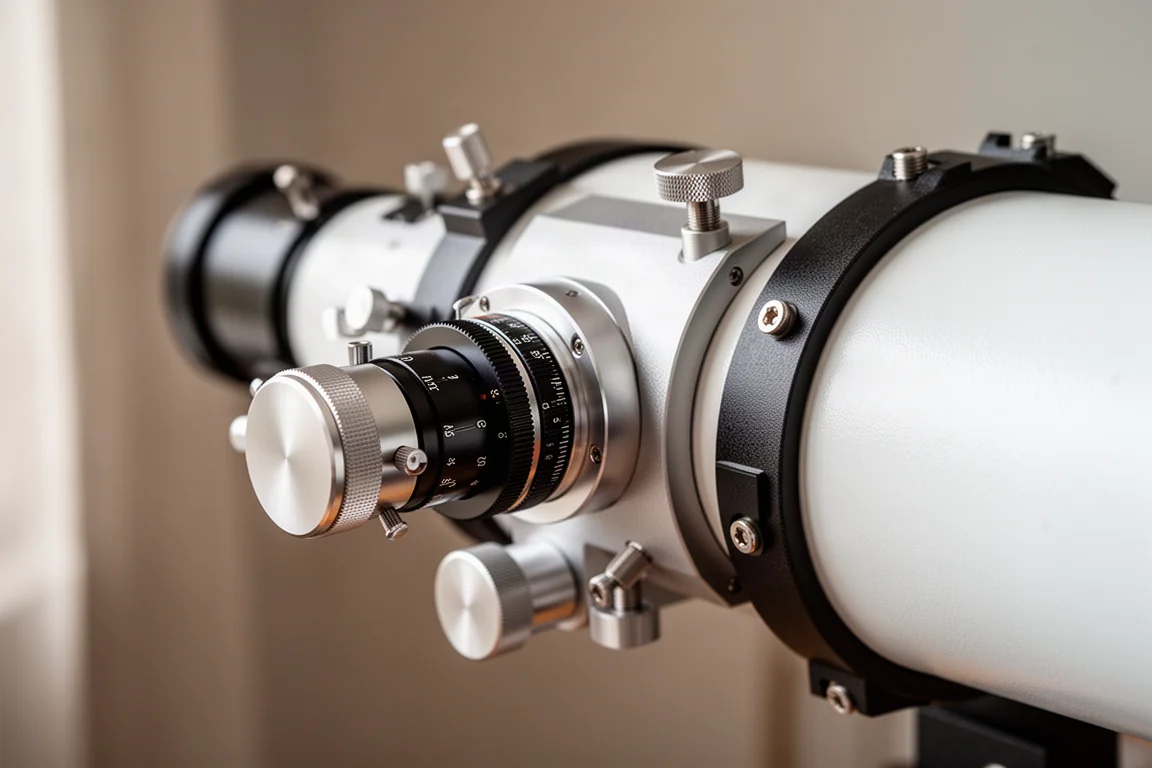
The Sky-Watcher Esprit 120 ED Super APO triplet is the most substantial of the three. Its retractable dew shield has some play when the locking screws are loose, but locks down firmly. The thick rings are felt-lined, and the green Sky-Watcher Losmandy plate matches the rest of the Sky-Watcher ecosystem nicely. Each ring has five tapped holes on top for plates and accessories. Rotation is handled two ways: a captain’s wheel that rotates the entire focuser, and a two-ring camera rotator behind it. Neither is a favorite; the glossy metal pieces are hard to grasp with cold hands on winter nights. The focuser is a 3.4-inch dual-speed rack and pinion with a steel rail on top to prevent rotational play, a rare and welcome addition, plus markings for repeatable focus. The included 1x flattener replaces the visual back; an optional Sky-Watcher reducer and a Starizona Apex reducer are available. Weight with cap off, rings, plate and flattener installed: 22 lb 9 oz (10.2 kg). The package includes a premium hard-sided case with wheels, handles on three sides, custom cutouts for the included accessories including a right-angle corrected finder diagonal, and built-in protective racquetball-style bumpers.
Imaging Performance
With one-shot color subframes, results matched expectations. The Explore Scientific AR127 showed visible violet fringing around bright stars, as expected from an achromat, and its corners were fairly elongated since no field flattener was used and none is suggested on the manufacturer’s website. The Svbony 122, shot with its reducer, showed noticeable vignetting from the reducer, though calibration with flats would remove that. The Sky-Watcher Esprit 120 looked nearly perfect, with only a trace of corner vignetting likely from the threaded adapters rather than the scope itself.
Looking at stars across the full-frame field: the Svbony’s bright stars at the field edge get a bit funky, with halos that have bites taken out of them and some split chromatic aberration. The Esprit’s stars look near-perfect everywhere, including the extreme corners, round and undistorted, suggesting a nicely flat field.
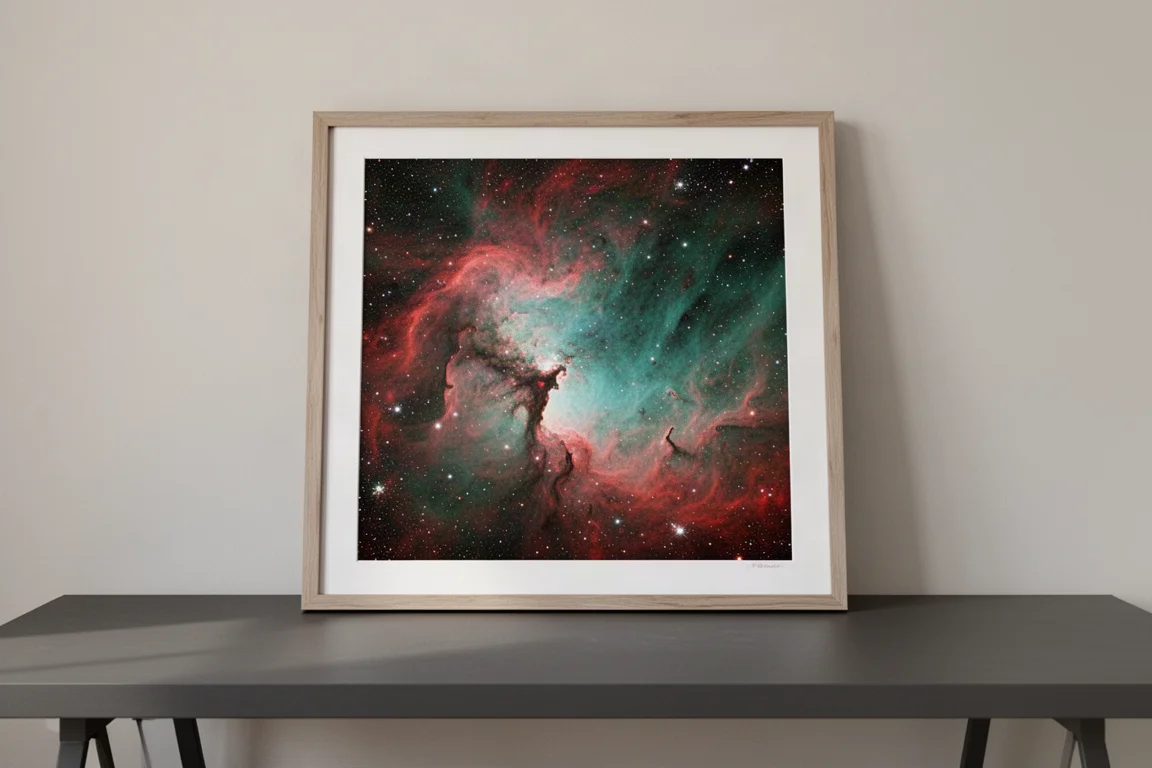
In stacked images the differences amplify. The AR127’s violet halos grow stronger and its stars are noticeably softer than either APO. At first glance the Svbony and the Esprit look very similar, so an extreme saturation test was used to separate them. The result was clear: the Svbony shows violet fringing on bright blue stars and a split color on a bright yellow star, while the Esprit’s stars stay clean even under heavy saturation. Some splitting on the Esprit may come from atmospheric dispersion rather than the optics. This is essentially what the FPL-53 glass is buying you over FPL-51: cleaner color on bright sources. The nebula detail itself, though, looked basically identical between the two APOs.
What the Narrowband Tests Showed
Here is where the story flips. Testing the achromat with mono narrowband filters (5-minute subs per filter with H-alpha and OIII) produced a genuinely surprising result: the theory holds up. The AR127’s H-alpha stack was shockingly good, far closer to the APOs than in one-shot color. Since narrowband samples just 5 nanometers of light, the achromat’s uncorrected blue response simply stops mattering, and star sharpness and control looked comparable across all three scopes.
The Esprit still had the best OIII of the batch, with excellent field illumination and noticeably better contrast, likely thanks to having the best coatings of the three, while the AR127 likely has the worst. In H-alpha, contrast was closer, with the Svbony not far behind the Sky-Watcher. Combining the data into bicolor HOO images showed all three telescopes converging, a stark contrast to the wide gulf in broadband color imaging. Narrowband is where a budget achromat genuinely punches above its weight; broadband is where the premium glass earns its price, especially if you like pushing saturation on stars.
Buying Advice
If your imaging is broadband, one-shot color, or RGB, the Sky-Watcher Esprit 120 ED is the pick. Its marketing claim of virtually eliminating chromatic aberration proved accurate, stars are clean and round to the extreme corners, and the included wheeled case and flattener round out a complete package.
The Svbony 122 is the value APO of the group. Stars are not as perfect at the field edges, and the reducer shows vignetting without flats, but center-of-field detail matched the Esprit closely and the nebula performance was nearly identical. The recommended bundle includes the soft-sided case and the field flattener; if you are not shooting with it, the OTA alone saves a couple hundred.
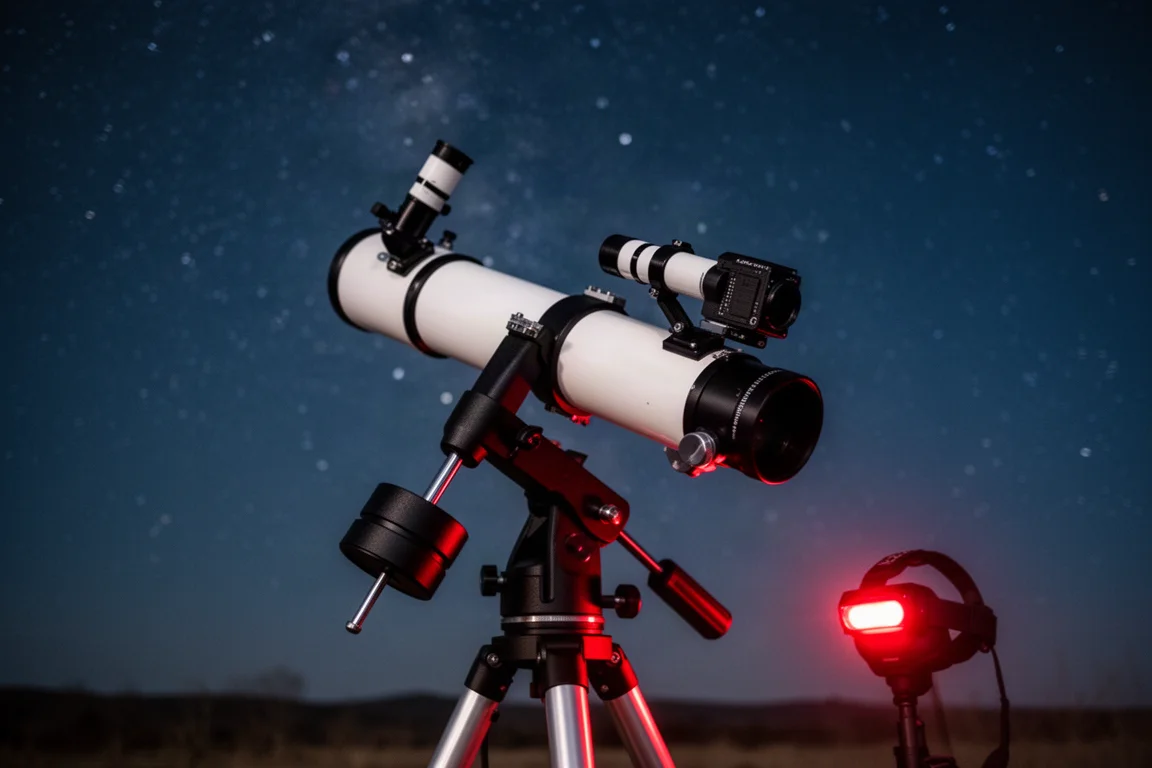
The Explore Scientific AR127 makes sense for a specific strategy: narrowband mono imaging, or solar work with a Daystar Quark. Paired with 5nm filters it performed far better than its price suggests, just do not expect clean broadband star color. And whichever tube you choose, remember that the mount and guiding matter enormously at this focal length.
Conclusion
Three five-inch refractors, three very different value propositions. The Esprit 120 ED delivers near-flawless optics worth its premium for color imaging. The Svbony 122 gets you most of the APO experience for less, with minor edge-of-field compromises. And the AR127 proves that with narrowband filters, a well-regarded achromat can hang with telescopes costing far more. Match the scope to how you actually shoot, and any of the three can be the right answer.
Product link
View more details for Explore Scientific AR127
This product is mentioned in the review. Check the specifications, options, and compatibility before buying.
View more details for Explore Scientific AR127Further reading
Related Reviews

Telescopes
Sightron SJ75 UF and Sky-Watcher HS125: Two Telescopes Worth Watching
A look at two notable telescopes from a recent camera and optics expo: a sharp new astrograph from Sightron Japan and a compact fast reflector from Sky-Watcher.

Telescopes
SV503 102ED Review: A Budget 102mm Refractor That Surprises
The SV503 102ED is an affordable 102mm doublet refractor that delivers surprisingly decent star shapes and a smooth focuser, despite some chromatic aberration and light falloff.

Telescopes
SVBony MK127 Review: A Compact Maksutov-Cassegrain That Surprises
The SVBony MK127 is a 127mm Maksutov-Cassegrain telescope with a unique 0.65x reducer, making it a versatile option for visual astronomy and even some deep-sky imaging.