Hand Tools
Best 3/8 Drive Ratchets: 8 Ratchets Worth a Second Look
The 3/8 ratchet is the hand tool you will reach for most often. Here are eight options, from budget-friendly to locking flex-head flagships, with honest trade-offs for each.
Introduction
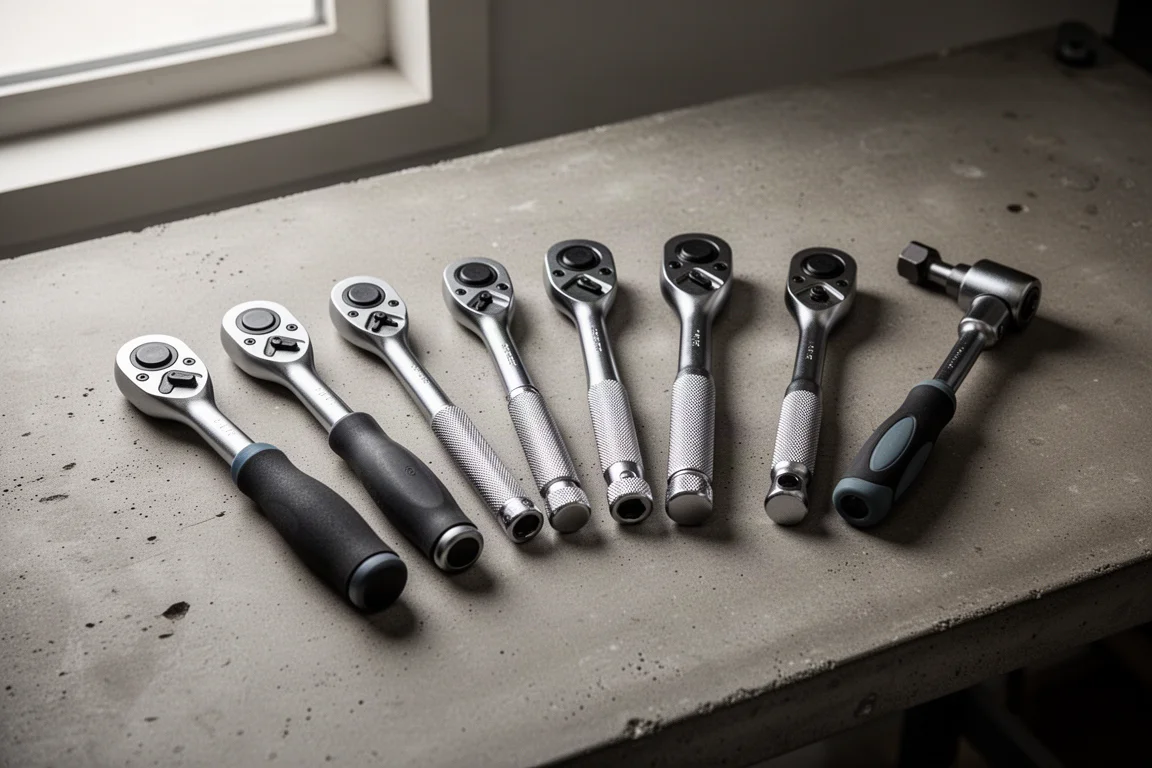
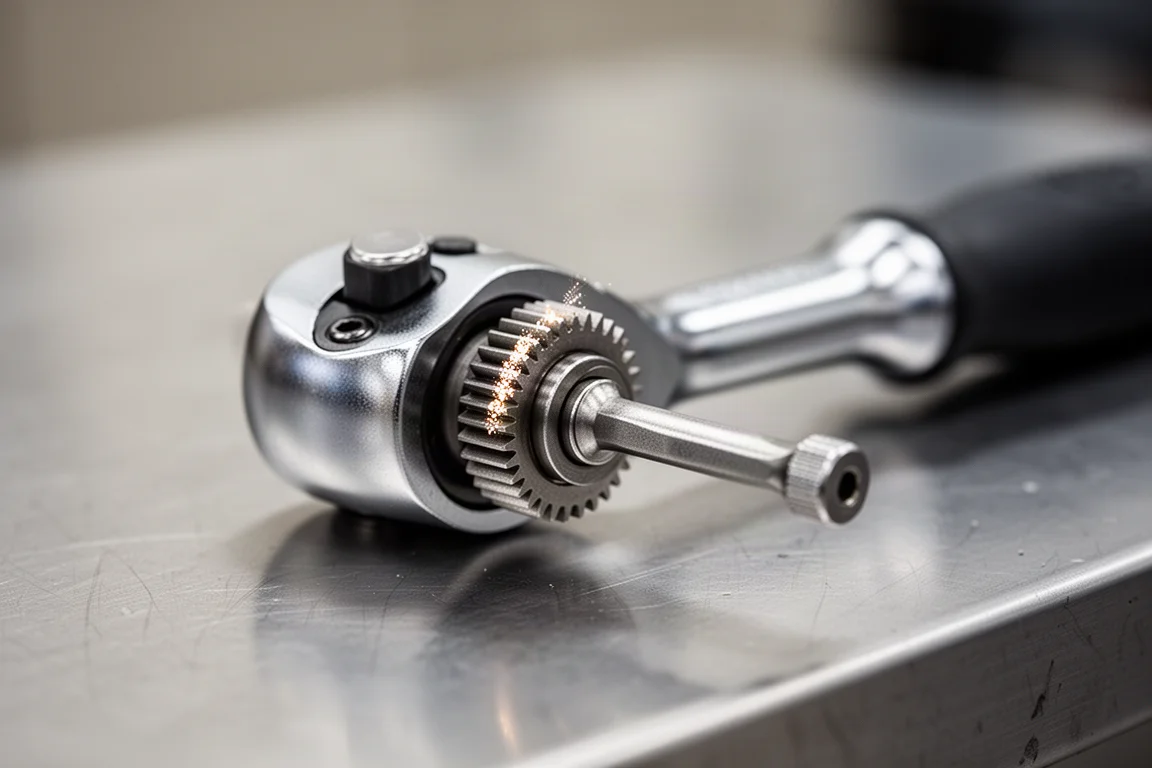
When people think about upgrading their hand tools, they usually reach for the wrong size. For most automotive work, the big half-inch ratchet stays in the drawer, because anything that needs serious torque is going to a power tool anyway. The tool that lives in your hand day after day is the 3/8 drive ratchet. If there is one hand tool worth spending a few extra dollars on, this is it. Below are eight ratchets that cover the range, from a cheap throw-in-the-bag option to a locking flex-head flagship.
Why the 3/8 Ratchet Deserves Your Budget
Think about lug nuts: tightening a truck’s lug nuts to around 130 foot-pounds with a foot-long 3/8 ratchet is not something you want to do to yourself or the tool. That is half-inch territory, or better yet an impact wrench. The 3/8 ratchet is the daily driver: smaller fasteners, tighter spaces, constant use.
That constant use is exactly the argument for investing here. Of everything in the drawer, the 3/8 ratchet is the one tool most likely to be in your hand, so it is the one where spending a little more makes real sense.
The Tekton Picks
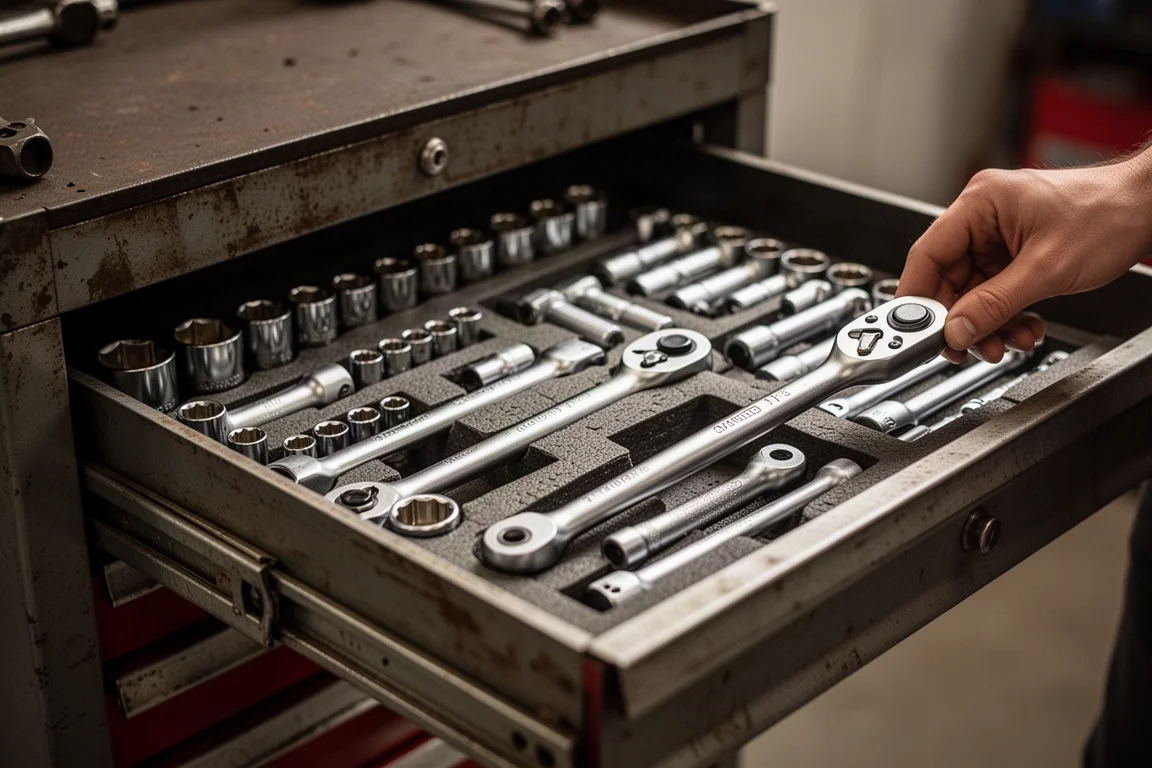
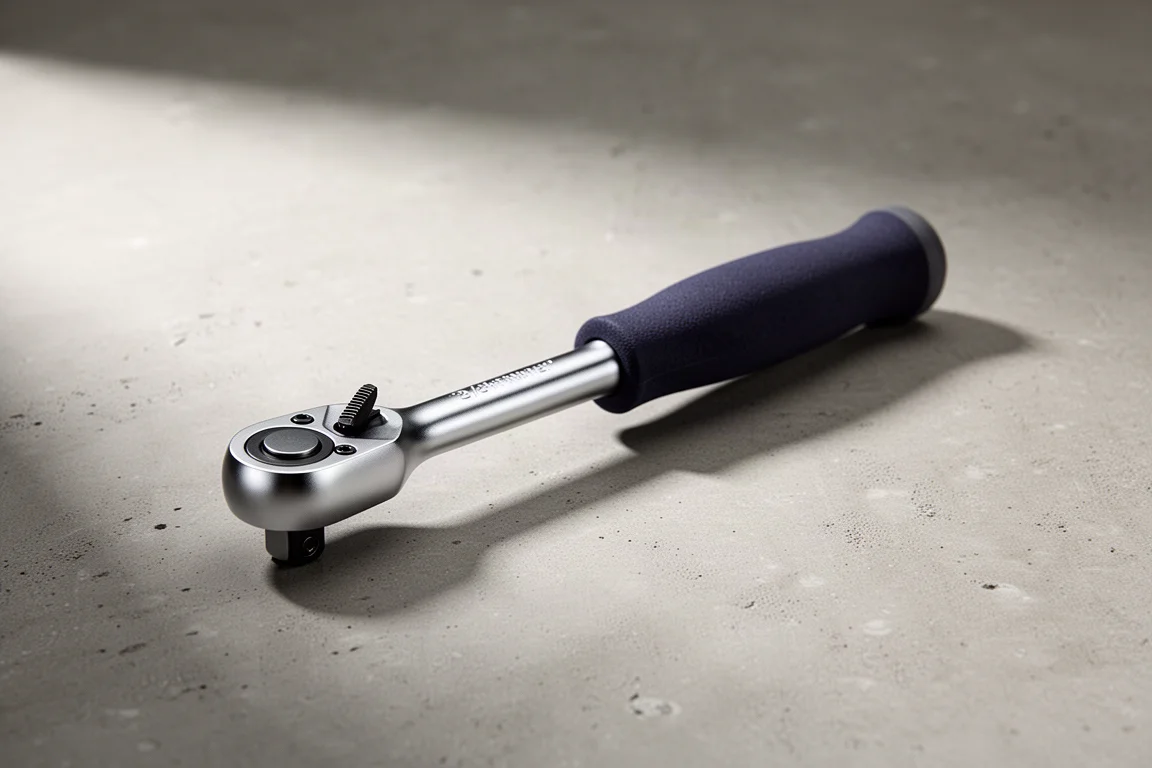
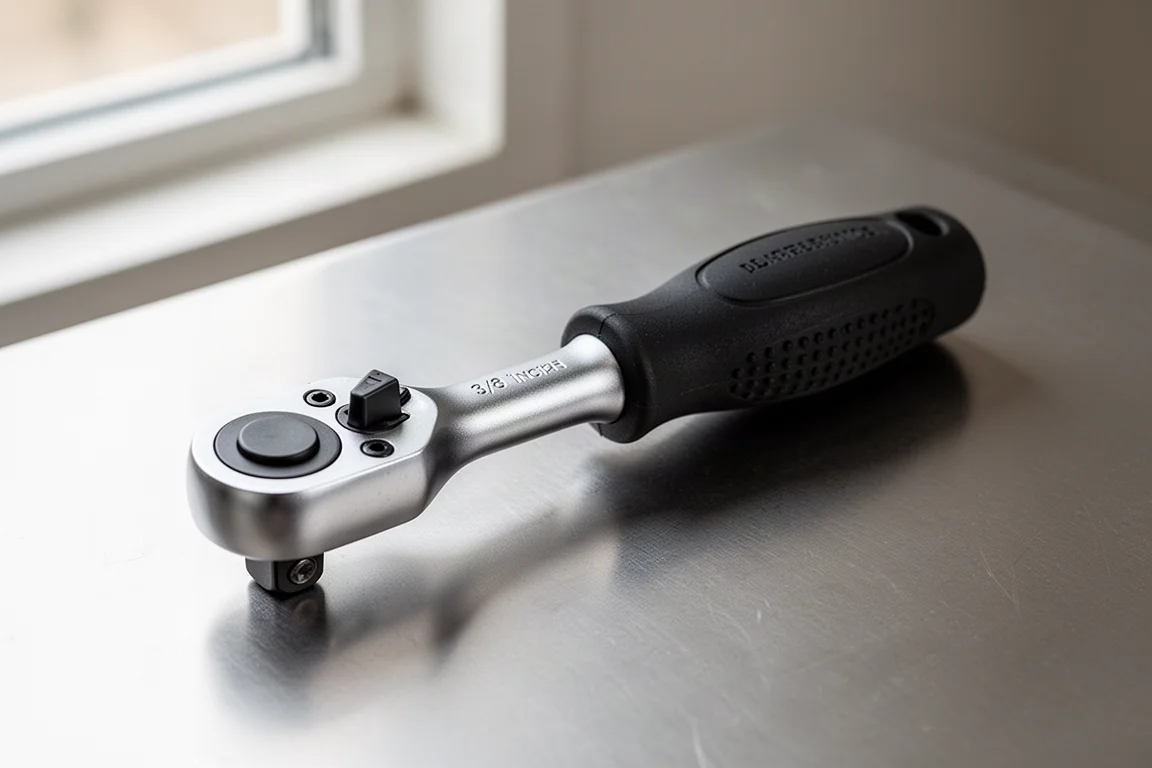
Tekton sent over two ratchets from its newer soft-grip line, and both are strong contenders. The standard 3/8 uses a head design very similar to the previous version, with a soft handle material that is genuinely remarkable to hold. It is a little on the short side for a 3/8, but that is rarely a dealbreaker in real use. The switch mechanism feels smooth in operation. One note: these are not quick-release designs.
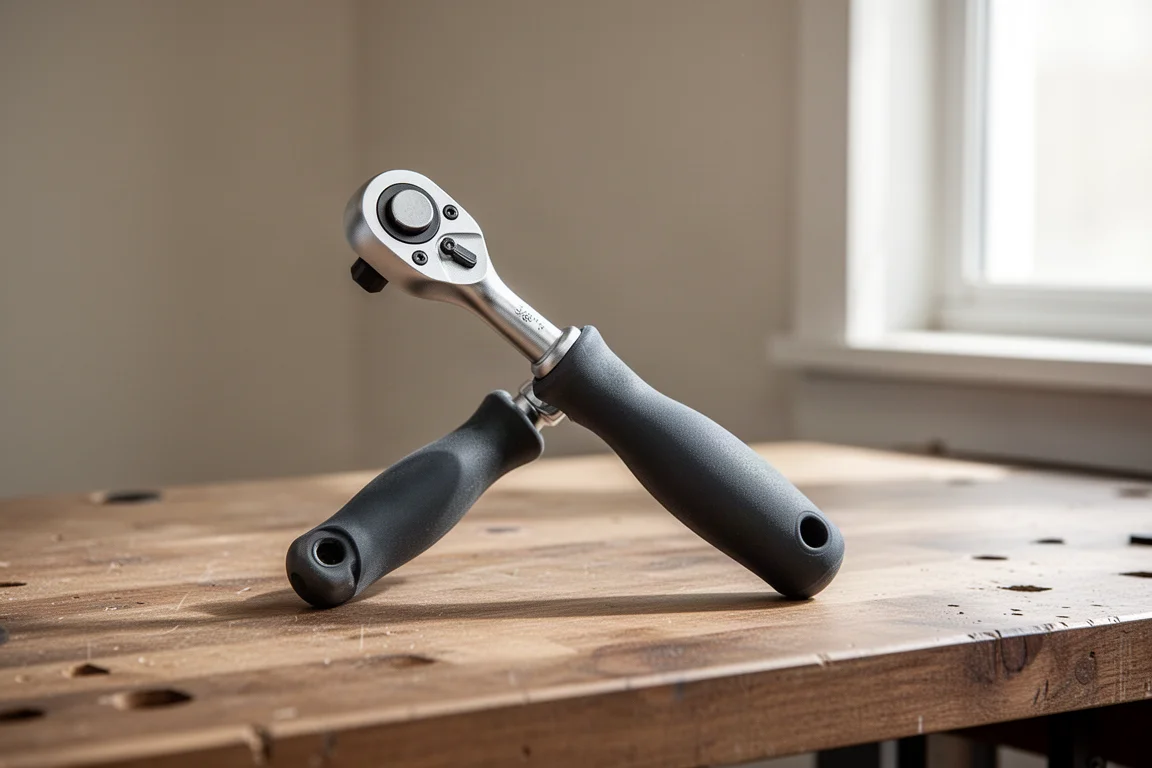
Tekton’s comfort-grip flex-head version shares the same soft-grip line and adds a pivoting head. The flex action swings a full 180 degrees, though it does not lock in place, which would be a nice addition. That pivoting head is what makes this style useful for those hard-to-reach fasteners that a straight ratchet simply cannot access.
Warranty is worth mentioning here. Tekton’s process is a photo-and-ship arrangement: send a picture of a broken tool and a replacement ships out. That compares favorably to brands that require an in-store trip.
The Vintage Corner
Two older ratchets are worth including because they show what lasts. A vintage SK 3/8, even a slightly stubby one with years of use behind it, still turns sockets faithfully. SK is not what it used to be as a brand, sadly, but the old tools keep going.
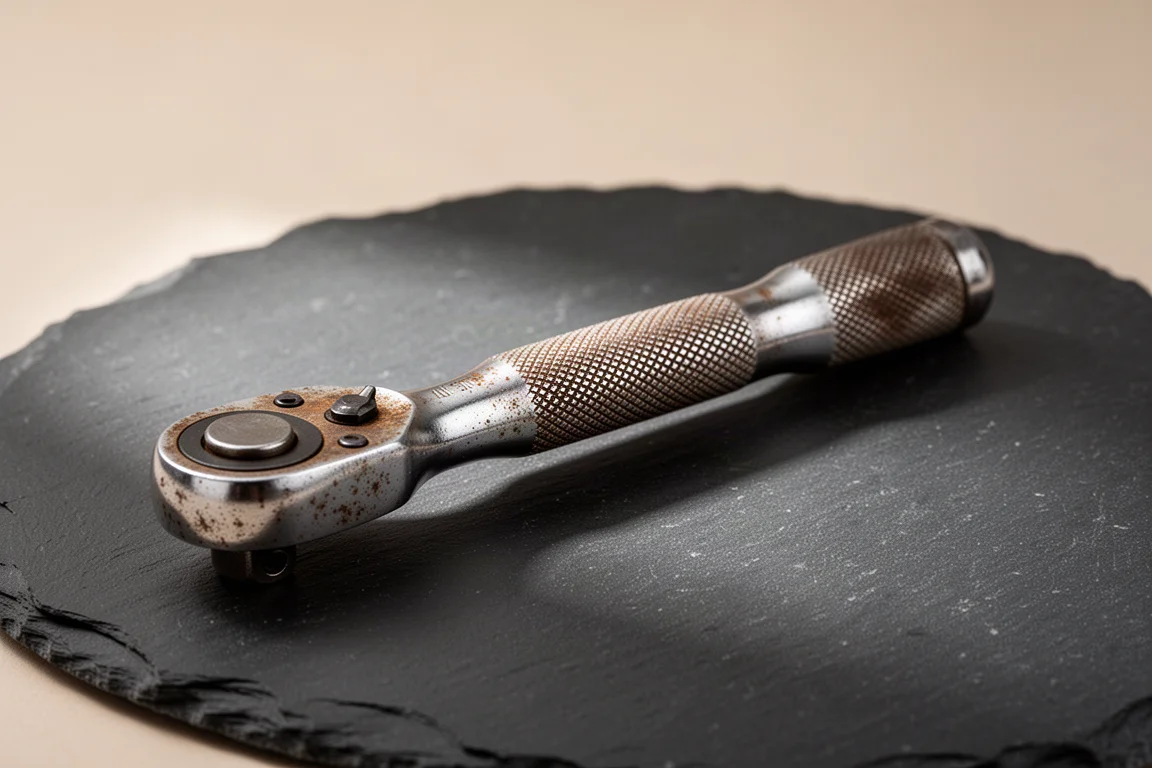
An even older vintage Craftsman flex head, made in the USA, demonstrates why the flex-head style caught on in the first place. To some people this is the one-ratchet answer: a single tool you can grab to do almost anything. Flex heads pivot to angle the drive square into awkward positions, which is precisely what makes the modern flex-head picks below so compelling.
The Premium Option
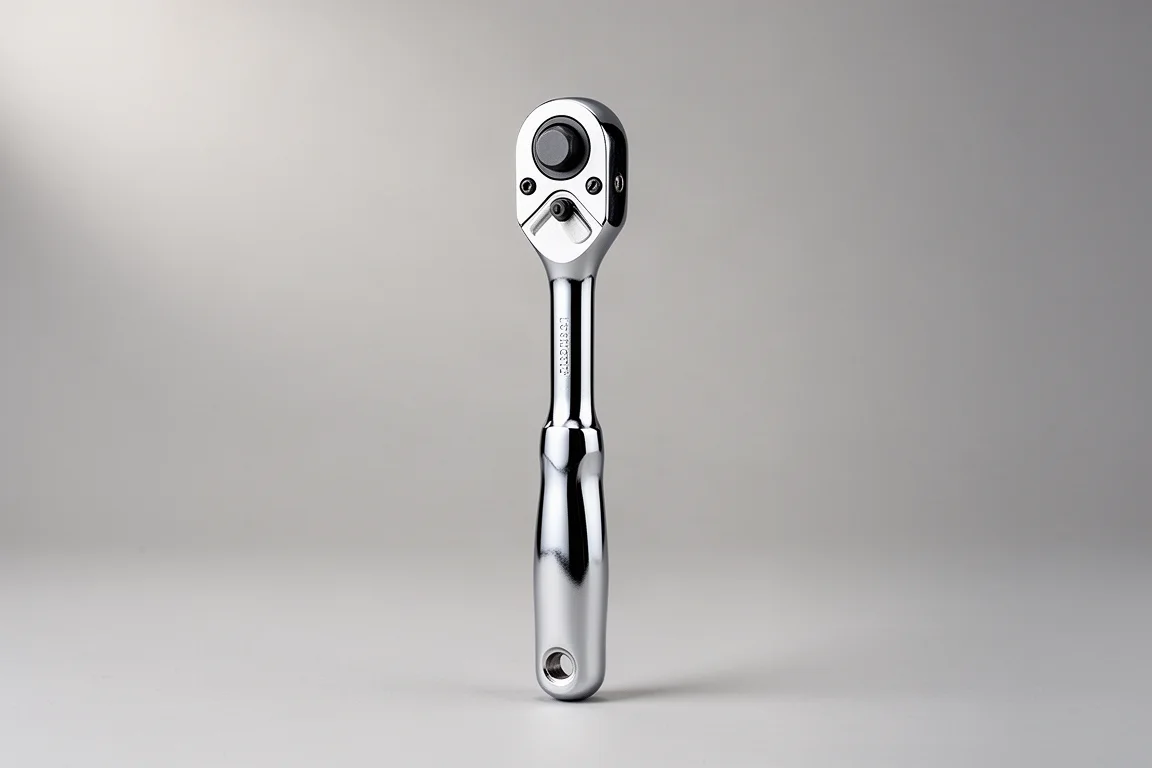
The Carlyle 3/8 does not get the respect it deserves. This is a genuinely nice ratchet: a large, refined head, a comfort grip, and a length that is considerably longer than the comparable Tekton. The trade-off is price. With list pricing around 120 to 130 dollars, it sits at tool-truck territory, so waiting for a sale is the smart play.
The Flex-Head Picks
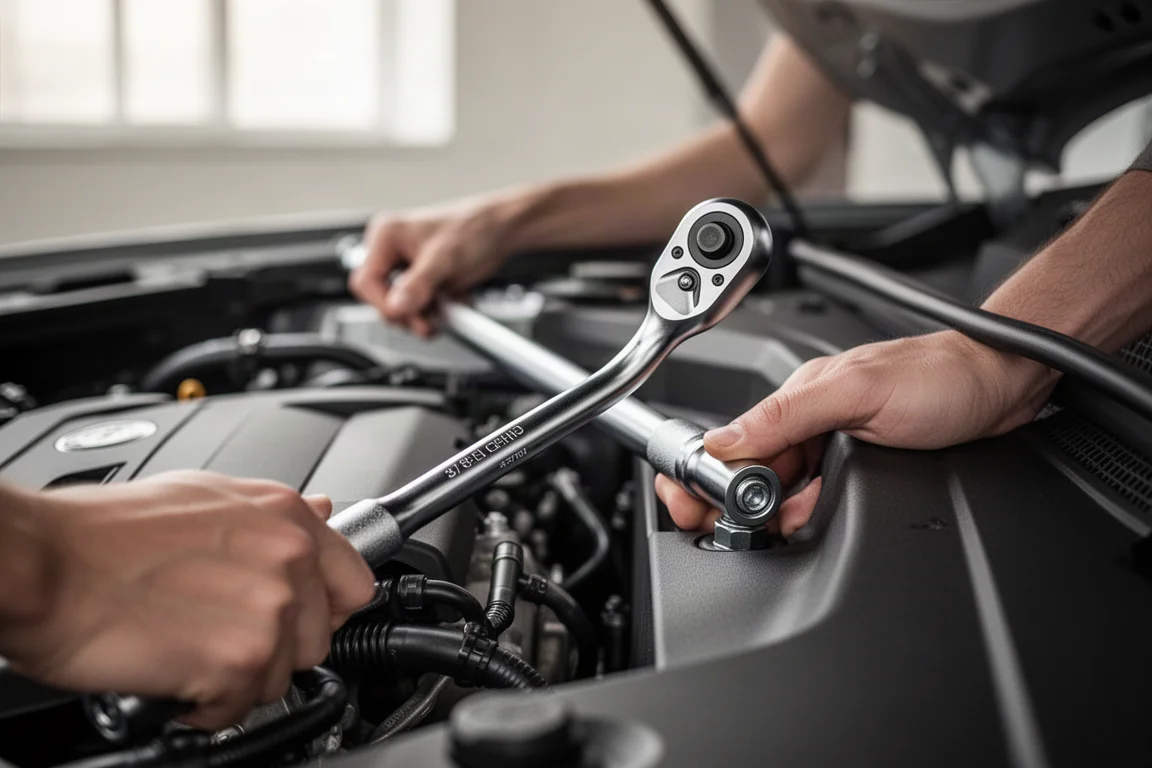
Beyond the vintage Craftsman, the modern flex-head category is where the 3/8 ratchet starts becoming the one tool you can grab for almost any job. Tekton’s comfort-grip flex head (covered above) offers a full 180 degrees of pivoting.
The GearWrench 120XP locking flex head is the standout of this group and, for many, the Excalibur of the toolbox. It combines a flex head with a locking mechanism, so the head stays exactly where you set it instead of flopping under load. The head itself is remarkably small and the mechanism feels refined, with a subtle spring-back that is easy to live with. Compared side by side with the Tekton, the two heads are extremely close in size, with minor differences at the base and midsection that you would only notice with a ruler.
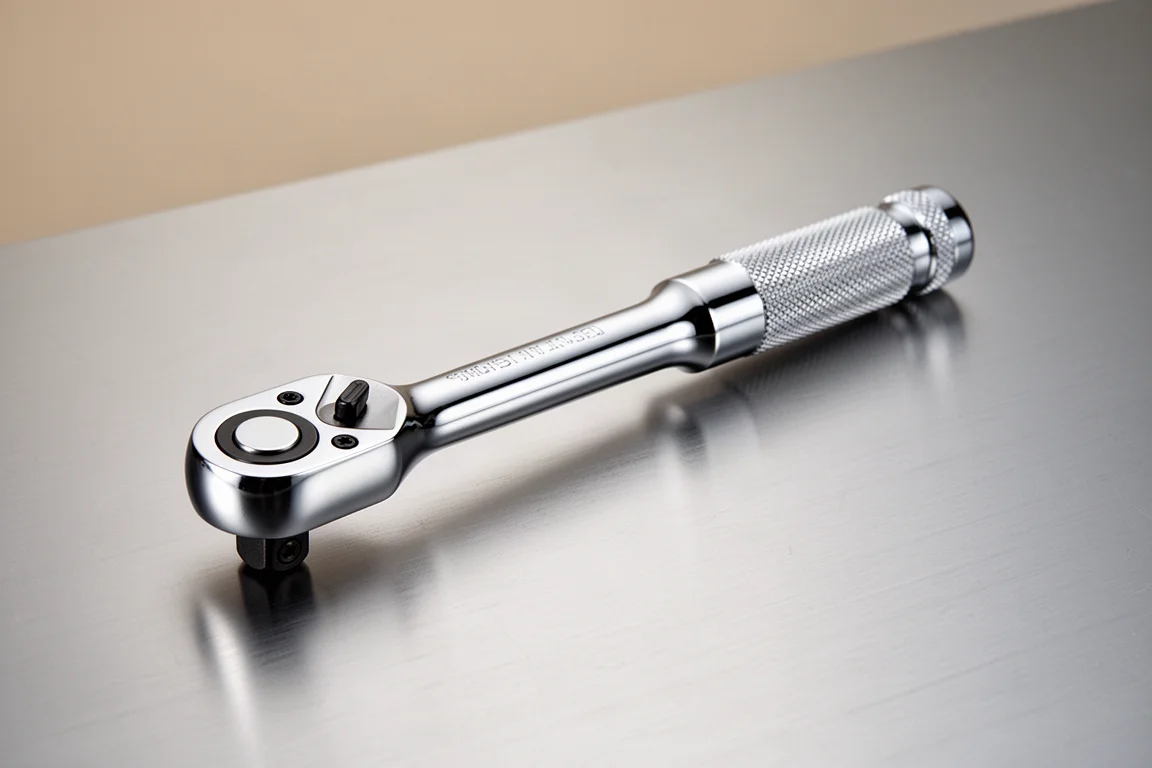
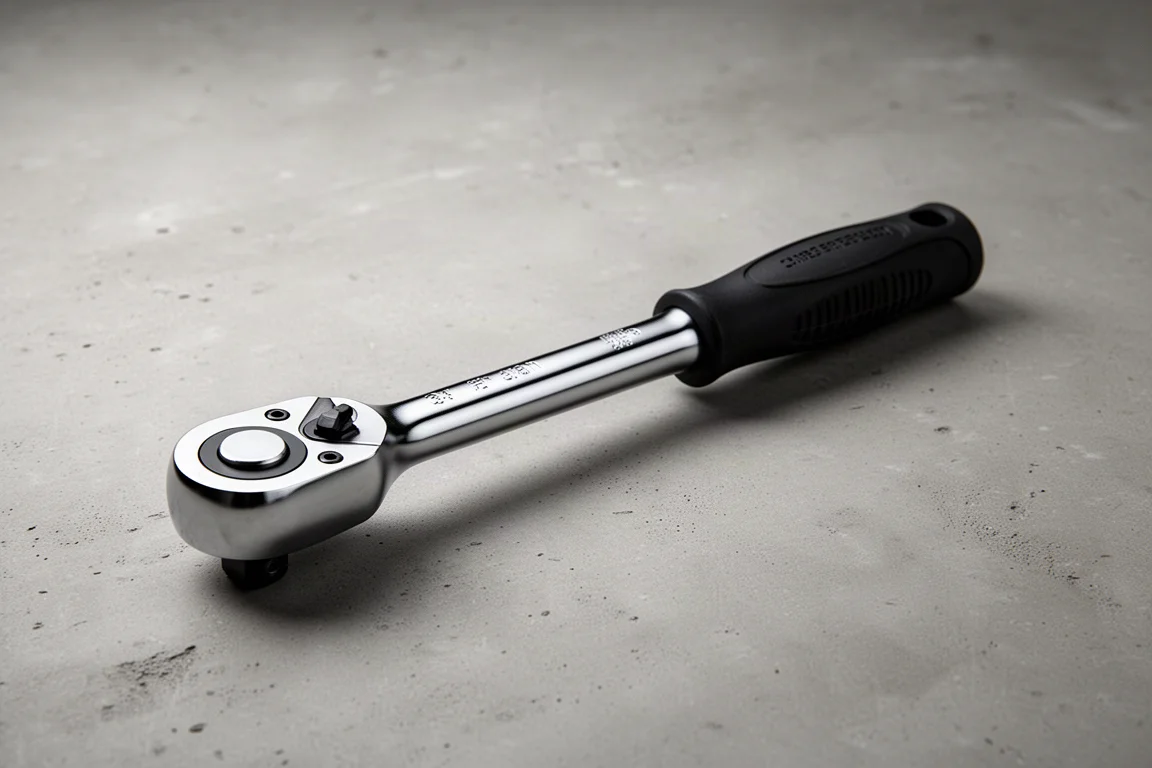
If the GearWrench is the Excalibur, the Icon 3/8 is the value that keeps it honest. Its comfort grip is a firmer rubber than Tekton’s, closer to a soft touch than hard plastic, and the ratchet itself runs a little longer overall. The switch is slightly more pronounced, which some people prefer for direction changes. Icon’s warranty works differently: you walk into the store and they swap it, typically in minutes, versus Tekton’s ship-it-to-you process. Both are easy to live with.
The Budget-Friendly Picks
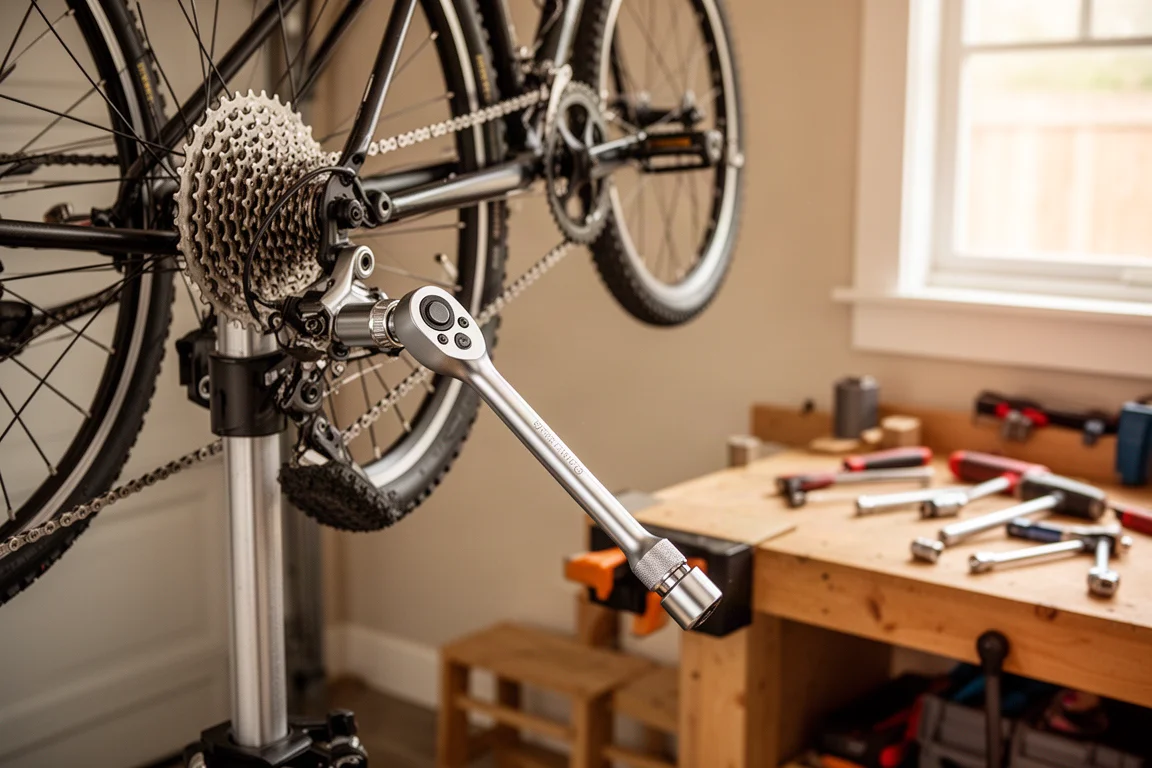
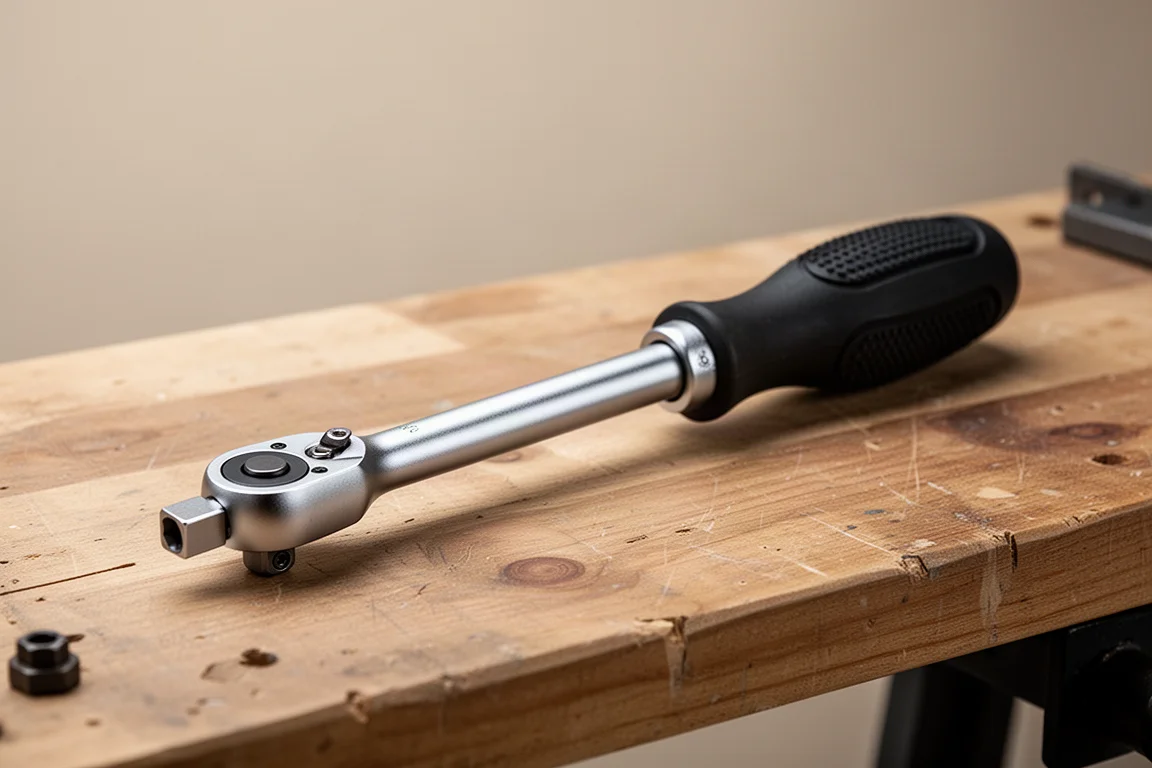
Not every job needs a premium tool. A long-serving Pittsburgh extendable ratchet with a comfort grip earns its place as the cheap, throw-in-the-bag option. It is extendable, it uses 3/8 drive on one end and 1/4 on the other, and it has been used heavily for bicycle repair where compact reach matters more than polish. It is proof that a solid starter ratchet does not need to cost much.
Buying Advice
There is no single answer for everyone, but a few patterns emerged from using all of these:
- If you want one do-everything ratchet: a locking flex head is the strongest case, and the GearWrench 120XP is the most refined execution here.
- If you want soft-grip comfort and easy warranty support: Tekton’s pair covers both straight and flex-head styles.
- If you want maximum length and a big head and can catch a sale: the Carlyle is a beautiful tool at tool-truck pricing.
- If you want solid value with a walk-in warranty: the Icon is hard to argue with.
- If you want something cheap you will not baby: the Pittsburgh extendable covers light-duty and bike work happily.
The deciding factor is honest use. This is probably the tool you will hold most often, so it is worth figuring out which style, length, and grip actually suits your hands before committing.
Conclusion
A 3/8 drive ratchet is the most important ratchet in most toolboxes, and possibly the most important hand tool overall. You do not have to spend big money to get quality, but if there is one tool where spending a few extra dollars pays off every single time you open the toolbox, make it your 3/8. Pick the style that matches how you actually work, and it will pay you back for years.
Further reading
Related Reviews
Hand Tools
Best Diagonal Cutters 2026: 16 Pliers Tested for Cutting Power and Durability
We put 16 diagonal cutters through nail, screw, drill bit, and hex key tests to find the best value picks for your toolbox.
Hand Tools
Best Hex L Key Sets 2026: Nine Sets Tested for Real-World Torque
Nine hex L key sets from budget to premium, tested for torque, fit, and durability. See which sets deliver real performance and which ones to skip.
Hand Tools
Best Locking Pliers 2026: Top Picks Tested for Grip and Durability
We tested 18 brands of 10-inch locking pliers for grip strength, jaw bite, build quality, and ease of release to find the best options for tough jobs.