Power Tools
Best 18V Cordless Planers Compared: Makita, DeWalt, Milwaukee and Hikoki
Four 18V cordless planers go head to head for cutting power, depth of cut, chip ejection and handling. Here is how they stack up.
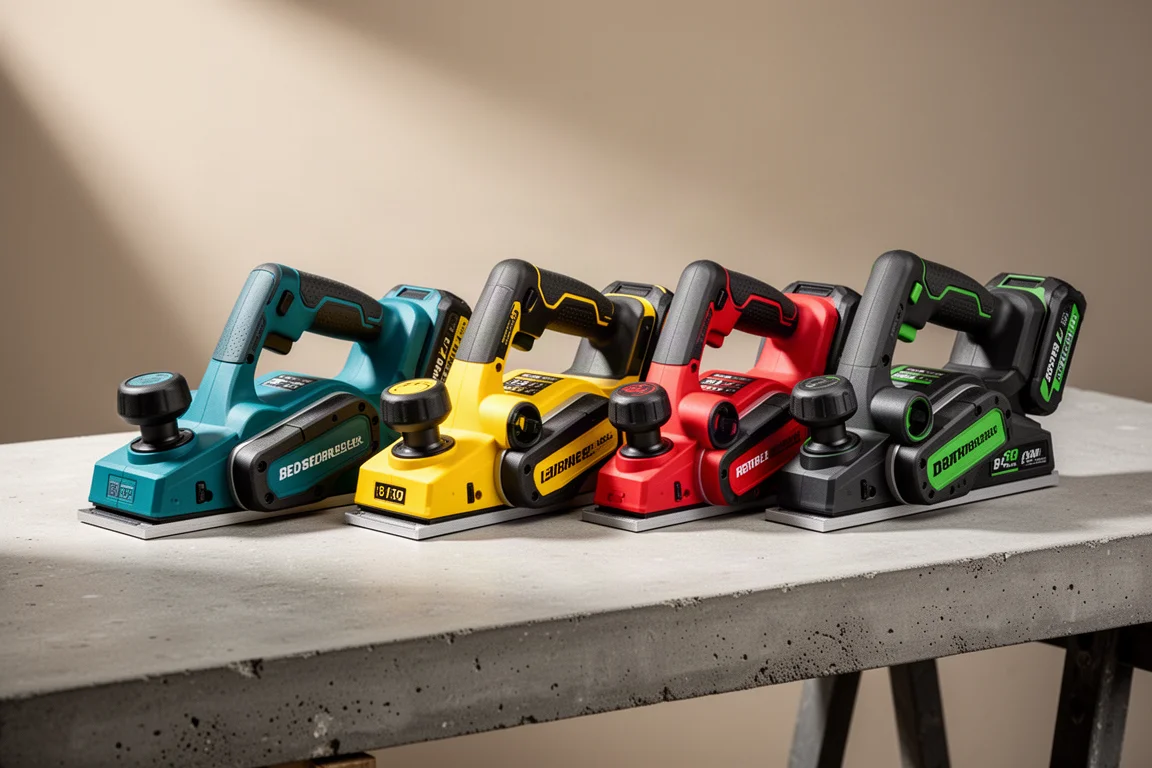
Introduction
Cordless planers are not fine furniture instruments. On building sites they get used at full throttle to straighten posts, flatten wall plates and knock timber down close to size, fast and rough, with the fine finishing left to sanding afterwards. That is exactly how they should be judged: which one cuts hardest, fastest and deepest without stalling.
We put four 18V planers up against each other from Makita, DeWalt, Milwaukee and Hikoki (sold as Metabo HPT in the United States). Every tool ran the same 5Ah 18V battery, on the same dressed 300x50 timber (roughly a 2x12 in US sizing), at the same depth settings, pushed as hard as possible.
How These Planers Were Compared
The headline numbers matter here, but not always in the way you would expect. Rated speeds across the four range from 12,000 to 16,000 RPM, and a higher number does not automatically mean faster cutting. What matters is whether the motor can hold that speed under load, and modern brushless motors increasingly trade headline RPM for torque that survives heavy pressure.
Max depth of cut is the other big spec: three of these planers are rated at 2mm, while one manages 3mm. Weight, chip ejection direction, rebating depth, base features and trigger ergonomics round out the picture before any timber is touched.
Makita 18V Cordless Planer
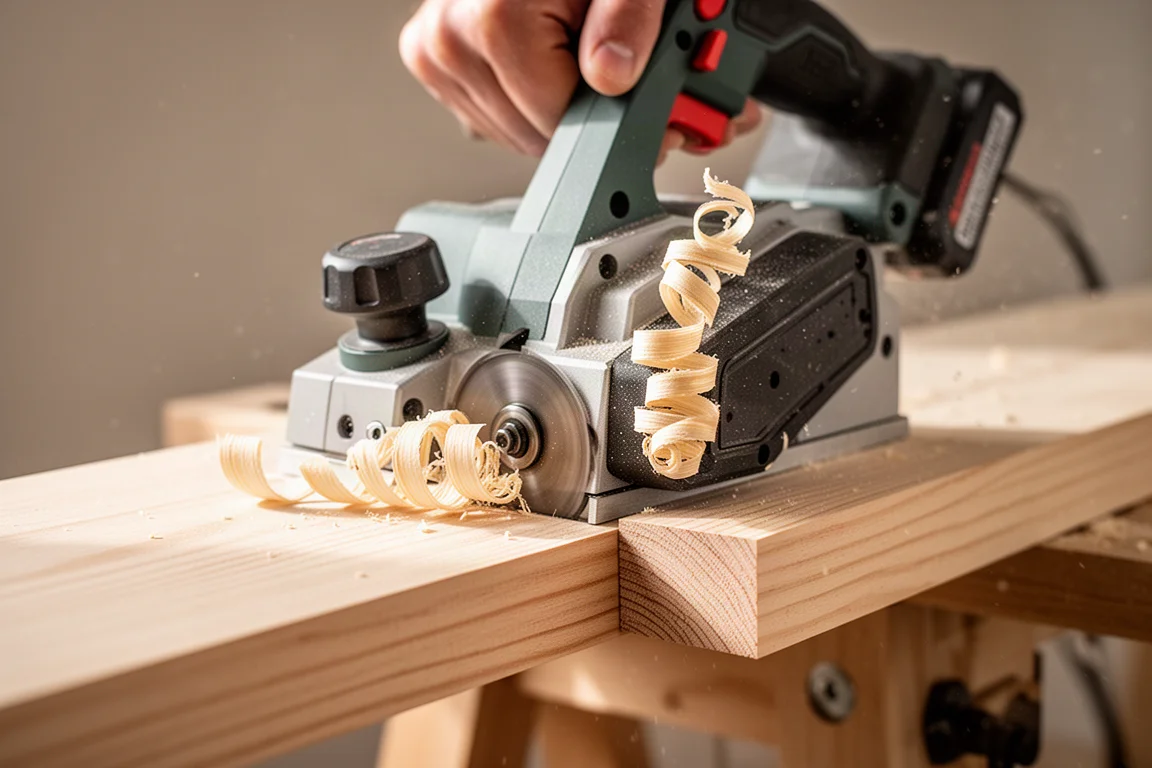
The Makita stands apart from the other three from the first spec sheet. Its 3mm max depth of cut is 50 percent more than the 2mm rating on the DeWalt, Milwaukee and Hikoki, and in practice it handles three full millimetres without complaint. It is also the heaviest of the group at around 3.1kg without a battery, but that mass comes with serious capability.
The standout feature is the 25mm rebate depth, far beyond the roughly 9 to 11mm of the competition. Because the motor housing does not protrude at the side, the tool can get flush up against a weatherboard, making it genuinely useful for stripping paint from weatherboard houses, something the other three cannot do. It also offers left or right chip ejection (via a swappable attachment), a large 45mm internal chip duct, AWS automatic vacuum activation, an onboard battery gauge, a green high-torque mode indicator and three preset chamfer grooves in the base. The side-push thumb trigger is the most comfortable design of the four. Downsides: it is heavy, the chip ejection attachment is fiddly to swap, and the depth adjustment knob overshoots zero and clicks past 3 rather than stopping positively.
DeWalt 18V Cordless Planer
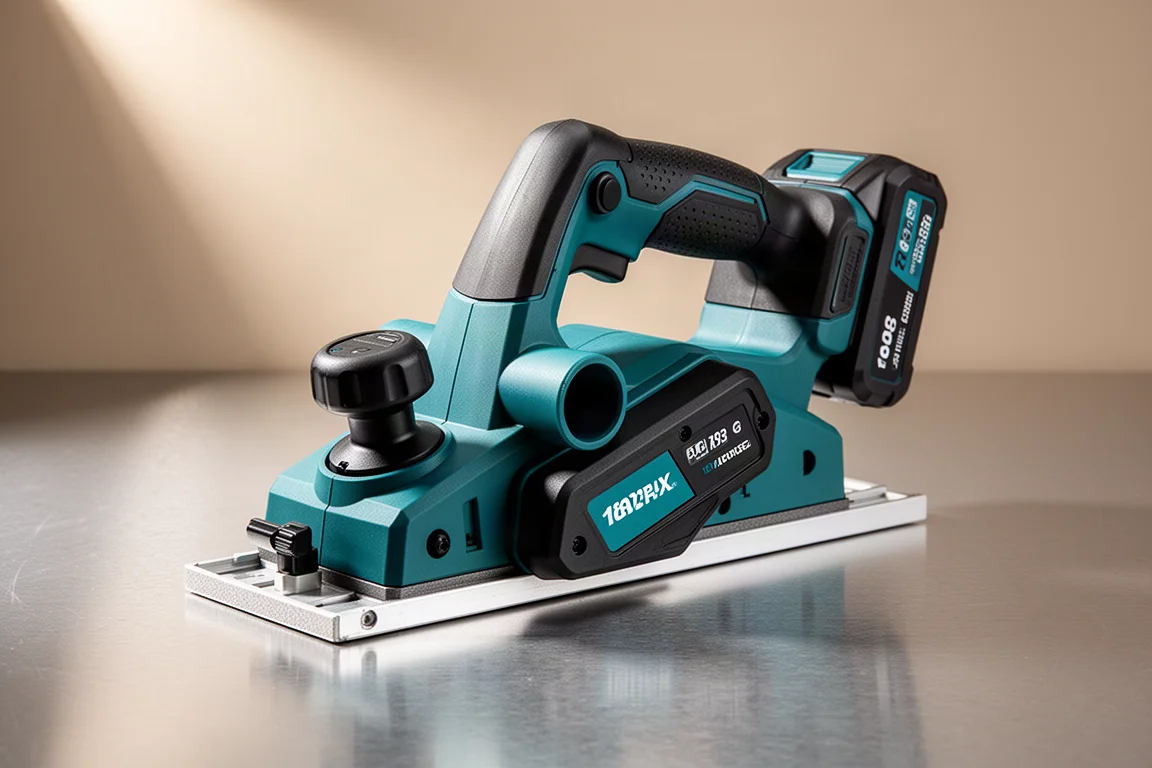
The DeWalt is the lightest of the four at about 2.5kg, and it was arguably the nicest one to actually use, thanks in part to a comfortable handle angle. Its depth knob is the best in the test, with a solid positive click from zero to two with no overshoot.
In the cutting tests it performed strongly for a 2mm-rated tool, cutting closer to 2.5 to 3mm than its rating suggests, and it resisted stalling under hard pressure. It ejects chips from the right side only, which suits right-handers but frustrates left-handers. Bonus features include a clip that holds the spring-less parking foot out of the way (though the clip feels flimsy and may not last long) and a small onboard compartment for storing two spare blades, though that cap also feels likely to vibrate off over time. Hearsay about long-term lifespan concerns is worth keeping in mind, but the raw cutting power is excellent.
Milwaukee 18V Cordless Planer
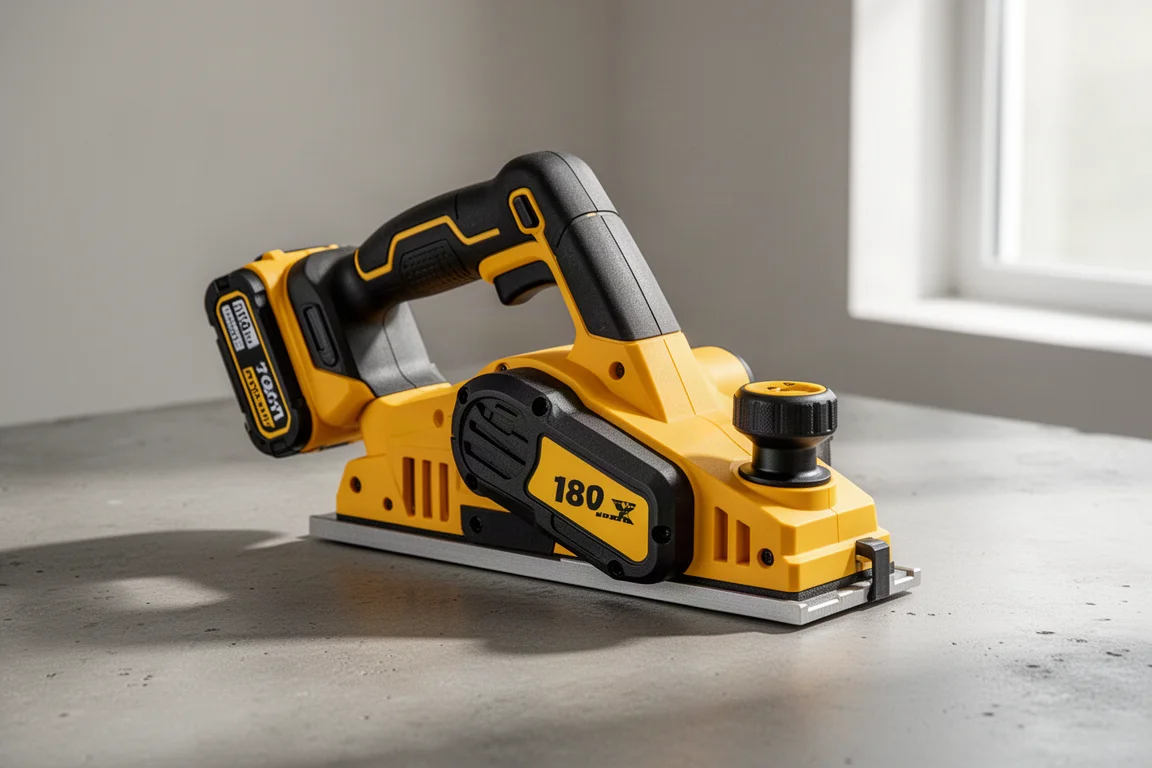
The Milwaukee weighs about 2.8kg without a battery and shares the right-side-only chip ejection and 2mm max depth of cut of its rivals. Its depth knob has nice, solid clicks, and its ejection direction switch is simple to use.
But this is the surprise of the test: the Milwaukee struggled for power. At a 2mm depth it stalled under natural planing pressure, even when fitted with a 12Ah High Output battery, forcing slower pushes than the others could sustain. It feels underpowered to a degree that is unusual for this brand, and the conclusion is blunt: on 2mm cuts, on soft timber, it cannot keep up. The thumb trigger also feels flimsy and cheap. If you are invested in the Milwaukee platform and want a planer, it may be worth waiting to see whether a brushless version arrives.
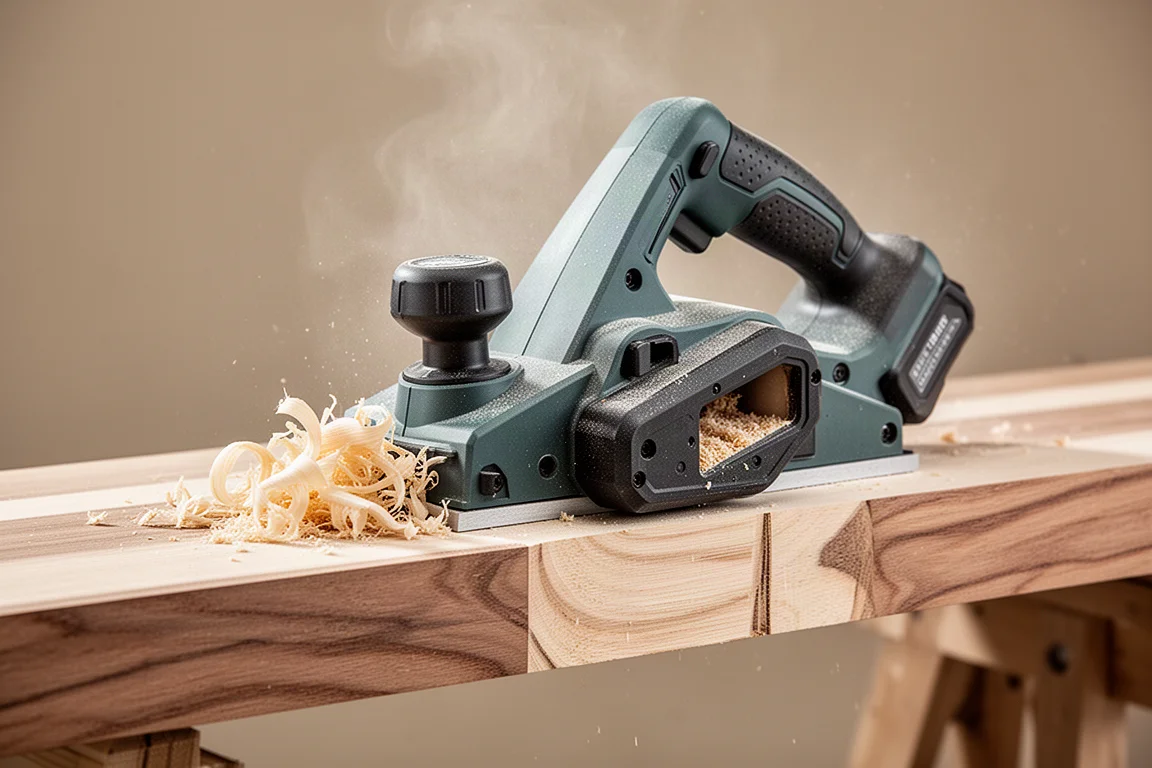
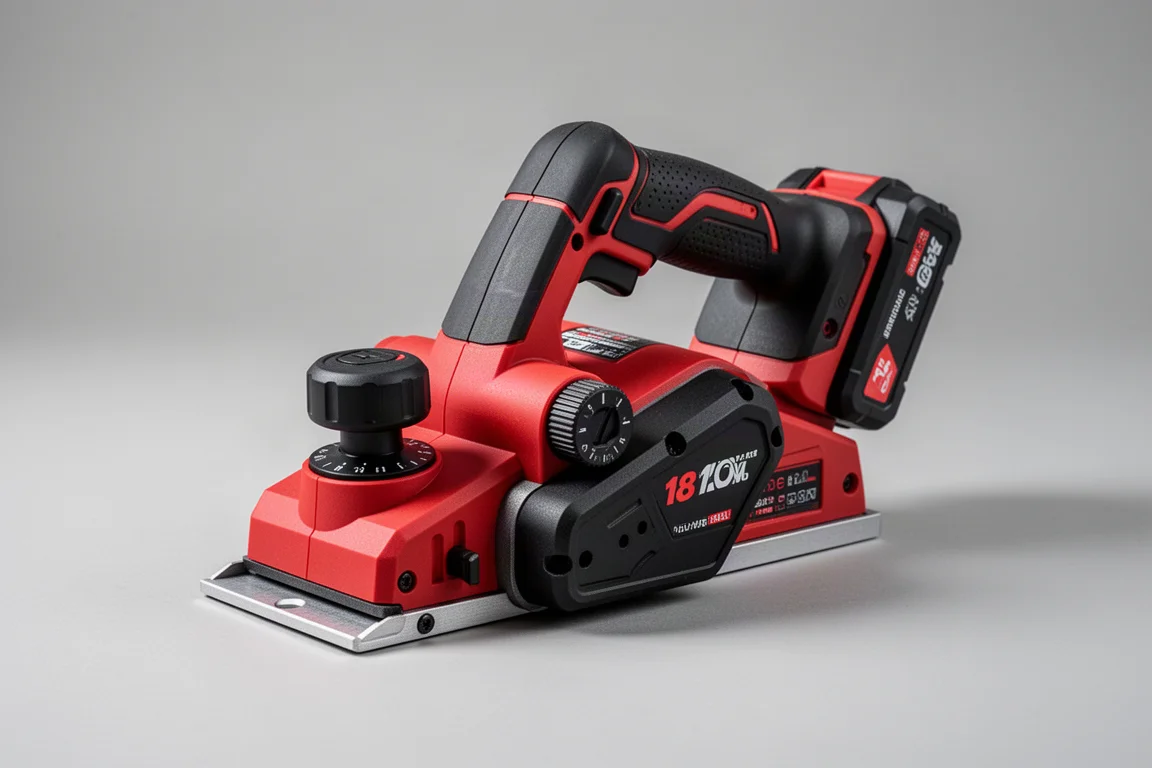
Hikoki (Metabo HPT) 18V Cordless Planer
The Hikoki, sold as Metabo HPT in the US, sits at about 2.7kg and is the only brushed-motor tool besides the Makita in this lineup. It also shares the 2mm max depth and right-side-only ejection of the DeWalt and Milwaukee.
Its main frustrations are ergonomic. The depth knob has no positive clicks, can be overwound in either direction, and the scale does not line up accurately. The thumb trigger is among the flimsiest of the four. It lacks onboard blade storage, and its fence knob was already loose out of the box. On the plus side, it has a battery gauge, spring-loaded parking feet similar to the Makita, and it cuts respectably for a brushed tool, not far behind the DeWalt. A new model is expected from Hikoki around the start or middle of next year, which may close the gap.
Chip Ejection and Dust Handling
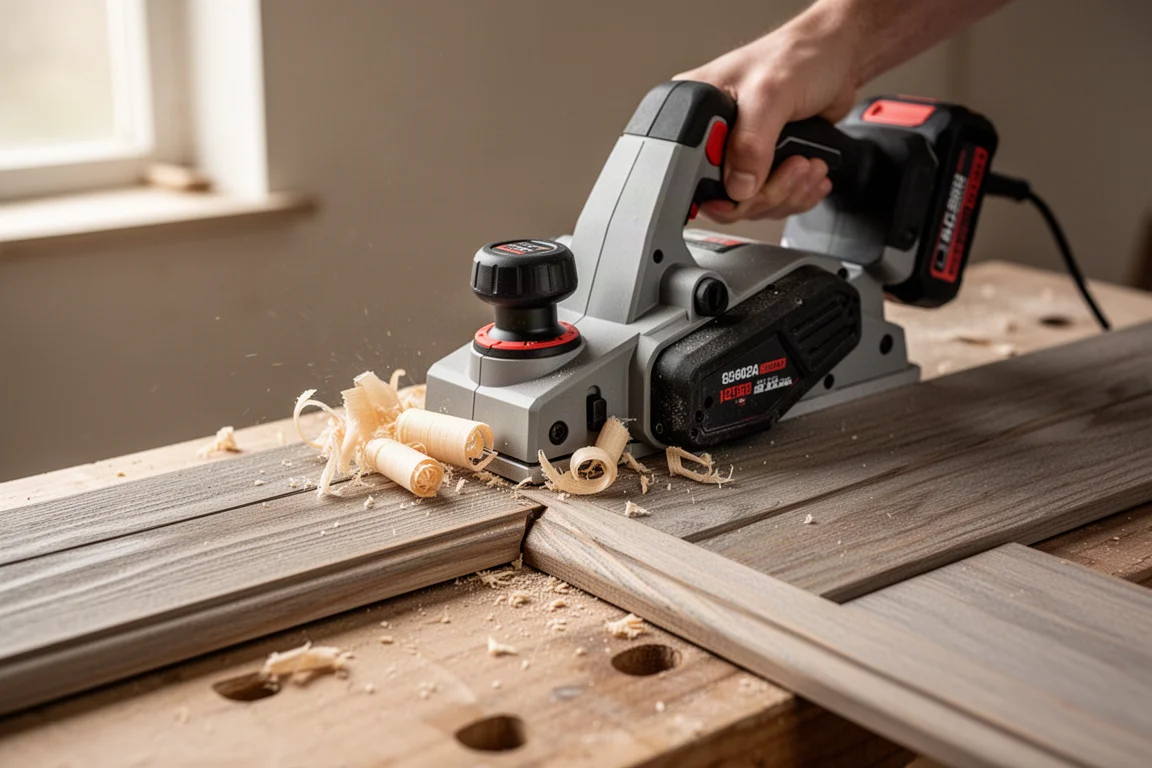
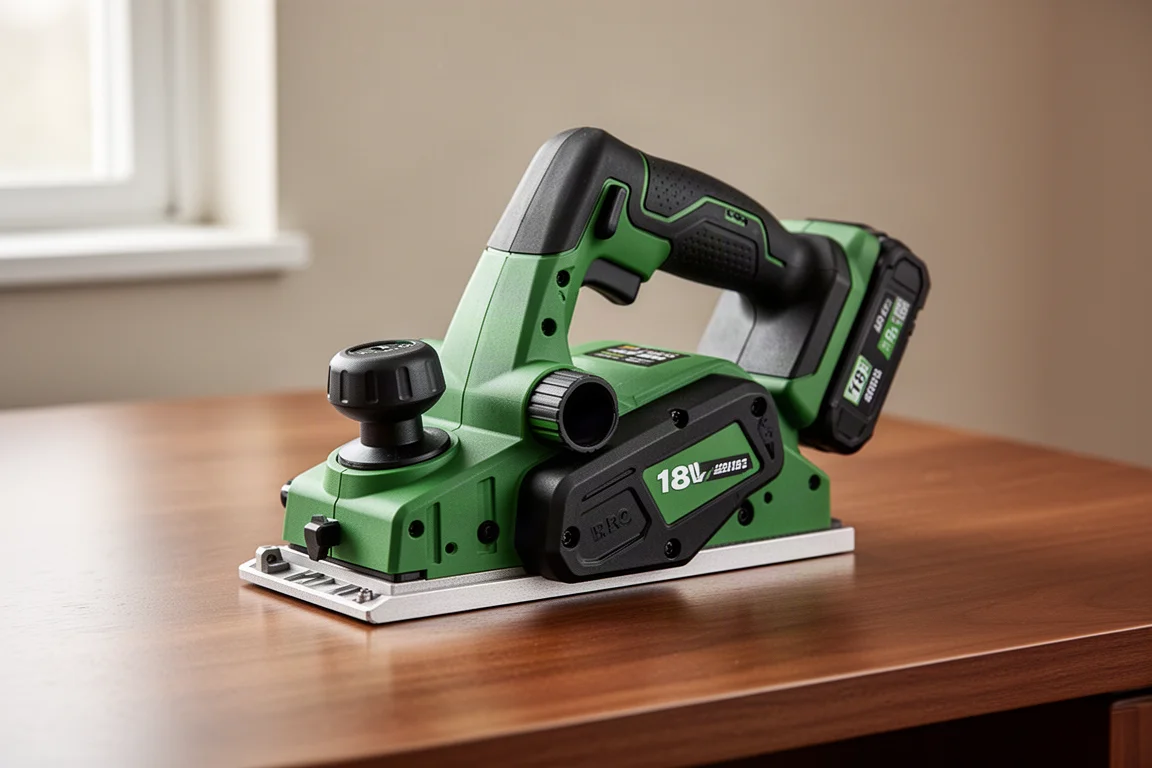
Only the Makita and Milwaukee offer selectable left or right chip ejection. The DeWalt and Hikoki fire chips from the right side only, which is fine for right-handers but a pain for left-handers or awkward planing positions where chips blow back toward you.
The Makita also has the largest internal chip passage at 45mm diameter, roughly 10mm bigger than the others, which matters when you are tearing out 3mm of material at speed. Add AWS compatibility that automatically switches on a connected vacuum, and the Makita manages debris better than any of them.
Power Test Results
Run at 1mm and then 2mm depths on dressed softwood, the ranking was clear. The Makita cut hardest and deepest, and happily chewed 3mm passes. The DeWalt was strong at 2mm and could plausibly have been sold as a 2.5mm tool. The Hikoki did well for a brushed tool and was not far behind the DeWalt. The Milwaukee stalled at 2mm even with the biggest battery in the test, making it arguably a 1.5mm tool in practice.
Worth noting: the Makita ran on worn blades while the other three had fresh blades fitted, and it still dominated. When pushed hard, the higher-output tools can jam shavings inside the cutter head, producing a stuttering cut until cleaned out, but that only happens under maximum pressure.
Overall Buying Advice
If you are on the Makita battery platform, do not hesitate: this planer is a class above the other three in this test, and the extra depth of cut plus 25mm rebating justify it alone. If you are on DeWalt, the planer has plenty of power and feels great in hand, just check it suits your priorities on the finer details. Hikoki users get a capable brushed tool that does the job, with a newer model on the horizon. Milwaukee users who want a planer may want to wait for a brushless version before committing.
Conclusion
As a pure power and capability ranking, the Makita finishes first, the DeWalt second, the Hikoki third and the Milwaukee last. The Makita’s 3mm depth of cut and 25mm rebate put it in a different league, the DeWalt is a strong all-rounder, the Hikoki is competent but crude in the details, and the Milwaukee is the rare case of this brand shipping a tool that lacks power.
Further reading
Related Reviews

Power Tools
Best 1-Inch Pistol Impact Wrenches: Three Heavy-Duty Options Compared
We compare three 1-inch pistol impact wrenches, from a budget-friendly Harbor Freight model to a premium Caterpillar unit, to help you choose the right one.

Power Tools
Best 3/4-Inch Impact Wrenches 2026: Five Contenders Compared
We compare five 3/4-inch impact wrenches across price and performance, from a budget Amazon option to Snap-on's most powerful model yet.

Power Tools
Best Budget Cordless Tools 2026: Walmart Finds That Punch Above Their Price
We tested five cordless tools from Walmart, including a high-torque impact wrench that trades blows with Milwaukee and a $35 duster that outperforms its price class.