Power Tools
Best 12V Right Angle Die Grinders: Milwaukee M12 Gen 2 vs Hercules vs HyperTough
Three affordable cordless right angle die grinders tested under load: Milwaukee's new M12 3485 Gen 2, Harbor Freight's Hercules 59610, and Walmart's HyperTough 12V.
Introduction
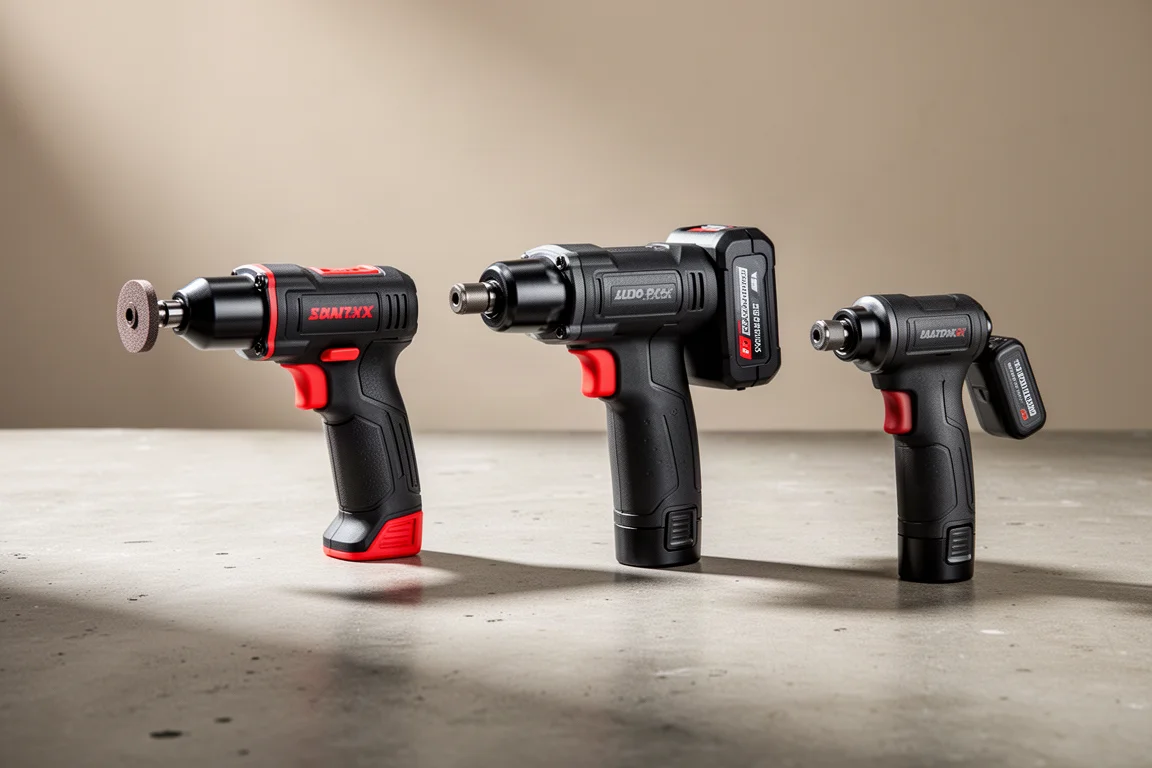
Cordless right angle die grinders are one of those tools that quietly earn their keep in automotive shops, fabrication benches, and home garages. Three new options have landed at very different price points: Milwaukee’s redesigned M12 3485 Gen 2, Harbor Freight’s Hercules 59610, and Walmart’s HyperTough 12V right angle die grinder.
The interesting backstory here is that Milwaukee’s previous M12 die grinder, the 2485, promised a lot and delivered on little of it. It claimed to beat air die grinders by 20% with 0.3 horsepower output, but in practice it could not match quarter-horsepower air tools in raw power or disc size capability, and it ran into temperature protection roughly 45 seconds into use, sometimes even at 75% power output. That heat protection persisted between uses, making the tool slow down even sooner the next time you picked it up. So the real question with the Gen 2 is whether Milwaukee fixed what mattered, and whether the cheaper competition closes the gap.
We loaded each tool on a dyno until it stalled, measured RPM under load, peak watts, and sustained watts, then factored in size and speed scoring to produce a total points ranking.
Evaluation Criteria
The testing approach is straightforward. Each tool runs a mid-level grinding demand scenario to measure how much RPM it holds under load, since abrasive wheels and carbide burrs need high RPM to work well and finish jobs faster. Then each tool is loaded until it stalls to find peak power, and run under varying extended load to find what it can sustain without heat protection kicking in. Size matters too: a bigger head and body earn a points penalty, and so does low operating speed.
Hercules 59610: Harbor Freight’s $60 Contender
The Hercules 59610 is the new 12V right angle die grinder from Harbor Freight, and unlike Milwaukee’s $219 asking price, this one is just $60. It is brushless and comes with a 5-year warranty, which is reason enough to like it if it performs. The company’s largest 12V battery, the 4Ah pack that slides onto the rear like a little lunchbox, costs $35 on its own. This is a sensible approach to competing with air tools: do not charge $200-plus bare for a tool that, frankly, will not outlast air equipment.
Size-wise it is slightly smaller than the old M12 in the head and body since the battery does not go into the handle, but the rear-mounted battery makes it boxier overall. It displaces about 650cc, a bit larger than the old M12 with a larger battery attached.
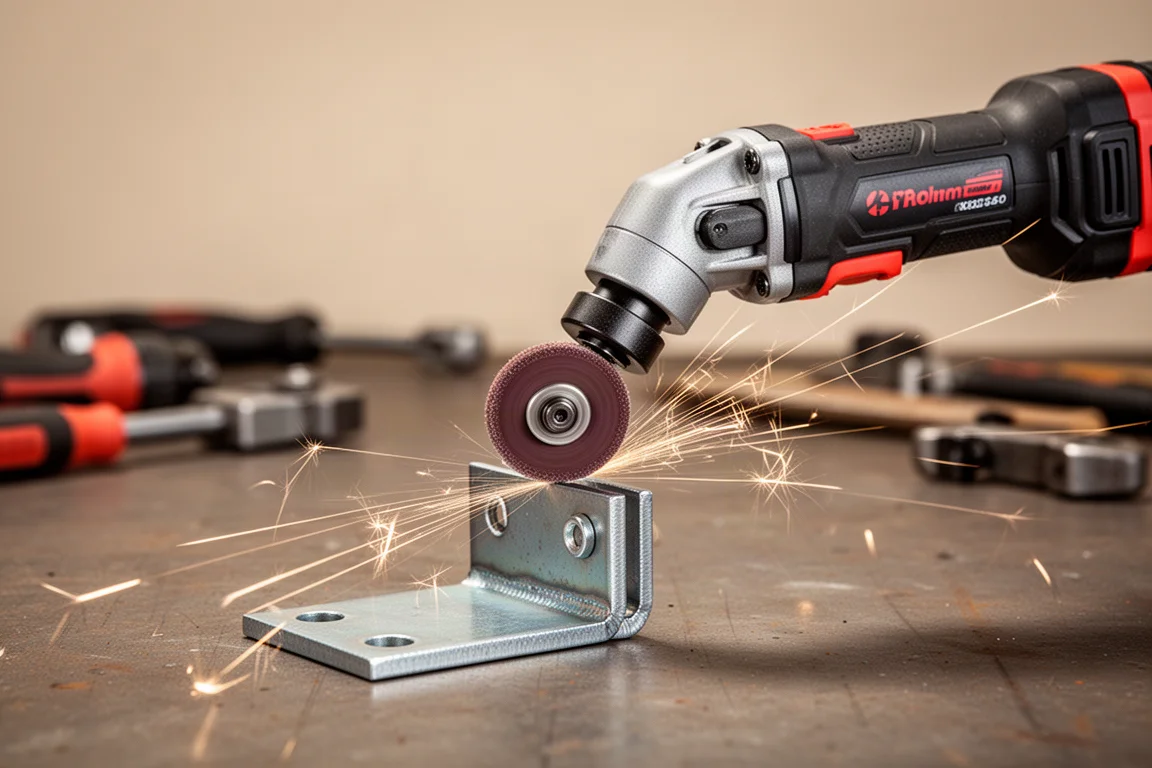
Under the same load the old Milwaukee saw 16,800 RPM from, the Hercules manages about 16,200 RPM, so fairly similar in the working zone. Where it impresses is load tolerance: it accepts as much as 190W on the dyno before it stumbles, already passing the original M12. The Hercules sustains 170W; it tapers and dies at 180W but comfortably works at 160 to 170W for extended periods. That sustained output is exactly the area where the old M12 was most annoying, and the Hercules improves on it. Its total score lands at 457 points.
HyperTough 12V Die Grinder: The Budget Surprise
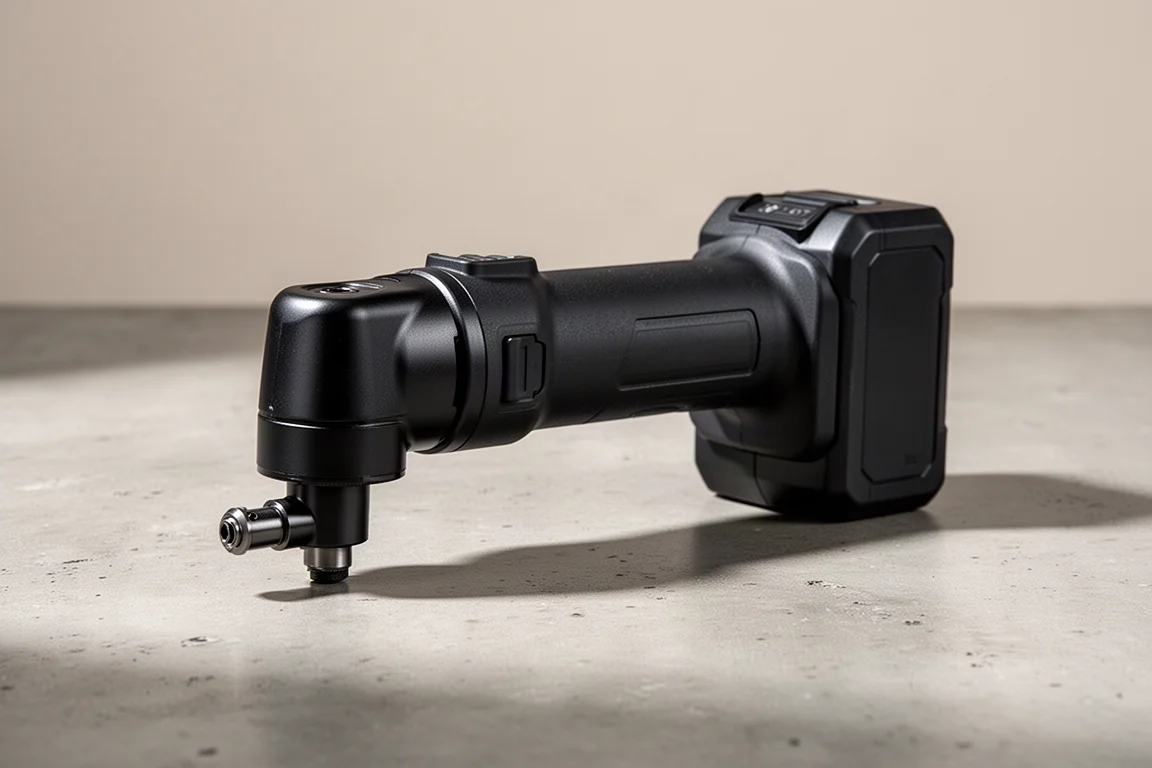
The HyperTough 12V right angle die grinder from Walmart is the cheapest of the three by a wide margin. We paid $47 for everything shown here, including the small battery and barrel-plug charger. The little foot-style battery that resembles M12 packs costs only $25, so there is little reason not to own one if you dabble in HyperTough 12V tools.
Despite a large handle, slightly larger even than the M12, the tool is overall the smallest of the group at 600cc, and it is shorter than either competitor. It also has a spindle lock button, which shortens the tool further by eliminating the need for a second wrench spot, and means you do not have to juggle two wrenches with an extra hand to change attachments. It is a little funny that HyperTough got this right while Hercules and Milwaukee originally missed the boat.
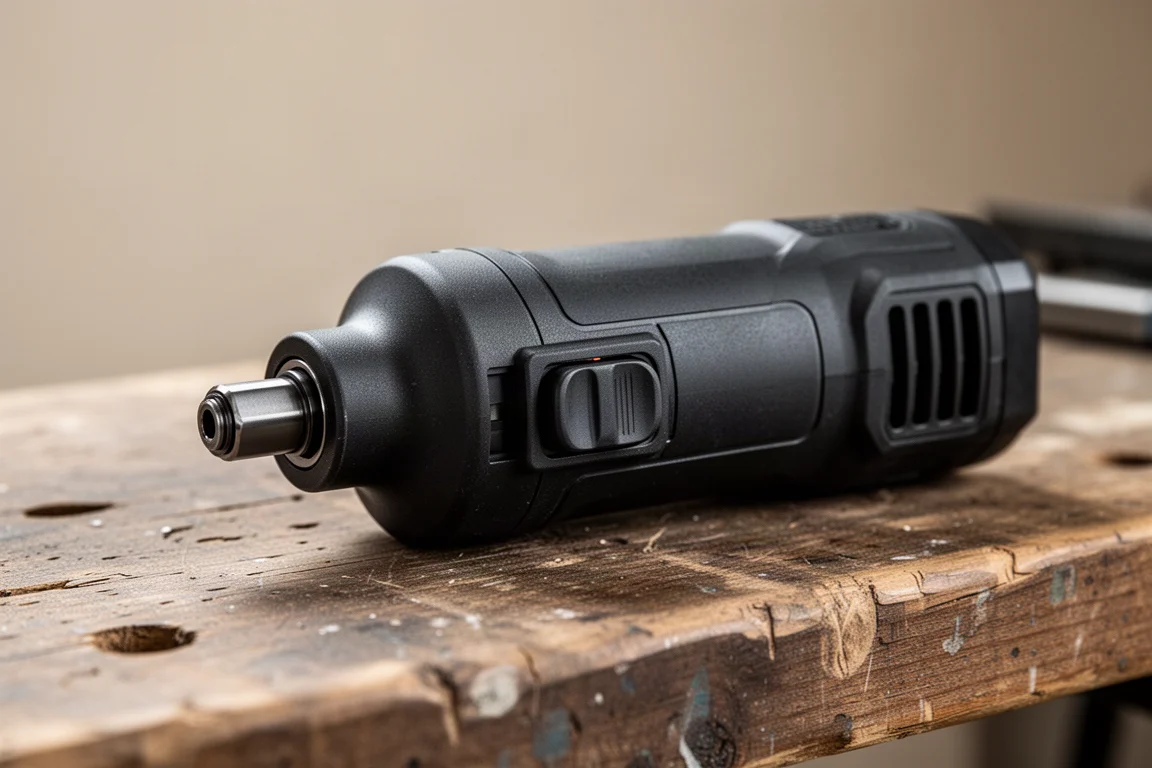
The trade-offs show up in speed. It is rated at 20,000 RPM rather than the 25k peak of the Hercules and Gen 1 M12, and we measure about 19,000 RPM max free speed, dropping to roughly 17,000 RPM on the dyno unloaded. Under the same load as the others, it works at around 13,800 RPM, and it is not entirely happy there, pulsing and sputtering similar to what we saw from their 12V impact wrench. If your attachments prefer around 18,000 RPM during use, like a burr, this is probably not your first choice.
But push past that and the numbers get surprising. It climbs all the way to 200W before cutting out, matching the M12 with its high-output battery, despite using one of the least potent 12V packs available. It sustains around 170W without dropping, though it audibly does not enjoy it. Its total score is 448 points, all measuring in the quarter-horsepower range. If you think the old M12 was good enough, this cheaper tool does 2-inch work fine with no sustained-power problems.
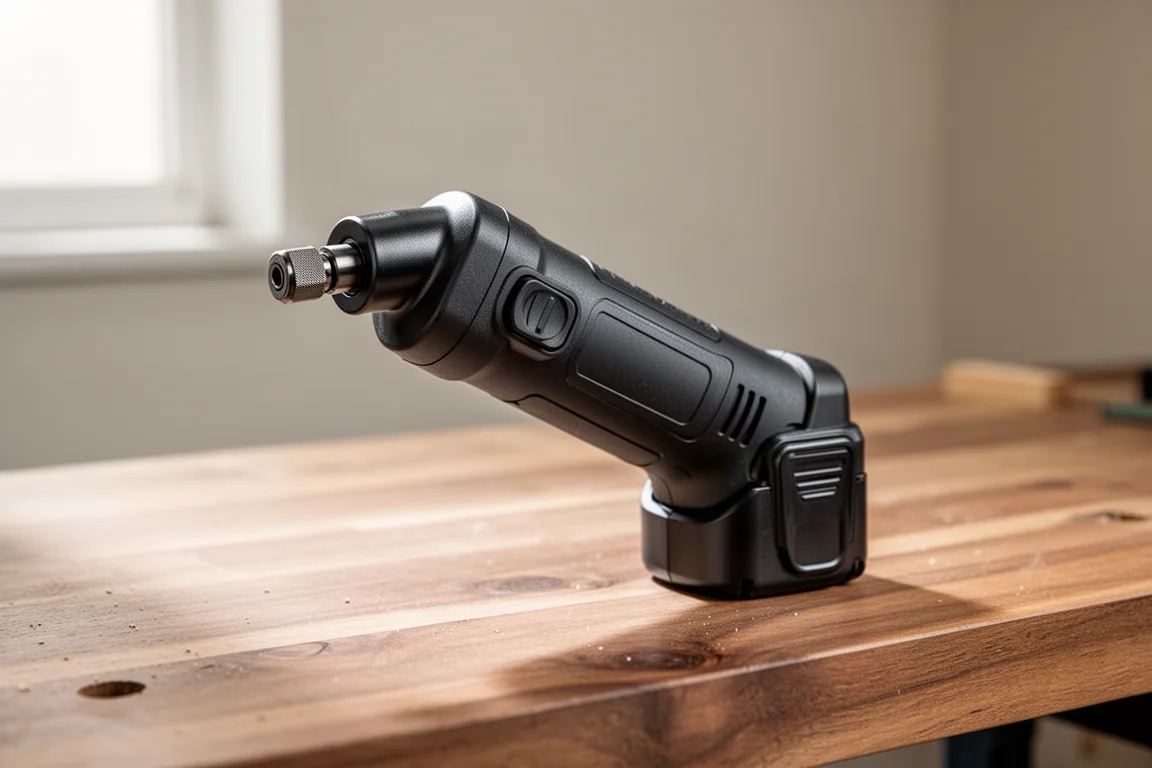
Milwaukee M12 3485 Gen 2: The New Benchmark
This is the tool everyone was waiting for. Milwaukee asks $219 for the 3485, so it is more powerful but certainly not cheaper. The bold marketing continues: 50% more power than air die grinders, a stated 0.4 horsepower output, and demos showing it beating a half-horsepower die grinder. Let’s separate the claims from the numbers.
Design and Handling Updates
Several improvements are visible right away. Lighting has moved from the base to the front of the tool, and there is more of it, which is often the better placement. It finally has a spindle lock button, so you only need one wrench, and that wrench can be any common wrench, even an adjustable one, turned one-handed. The trigger is miles better too: the Gen 1 tried to imitate an air-tool style lever and made something worse, while the new trigger is arguably better than most air tools, with a feather-light lock release and a plastic trigger button that takes little effort to hold down.
It is bigger than the last generation and every new competitor today, mainly in the head, with a longer body too, hopefully to house the extra power. Displacement measures about 750cc versus 625 for the last model and 600 to 650 for the others. Surprisingly, it is light: 1.3 lb bare, only about 2 oz apart from the competitors, and still smaller than an 18V class competitor.
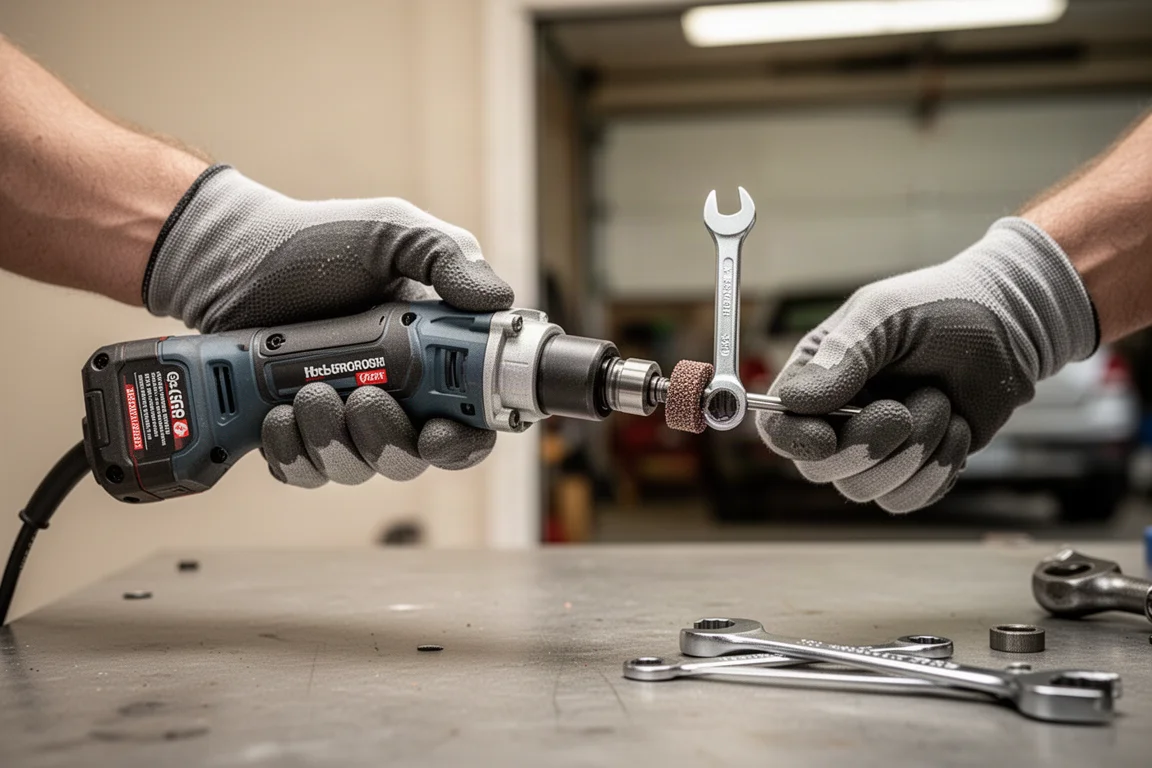
Power Testing Results
Starting with the compact option: with the 2.5Ah high output battery, it spins at around 15,200 RPM under load, between the other two models, and reaches up to 210W, passing the old model even when that ran the 5Ah high output.
With the 5Ah high output, the real story begins. Under the same usage draw as the others, it holds 18,700 RPM, the highest we have ever clocked on this kind of tool. It is a fast tool, so be careful spinning large diameter attachments at free speed. Peak power climbs to 310W before the tool calls it quits, a big improvement over the last generation and everything else tested today. Sustained output is 270W, with 280W being too much to live at long-term. The limiting factor remains heat-based restrictions, and there is still a gap between what it can briefly overcome and what it can hold, but the ceiling is now far higher than most competitors. With a 6Ah battery, expect around 15,800 RPM under load and 240 to 250W sustained.
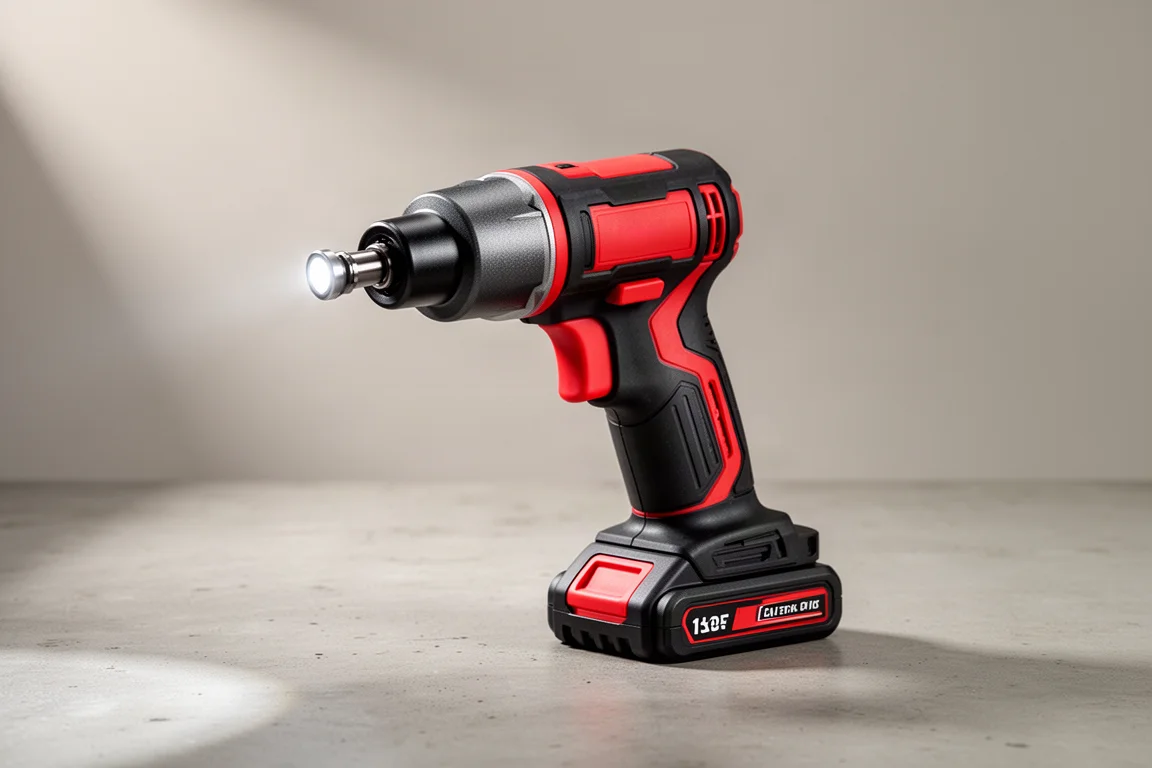
Everyday Use: 3-Inch Discs and Heat Management
Here is where the Gen 2 earns its price. Three-inch surface prep and sanding discs, something the previous model could not officially handle, are now easily within reach. Where one finger of light pressure stalled the old tool out, the new one takes three fingers with heavy pressure. It has genuinely stepped up to the tasks you would likely ask of it.
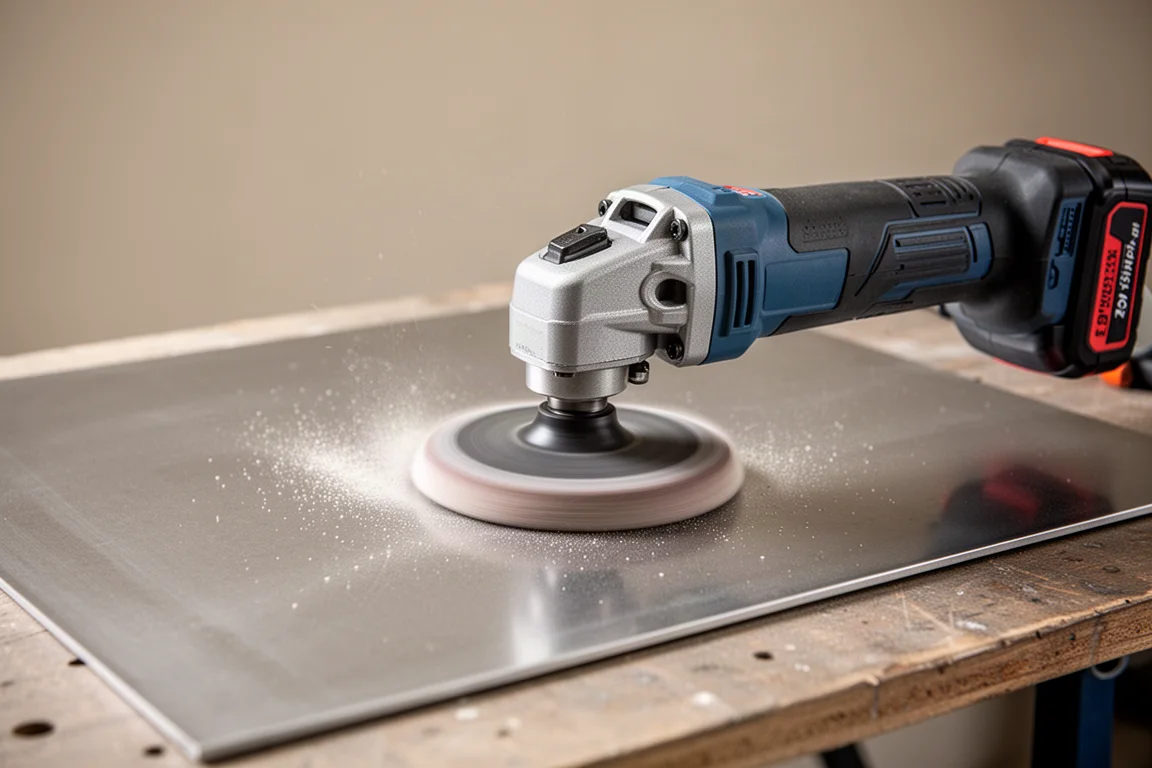
The final score is 692 points: a size penalty for the big head and longer body, offset by a speed bonus for that 18,700 RPM under load, 310W peak, and 270W sustained. Using the dyno power curve, Milwaukee’s 0.4 horsepower claim essentially holds up. The marketing claim of beating a half-horsepower right angle die grinder is a stretch, but the two are comparable in conversation, largely because a half-horsepower air tool transmits power through a right angle bevel gear assembly while the M12 is direct drive, which helps explain the marketing framing.
How They Compare Overall
The updated scores tell the story: Milwaukee 692, Hercules 457, HyperTough 448. All three budget tools aimed squarely at the old M12 and, for the most part, met or exceeded that target at lower prices. The Gen 2 then moved the goalposts significantly.
One more data point worth knowing: an 18V competitor with a new Edge 21700 cell pack measured 20,900 RPM under load, 390W peak, and 360W sustained, scoring 854 points and reaching an estimated 0.53 horsepower. That gives a sense of how much headroom exists above the 12V class if you need it.
Buying Advice
Choose the Hercules 59610 if you want the best balance of price, sustained power, and warranty coverage at $60. Choose the HyperTough if budget is the absolute priority and your work is mostly 2-inch attachments; it genuinely lacks the sustain problems the old M12 had. Choose the Milwaukee M12 3485 Gen 2 if you are already in the M12 platform, need 3-inch disc capability, high RPM for abrasive work, and the best overall performance, and can accept the $219 price and the larger head.
Conclusion
The Milwaukee M12 3485 Gen 2 is the tool the original should have been, with real 3-inch disc capability, strong RPM under load, and dramatically improved peak and sustained power. The Hercules and HyperTough prove you no longer need to spend $219 for a competent quarter-horsepower cordless die grinder. Match the tool to your disc sizes, battery platform, and budget, and all three have a clear case.
Further reading
Related Reviews
Power Tools
Best 1-Inch Pistol Impact Wrenches: Three Heavy-Duty Options Compared
We compare three 1-inch pistol impact wrenches, from a budget-friendly Harbor Freight model to a premium Caterpillar unit, to help you choose the right one.
Power Tools
Best 3/4-Inch Impact Wrenches 2026: Five Contenders Compared
We compare five 3/4-inch impact wrenches across price and performance, from a budget Amazon option to Snap-on's most powerful model yet.
Power Tools
Best Budget Cordless Tools 2026: Walmart Finds That Punch Above Their Price
We tested five cordless tools from Walmart, including a high-torque impact wrench that trades blows with Milwaukee and a $35 duster that outperforms its price class.