Power Tools
Best 12V Mini Chainsaws Compared: Stihl GTA 26 vs Makita DU11 vs Milwaukee M12 FHS
Three compact 12V pruning chainsaws face off on weight, chain care, comfort, and cutting behaviour, with one important availability catch to know before buying.
Introduction
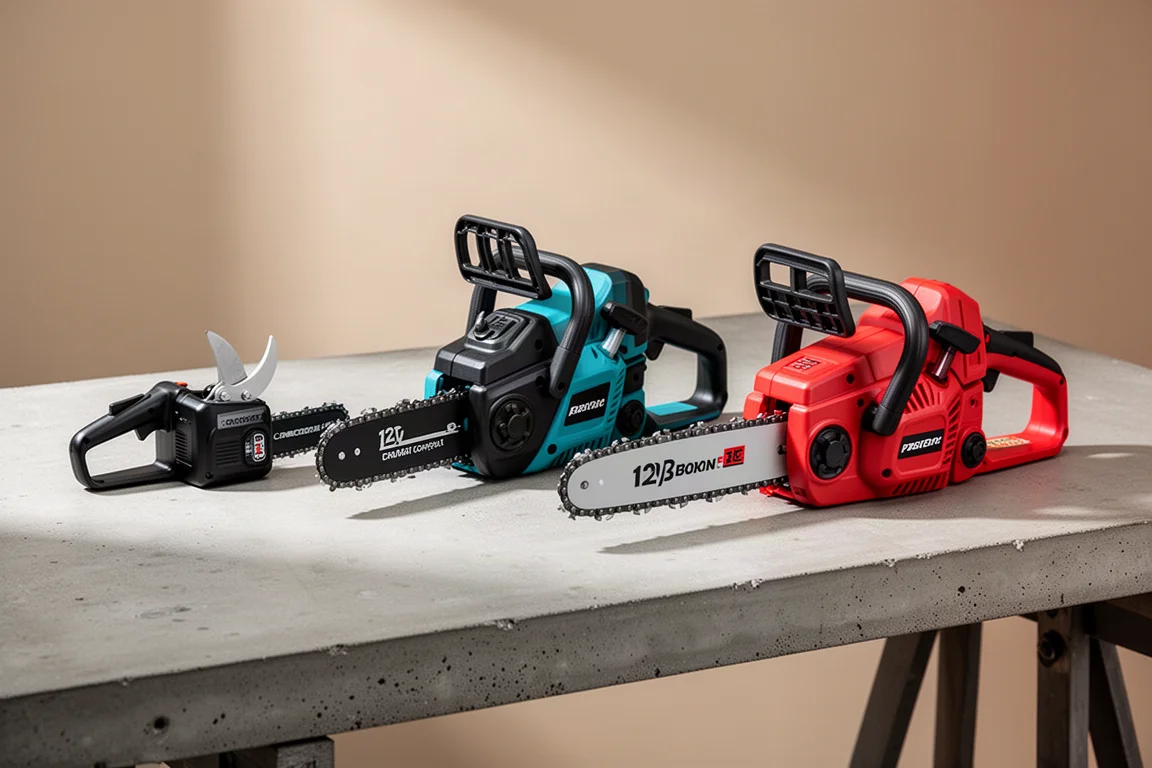
Compact 12V pruning chainsaws have quietly become one of the most popular garden tools around, largely aimed at people who want light trimming work without wrestling a full-size saw. We put three of the best-known options side by side: the Stihl GTA 26, the Makita DU11, and the Milwaukee M12 FHS Hatchet. All three run on 12V-class batteries (which is really 10.8V nominal marketed as 12V max, the same way 18V nominal becomes 20V max), but that is roughly where the similarities end.
Size Claims: Not What the Labels Say
Stihl and Makita sell theirs as 4-inch (100mm) chainsaws, while Milwaukee markets a 6-inch (150mm) version. In practice, measuring from where the wood enters the tool to the tip, the bars come in at 100mm, 110mm, and 140mm respectively, and the Milwaukee’s bucking spikes reduce the usable cutting length further. At best it is about 30mm longer than the Makita, and with the spikes factored in, just under an inch. Do not assume the Milwaukee is dramatically bigger than the label suggests.
Design and Handling
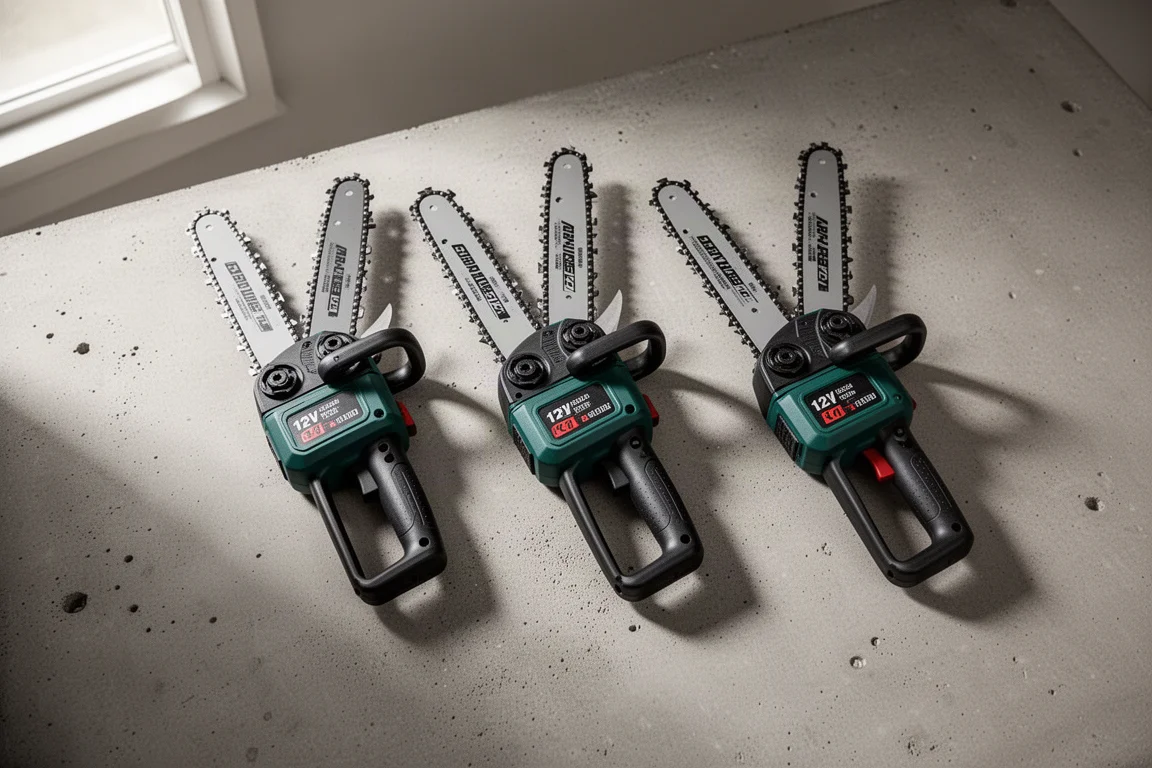
Handling differences show up immediately. The Milwaukee feels substantially heavier than the other two, and the grip is the least comfortable: you end up holding directly around the battery, and pressing the trigger and lock pushes into your palm. It does, however, include a hanging hook for wall storage, a small touch the other two lack.
On safety, all three require two-handed use with a top hand guard. Makita adds a lower hand guard, which helps shield from flying wood debris, and Milwaukee adds guards over both handles. One notable catch: the Milwaukee M12 FHS is not approved for sale in New Zealand, reportedly because it lacks the required brake setup and the chain stop time is too slow, and the company is not expected to modify it for that market. Buyers elsewhere should check their local rules before ordering.
Chain Care: Where the Gap Opens Up
This is the section that stings. The Stihl GTA 26, made in Germany by a company whose core business is chainsaws, ships with no automatic oiler and no chain tensioning screw of any kind. Oiling is entirely manual, and tensioning means fitting the cover, backing it off, pulling the bar forward by hand, and hoping the clamping pressure holds. The cover also has a habit of seating incorrectly if you are not paying attention. To top it off, it is a brushed motor, while the other two are brushless.
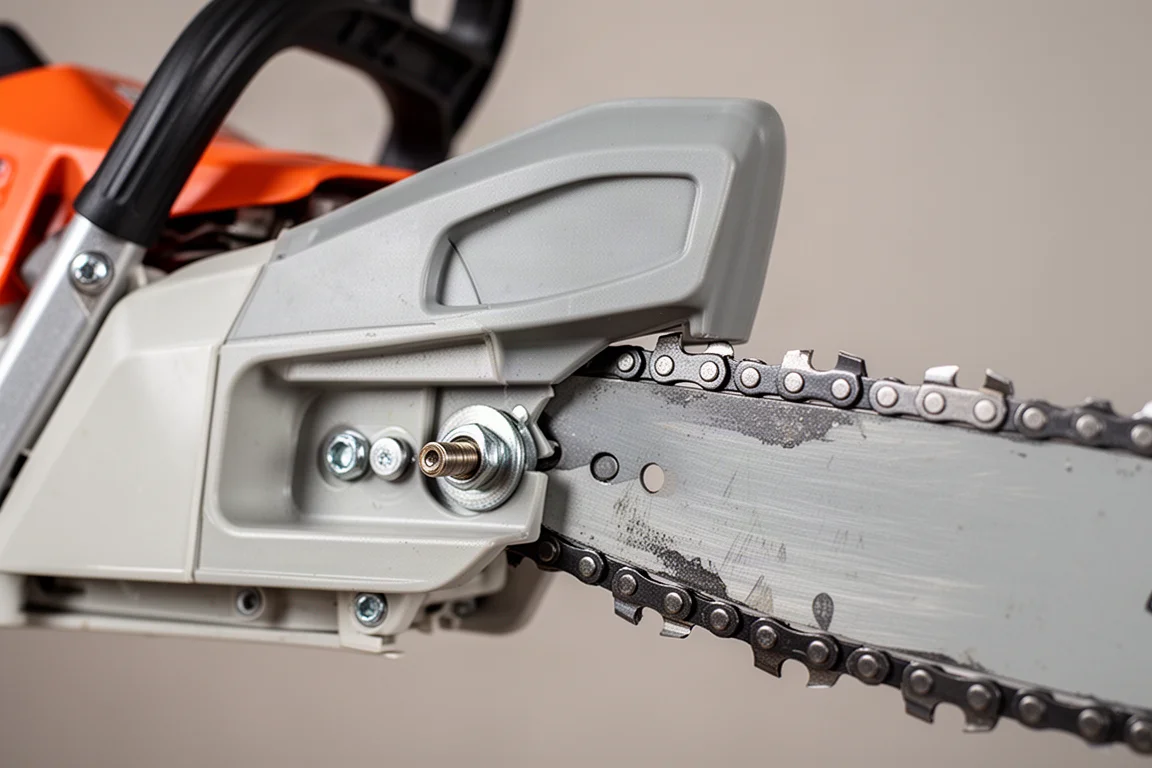
The Makita is the standout here: a tool-less side cover and an automatic chain tensioner that keeps proper tension as the chain stretches. The Milwaukee is more old-school, using a nut and an included combined wrench-screwdriver to adjust the chain manually.
Comfort, Weight, and Cutting Feel
On the scale, the Stihl with battery weighs 1.46kg and is genuinely comfortable in the hand, with a small chain that cuts smoothly rather than bouncing. The Makita matches that weight despite carrying an oiler, an extra guard, and the self-tensioner. The Milwaukee comes in at 1.91kg, roughly a third heavier, and it shows in use.
Cutting behaviour splits the field. The Makita’s stock chain is notably aggressive for such a small saw and bounces around enough to intimidate less experienced users. The Stihl delivers the smoothest cut but demands near-constant oiling and careful tensioning to perform, and it has little torque headroom if anything is out of the optimum range. The Milwaukee has the most power and stalls less than the other two, but all three need to be babied through cuts if you are used to bigger tools.
Battery Platform and Runtime
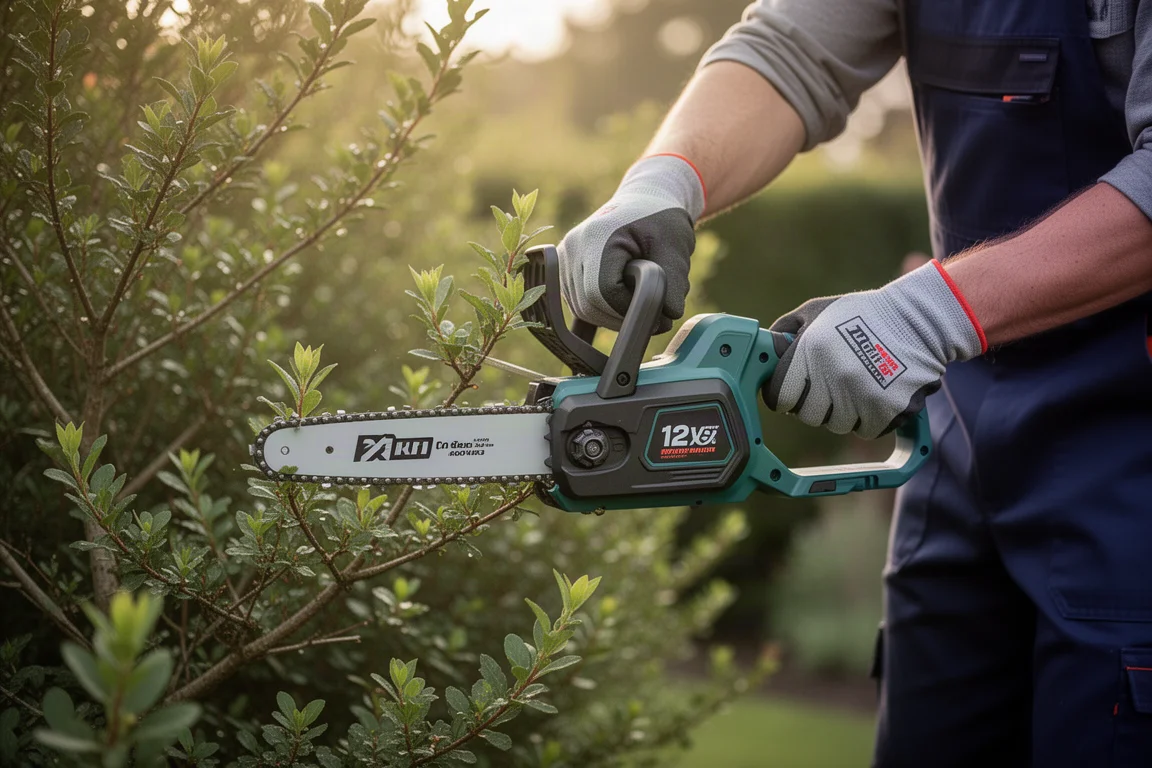
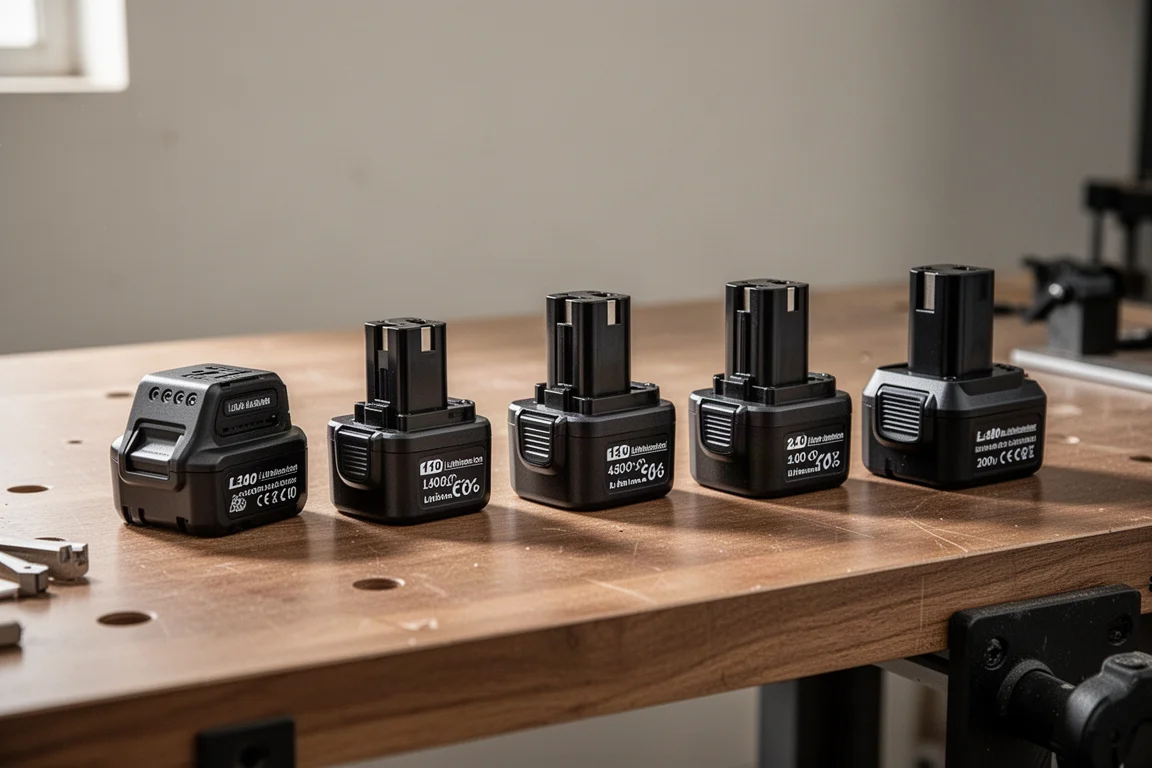
Battery flexibility differs meaningfully. The Stihl runs on small 1.5Ah or 2.6Ah packs, and nothing larger seems to be available; a 1.5Ah pack would be nearly pointless on this tool, and the battery depleted fastest of the three even with the biggest pack fitted. Makita offers up to 4Ah packs with more available beyond that, and Milwaukee’s M12 range goes up to 6Ah high-output options. If runtime matters, Makita and Milwaukee have the clear advantage.
The Stihl and Milwaukee both have battery indicators on the tool; Makita puts the indicator on the battery instead. Slide-pack batteries on the Makita are also the easiest to fit and remove, while the push-in packs on the Stihl and Milwaukee are a common complaint among first-time buyers.
Buying Advice
The philosophy behind each brand shows through. Milwaukee builds for power, so its tool is chunkier and heavier but has the most torque. Makita prioritises efficiency, so it is lighter, more comfortable, and far easier to live with thanks to the auto tensioner and oiler. The Stihl wins on comfort and smooth cutting, but the missing oiler and tensioner are hard to forgive for a dedicated chainsaw maker, and it offers less protection than the Makita.
If you want more cutting capacity, both Makita and Milwaukee offer 18V-class versions, with the Milwaukee M18 Hatchet sporting an 8-inch bar, though that may be getting heavy for small gardens and less tool-confident users.
If you want power, the Milwaukee is the pick. If you want comfort and smooth cutting, the Stihl delivers, provided you accept the manual maintenance. For most buyers who want an easy, well-protected middle ground, the Makita is the most sensible all-rounder.
Conclusion
None of these compact chainsaws is perfect, and each one suits a different kind of buyer. The Makita DU11 is the most user-friendly overall, the Milwaukee M12 FHS brings the most muscle at the cost of weight and comfort, and the Stihl GTA 26 cuts beautifully but demands care and skips basic chain features. Match the tool to who will actually be using it, and you will make the right call.
Product link
View more details for Stihl GTA 26
This product is mentioned in the review. Check the specifications, options, and compatibility before buying.
View more details for Stihl GTA 26Further reading
Related Reviews
Power Tools
Best 1-Inch Pistol Impact Wrenches: Three Heavy-Duty Options Compared
We compare three 1-inch pistol impact wrenches, from a budget-friendly Harbor Freight model to a premium Caterpillar unit, to help you choose the right one.
Power Tools
Best 3/4-Inch Impact Wrenches 2026: Five Contenders Compared
We compare five 3/4-inch impact wrenches across price and performance, from a budget Amazon option to Snap-on's most powerful model yet.
Power Tools
Best Budget Cordless Tools 2026: Walmart Finds That Punch Above Their Price
We tested five cordless tools from Walmart, including a high-torque impact wrench that trades blows with Milwaukee and a $35 duster that outperforms its price class.