Power Tools
Best 12-Inch Sliding Compound Miter Saws: 15 Corded Models Compared
Fifteen corded 12-inch sliding compound miter saws compared across pro, mid-range, and budget tiers, with real prices, the standouts, and the ones to skip.
Introduction
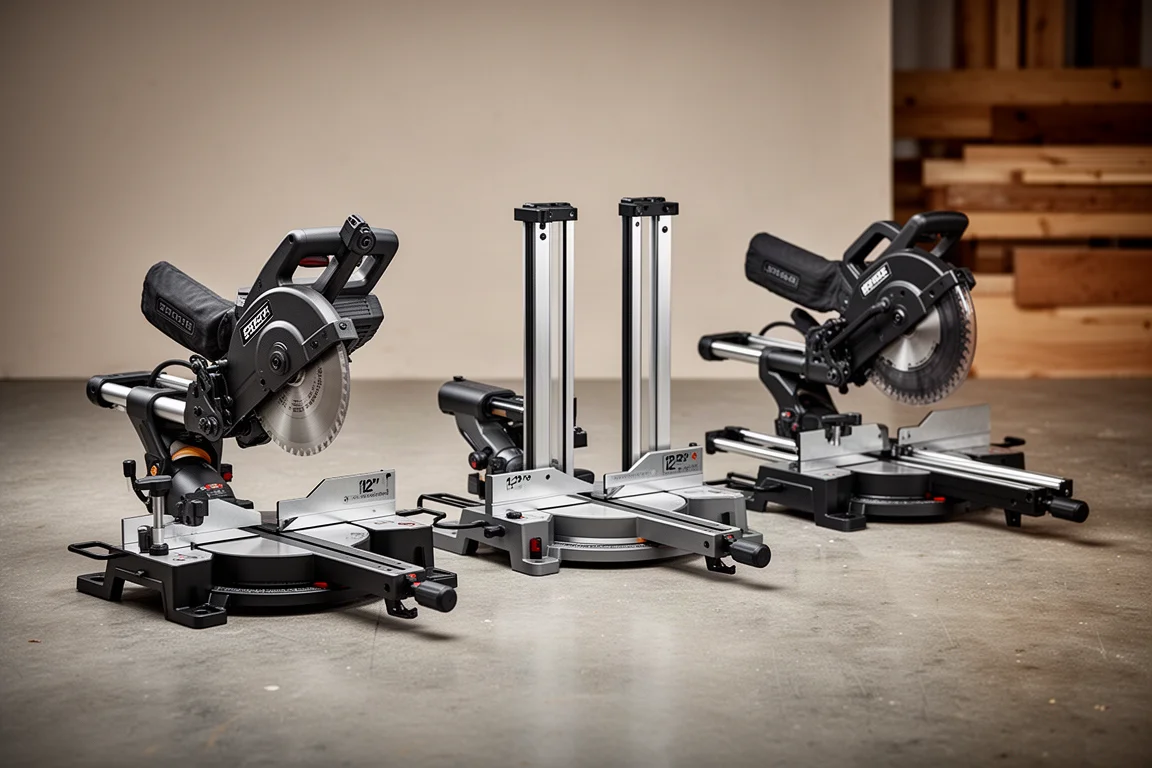
Few workshop purchases generate as many questions as the 12-inch sliding compound miter saw. It is the one tool that seems to sit at the centre of every trim job, deck build, and crown molding install, and the market is crowded enough that picking the wrong one is easy. This guide walks through fifteen of the bestselling corded 12-inch sliding compound miter saws on the market, sorted into three tiers: the professional options, the entry-level budget picks, and the Goldilocks zone in between.
A note on scope: every saw covered here is a corded 12-inch model. No cordless saws and no hybrid designs made the list.
How This List Is Put Together
Most 12-inch sliding miter saws follow the same template. Miter controls sit at the front, bevel controls at the rear, and dual rails slide backward as the head extends. That rear travel is the catch: the saw needs significant clearance behind it, so on a standard-depth workbench at home it forces the bench to jut out from the wall. On a job site stand it rarely matters, but in a shop it shapes how you set up your space.
The zero rear clearance designs solve this, and several saws below do it in different ways. Understanding that one distinction explains most of the price gaps between these machines.
Bosch Glide 12-Inch Dual Bevel Sliding Miter Saw
The Bosch Glide sits at the top of the pile for a lot of woodworkers. It lists for $729 and has been seen on sale for $609, with an additional $10 off $600 promotion bringing it to roughly $599. Instead of sliding rails, it uses an articulating arm system that keeps the entire mechanism forward, delivering true zero rear clearance. That means the saw can sit flush against a wall, which is genuinely valuable in a fixed shop setup.
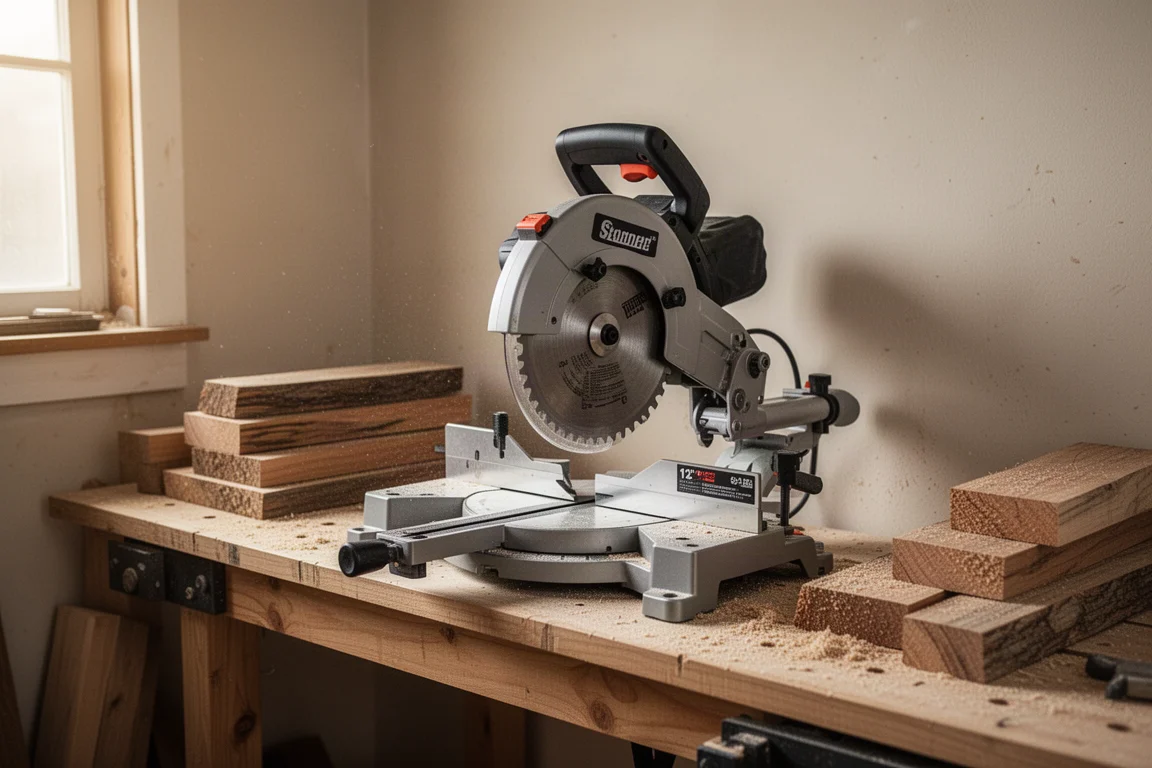
Beyond the arm, the Glide includes small mini table extensions built into its wings, a detail that sets it apart from the front-rail competition. In practice, this saw has developed a reputation as the stationary choice: the saw you find in dedicated cabinet shops and high-end woodworking spaces rather than in the back of a contractor’s van.
Makita 12-Inch Dual Bevel Sliding Compound Miter Saw
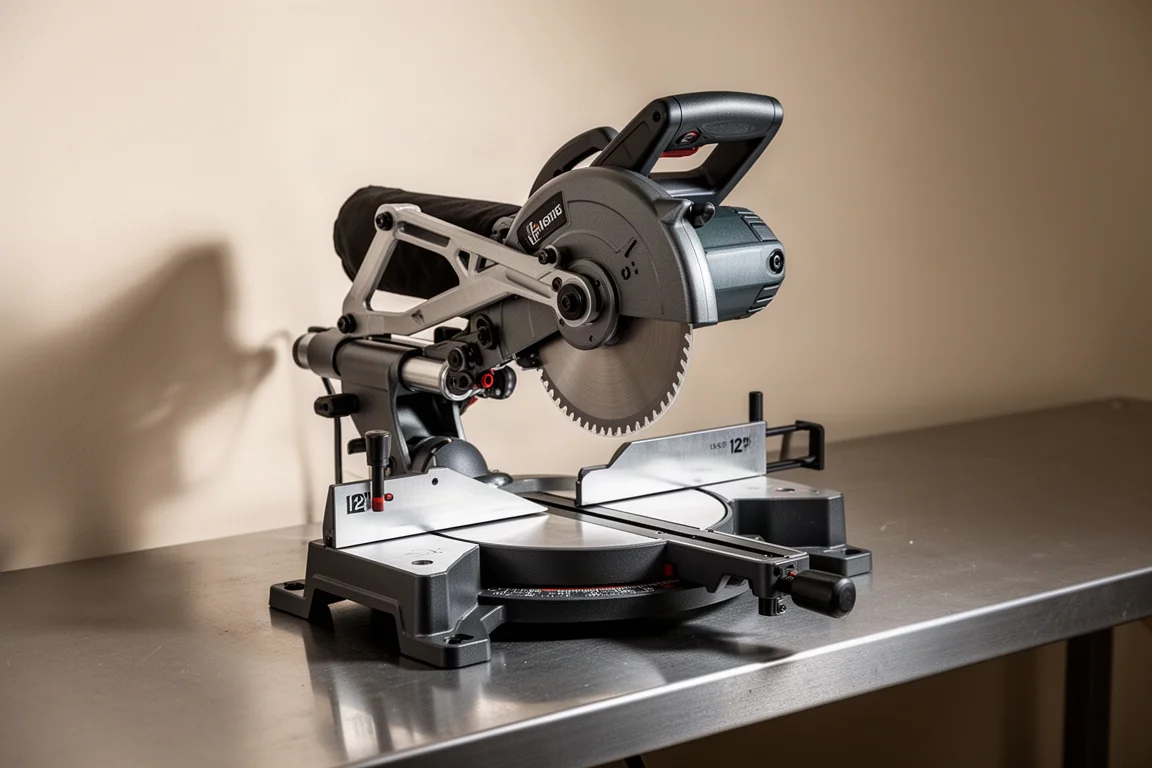
The Makita is the other professional heavyweight, coming in at $759 after discount. It takes the conventional dual-pipe design and inverts it, mounting the pipes at the front in an over-under arrangement, similar to the barrels of a shotgun. That placement also puts the bevel control at the front end of the pipe, so both miter and bevel adjustments are reachable without walking around the saw.
The trade-off is in the wings: the Makita uses wire extension supports rather than the Bosch-style mini tables, and they are not as refined. Where the two diverge most is in use. High-end cabinet makers and top-tier woodworking professionals lean Makita, especially those working on site out of a van, while shop-bound woodworkers gravitate toward the Bosch. If your saw travels constantly, the Makita is the stronger candidate.
DeWalt DWS780
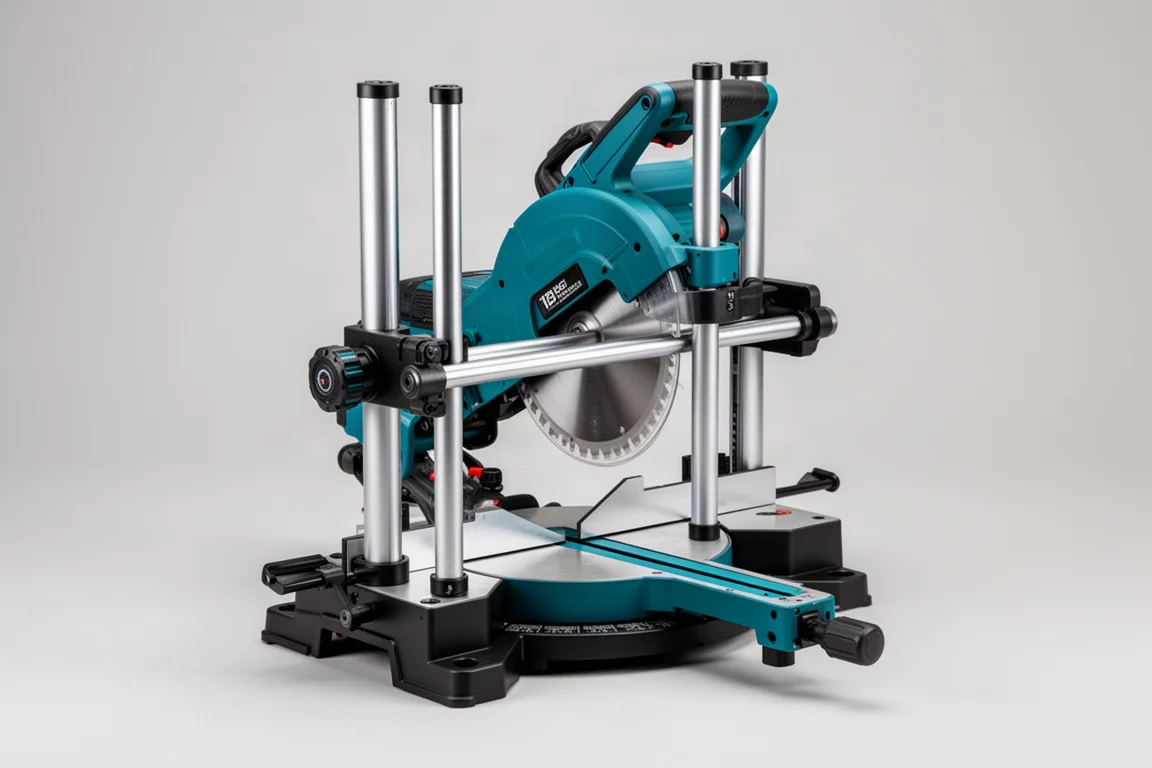
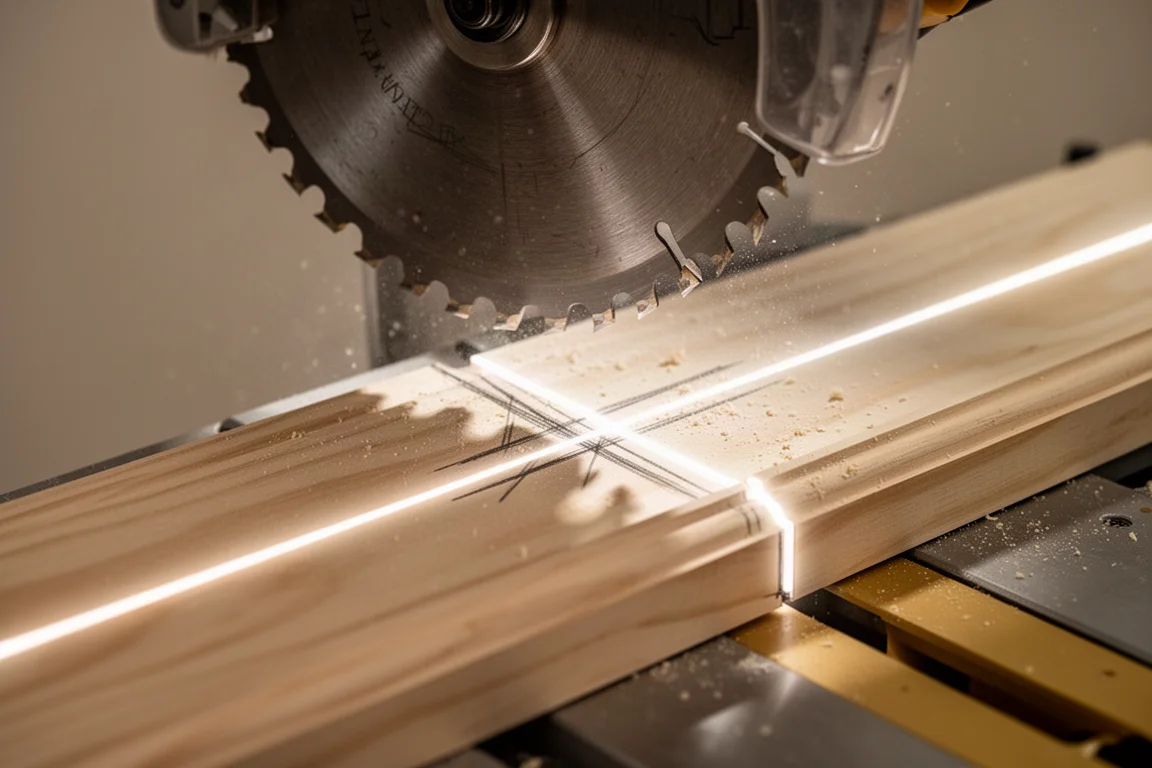
For the average everyday contractor, the DeWalt DWS780 is the default. It uses the conventional layout, dual rails sliding to the rear, and it does everything most users need with a well-proven track record. Its signature feature is the XPS shadow light system: an LED above the blade casts a shadow onto the workpiece that exactly matches the blade’s cut line.
The clever part is what happens when you swap blades. Because the shadow is produced by the blade itself, it adjusts automatically. Fit a thin-kerf blade and the shadow narrows to match, with no laser recalibration required. It is a fortuitous little bit of physics that makes the feature far more useful than a fixed laser line.
The DWS780 carries a premium over its sibling, and that gap is worth understanding before you commit.
DeWalt DWS779
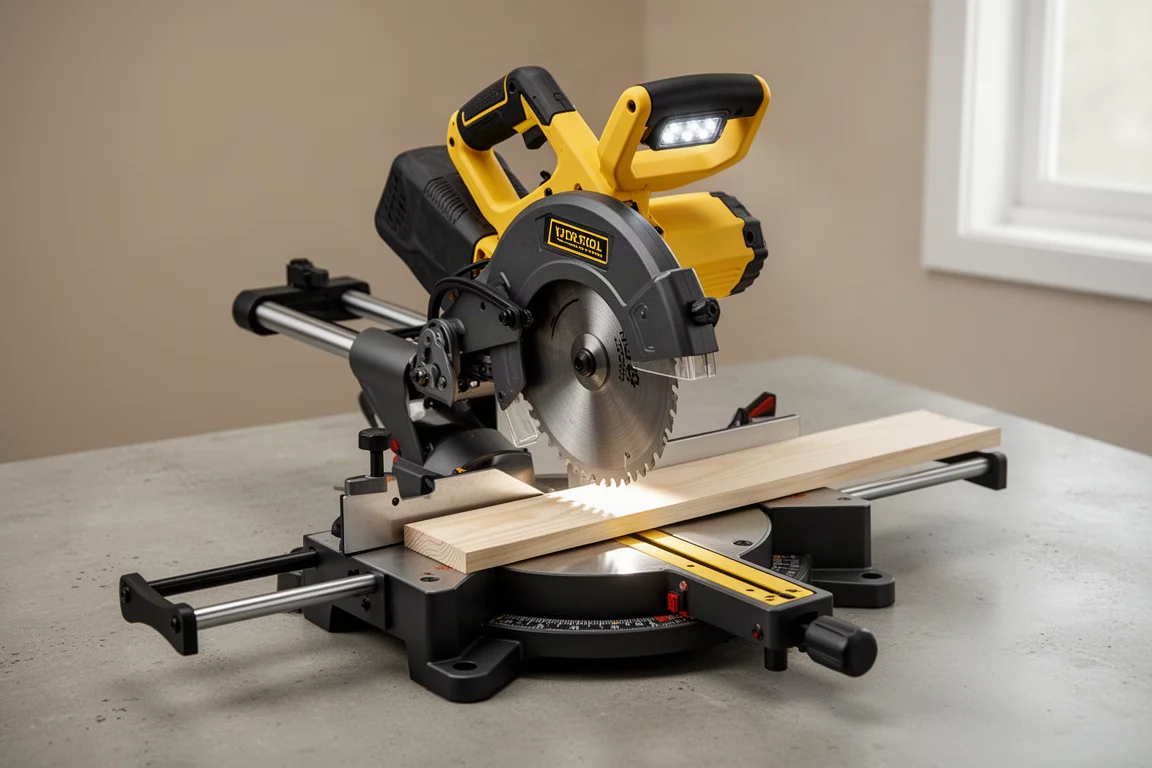
The DWS779 is the same machine as the DWS780 with one omission: it lacks the XPS shadow light. Everything else, including the internal parts, is identical, and the price difference is around $200. There is no obvious technical justification for that gap, which has fueled an entire community of buyers who purchase the 779 and then order the shadow light parts for the 780 online, installing them into what is effectively the same saw.
The one honest warning about that route: the modification voids the warranty. If a longer service safety net matters to you, factor that into the decision before choosing the hack.
Ryobi 12-Inch Sliding Compound Miter Saw
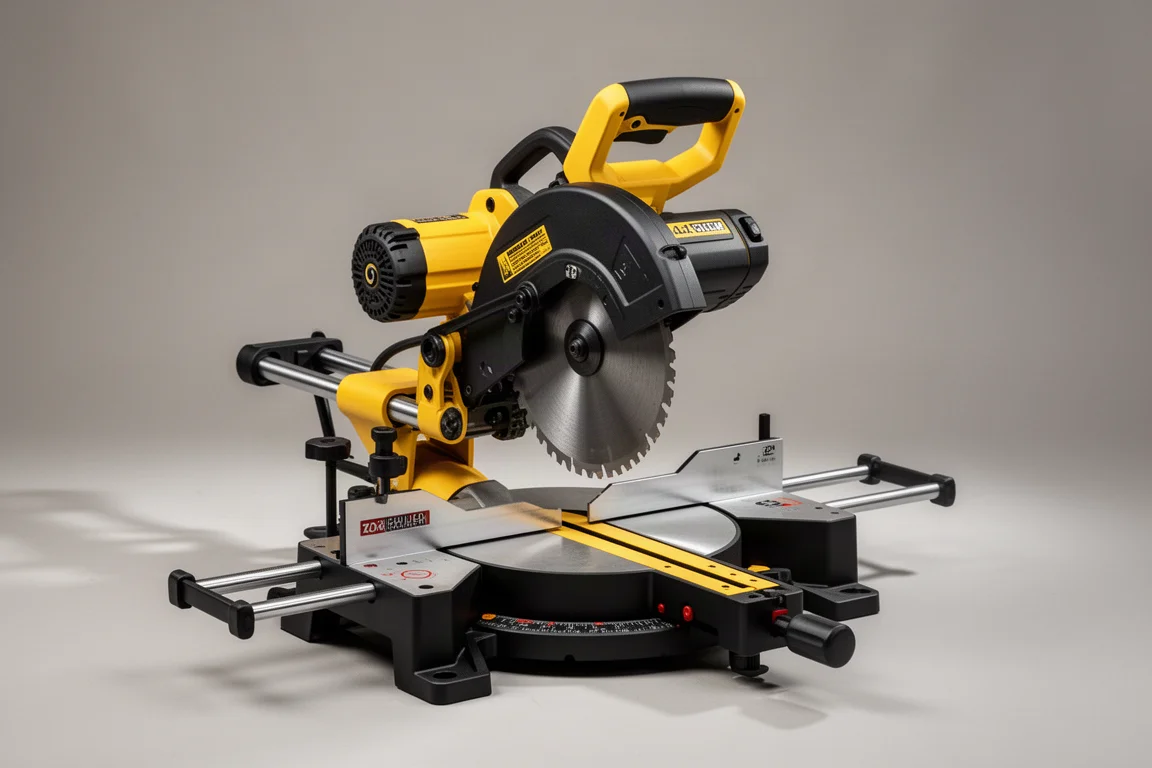
The Ryobi is the baseline cookie-cutter option at Home Depot, priced at $329. It has all the basic features you would expect from a 12-inch sliding compound saw, including the standard rear-sliding dual rails and front miter controls.
It is not a bad saw, but the wire extension wings are noticeably weak, and at this price there are simply better options available. For that reason it is hard to recommend over the alternatives in the same bracket.
Ridgid 12-Inch Dual Bevel Sliding Miter Saw
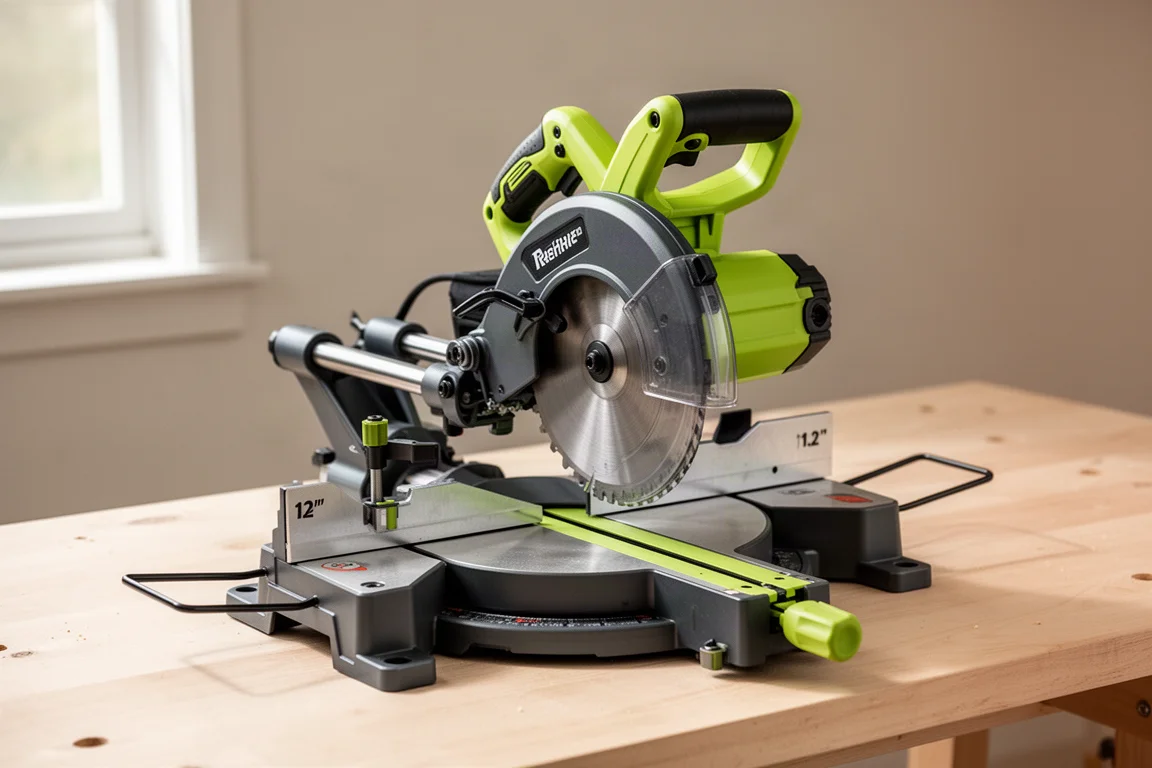
The Ridgid at $400 positions itself as the more robust version of the Ryobi. It keeps the standard front controls and rear bevel setup but builds everything with more substance. Notably, it appears to lack extension wings or side tables entirely.
The bigger story is the brand’s lifetime service agreement. It is worth reading the fine print, because there is a documented history of the company finding ways out of honoring it, which undercuts the main reason to pay a premium for the badge. There is also a larger Ridgid version at $636 that uses an articulating arm system similar to the Bosch Glide, but it is frequently out of stock. The company appears to order these in large batches, sell through, and then leave buyers waiting.
Delta 12-Inch Dual Bevel Sliding Miter Saw
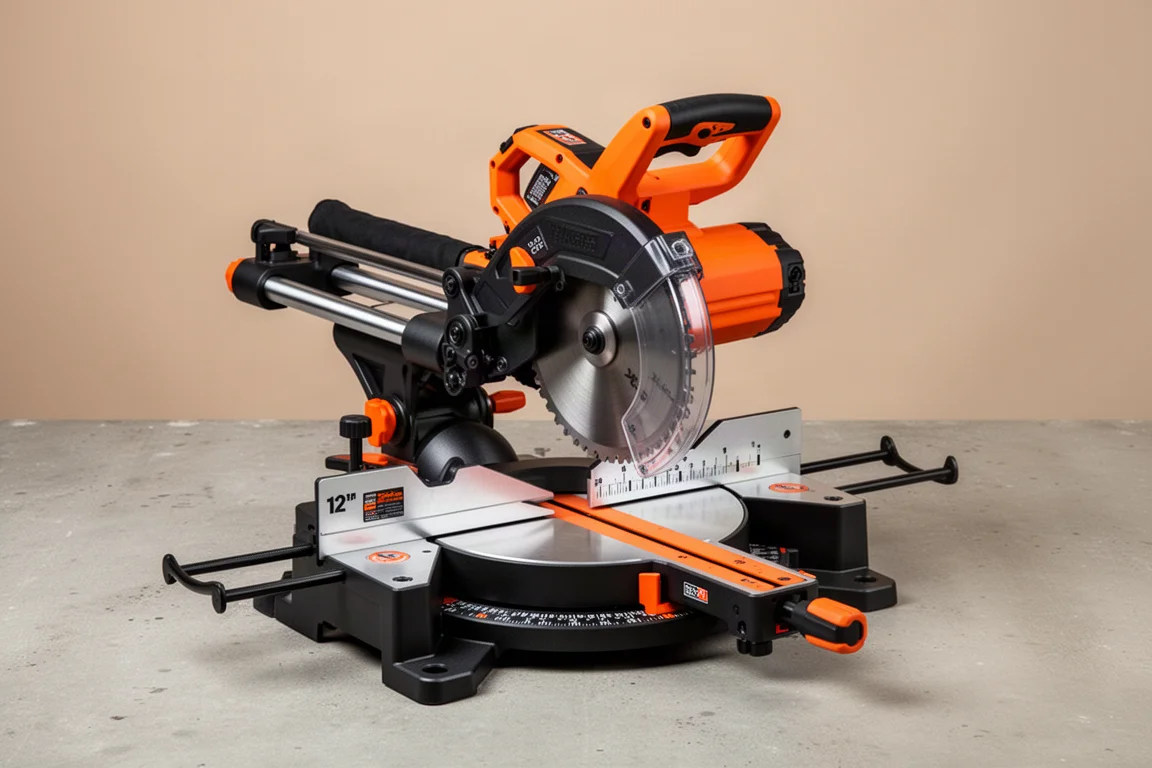
Here is the open secret: the Delta 12-inch dual bevel sliding saw at $636 is essentially the same machine as the out-of-stock Ridgid version. Both are produced by the same parent company, with only slightly different arm details separating them.
If you want this saw, the practical advice is simple: buy whichever of the two is in stock and on sale. There is no meaningful usable difference between them, and neither includes extension wings. At $636 against a Bosch Glide at around $599 on sale, the value case is thin.
Kobalt 12-Inch Dual Bevel Sliding Compound Miter Saw
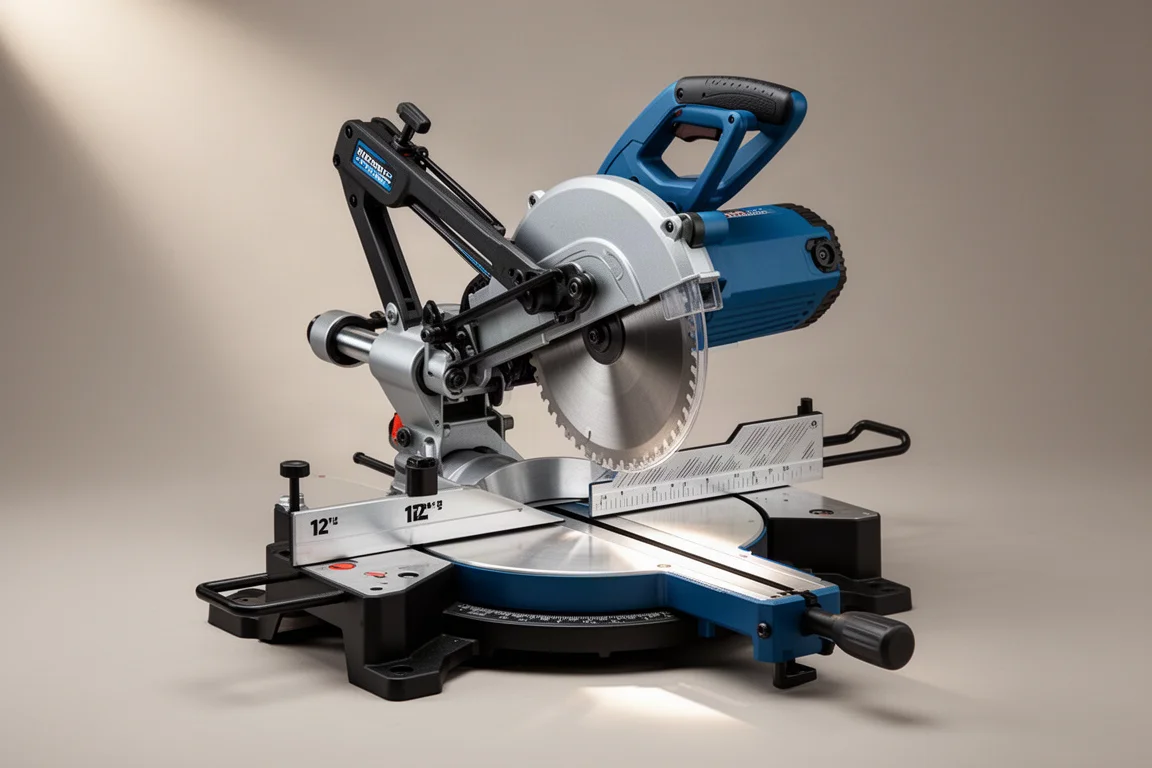
The Kobalt is Lowe’s house-brand entry at $400. It follows the standard template: dual pipes to the rear, regular controls up front, and decent extension wings. It also carries a nice warranty for the price bracket.
This is a good saw that does its job without excitement. Since it is a corded tool, there is no battery-platform loyalty holding you to the brand, which makes the lack of a standout feature harder to overlook. It is solid, it is fine, and it is not the most compelling $400 in this comparison.
Hercules 12-Inch Dual Bevel Sliding Compound Miter Saw
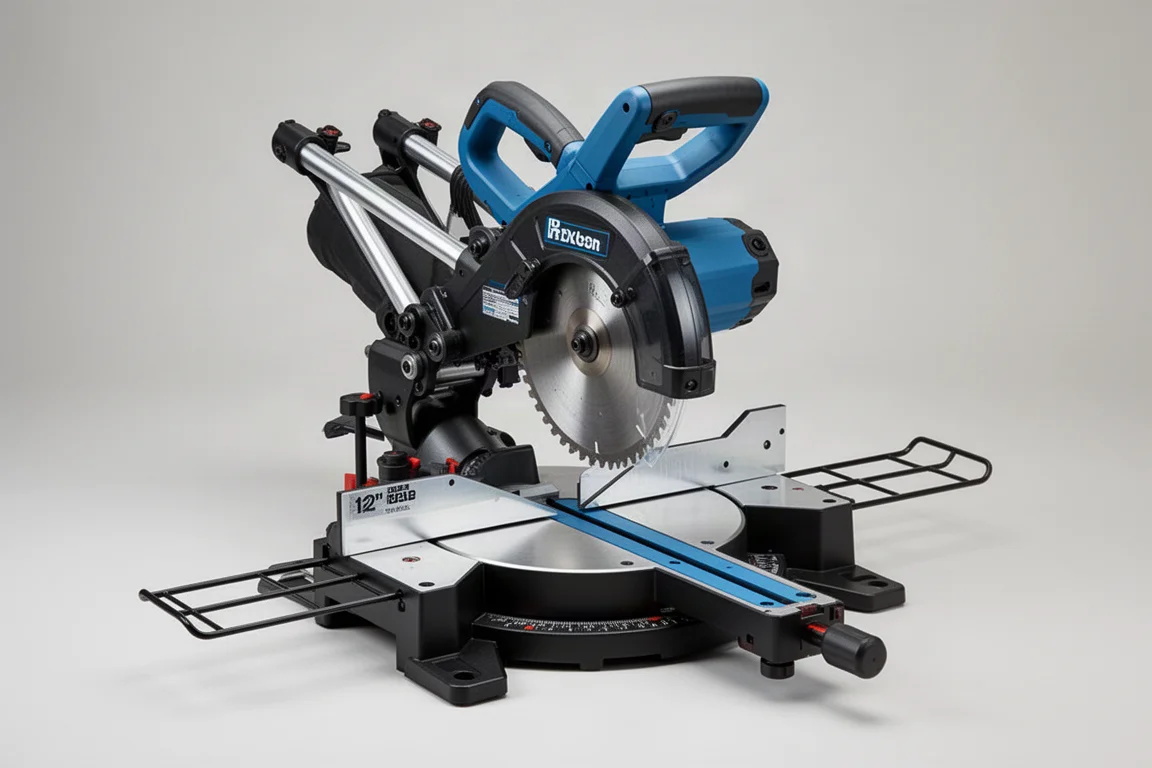
The Harbor Freight Hercules caused a stir when it launched because it borrowed heavily from the DeWalt playbook, including the drop shadow light, and delivered the DWS780 experience for roughly half the price. It goes on sale for $300 on a regular cycle, roughly every two to three months.
The catch is the warranty, which has shrunk to 90 days from the longer coverage offered at launch. Harbor Freight sells a two-year extended warranty for about $90 that works on a no-questions-asked basis: you bring the saw in and swap it for a new one. For busy contractors who would rather replace a dead saw than wait weeks for factory service, that simplicity has been enough to drive real switching away from DeWalt. At $390 all in, you are still under the price of a DWS779.
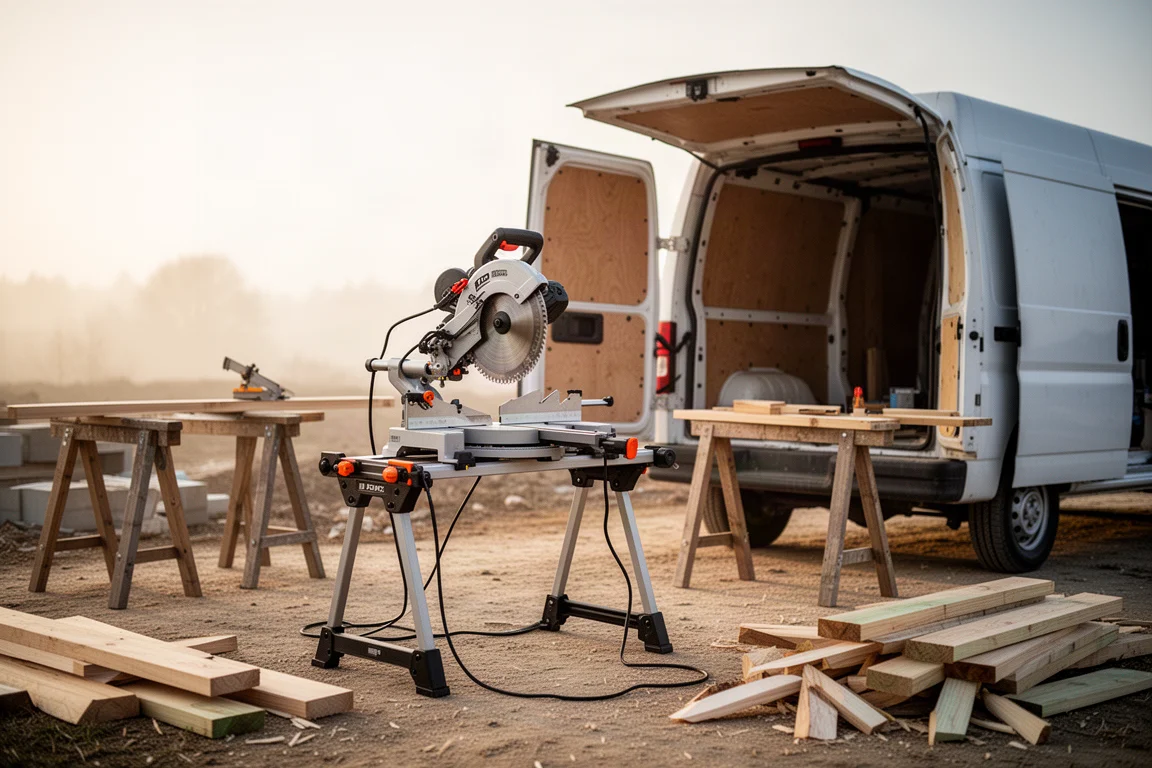
It may not be the single best choice in this entire comparison, but it is a legitimately good saw from a company that has silenced a lot of early skeptics.
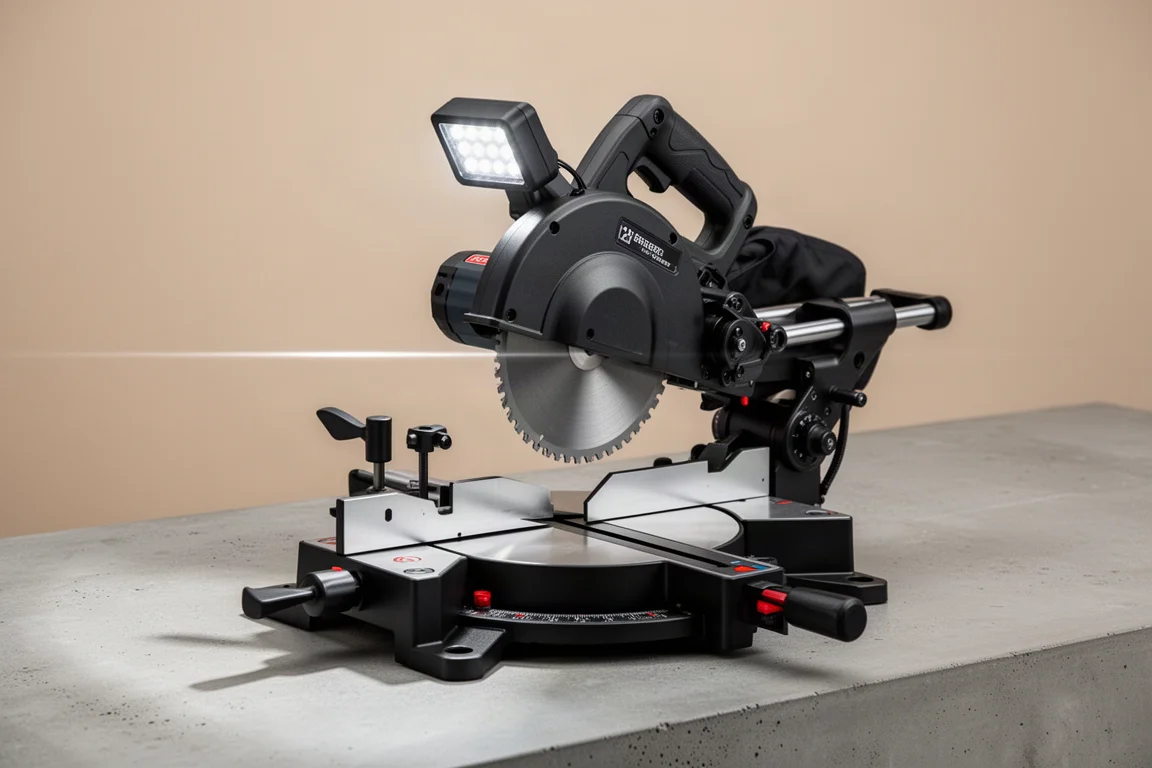
Masterforce 12-Inch Dual Bevel Sliding Compound Miter Saw
The Masterforce is Menards’ house-brand take on the category, and it is exactly what the standard template suggests: dual pipes to the rear, controls up front, and extension wings included. It is a good saw with a decent warranty and nothing particularly special about it.
With the sale price and the Menards rebate, which seems to be perpetually available, the effective cost lands around $374. That is respectable, though the Hercules still edges it out on setup and feel, feeling slightly more robust in use.
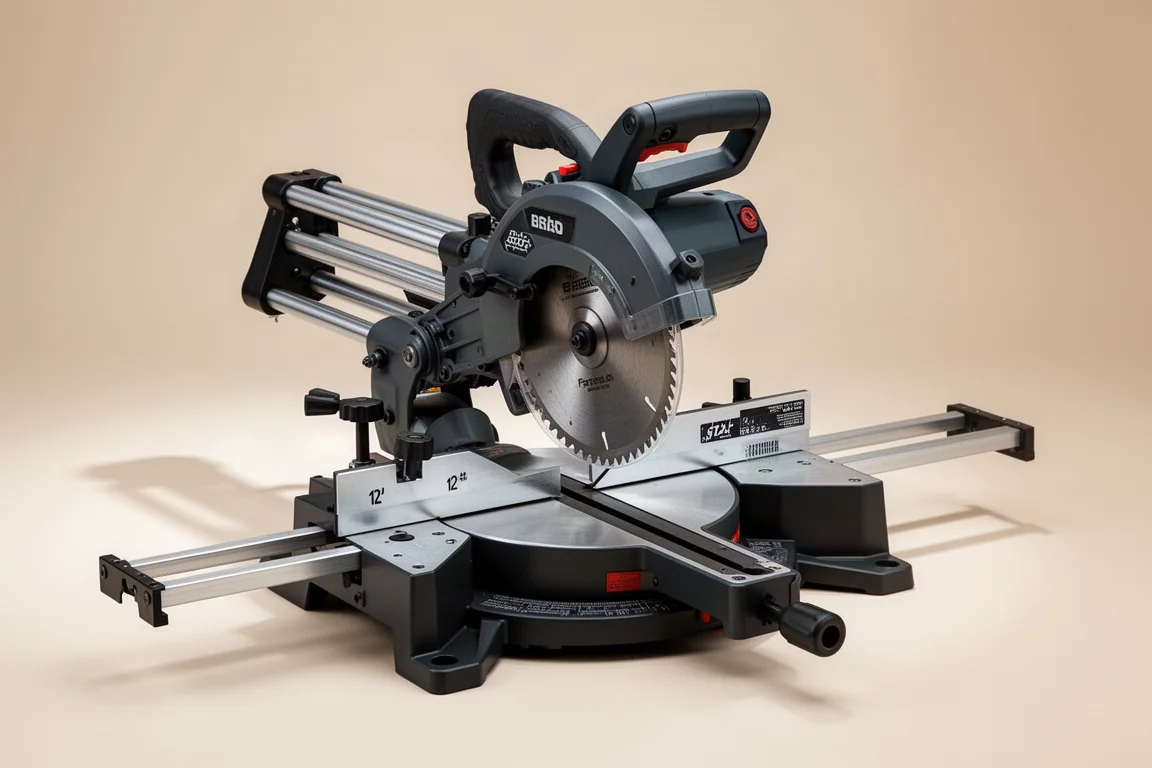
Metabo HPT 12-Inch Dual Bevel Sliding Compound Miter Saw
This is the value pick of the entire list. The Metabo HPT 12-inch dual bevel sliding compound miter saw costs $389 and delivers a feature set that should not exist at this price. Like the Makita, it uses an over-under dual rail style, but mounted at the front, which gives it zero rear clearance. Within the past year or so it also upgraded from a laser line to the drop shadow light, matching the feature the DeWalt charges $200 extra for.
It includes wire extensions rather than table extensions, which is the one area where it gives up ground. Everything else lands in its favour: five-year warranty, shadow light, zero rear clearance, at roughly the average price of the basic saws in this class. It does not cut quite at the same level as the Bosch Glide, but for a home user who wants the extra features, or a professional buying on value, it is the standout.
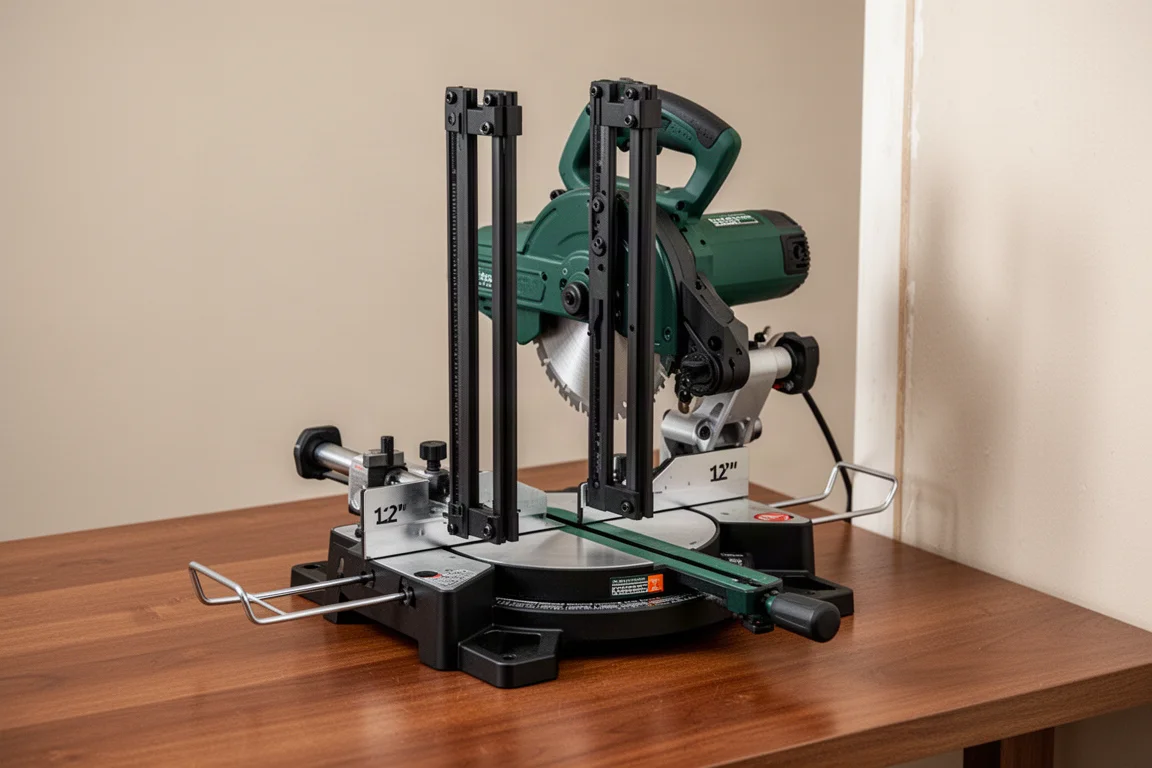
Skilsaw Worm Drive 12-Inch Miter Saw
The Skilsaw worm drive is a strange case. It is a great saw, and the worm drive technology gives it a distinct identity, but it is barely available anywhere. You can find it at Grainger for close to $1,000, or at a smaller specialty retailer for $760, and almost nowhere else.
Here is the honest assessment: worm drive technology matters far less on a miter saw than it does on a circular saw or table saw. Miter saws make quick chop-style cuts rather than extended rip cuts, so the drivetrain advantage rarely comes into play and does not justify its cost here. Unless you are deeply loyal to the brand, this is a pass, and it is an easy pass at $1,000.
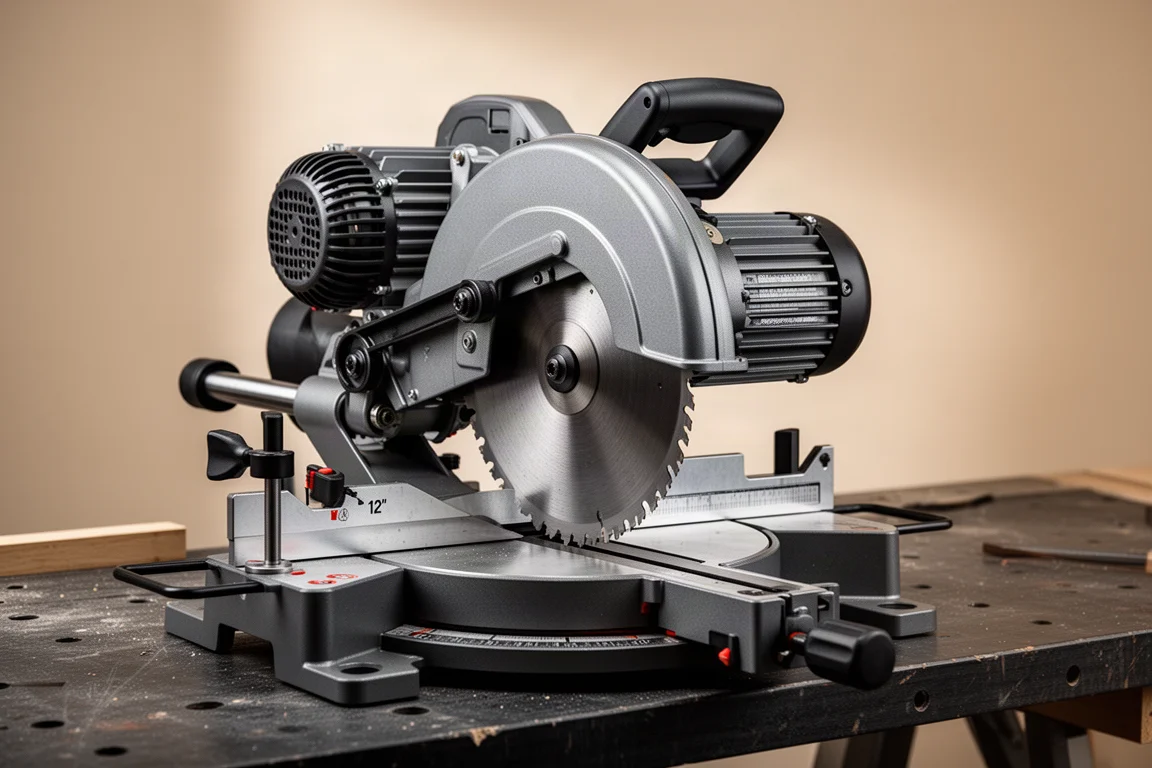
Jet 12-Inch Dual Bevel Sliding Miter Saw
Jet has real history in the woodworking world, and fans of the brand’s older table saws and band saws will remember when the name carried serious weight. That history makes the current offering harder to accept.
At $680, the Jet 12-inch dual bevel sliding saw is no different from the standard dual-pipe, basic-control saws available everywhere else. It is a decent tool, but it is not a $680 tool, and at this price the Bosch Glide and even the Makita make far more sense.
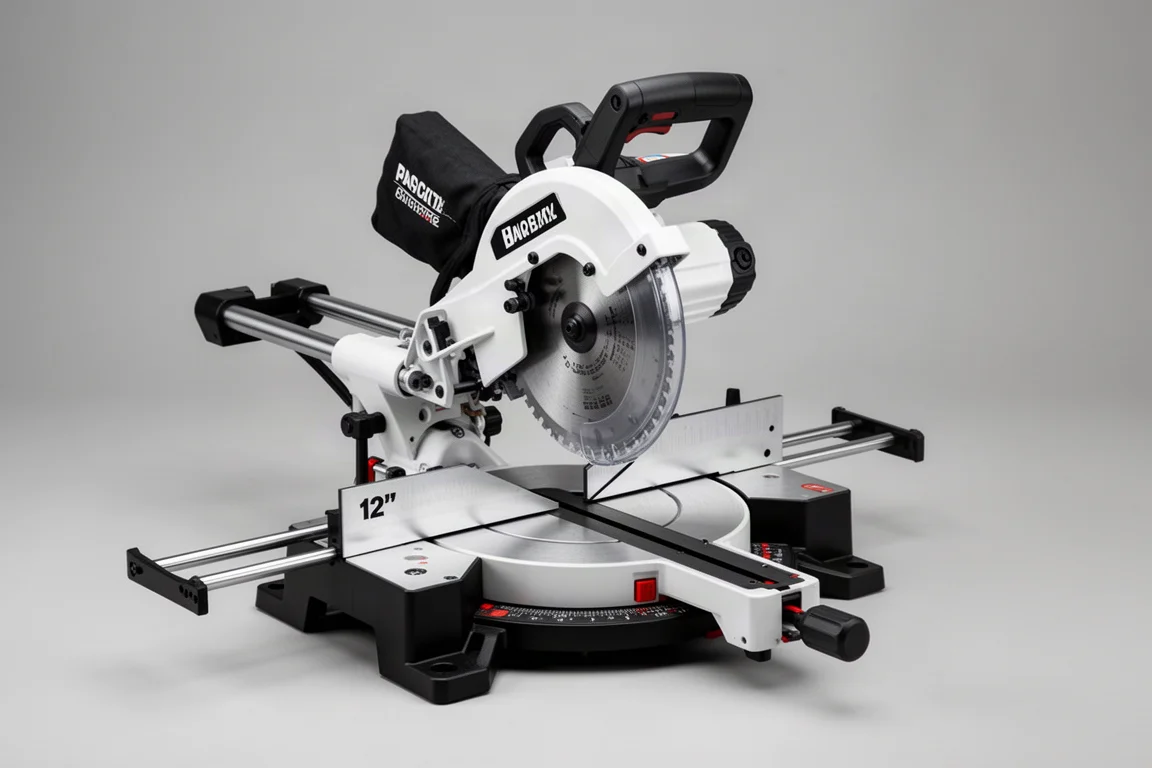
Craftsman 12-Inch Dual Bevel Sliding Miter Saw
The Craftsman sits at $285, making it one of the least expensive dual bevel sliding saws in this whole comparison. It is a basic, standard-layout machine aimed squarely at the sub-$300 bracket.
Its main argument is price. In a tier where customer service quality varies widely between brands, the Craftsman holds its place as the inexpensive fallback for buyers who mostly want the capacity of a 12-inch slider without paying for features they may never use.
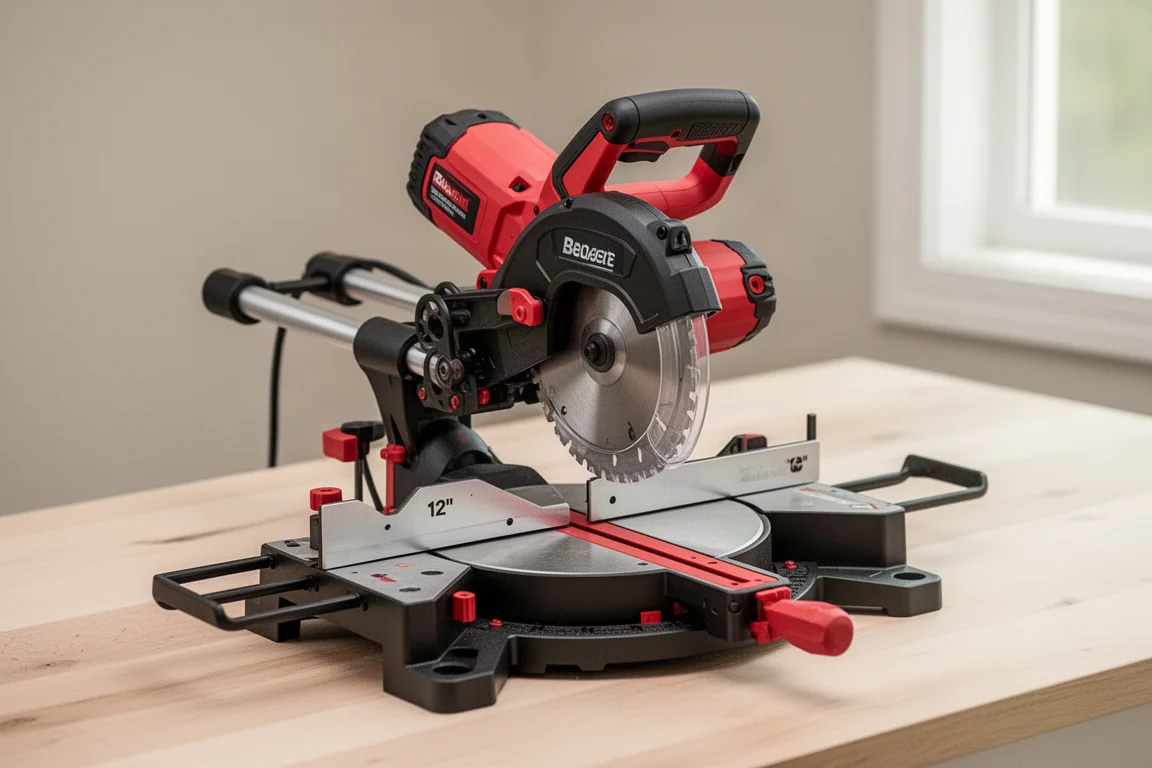
Vevore 12-Inch Sliding Compound Miter Saw
For completeness, the Vevore deserves a mention because it offers zero rear clearance at a budget price, using the same shotgun-style forward rail arrangement as the Makita. The execution, however, falls short: bevel controls remain in the old rear position rather than moved to the front, and the wire extensions are among the flimsiest in this class.
The brand itself is a sticking point for many buyers, though it is worth noting this unit is sold and shipped by Amazon. It is listed here for transparency rather than as a recommendation; there are stronger options at every nearby price point.
Buying Advice
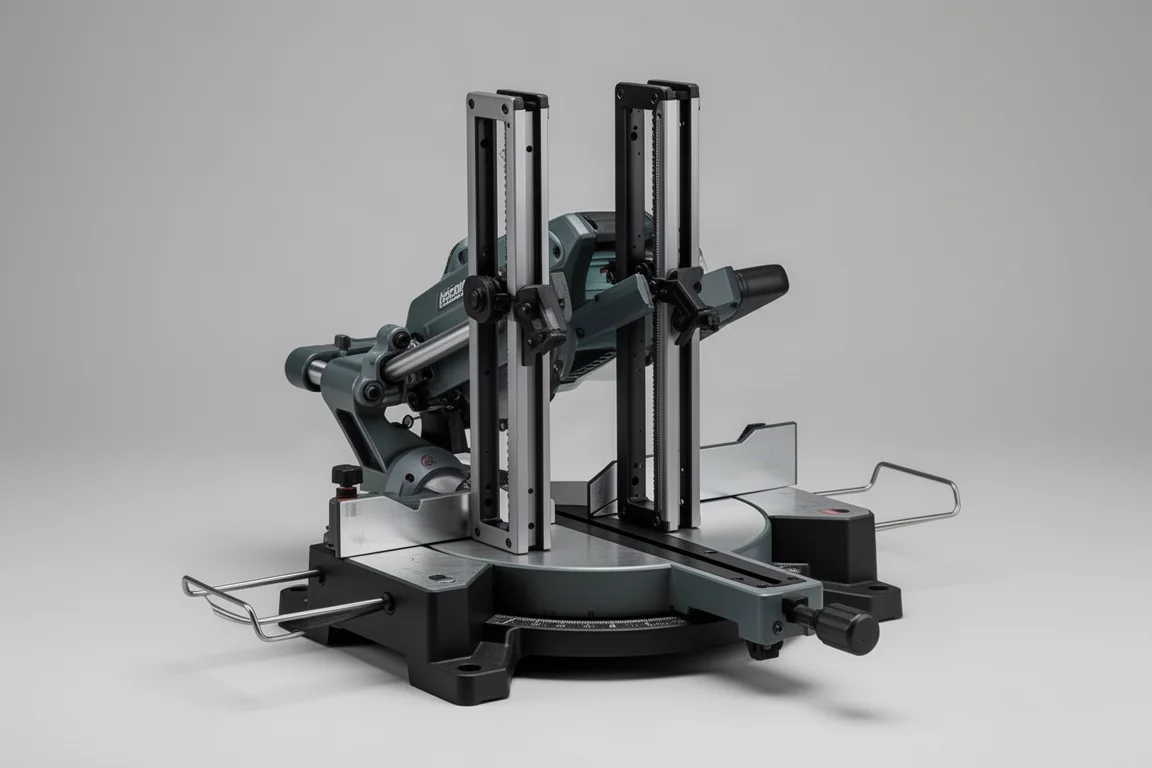
For professionals, the choice comes down to the Bosch Glide and the Makita, and the decision is really about where you work. If the saw moves from van to job site constantly, the Makita is the more natural fit. If it lives in a home shop or small workshop, the Bosch Glide and its zero rear clearance arm earn their keep.
In the Goldilocks zone, the Metabo HPT at $389 is the pick that keeps coming back. At the same price as a Hercules with the two-year plan, you get a five-year warranty, the drop shadow light, and zero rear clearance. On the budget end, the Hercules at its frequent $300 sale price remains a legitimately strong option, and warranty length is the tiebreaker worth watching across the sub-$400 field.
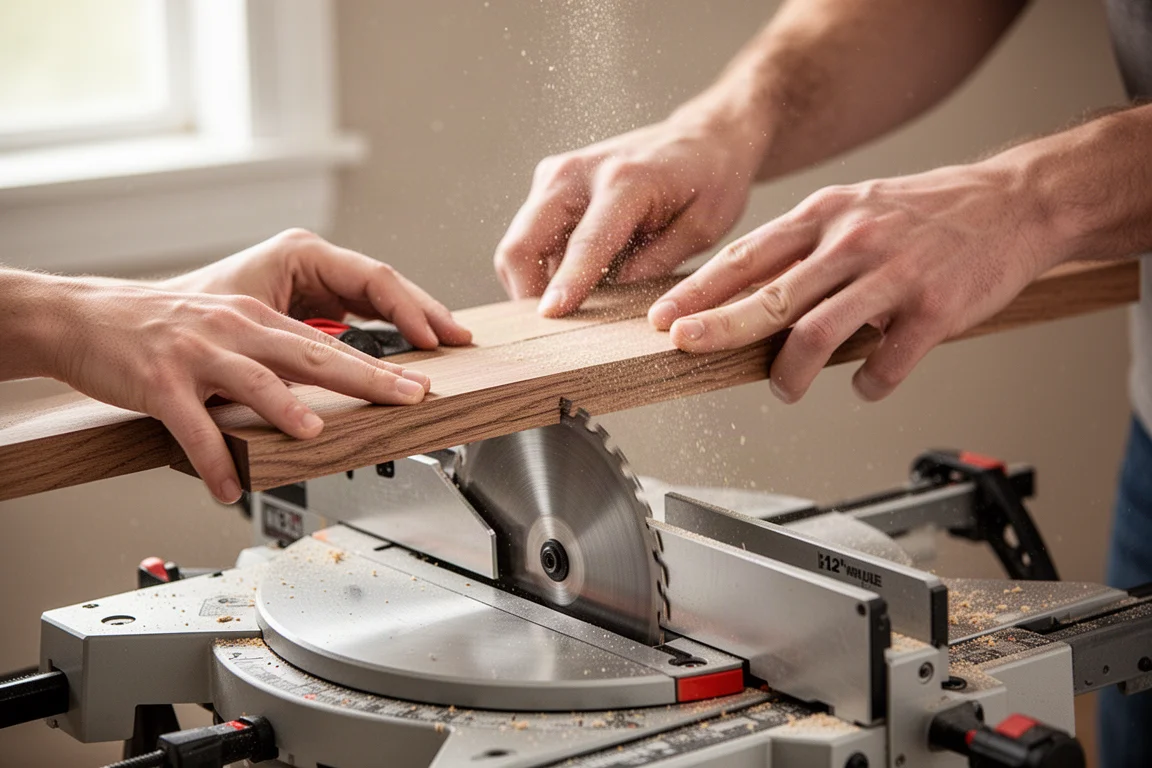
One cutting tip that applies to every saw on this list: do not lean on the handle as the blade cuts. Leaning throws the cut off regardless of how good the saw is. Let the blade do the work, and even the more affordable saws here will produce noticeably cleaner results.
Conclusion
The overall shape of this market is clear. The Bosch Glide and Makita own the professional tier, the DeWalt DWS780 and DWS779 own the contractor mainstream, and the Metabo HPT quietly outclasses almost everything near its $389 price with a feature set normally reserved for saws costing hundreds more. The Hercules is the savvy budget buy when its sale hits, while the Ryobi, Skilsaw worm drive, Jet, and Vevore are best left on the shelf unless a specific deal changes the math.
Match the saw to where you actually work, pay attention to warranty terms, and any of the top three tiers here will serve you well for years.
Further reading
Related Reviews
Power Tools
Best 1-Inch Pistol Impact Wrenches: Three Heavy-Duty Options Compared
We compare three 1-inch pistol impact wrenches, from a budget-friendly Harbor Freight model to a premium Caterpillar unit, to help you choose the right one.
Power Tools
Best 3/4-Inch Impact Wrenches 2026: Five Contenders Compared
We compare five 3/4-inch impact wrenches across price and performance, from a budget Amazon option to Snap-on's most powerful model yet.
Power Tools
Best Budget Cordless Tools 2026: Walmart Finds That Punch Above Their Price
We tested five cordless tools from Walmart, including a high-torque impact wrench that trades blows with Milwaukee and a $35 duster that outperforms its price class.