Power Tools
Bauer vs Milwaukee Caulk Guns: Is a Budget 20V Gun Good Enough?
A hands-on comparison of the Bauer 20V Caulk and Adhesive Gun and the Milwaukee M18 Caulk Gun, covering speed settings, bead control, restart behavior, and where the cheaper tool makes sense.
Introduction
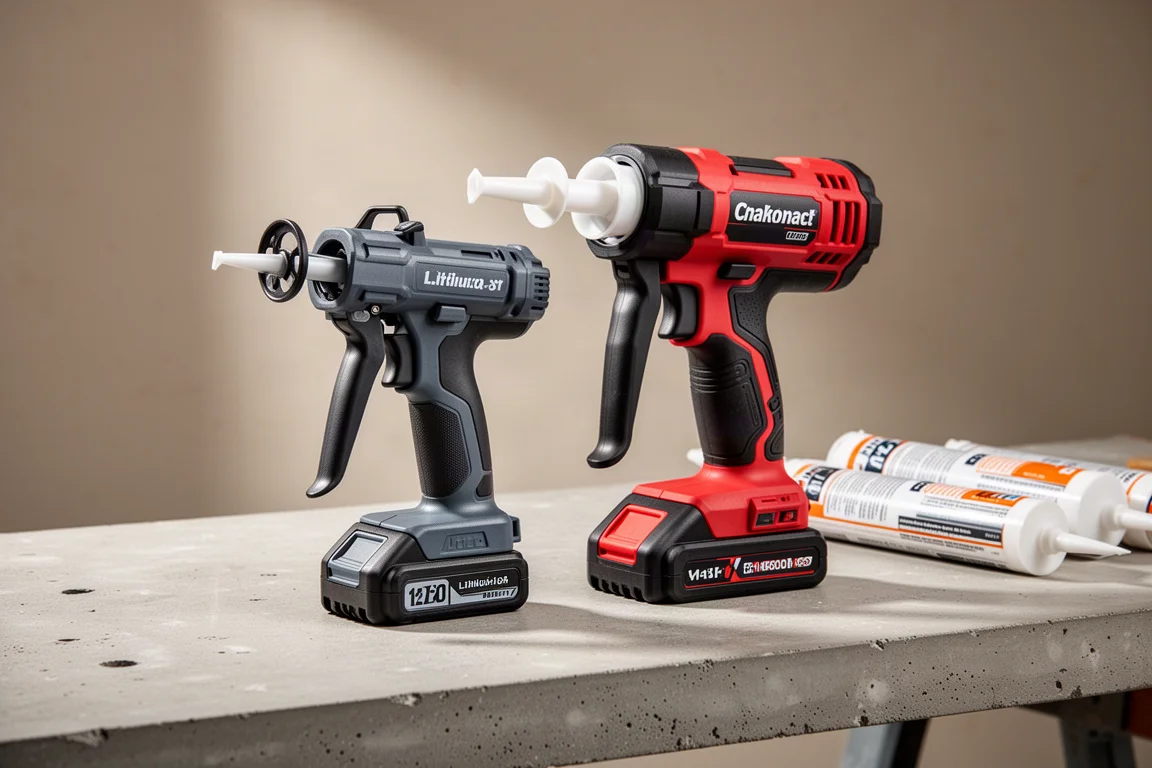
Powered caulk and adhesive guns are one of those tools that seem like overkill until you use one. A basic manual click-type gun costs a couple of dollars, so why would anyone spend $40, $179, or close to $300 on a cordless version? To find out, we put two of them head to head: the Bauer 20V Lithium-Ion Caulk and Adhesive Gun (part number 59793) and the Milwaukee M18 Caulk Gun, running both through identical tubes of construction adhesive at every speed setting.
The short version: if you do much caulking, a powered gun really does make a difference. You can lay a cleaner, more consistent bead than with a standard click-type gun. The real question is how much tool you actually need.
Why a Powered Caulk Gun at All?
There are two basic families of caulk guns. Manual guns use a ratcheting mechanism with teeth that clicks the plunger forward. Powered guns have no gears or teeth at all; the motor drives the plunger directly, which is what makes the bead so much smoother and easier to control.
The interesting comparison is not just bead quality. It is what happens when you pause. Powered guns back the plunger off when you stop, which relieves pressure on the tube so the caulk does not keep squeezing out. That is great for cleanliness, but it creates a restart problem: on a low speed setting, the plunger has to travel all the way back up to the tube before material flows again. On the slowest settings, that crawl back can feel like it takes forever, which matters a lot when you are trying to work precisely.
Bauer 20V Caulk and Adhesive Gun: The Budget Pick
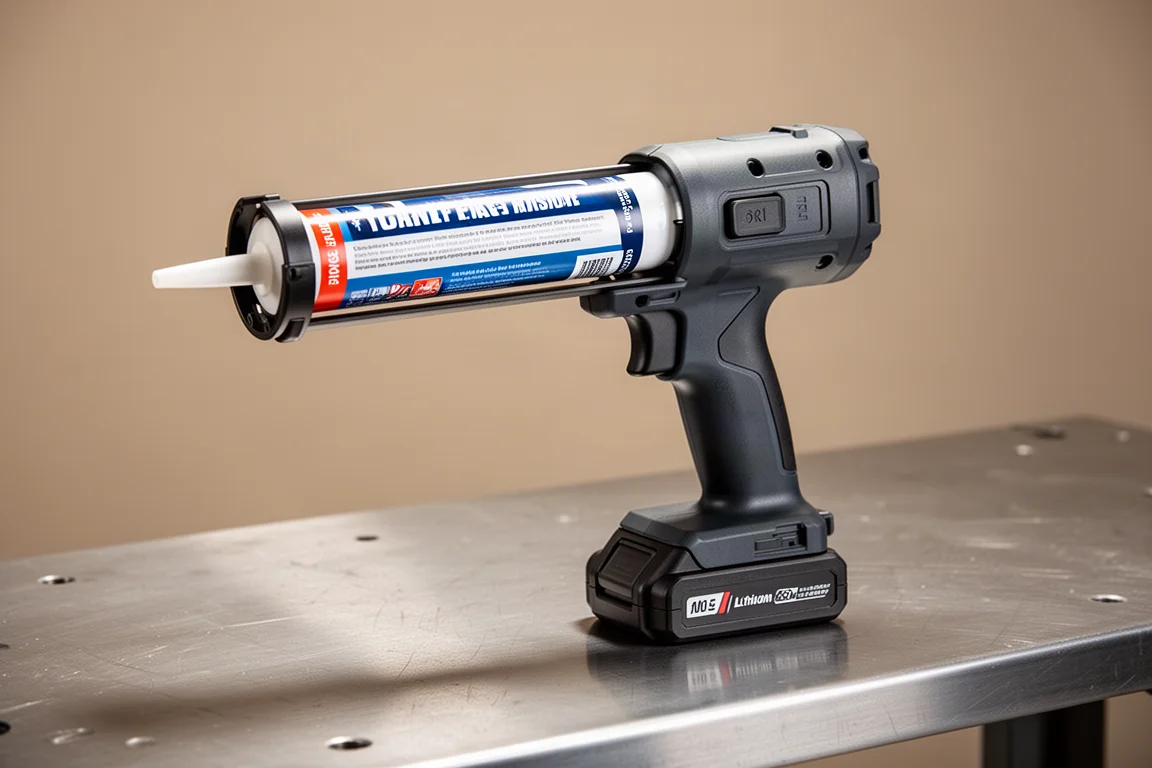
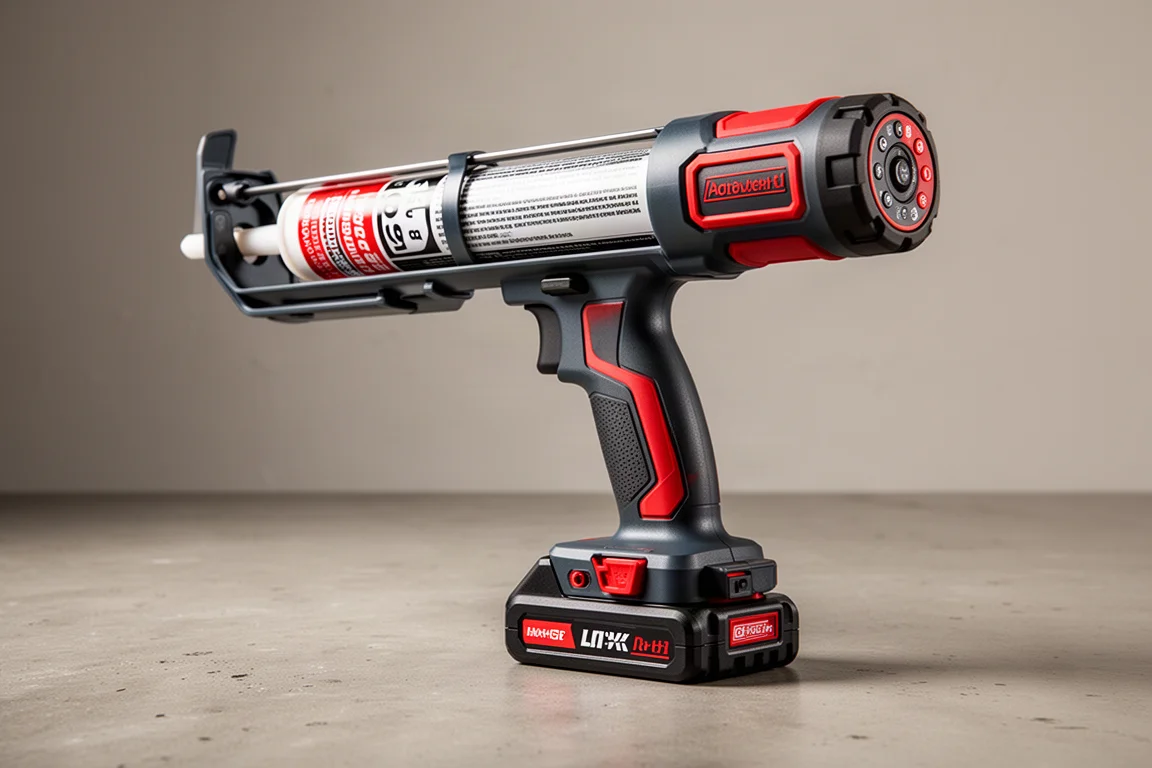
The Bauer 20V caulk and adhesive gun sells for $39 and takes Bauer batteries, though none is included in the box. A rear release button lets the plunger slide back and forth freely, and the gun offers five speed settings. It also has a dedicated release button for unloading, and both the Bauer and Milwaukee can be taken apart to access the plunger for cleaning.
In testing, the Bauer’s restart behavior was the standout. Back the plunger off, hit the trigger, and it surges back up to the tube almost instantly, then settles into its set speed. On the Milwaukee, the same restart at low speed is a long, slow crawl. If you pause frequently while working, that difference adds up to real time and frustration saved.
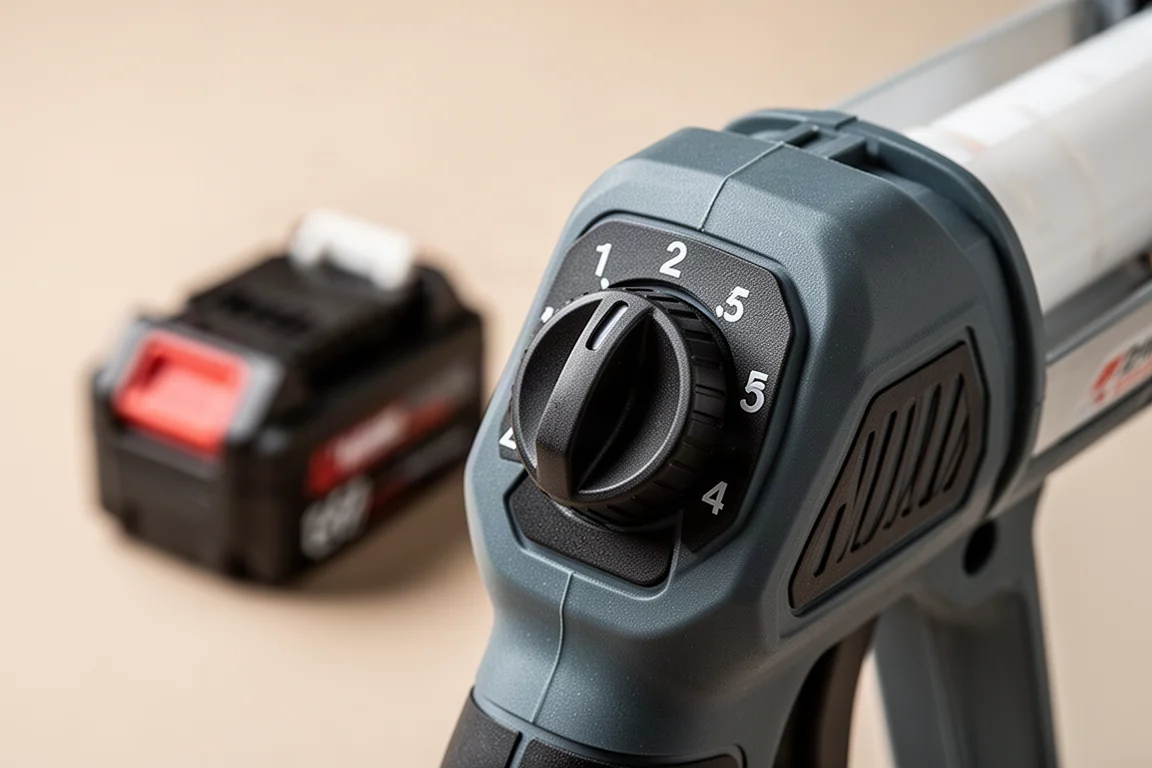
The bead at the lowest setting was still a touch heavier than the Milwaukee’s finest output, so the Milwaukee holds an edge if you need an extremely fine line. The bigger complaint is the small trigger-area switch, which is oddly loose and can jam or get stuck, an irritating weak point on an otherwise well-behaved tool. The package includes a belt loop and a tube-popping tool for the foil seal.
Milwaukee M18 Caulk Gun: The Premium Option
The Milwaukee runs roughly $179 and, at the top end of the M18 range, approaches $300, also without a battery. It offers six speed settings, one more than the Bauer, and its lowest settings deliver a noticeably finer, lighter bead. For detail work where bead precision is the priority, it is the more capable tool.
The plunger release lives on a button that will feel familiar if you already own Milwaukee tools, which is a nice bit of muscle-memory continuity, though its placement is not obvious to newcomers. The switch locks, and the plunger backs off just like the Bauer’s when you stop.
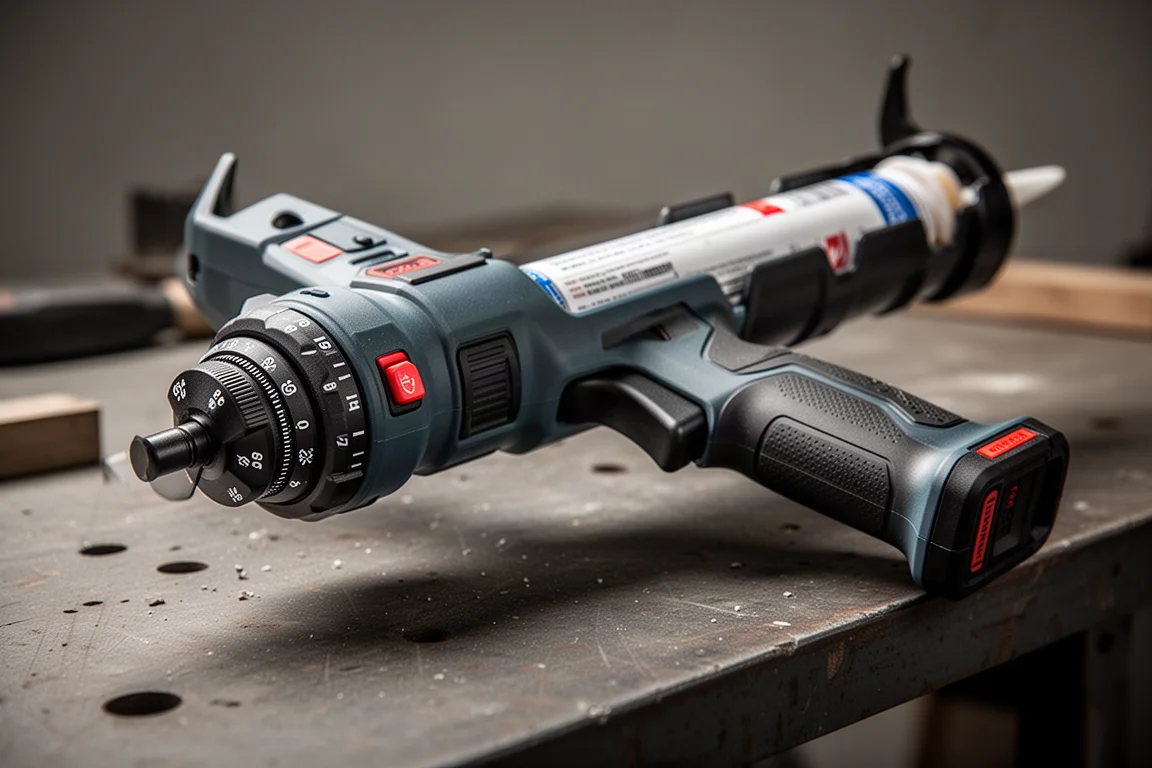
Where the Milwaukee falls down is restart speed at low settings. Set to its slowest speed, the plunger takes a long time to creep back up to the tube after backing off, which makes precise, pause-heavy work more tedious than it should be on a tool at this price.
Head-to-Head Verdict
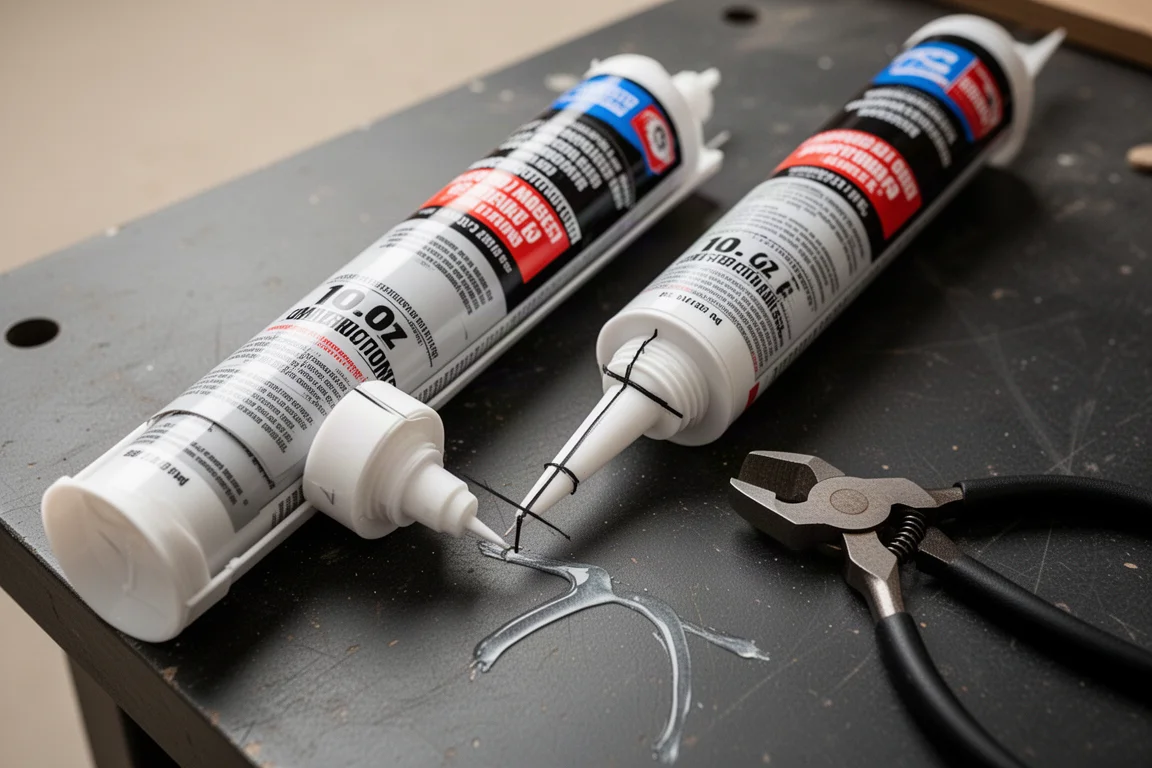
We tested both guns on matched, straight-cut 10-oz tubes of construction adhesive at equivalent settings. At the highest speeds, both start and flow quickly. At mid and low settings, the Milwaukee puts out less material per second, which translates to better control. The Bauer compensates with a much faster recovery after a pause, and its lowest setting still produces a perfectly usable bead for most jobs.
Buying Advice: Which One Should You Get?
Unless you really need a much finer line than the Bauer produces, the $39 Bauer does the job fine and is the least expensive powered option among the main brands, with Ryobi and others sitting in between. The caveats: the loose, occasionally sticky switch is genuinely annoying, and long-term durability is an open question.
Choose the Milwaukee if bead precision at the slowest speeds is central to your work or you are already invested in the M18 battery platform. Choose the Bauer if you want the powered-gun experience at a fraction of the price and can live with a fiddly switch.
Conclusion
Both guns prove the same point: once you use a powered caulk gun, you will not go back to a manual one. The Milwaukee M18 wins on fine-bead control, while the Bauer 20V wins on value and restart speed, making it the smarter buy for most people tackling everyday caulking and adhesive work.
Further reading
Related Reviews
Power Tools
Best 1-Inch Pistol Impact Wrenches: Three Heavy-Duty Options Compared
We compare three 1-inch pistol impact wrenches, from a budget-friendly Harbor Freight model to a premium Caterpillar unit, to help you choose the right one.
Power Tools
Best 3/4-Inch Impact Wrenches 2026: Five Contenders Compared
We compare five 3/4-inch impact wrenches across price and performance, from a budget Amazon option to Snap-on's most powerful model yet.
Power Tools
Best Budget Cordless Tools 2026: Walmart Finds That Punch Above Their Price
We tested five cordless tools from Walmart, including a high-torque impact wrench that trades blows with Milwaukee and a $35 duster that outperforms its price class.