Kitchen Knives
Battle of the Blades: Comparing Three 240mm Gyuto Knives
Three 240mm gyutos face off in real kitchen tests: the Hatsukoro Shino, Yoshikane Nashiji, and Masamoto KS. Here is how each one felt in hand and on the cutting board.
Introduction
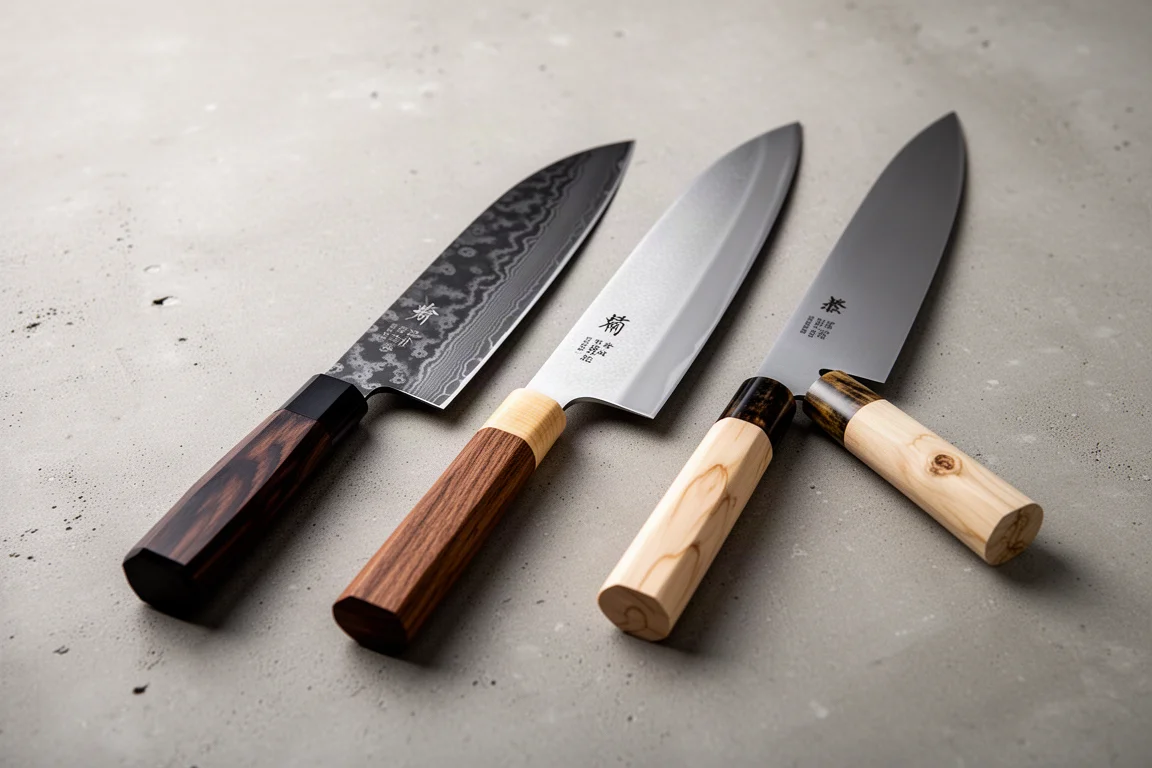
Picking one knife shape, one size, and three strong contenders is one of the most useful ways to compare Japanese kitchen knives. That is exactly what this round does: three 240mm gyutos, tested side by side through three practical kitchen challenges.
The three knives in this comparison are the Hatsukoro Shino, the Yoshikane Nashiji, and the Masamoto KS. All were given the same quick touch-up on a stone and strop before testing, so the results reflect each knife’s geometry and feel rather than factory edge condition. The tests were an onion dice, a bell pepper, and a carrot, plus the in-hand details that photos rarely capture: balance, handle feel, and fit and finish.
How the Knives Were Compared
Each knife was evaluated on three things. First, the specs: steel type, cladding, handle materials, and grind. Second, the feel: balance point, spine and choil comfort, and how the handle fills the hand. Third, cutting performance across the onion dice, bell pepper, and carrot tests, including food release and control at the tip.
None of these knives struggled. The real question is which one matches your hands and your cutting style, because the differences between them are mostly about feel, weight, and preference.
Hatsukoro Shino 240mm Gyuto
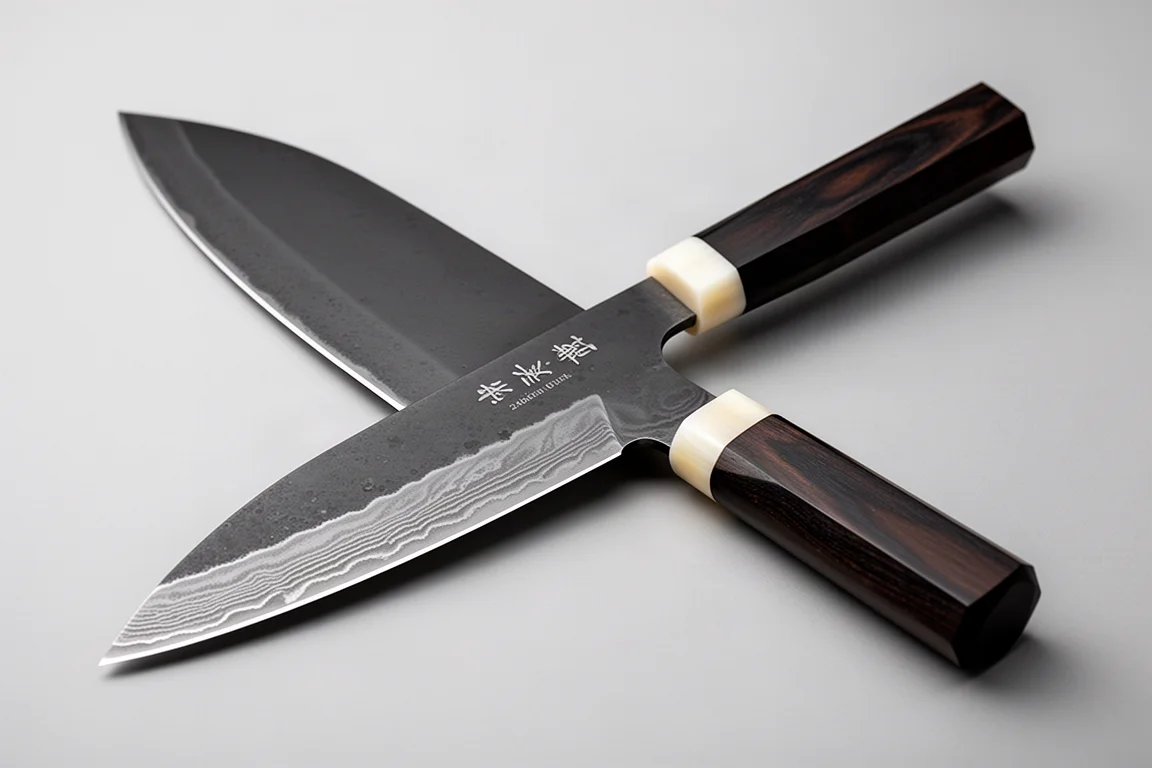
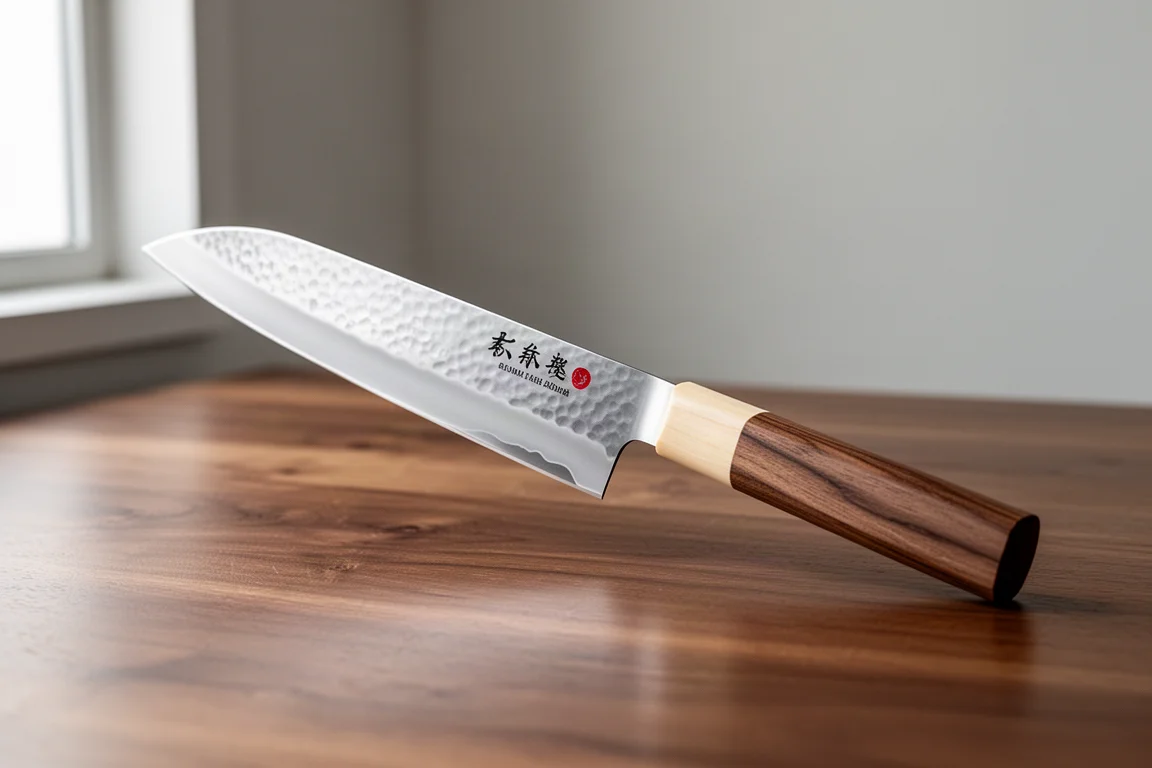
The Hatsukoro Shino is made from Aogami Super steel with iron cladding, finished with a kuruchi and Damascus treatment. It was produced for the Hatsukoro brand by Takaho Nihei, a very highly regarded knife maker, and it shows. This is easily the most striking knife of the three to look at.
The octagonal ebony handle with a white buffalo horn ferrule suits both right- and left-handed users and fills the hand nicely. The knife is a little heavier overall, with a balance point about an inch from the tang and handle insertion point, right where you would grip it for a pinch grip. That placement makes it feel very naturally balanced in use.
Fit and finish is strong, with two small notes: the spine and choil could be sanded down slightly better. That said, neither digs into the index finger, and the thick tang actually provides a nice platform for the finger. The bevels are clean with only minor hammer marks and a couple of small low spots, and the edge geometry is very good.
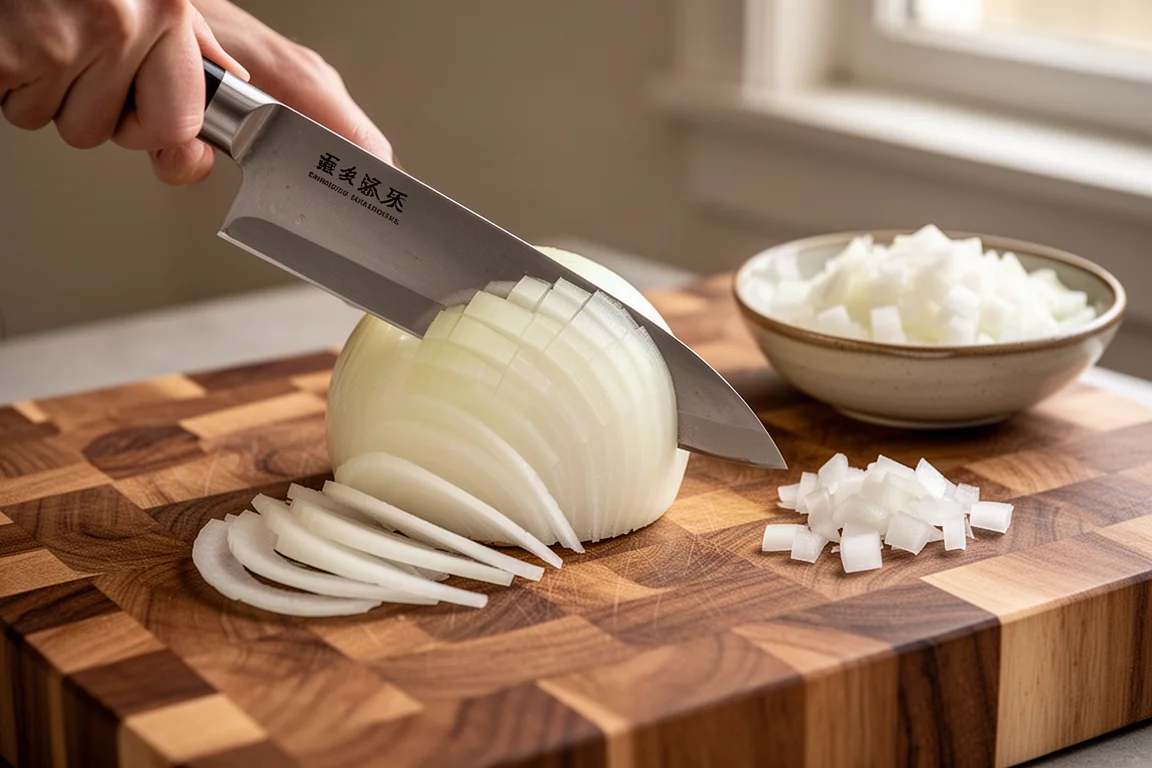
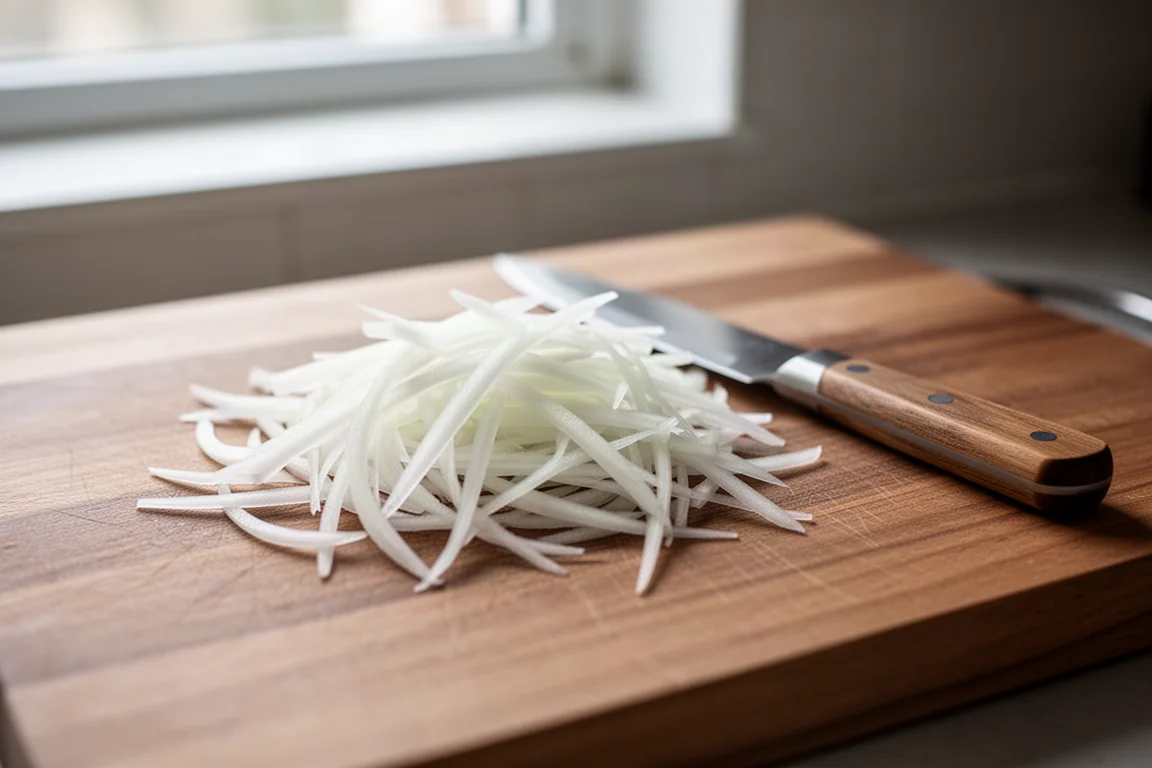
In testing, it was spectacular across the board. The heavier, slightly thicker build helps ingredients separate just enough for clean food release, and the weight does much of the work in up-and-down chopping. It went through bell pepper skin with zero pressure and handled fine julienne with ease. If you already own several light, thin knives and want something with more heft, this one speaks for itself.
Yoshikane Nashiji 240mm Gyuto
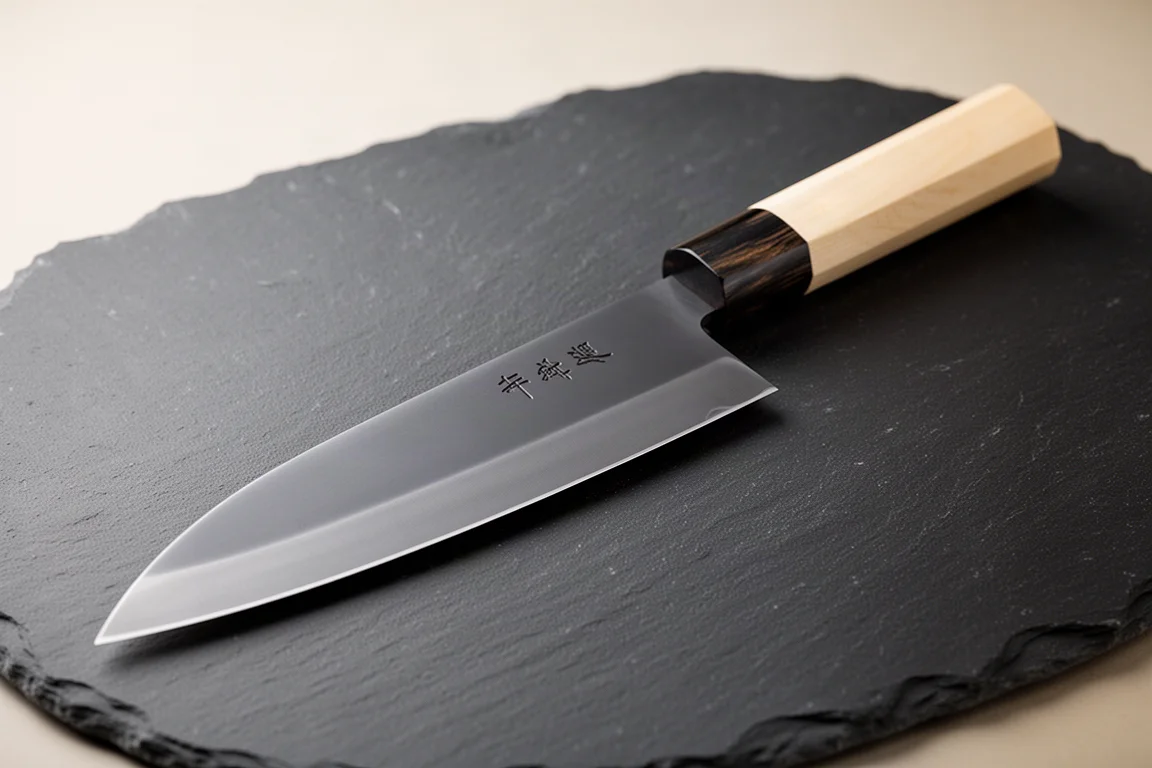
The Yoshikane Nashiji is the only knife here with stainless cladding, over a Shirogami number two core. That makes it the easiest of the three to maintain. It uses a slender walnut handle with a maple ferrule, and the whole knife is noticeably lighter and thinner than the Shino.
The grind is very thin at the spine and thin behind the edge, with a hollow grind and almost an S-grind character. The spine and choil are nicely sanded, which matters more on thin knives, since a sharp edge on an unfinished spine can dig into the pad of your index finger. The choil-to-handle gap fits a full middle finger comfortably.
Balance is quite far forward, roughly two inches off the handle, about an inch ahead of a standard pinch grip. If you chop with an up-and-down push or pull motion, that forward balance works in your favour.
In the tests, this knife went through carrots more easily than the others, and its horizontal cuts through onion showed excellent edge geometry with no wedging. It handled the bell pepper with no skipping on the skin at all, and rocking cuts felt very comfortable. It also passed cleanly through the pepper stem, something the thicker Shino caught slightly on. This is a genuinely high-performing knife and an easy recommendation, especially for anyone who prefers lighter, thinner blades.
Masamoto KS 240mm Gyuto
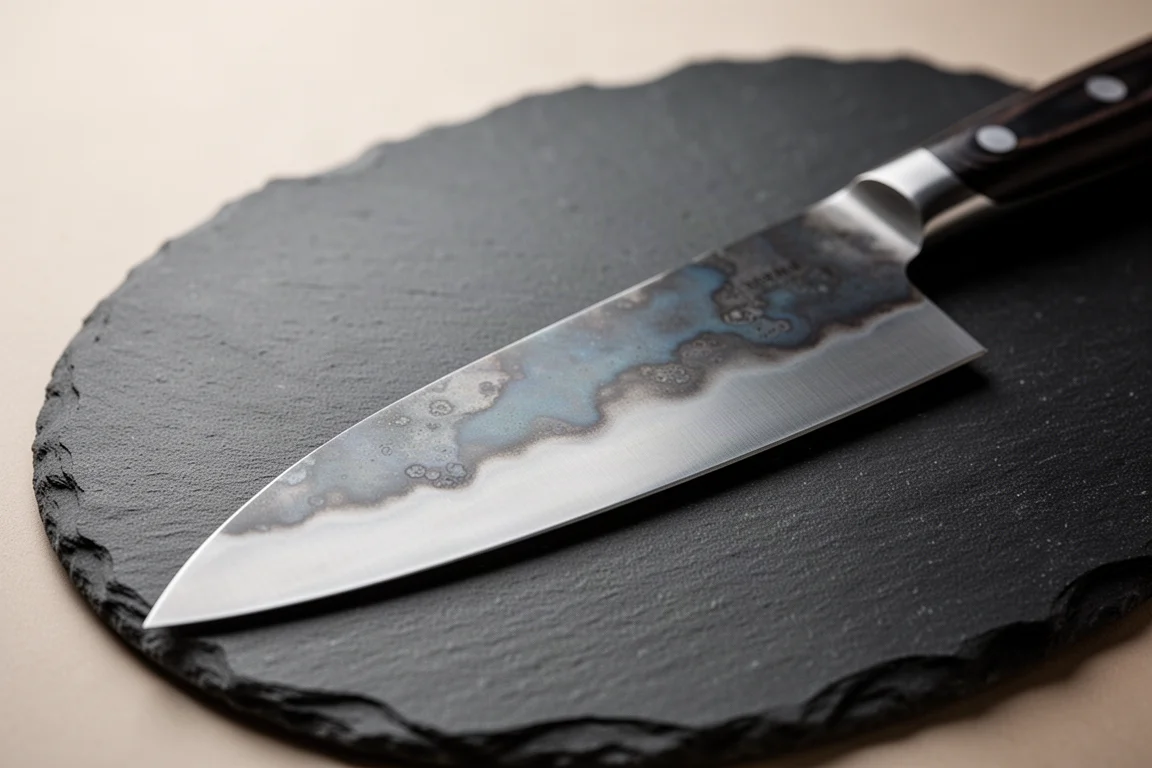
The Masamoto KS is a famous name among knife enthusiasts, and this 240mm gyuto is made from Shirogami number two as a mono steel, with no cladding. That matters for one very satisfying reason: the patina forms beautifully and evenly, with no difference between cladding and core steel. Roasting and slicing fatty sausages is a classic way to develop rich blue, light grey, and dark grey tones on a blade like this.
The handle is D-shaped magnolia with a buffalo horn ferrule, which technically makes it the only right-hand-specific knife of the three, though many left-handers find these handles comfortable anyway. The handle is slightly chunkier than the Yoshikane but not as chunky as the Shino, and the choil-to-handle gap is the most expansive of the three. The spine and choil are nicely sanded, though the choil is thin enough that some buyers may choose to round it a little more.
Balance sits between the other two: a little closer to the handle than the Yoshikane, slightly back of the pinch grip. It is very light and nimble in the hand.
Where this knife stood apart was food release. As the only one with a convex grind, it released carrot slices with essentially zero friction, clearly better than the two hollow-ground knives. It diced onions with precision, and its tip is thin and accurate, though its slightly stronger curve at the tip took a little adjustment. If food release on dense vegetables is your priority, this is the standout.
Test Results: Onion, Bell Pepper, and Carrot
The onion dice was effectively a three-way tie. All three knives made clean radial cuts and clean horizontal cuts, with the heavier Shino benefiting from just enough thickness to keep onion slices from flailing, and the thinner Yoshikane and Masamoto cutting with slightly less resistance.
The bell pepper also separated them very little. The Yoshikane earns a slight nod here because it passed through the pepper stem without any hang-up, while the slightly thicker Shino caught a touch. The Masamoto matched the Yoshikane through the stem. All three cut the skin with zero pressure when worked from pith down, and all three handled the fillet-open and rocking cuts comfortably.
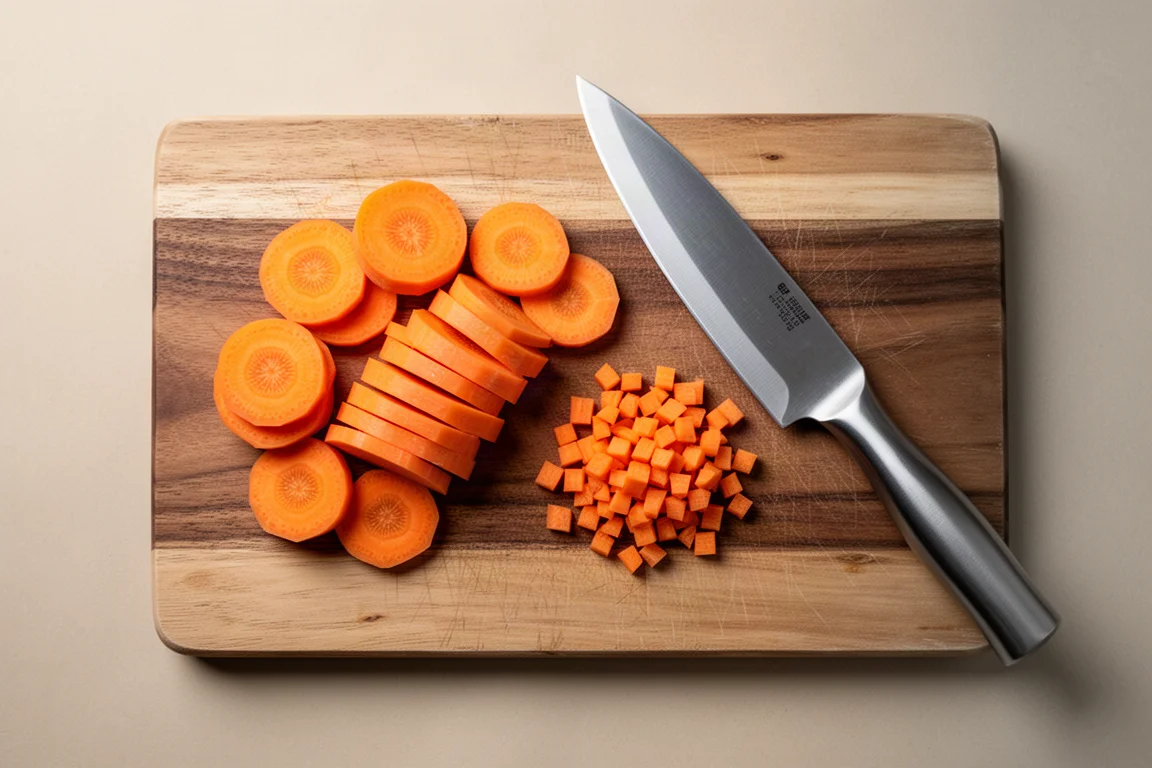
The carrot is where things changed. The Yoshikane moved through dense root vegetable more easily than the Shino, with cleaner mid-blade cuts and better tip work, so it takes the carrot test over the Shino. But the Masamoto’s convex grind delivered the best food release on carrot by a clear margin, with slices falling away with no friction at all. Its brunoise was excellent too, though the Yoshikane felt marginally better on the finest dice.
Tallying it up informally: a tie across all three on onion, a slight edge to the Yoshikane on bell pepper, and a carrot test shared between the Yoshikane and the Masamoto.
Which One Should You Buy
If this is your first 240mm gyuto and you want something that performs at a very high level all around, the Yoshikane Nashiji is the natural pick. It is easy to maintain, exceptionally sharp, thin behind the edge, and the strongest all-around performer in the tests.
If you already own a collection of light, thin knives and want something with more heft, the Hatsukoro Shino is the one that stood out in hand. It is heavier, beautifully finished, and its weight-forward balance makes chopping feel almost effortless. The aesthetic appeal, from the kuruchi and Damascus finish to the ebony handle, is a genuine bonus.
If even, attractive patina development and the best food release of the three matter most to you, the Masamoto KS delivers, backed by a famous name and a very light, nimble feel. Just keep the D-shaped handle in mind if you are left-handed.
Conclusion
Every one of these 240mm gyutos performed at an exceptionally high level, and choosing between them comes down to personal preference rather than a clear winner. The Yoshikane Nashiji collected the most test points, the Masamoto KS won on food release, and the Hatsukoro Shino won on feel, looks, and that satisfying heavier chopping character. Any of the three would be a knife you could be genuinely happy to own, and the best choice is simply the one that matches the knives you already have and the way you cut.
Further reading
Related Reviews

Kitchen Knives
Best Chef's Knives 2026: 27 Popular Options Tested and Ranked
A comprehensive review of 27 chef's knives ranging from $18 to $380, with honest assessments of handle comfort, blade balance, and real-world performance.

Kitchen Knives
Best Chef's Knives Under $75: Two Tested Recommendations
Two practical 8-inch chef's knives that balance sharpness, comfort, and durability without premium pricing.

Kitchen Knives
Best Chef's Knives 2026: 27 Options Tested and Ranked
A comprehensive review of 27 chef's knives ranging from $18 to $380, with honest assessments of handle design, balance, blade profile, and real-world performance.