Skis
Atomic Maverick 105 CTI Review: A Wide Ski Built to Carve
A close look at the Atomic Maverick 105 CTI, a new 105 mm ski that blends carbon and titanal for confident carving and dependable float, plus the terrain where it falls short.
Introduction
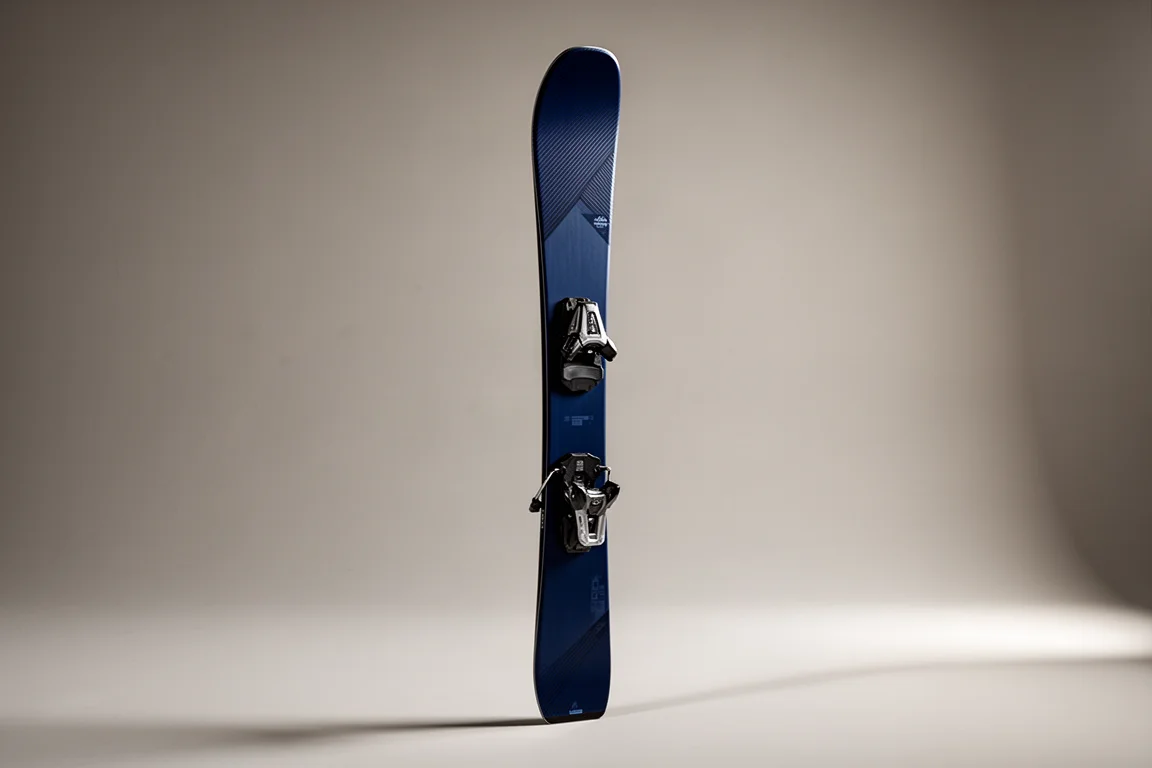
The Atomic Maverick 105 CTI is a new ski for 2025, and it takes the place of the Atomic Maverick 100 TI in the lineup. With 105 mm underfoot and a 19 m turn radius on the 185 cm length, it stretches the Maverick outline wider while keeping the composed, frontside-leaning manners the line is known for.
The CTI in the name refers to the core. Where the narrower Maverick 88 TI and 95 TI use titanal alone, the 105 CTI blends carbon with titanal over a wood core. The idea is to stop a ski this wide from feeling slow and heavy, and the result is a ski that carves with a level of composure that is unusual at this waist width.
It is worth being clear about what this ski is and is not. It is not a soft, surfy freeride shape that encourages a laid-back stance. It is a wide ski with a strong platform underfoot, and it rewards a rider who stays forward and drives through the turn.
Who This Ski Is For
This is a ski for someone who wants width without giving up groomer performance. If your priority list starts with carving and only then moves to float, the Maverick 105 CTI lines up well.
It also makes a strong case as a powder ski for East Coast riders, where the snow is often heavier and the runs are shorter. The ski keeps its damping and stability in chattery, icy conditions, so it does not force a trade-off between edge grip and powder capability.
For riders in places like Tahoe or Snowbird, where big open terrain is common, the ski’s power and stability suit wide, fast lines. Riders who prefer quick, playful, technical skiing will likely want something else in this width.
Main Strengths: Carving Precision and Stability
Carving is where this ski separates itself. It is smooth, well balanced, and holds an edge with a confidence that does not feel like a 105 mm ski. In this width class, it is among the most capable carving shapes available.
The platform underfoot is notably stiff at the apex of the turn, and the titanal layer is easy to feel. That stiffness pays off on steeper sections and on chopped-up, chattery snow, where the ski stays planted and continues to hold through the finish of the turn. It is not as pinpoint as a narrow carving ski in the high 80s, and it should not be expected to be.
Speed is handled well too. There was no speed chatter or wobble, which makes it a sensible choice for riders who like to go fast without giving up control.
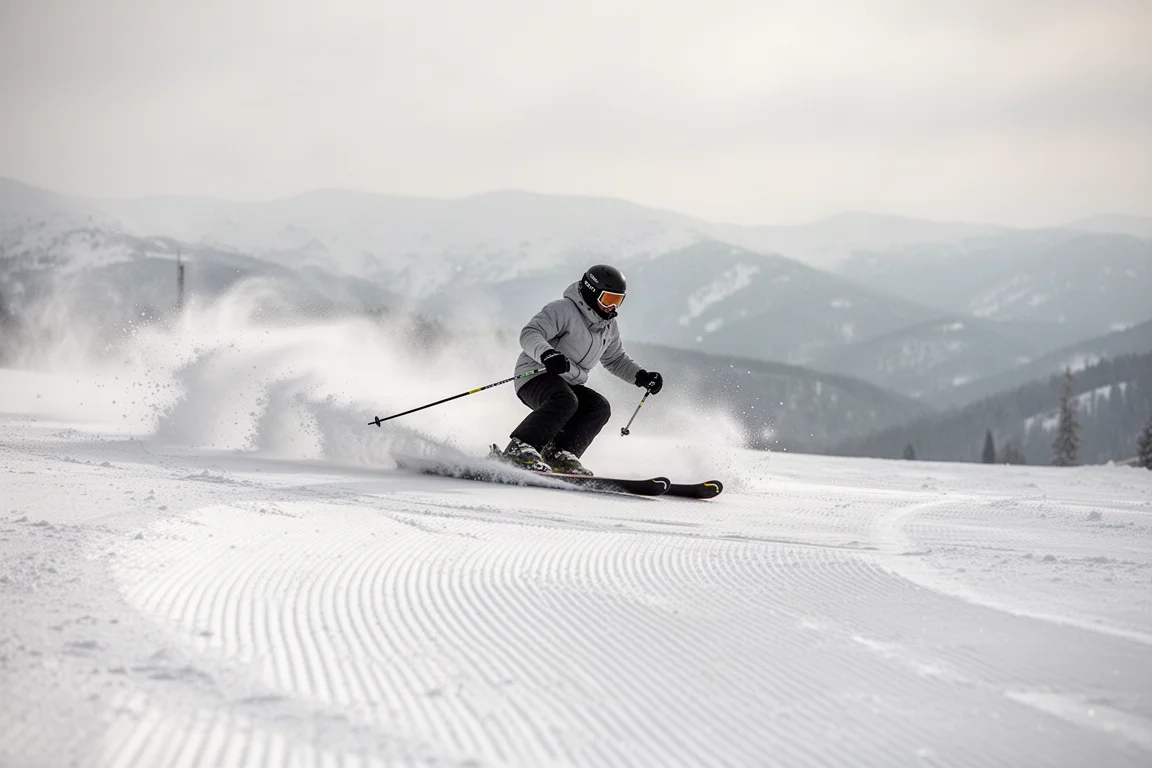
Riders who judge a ski by how much energy it returns out of a turn will find a lot to like here. The ski loads up underfoot and shoots forward into the next turn rather than absorbing the input.
Float and Powder Performance
The Maverick 105 CTI is fun and floaty, and it leans hard on its Horizon Tech tip design. The wider the ski, the more effective that tip geometry tends to be, and here it is put to full use to maximize flotation.
In powder, the ski performed well in higher elevation, wind-blown snow, and it also powered through sunbaked powder that had turned sticky and grabby. It handled that heavier snow better than the Bent 110, which is a meaningful result given how differently the two skis are set up. The extra weight and drive behind the Maverick 105 CTI make the difference.
Compared with the Bent 110, this ski carries noticeably more power in and out of the turn. The titanal underfoot creates a strong platform that lets you load the ski and release that energy into the next turn. It also keeps its momentum well through powder rather than getting hung up.
Where It Struggles: Tight Terrain and Surfy Turns
The first real drawback is surfy turns. This ski wants weight forward. If you shift back and try to wash out the tail and glide through a long, sweeping powder turn, the Maverick 105 CTI resists. It can float and it can hold a solid powder turn on edge, but it does not deliver the loose, snowboard-like drift that some wider freeride shapes offer.
The bigger limitation is maneuverability. In short tree turns or tight brush, the ski feels cumbersome. It does not like being thrown around, and it carries the same businesslike, point-it-downhill character as the Maverick 100 TI rather than the quick, hop-turn friendly feel of a more center-mounted shape.
That matters more than it might sound. In lean snow years, or on days when you arrive after the first tracks are gone, finding powder often means going where most people do not, through brush and tight sections. A ski that is confident but hard to pivot makes those lines harder to take.
Design and Construction Notes
The core uses a popular wood in the middle with a sheet of titanal, blended with carbon. The exact carbon placement is not published, but the likely approach mirrors earlier designs in this family, with titanal concentrated through the middle of the ski and carbon working toward the tips and tails.
The ski comes standard with Horizon Tech, and this generation runs wider than before, which is reasonable given the wider platform. Unlike the version used on the Bent 100, the tip here is not squared off; it follows a more traditional Horizon Tech profile.
Flex and camber are worth noting. The tips have healthy splay, the tails have very little, and overall camber is minimal. It carries less camber than the Bent 100, the Bent 110, and the QST 106. That is a notable shift from the narrower Maverick 88, which has considerably more camber, and it suggests the design is deliberately trading camber for tip float.
Buying Advice
The right answer here depends entirely on your priorities and where you ski. If you want a wide ski that refuses to compromise on carving, the Maverick 105 CTI is an excellent option and a safe bet. It also works as a single-ski quiver for a West Coast rider who spends most days on groomers and wants float available when the snow arrives.
If you already own a narrower daily driver and you are shopping for a powder ski, think carefully. The Maverick 105 CTI feels like it is still clinging to its carving roots, and riders who want their powder ski to feel genuinely different from their everyday ski may prefer a more playful, surfier shape.
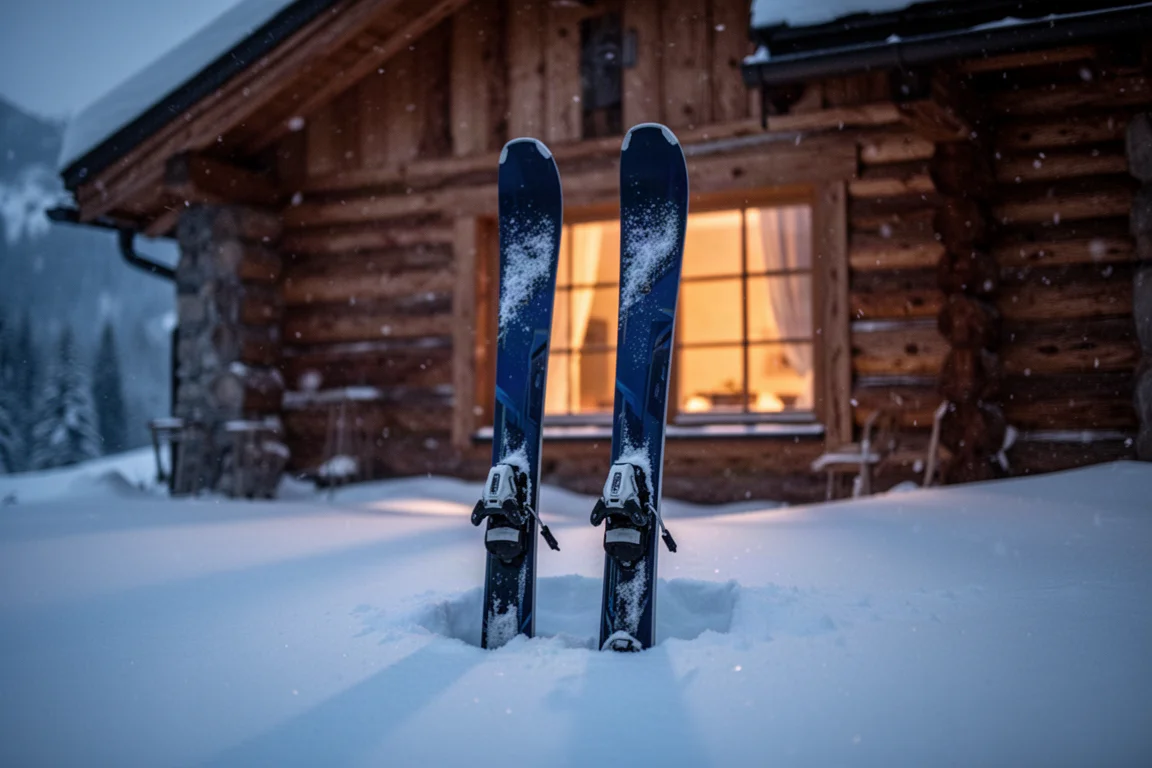
It is also worth weighing how you like to ski powder. A forward, driving style gets the most out of this ski. A laid-back, drift-heavy style will find it stubborn.
For East Coast riders, and possibly for parts of the Pacific Northwest, this could be a genuinely great powder ski. It gives up nothing in damping, edge grip, or stability, and it still floats well. For riders in Idaho, where access to powder often runs through tight brush and trees, the maneuverability trade-off is harder to accept.
Conclusion
The Atomic Maverick 105 CTI is a well-engineered ski that does exactly what it sets out to do. It carves better than any other 105 mm ski in its class, it is stable at speed, and it floats with enough authority to handle real powder days, including heavy, grabby snow.
Its limitations are specific rather than fundamental. It does not surf, and it does not pivot quickly in tight terrain. Riders whose home mountains reward power and open lines will get a lot out of it. Riders who want a loose, maneuverable powder ski should look elsewhere.
For what it is good at, it is very good, and it is a strong choice for anyone who wants width and power without surrendering groomer performance.
Product link
View more details for Atomic Maverick 105 CTI
This product is mentioned in the review. Check the specifications, options, and compatibility before buying.
View more details for Atomic Maverick 105 CTIFurther reading
Related Reviews
Skis
Armada Anti Matter 82 W Review: A Light, Approachable All-Mountain Carver
Armada's Anti Matter 82 W pairs a lightweight Karuba and carbon build with an easygoing all-mountain shape, aimed at intermediates through lighter-footed advanced skiers.
Skis
Armada Anti Matter 88W Review: A Light, Playful 88mm All-Mountain Ski Plus Two Alternatives
The Armada Anti Matter 88W returns unchanged in spirit from its Reliance 88C days, and it remains one of the most versatile 88mm skis around. We also look at the Nordica Santa Ana 87 and Anti Matter 92 W as alternatives.
Skis
Armada ARV 100 vs Atomic Bent 100: Which 100mm Freestyle Ski Should You Buy?
Two of the best all-mountain freestyle skis of the season compared: one leans playful and park-ready, the other holds up better everywhere else.