Skis
Atomic Bent Decode 93 Review: A Park-First Twin Tip for 2027
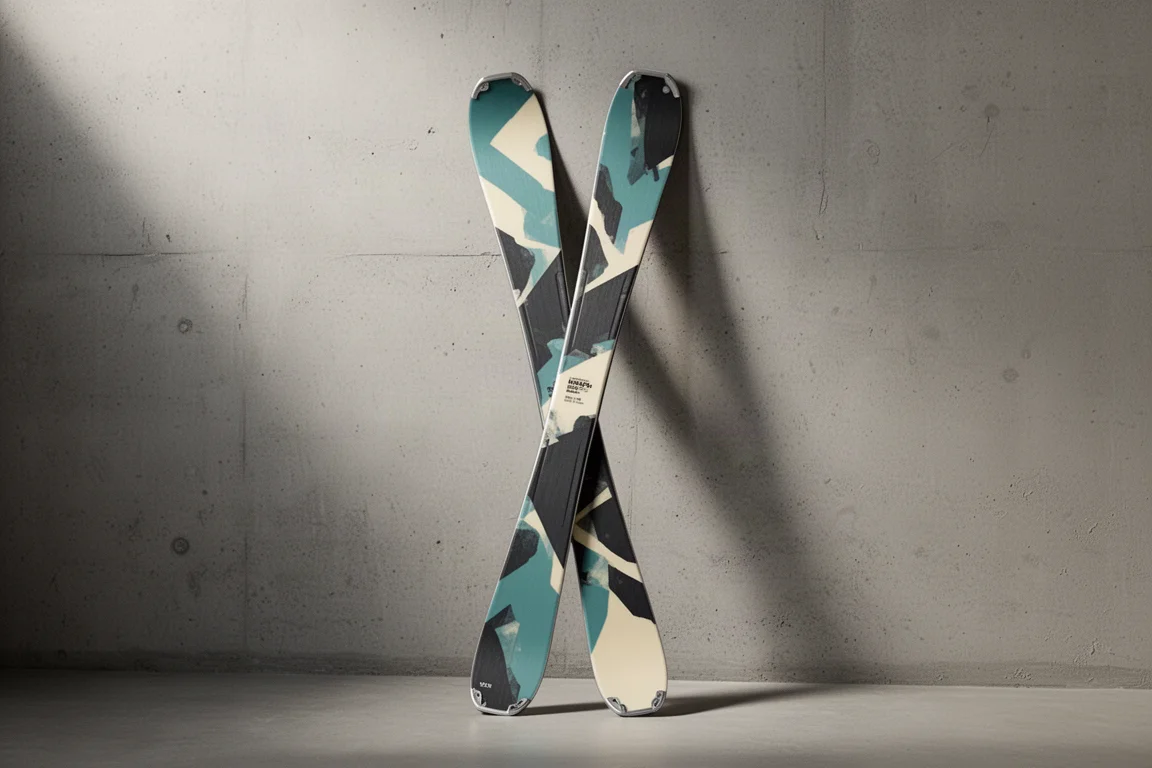
The Atomic Bent Decode 93 is a center-mounted park twin tip with a poplar core, a full ABS layer underfoot, and a feel that separates it clearly from the Bent 90.
Introduction
The Bent collection has become one of the most recognizable twin tip families in skiing, spanning widths from 85 mm all the way up to 120 mm. The 120 remains the flagship that started it all, while the 85 serves as a more budget-friendly entry point for newer skiers. For 2027, Atomic is adding something that does not simply slot into that ladder: the Bent Decode 93.
The Bent 90 and Bent 100 have always been framed as all mountain skis first and park skis second, with bumps, trees and groomers as the starting point of the conversation and the terrain park as the bonus. The Decode reverses that. Atomic describes it as an athlete-driven, park-focused ski, and its own printed material puts it at roughly 75 percent park and 25 percent all mountain. It also gets its own graphic theme rather than sharing the family look, which signals how differently the brand wants it read.
After a solid stretch of days on snow, the picture is clearer than the marketing numbers suggest, and it is more interesting than a simple percentage split.
Who the Bent Decode 93 Is For
This is a ski for people who ride park seriously and want a twin tip built around that use. The Decode carries a single recommended mount point at true center, with additional marks at minus one and minus two. That is a meaningful departure from the Bent 90 and Bent 100, which offer a very wide range of mount positions, roughly minus four to plus six, and behave like directional skis as a result.
A center mount changes how a ski is skied. It puts the rider over the middle of the ski, which suits spinning, switch riding, butters and presses. Anyone who has spent time on center-mounted park skis will recognize the stance immediately. Anyone who has not will need a few runs to adjust.
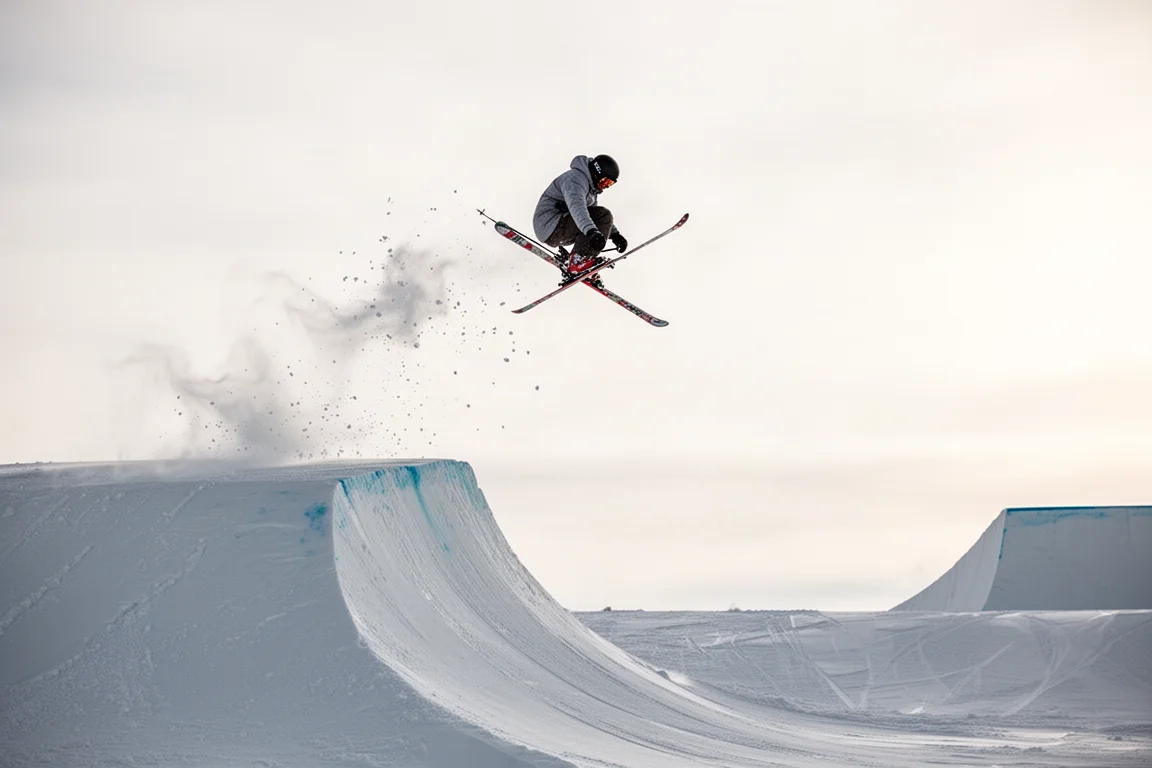
The Decode is also aimed at a younger generation of skiers, and the brand’s own messaging says as much. That does not mean more experienced riders cannot enjoy it, but it does explain the priorities baked into the shape and flex.
Construction and Flex: What Sets It Apart
Inside, the Decode uses a poplar wood core, the same base material as its siblings. The key difference is a full sheet of ABS material sitting under the core, running tip to tail and edge to edge. It is similar in nature to the plastic used in sidewalls, and it takes the place of some wood. The trade is a damper, smoother feel rather than a poppy, energetic one.
The weight reflects that. The Decode in the 185 length comes in around 1,850 g, roughly 250 g more than a Bent 90 in a comparable length at about 1,600 g. That sounds like a lot until you remember that Bent skis are exceptionally light to begin with. The Decode is heavier, not heavy.
It also uses Horizon Tech Park, one of three versions of Horizon Tech across the range. On the Decode the feature sits further up into the ski with a more beveled inner section, rather than running deeper into the ski as it does on the Bent 90. Whether a rider can feel that difference on snow is an open question, but it is one of the ways the ski is set apart.
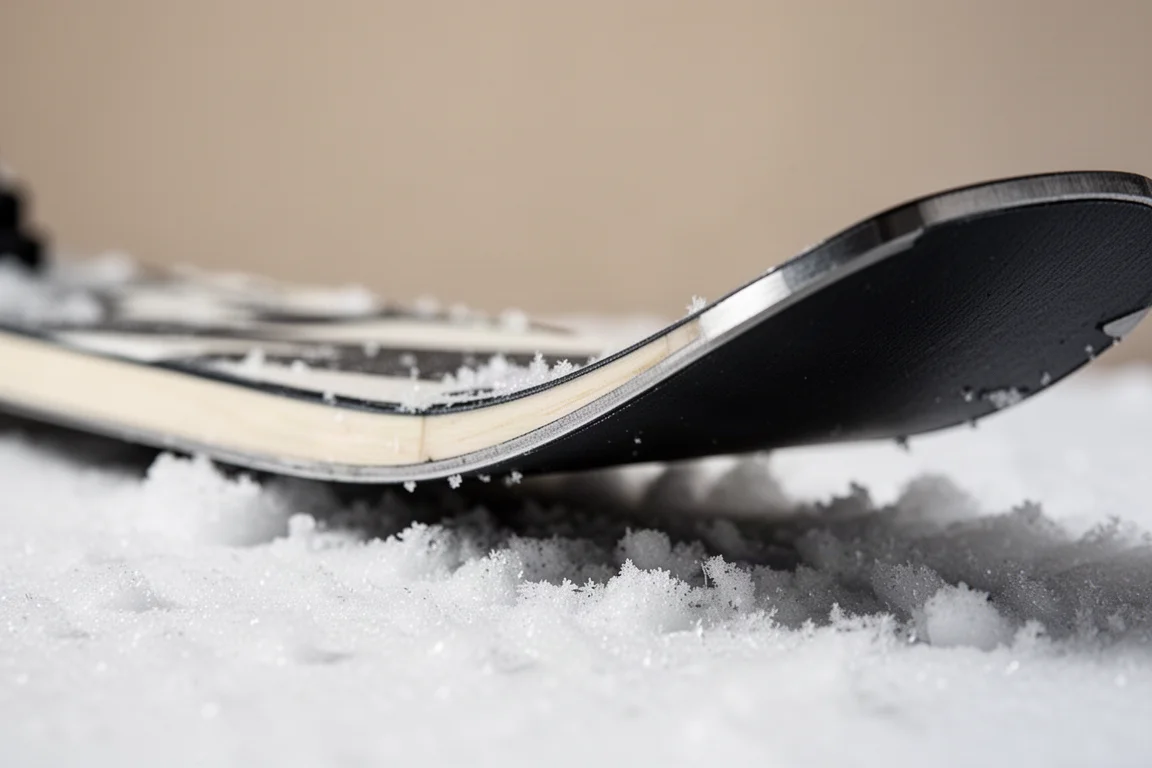
Several other details stand out when the skis sit side by side. The edges rise higher off the snow than on the Bent 90 or 100, and the bend down to where the metal edge ends is slower and more gradual. The flex pattern is notably uniform from tip to tail, with tips and tails behaving similarly rather than softening at the ends. Camber height is higher too, somewhere around 1.5 to 2 cm against roughly 1.2 cm on the Bent 90. The shape is symmetrical from a rocker perspective, with equal tip and tail rocker, a tip only 5 mm wider than the waist, and a turn radius of about 18 m in the 185 length. Factory base bevel is set at 1.3 degrees, and the sidewall construction is roughly half vertical sidewall and half cap.
Main Strengths: Precision in the Park
The word that fits best in the park is precise. That is an unusual adjective for a freestyle ski, but it describes how the Decode interacts with snow. The higher camber pushes the tips and tails into the surface a little more, so the ski feels connected rather than loose. The result is a twin tip that is exacting but still forgiving, with a level of control that encourages deliberate skiing.
That character has a side effect. On a softer, looser park ski, it is easy to get away with sloppy technique and simply flow through a run. The Decode asks for commitment. It rewards riders who set up properly and finish their tricks, and it tends to make people ski with more intention than they might otherwise.
It is also supportive. In the 185 length the ski handles big landings without feeling vague, which matters given the caliber of athletes the brand works with. Riders who want to go large will find the platform holds up.
On Groomers, Bumps, and Soft Snow
Outside the park, the Decode is capable but particular. On a groomer it can carve, and carving it is genuinely fun, though a rider coming from an all mountain ski will need to temper expectations around edge grip and stability. The more rewarding approach is a creative one: skiing switch, hunting side hits, and using the edge of the groomer as a miniature spine.
In bumps and trees the ski performs well provided the rider already understands center-mounted skis. The tips and tails are compliant, and the ski is less washy than its shape suggests. The main obstacle is simply the amount of ski behind the foot on a longer length, which takes effort to wrangle through moguls. For a rider who has never skied a center mount, the first run in bumps will feel terrible. For a rider who has, it will feel quite good, and more forgiving than many stiffer center-mounted options.
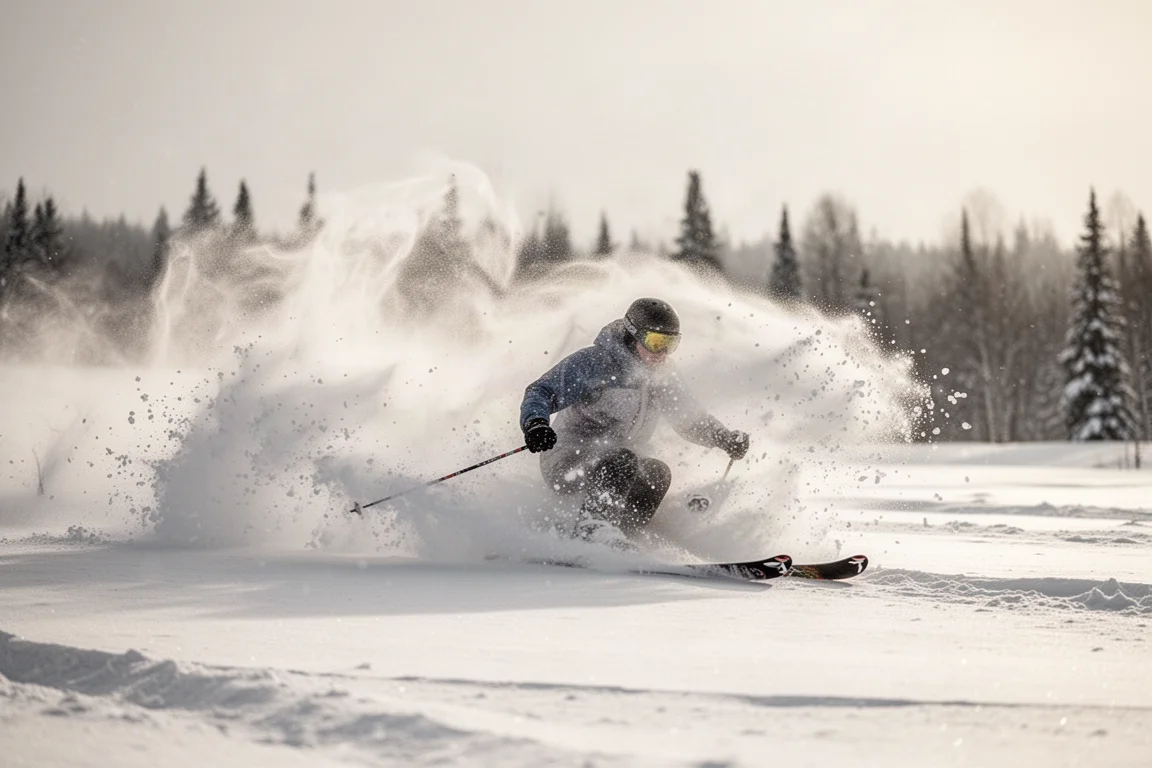
Soft spring snow was the one condition where the Decode did not shine. The rounded tip tended to plow, and the ski threw unusually large rooster tails when pushed. It remained fun, but it could not be driven as fast as a more traditional all mountain shape. Mid-winter packed powder, by contrast, was excellent.
Things to Consider Before Buying
The first consideration is mount point. Atomic is explicit that the Decode is designed to be mounted center, and that is how it should be set up. Riders who prefer a more directional stance, or who want to move their binding back for float and drive, are looking at the wrong ski in this lineup. The Bent 90 and Bent 100 exist for exactly that use.
The second is what the ski gives up. If the goal is an all mountain daily driver that spends most of its time in trees, bumps and soft snow, a Bent 90 or Bent 100 will be the better tool, and most riders in that position will know it within a run. The Decode is a park ski that can handle the rest of the mountain, not the reverse.
The third is the softer flex. It is uniform and consistent, but it is soft, and there are real limits to overall stability and torsional stiffness. Aggressive, high-speed charging outside the park is not what this ski was built for.
Finally, width is worth thinking about. Most park skiers are not going narrower than the low 90s. Riders who want maximum forgiveness and a looser feel often move up toward something around 100 mm, while those on very firm snow or in the halfpipe may prefer something narrower. The Decode sits in the middle of that conversation rather than at either end.
How It Compares to Other Park Skis
Against a field of well-known freestyle skis, the Decode lands closest to a blend of the Armada ARV 94 and the Elan Playmaker 91. It takes the quickness of one and the planted, precise quality of the other, without fully matching either.
It is least like the Faction Prodigy 1 and the Fischer Nightstick 90, both of which feel stiffer and damper. The Nightstick in particular uses metal and full vertical sidewalls, where the Decode uses ABS and a mixed sidewall and cap build, and that difference shows up in how the two skis feel on snow. The Völkl Revolt 90 reads as pure park with essentially no all mountain ambition, while the Decode opens up soft snow, butters, slashes, smears and presses in a way the Revolt does not. The K2 Omen Team is simply heavier, and sits closer to the Revolt 90 in character than to the Decode.
Buying Advice
The Decode makes the most sense for a rider whose season revolves around the terrain park and who wants a center-mounted twin tip with enough support for big landings. It suits someone who is willing to ski with purpose, and who values a connected, precise feel over a loose, surfy one.
It makes far less sense as a first ski, as a one-ski quiver for someone who mostly rides the whole mountain, or as an upgrade for a rider who has never skied a center mount. In those cases the Bent 90 or Bent 100 will deliver more enjoyment from day one.
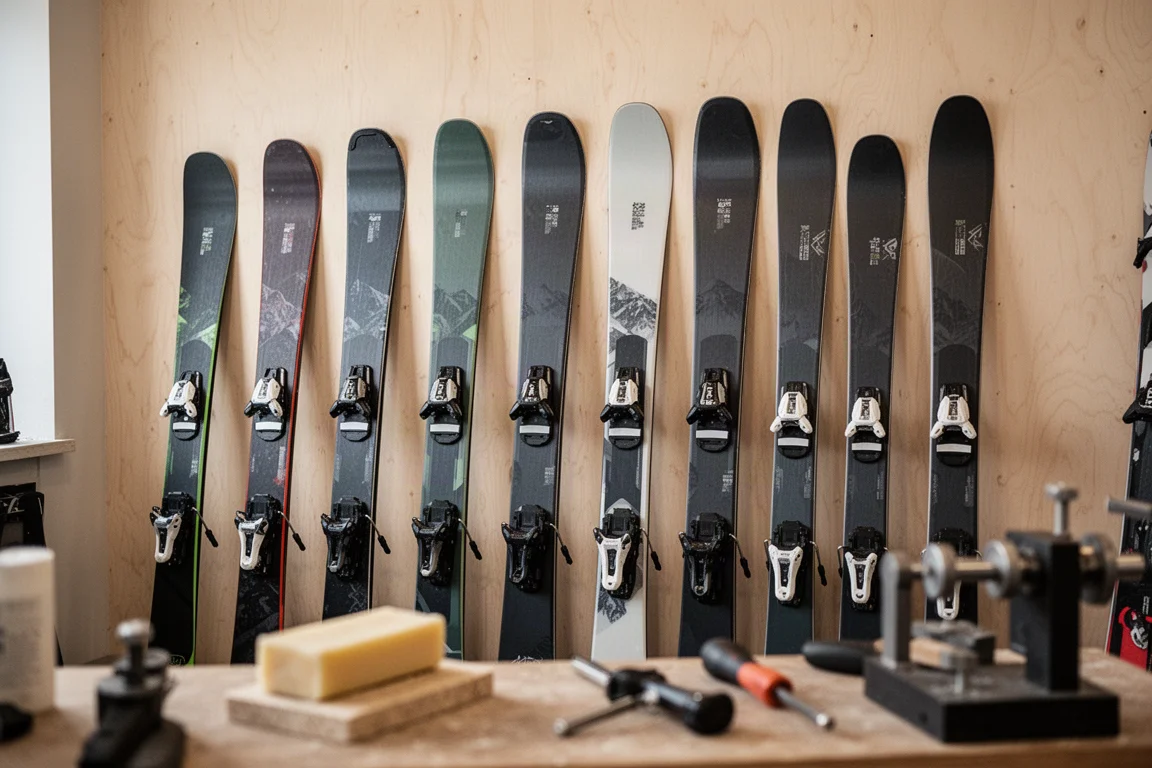
The good news is that the Decode does not ask for much compromise in the park itself. It is a genuine freestyle ski inside a family that has historically treated park as a secondary strength, and that alone makes it worth a look for anyone who spends most of their time hitting features.
Conclusion
The Atomic Bent Decode 93 is a distinct addition to the Bent line rather than a new width in an existing mold. A poplar core with a full ABS layer, a uniform soft flex, higher camber, a center mount and a symmetrical rocker profile add up to a park ski that feels precise, supportive and quietly demanding.
For the right rider, it is the kind of ski that rekindles enthusiasm for the park and pushes them to ski closer to their potential. For everyone else, the Bent 90 and Bent 100 remain the smarter, more versatile choice.
Product link
View more details for Atomic Bent Decode 93
This product is mentioned in the review. Check the specifications, options, and compatibility before buying.
View more details for Atomic Bent Decode 93Further reading
Related Reviews
Skis
Armada Anti Matter 82 W Review: A Light, Approachable All-Mountain Carver
Armada's Anti Matter 82 W pairs a lightweight Karuba and carbon build with an easygoing all-mountain shape, aimed at intermediates through lighter-footed advanced skiers.
Skis
Armada Anti Matter 88W Review: A Light, Playful 88mm All-Mountain Ski Plus Two Alternatives
The Armada Anti Matter 88W returns unchanged in spirit from its Reliance 88C days, and it remains one of the most versatile 88mm skis around. We also look at the Nordica Santa Ana 87 and Anti Matter 92 W as alternatives.

Skis
Armada ARV 100 vs Atomic Bent 100: Which 100mm Freestyle Ski Should You Buy?
Two of the best all-mountain freestyle skis of the season compared: one leans playful and park-ready, the other holds up better everywhere else.