Kitchen Knives
Atetsu Kuruchi Sashimi Kiritsuke 215mm Review: A Laser-Grind K-Tip With Real Versatility
An Aogami Super core wrapped in stainless cladding, a thin laser-style grind, and a K-tip profile. We put this 215mm kiritsuke through onions, sweet potato, carrots, and butternut squash to see where it shines.
Introduction
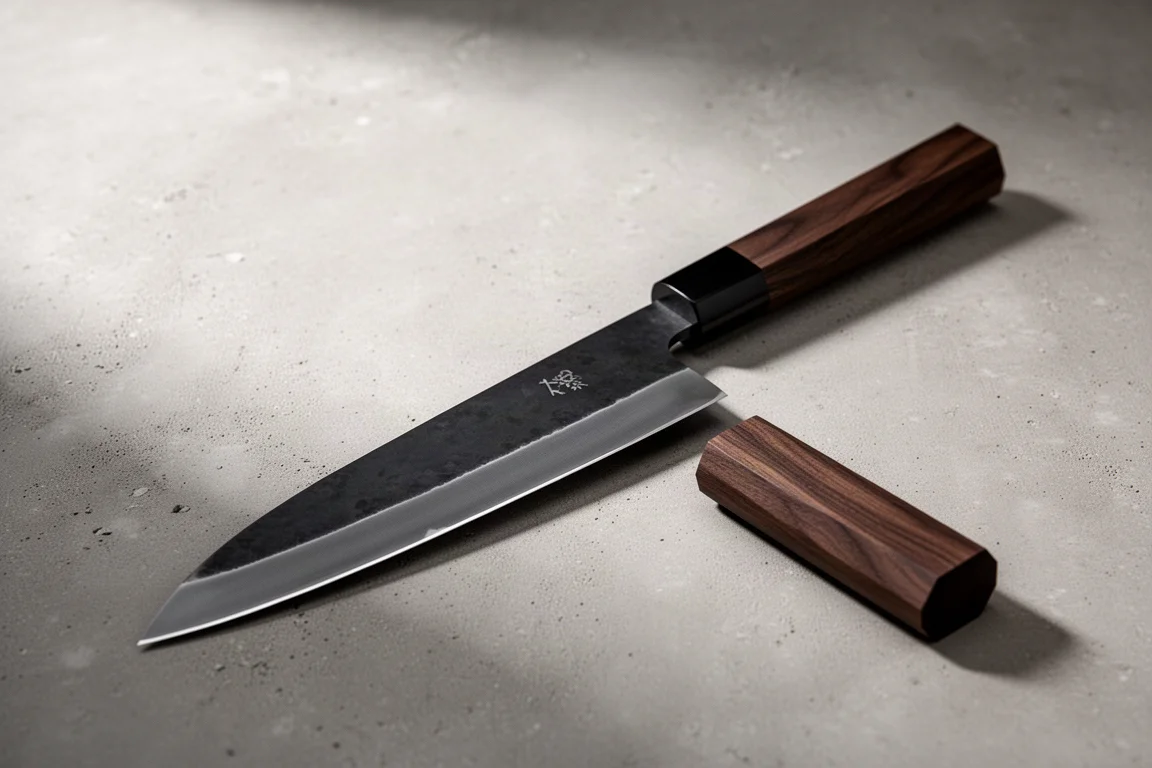
The Atetsu Kuruchi Sashimi Kiritsuke in 215mm is a knife that splits the difference between a laser and a workhorse. It pairs an Aogami Super carbon steel core with stainless cladding, heat treated to a claimed 62-63 on the Rockwell scale, and wraps it all in a traditional K-tip profile with an octagonal handle. That combination promises easy maintenance, a thin cutting feel, and a tip built for detail work. We put it through a full round of ingredient tests to find out where it excels and where you might need to adjust your technique.
Who This Product Is For
This knife suits cooks who want a thin, lightweight blade for long prep sessions. It is clearly on the laser side of the spectrum: thin at the spine, and it holds that thinness right down behind the edge. If your day involves mountains of onions, shallots, and root vegetables, the low weight and well-placed balance point for a pinch grip should keep your hand fresher than a big 240 or 270mm workhorse would.
It is also a good fit for anyone who wants carbon steel cutting performance without the full maintenance burden. The stainless cladding keeps the blade looking clean and presentable while the Aogami Super core handles the edge.
First Impressions and Build
Out of the box, the fit and finish feel genuinely nice. The handle install is straight, the octagonal walnut handle sits comfortably, and the ferrule appears to be rosewood or ebony. The balance point lands right where you want it for a pinch grip, and there is a generous spot for your fingers if you have larger hands.
Two minor gripes: the spine and the choil are a little square. Neither is sharp enough to cut or scratch you, but a touch more rounding would improve comfort during long sessions.
The profile is a fairly standard flat one for a kiritsuke, with a little belly toward the tip. The tip itself is low to the board, which is exactly what makes K-tip knives so good for fine tip work.
Testing on Root Vegetables
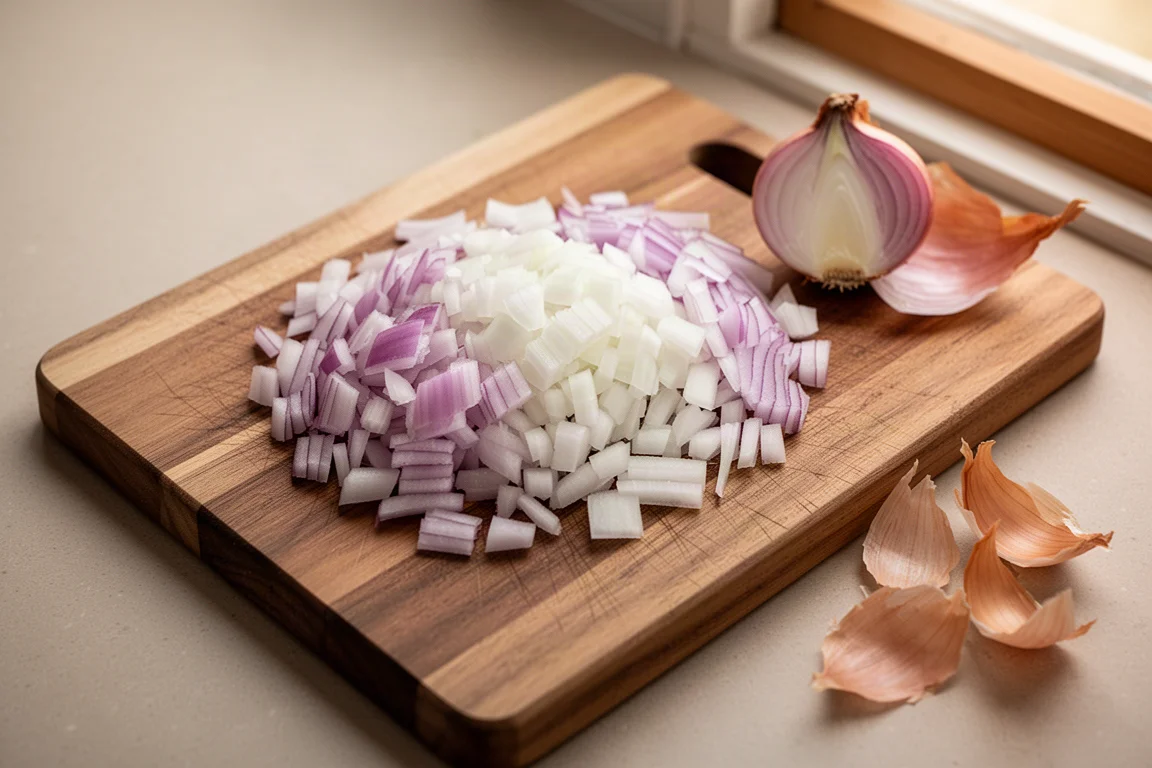
The out-of-the-box edge passed immediately. Slicing through a tomato felt smooth rather than toothy, but it got clean results without ever touching a strop. On the large onion gauge dice, the K-tip proved its worth for digging into tight spots, and the flat profile made cross cuts feel excellent.
Shallots were where the knife really started to shine. Push cuts felt fantastic, board contact was consistent, and the food release on the XL shallot dice was very good with no stuck-together bits. Tip work on the onion was not the finest we have felt, partly because the knife holds its thickness right up to the tip, though unfamiliarity with the K-tip grip may also have played a role.
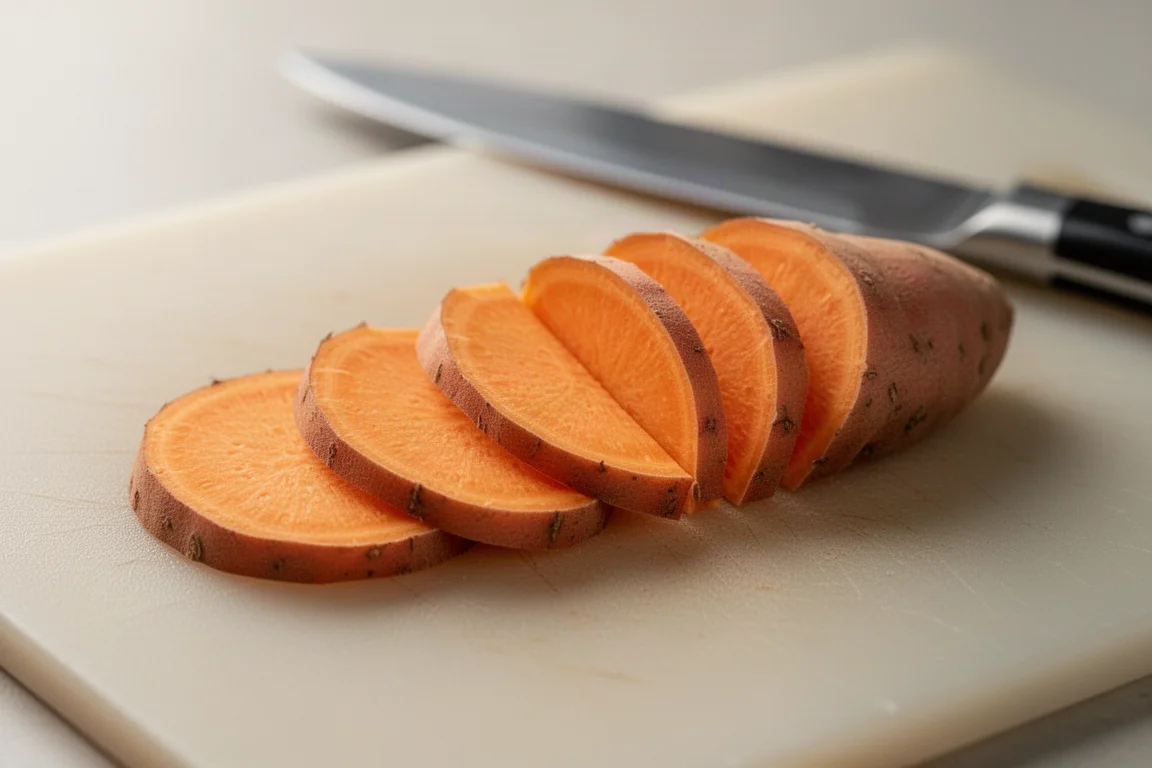
On the sweet potato, food release was a genuine highlight. Thin slices came off completely separate, which is exactly what you want from a thin-grind blade. The cross cut felt great, and a coarse dice was mostly clean with only slight stickiness on the wettest cuts.
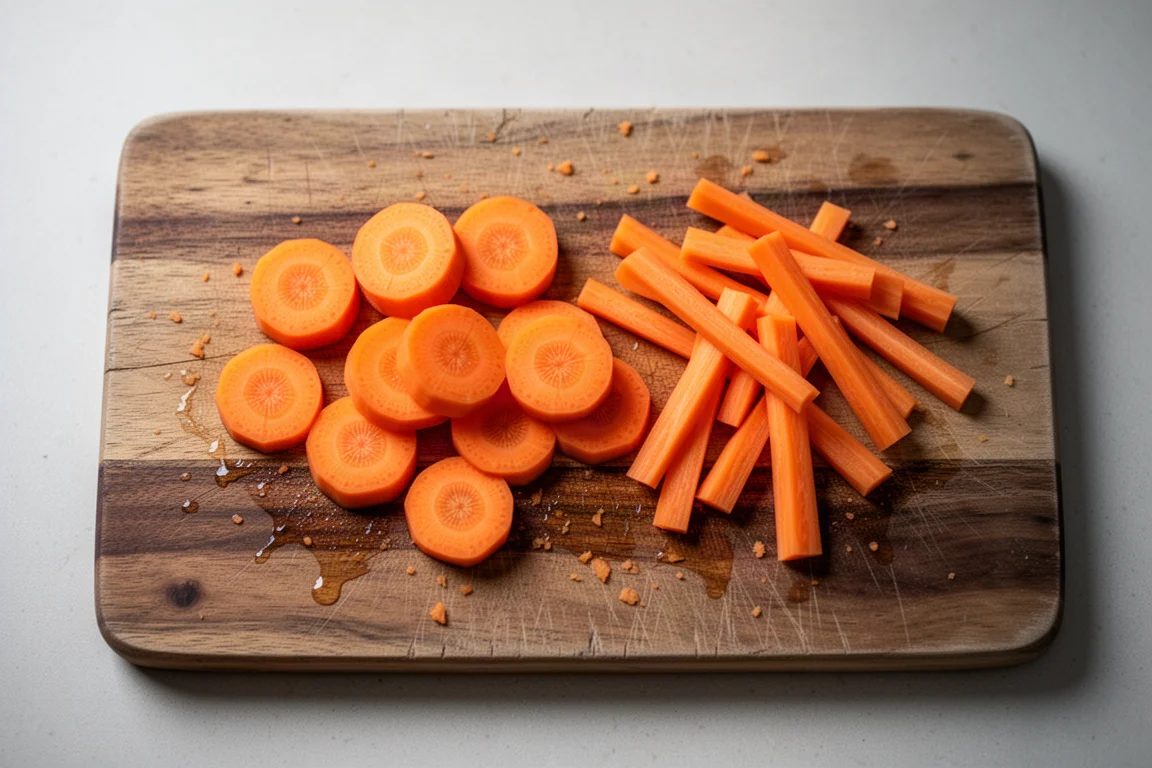
Carrots delivered one of the best results of the test. Push cuts through hard carrots met essentially zero resistance, and the full-length halving cut went through far better than expected. Rocking cuts are possible on lower material, but this is fundamentally a push-cut or up-and-down chop knife, not a rocker.
Where It Struggles: Butternut Squash and Rocking Cuts
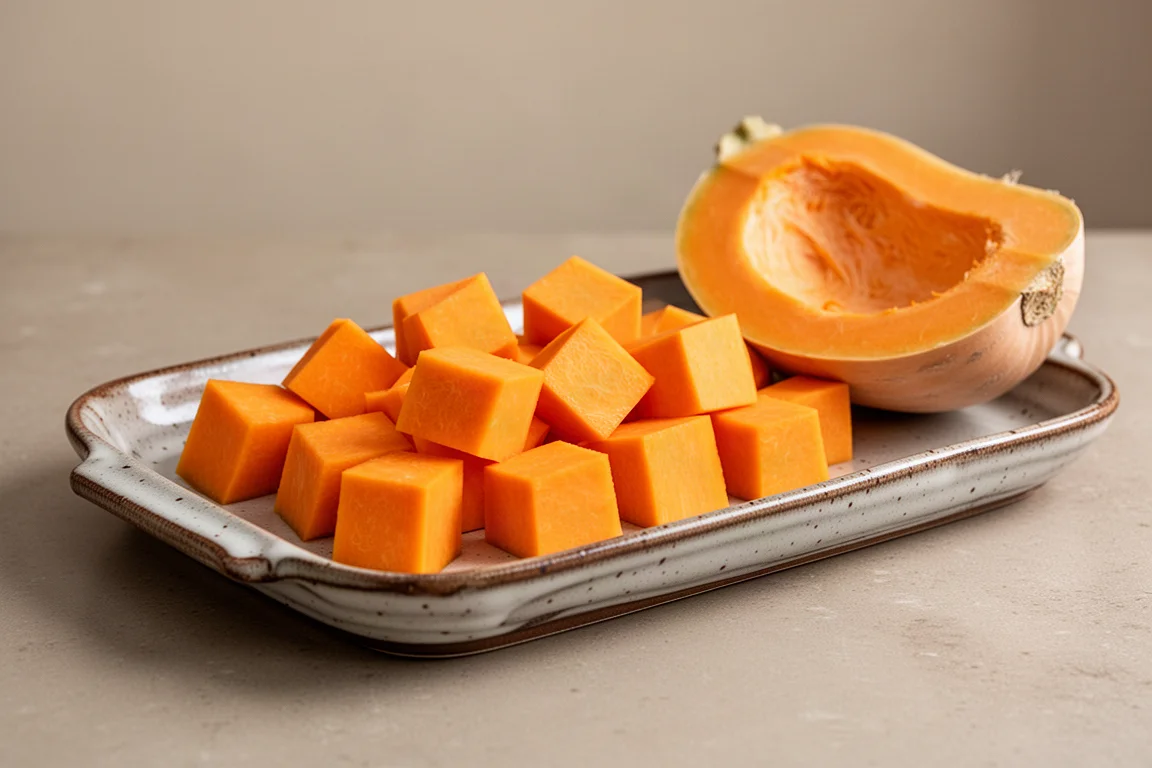
The butternut squash was the hardest test, and the knife struggled a little. The tip is not the thinnest, which suggests this knife leans slightly more toward workhorse territory than a pure laser, and the flatter, more traditional profile gave less natural lateral motion on dense material.
That is not necessarily a bad thing. A slighter tougher character suits the stainless-clad Aogami Super construction well, and it makes this a knife you do not have to baby through heavy root vegetable prep days.
As for rocking: anything taller than roughly 1.5 to 2 centimeters, like an onion half, gets uncomfortable, and high rocking risks biting into the board. Lower material such as shallots and herbs rock fine.
Buying Advice
If you mostly push cut and chop, this knife will feel wonderful. The Aogami Super core offers a strong balance of edge retention and sharpenability, and the stainless cladding makes day-to-day care simpler. It is light and well balanced, so long prep sessions stay comfortable.
If your technique leans heavily on rocking cuts over tall items, or you want the absolute finest tip work on dense produce, consider whether a more curved profile or a thinner-tipped knife fits you better.
Conclusion
The Atetsu Kuruchi Sashimi Kiritsuke 215mm is a well-built, laser-leaning knife with a comfortable octagonal handle, excellent push-cut performance, and surprisingly good food release on root vegetables. Its K-tip rewards a bit of practice, and its slightly tougher tip character makes it more forgiving than a pure laser. For cooks who want a low-maintenance, high-performance blade for everyday prep, it is an easy recommendation.
Product link
View more details for Atetsu Kuruchi Sashimi Kiritsuke 215mm
This product is mentioned in the review. Check the specifications, options, and compatibility before buying.
View more details for Atetsu Kuruchi Sashimi Kiritsuke 215mmFurther reading
Related Reviews

Kitchen Knives
Best Chef's Knives 2026: 27 Popular Options Tested and Ranked
A comprehensive review of 27 chef's knives ranging from $18 to $380, with honest assessments of handle comfort, blade balance, and real-world performance.

Kitchen Knives
Best Chef's Knives Under $75: Two Tested Recommendations
Two practical 8-inch chef's knives that balance sharpness, comfort, and durability without premium pricing.

Kitchen Knives
Best Chef's Knives 2026: 27 Options Tested and Ranked
A comprehensive review of 27 chef's knives ranging from $18 to $380, with honest assessments of handle design, balance, blade profile, and real-world performance.