Skis
Armada ARW 100 and ARV 100 Review: One Light, Playful Twin Tip, Two Graphics
The Armada ARW 100 and ARV 100 share the same karuba-core build and the same length run, so the choice comes down to the graphic. Here is how the ski behaves in the park, on groomers, and in soft snow.
Introduction
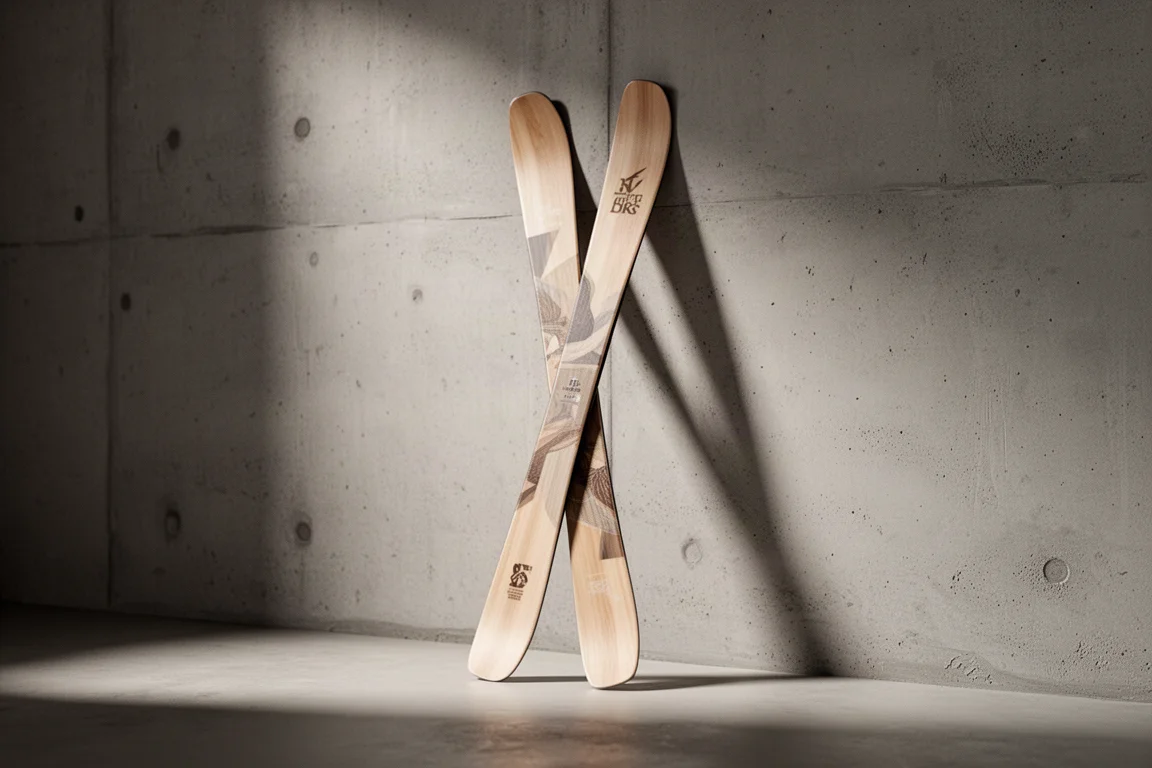
Armada’s ARW 100 and ARV 100 share more than a family resemblance. Underneath the topsheet they are the same ski: the same construction, the same dimensions, and the same length run in both graphics, including a 186 cm option. The only real difference is the graphic, which means the decision comes down to which topsheet you prefer rather than which build suits you better.
That makes the more interesting question what the ski itself does. The ARW 100 and ARV 100 sit at a 100 mm waist, use a light karuba wood core, and skip metal and carbon entirely. Armada positions them as twin tips that can spend the morning in the park and the afternoon in soft snow, and the way the ski behaves on snow backs that up.
What the Armada ARW 100 and ARV 100 Are
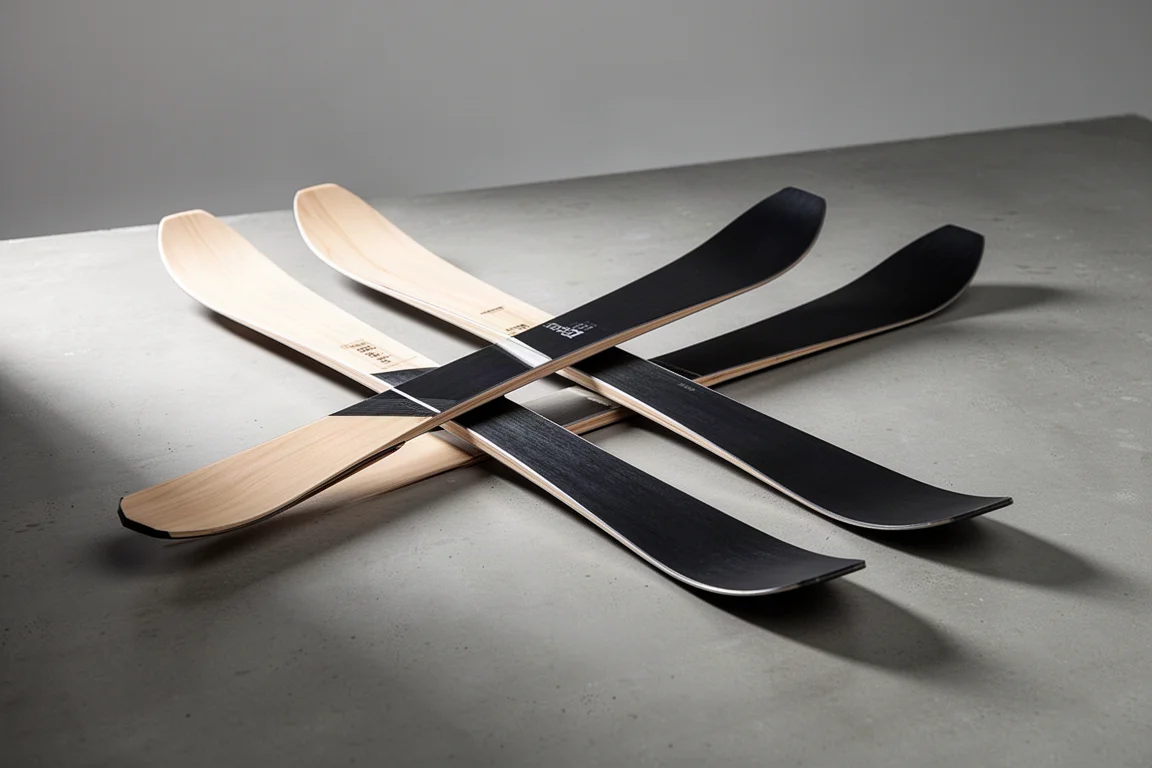
Both models are 100 mm-waisted twin tips built around a lightweight karuba wood core with no metal or carbon in the layup. In the 179 cm length the ski weighed in at 1,670 g, just under the 1,700 g mark, and that low weight is as noticeable on the snow as it is on the scale.
The rest of Armada’s line gives useful context for where the 100 sits. The ARW 88 and ARV 88 are dedicated park skis, and the 94 leans heavily toward the park as well. The 100 keeps a park-friendly feel while adding a little more surface area for soft snow and off-trail terrain.
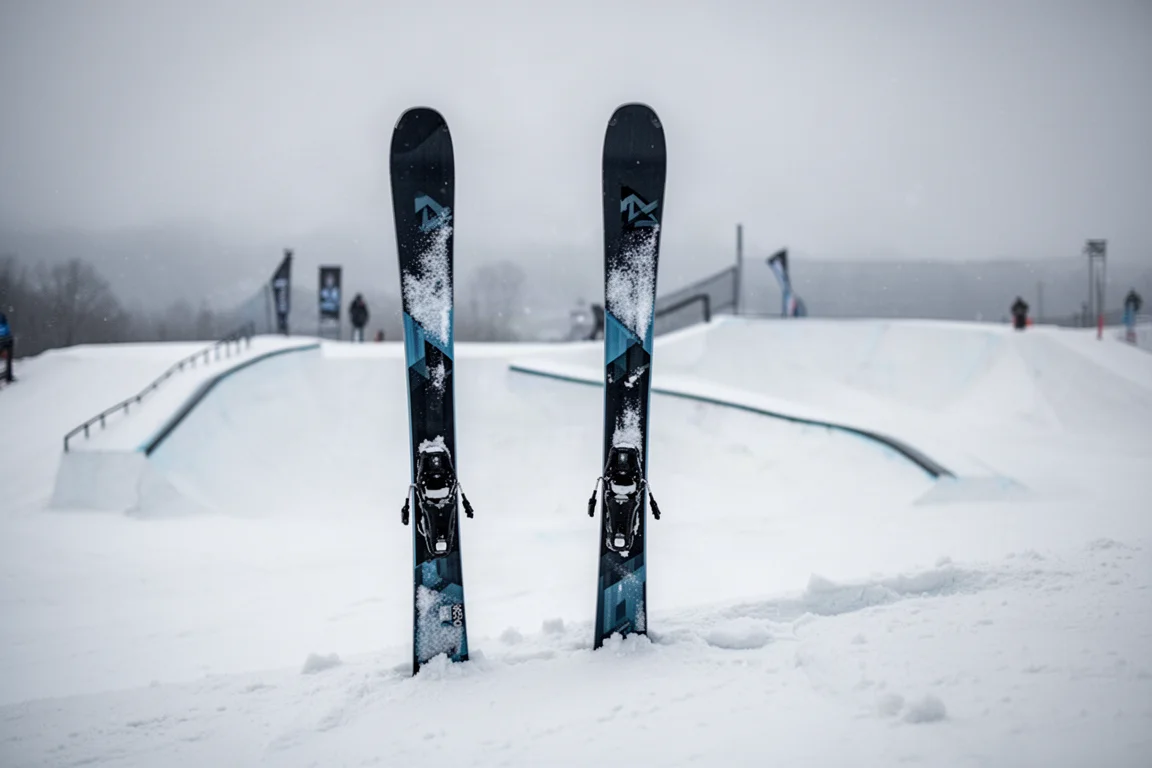
That extra width gives the ski more range than a pure park twin tip without turning it into a freeride charger. Riders who want one ski for park laps, side hits, and soft-snow tree runs are the natural audience.
Construction: Light Karuba Core and 3Dge Wall
The bulk of the story is the karuba core. Karuba is a light wood, and Armada pairs it with an ash binding insert underfoot. That insert matters: with no metal in the ski, a soft core alone would struggle to hold binding screws over time, and the ash plate gives the mounting area the density it needs. Older Armada twin tips used considerably more ash, which is part of why they carried more weight.
The other construction detail is Armada’s 3Dge Wall technology. Instead of bonding a sidewall against the flat edge of the core, Armada mills an angled slit into the side of the core and presses the sidewall material into it. The result is a mechanical bond with a three-dimensional interface between core and sidewall, and that angle does real work: impacts from the side push the two materials together rather than prying them apart.
The sidewall profile itself is a gradual taper. The core thins smoothly toward the tips and tails while staying the same width throughout, with only a small amount of cap at the very ends. It is a cleaner transition than a full sidewall that abruptly becomes a cap.
Shape, Rocker, and Mount Point
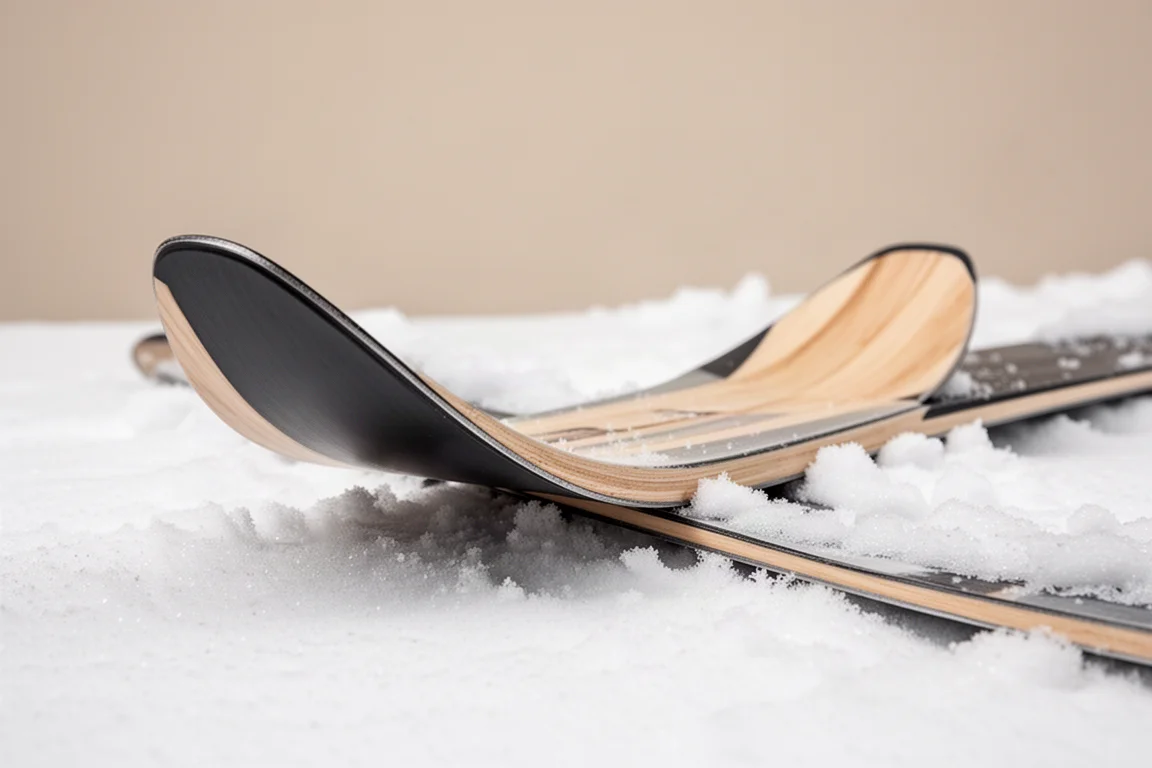
Rocker is generous for a twin tip, and there is a meaningful amount of tail rocker as well, though not as much as in the tip. That asymmetry shows up in the mount point: there is no true center option, and the recommended position sits a couple of centimeters back from true center.
Early taper has increased compared with earlier versions of the ski, and the effect is both visual and real. Looking down at the ski, the shape reads as catch-free, and on snow it behaves that way, releasing easily at the tip and tail.
Camber is the counterweight. There is a healthy amount of it underfoot, paired with a snappy flex pattern, which gives the ski pop and energy. Without that camber the ski would feel noticeably less lively and dynamic.
Flex is on the softer side but not the softest available, and it is consistent from tip to tail. That consistency is what makes the ski predictable, with no abrupt stiff spots to work around.
The turn radius in the length tested sits around 18 meters, which keeps the ski agile in trees and soft snow without making it feel nervous when you stand it up on edge.
On-Piste and Off-Piste Performance
Carving is where the ski has clear limits. It can hold an arc, but it asks for deliberate, delicate pressure and a fairly high edge angle. At low edge angles it does not want to grip, which comes down to limited torsional stiffness. On soft groomers, with an engaged edge and some trust in the ski, it carves well enough to stay alongside more carving-oriented models. On steep, icy terrain it is not the tool for the job.
Everything else on trail is a different story. Short turns, side hits, 180s, and switch skiing all feel natural, and the ski is happiest when it is skied upright and played with rather than driven hard. A flexy, high-edge-angle carve on a low-angle groomer with soft snow is well within its range.
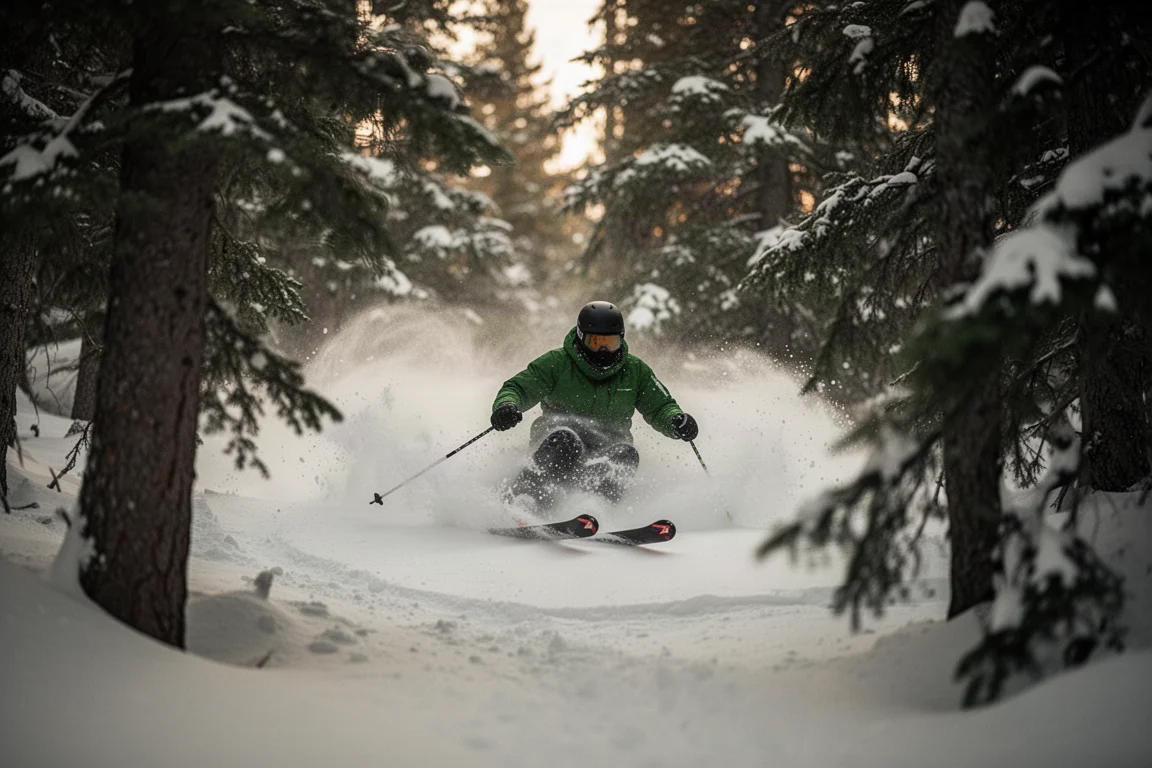
Off trail, the ski is bouncy and agile. The tail releases easily, which makes tight trees far less work than they are on a stiffer ski, and edge release is excellent when you want to throw the ski sideways and slash soft snow. The trade-off is longitudinal stability. It is light, maneuverable, and easy to drift, but it is not planted at speed in variable snow, and it is not a ski to point down the fall line and charge.
Park Performance: Light, Damp, and Forgiving
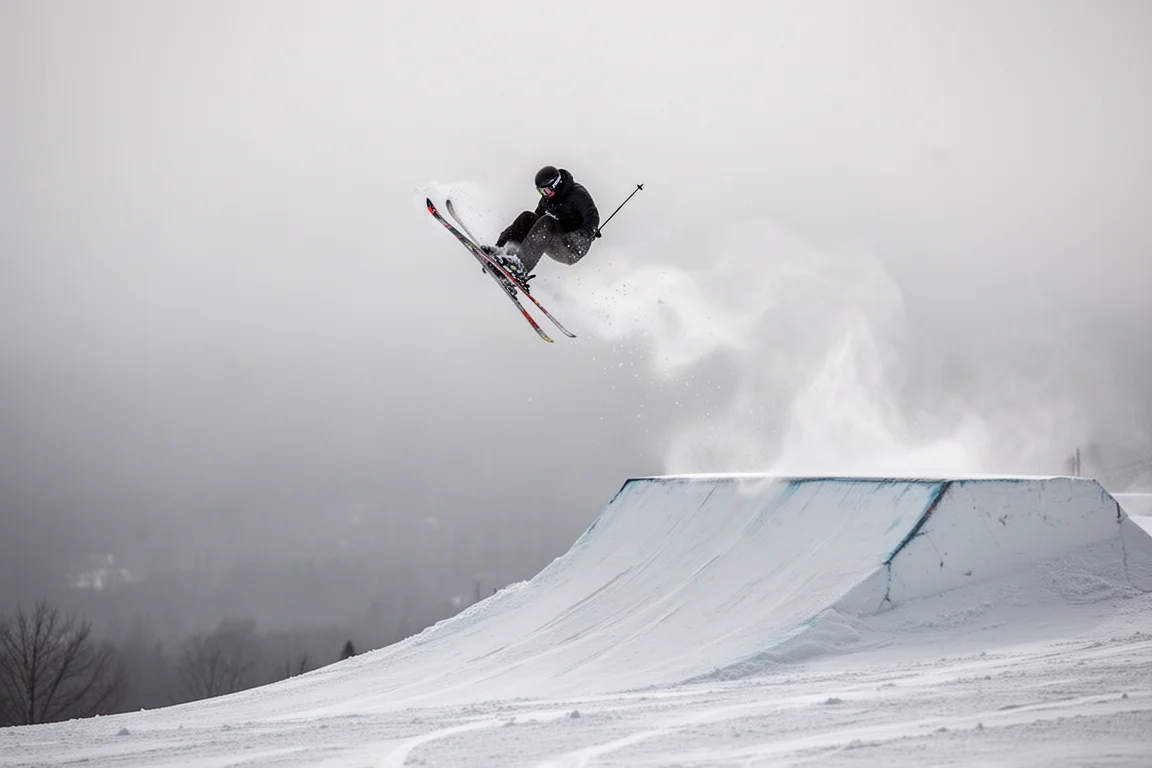
In the park, the two defining traits are low weight and a damp, quiet feel. Swing weight is light, which makes spins on jumps, spins onto rails, and switch-ups easier to start, yet the flex never feels harsh. Landings feel closer to suspension than to a hard stop, which matters on flat-light days when depth perception is unreliable and the landing arrives sooner or later than expected.
Early taper adds forgiveness on top of that. A ski that is stiff, or that lacks taper, can be punishing when a landing is not perfectly centered. This one absorbs those moments without sending a shock through the body, and it also reduces the risk of catching an inside edge on takeoff when spinning switch.
For newer park skiers the ski is approachable rather than intimidating. It is also more park-friendly than several non-metal freeride twin tips with tail rocker, including the Black Ops 98, Camox, QST 98, and M-Free 99. In character it sits somewhere between a Camox and a QST 98, but with a softer flex pattern. The Black Ops 98 is the closest of that group, though its much heavier build demands more skill from the rider.
Armada ARW 100: The Women’s Graphic
The ARW 100 is the graphic Armada builds for women, and it uses the same construction and the same lengths as the ARV 100. In the twin tip world, women’s-specific construction rarely changes much, because the ski is already light and mobile and there is little to be gained by making it lighter still. Riders comparing the two should treat the choice as cosmetic.
View more details for Armada ARW 100
Armada ARV 100: The Men’s Graphic
The ARV 100 is the counterpart graphic, again with identical construction and the same length run, including the 186 cm option. Same karuba core, same 3Dge Wall sidewall, same ash insert underfoot, same flex pattern. If you prefer the ARV topsheet, you lose nothing in performance.
Who the Armada ARW 100 and ARV 100 Are For
This is a ski for riders who spend real time in the park and want a light, forgiving twin tip they can also take into soft snow. It suits skiers who are happy to ski more upright, play with side hits, and spin off natural features, and it suits newer park skiers who want something approachable rather than a heavy, demanding rail ski.
It is not the right choice for skiers who want a dedicated carving ski, who spend their days on steep icy groomers, or who want to charge through variable snow at speed. Those riders will be happier on something with more torsional stiffness and more longitudinal stability.
Buying Advice
Length choice matters more than graphic choice here. Both topsheets come in the same sizes, and the longest option is 186 cm. Lighter riders who spend most of their time in the park may prefer the quicker handling of a shorter length, while taller or heavier riders who plan to use the ski off trail will want more surface area underfoot.
Mount position is worth respecting as well: the recommended point is a couple of centimeters behind true center, and there is no true center option, so the ski is designed to be skied slightly forward of a symmetrical setup. The line also continues into the next season, so this is not a model about to disappear from the market, which takes some pressure off the timing of a purchase.
Conclusion
The Armada ARW 100 and ARV 100 are one ski with two topsheets, and the design brief is consistent throughout: light, damp, forgiving, and easy to play with. In the park it is approachable across a wide range of abilities, and off trail it is agile in soft snow and tight trees, as long as you are not asking it to charge. Skiing is supposed to be fun, and this is a ski built around that idea.
Further reading
Related Reviews
Skis
Armada Anti Matter 82 W Review: A Light, Approachable All-Mountain Carver
Armada's Anti Matter 82 W pairs a lightweight Karuba and carbon build with an easygoing all-mountain shape, aimed at intermediates through lighter-footed advanced skiers.
Skis
Armada Anti Matter 88W Review: A Light, Playful 88mm All-Mountain Ski Plus Two Alternatives
The Armada Anti Matter 88W returns unchanged in spirit from its Reliance 88C days, and it remains one of the most versatile 88mm skis around. We also look at the Nordica Santa Ana 87 and Anti Matter 92 W as alternatives.
Skis
Armada ARV 100 vs Atomic Bent 100: Which 100mm Freestyle Ski Should You Buy?
Two of the best all-mountain freestyle skis of the season compared: one leans playful and park-ready, the other holds up better everywhere else.