Hand Tools
Aries Angled Lineman Pliers Review: A $10 Angled Plier That's Hard to Beat
An affordable angled lineman plier with good cutting knives, a nut holder, and a few quirks worth knowing before you buy.
Introduction
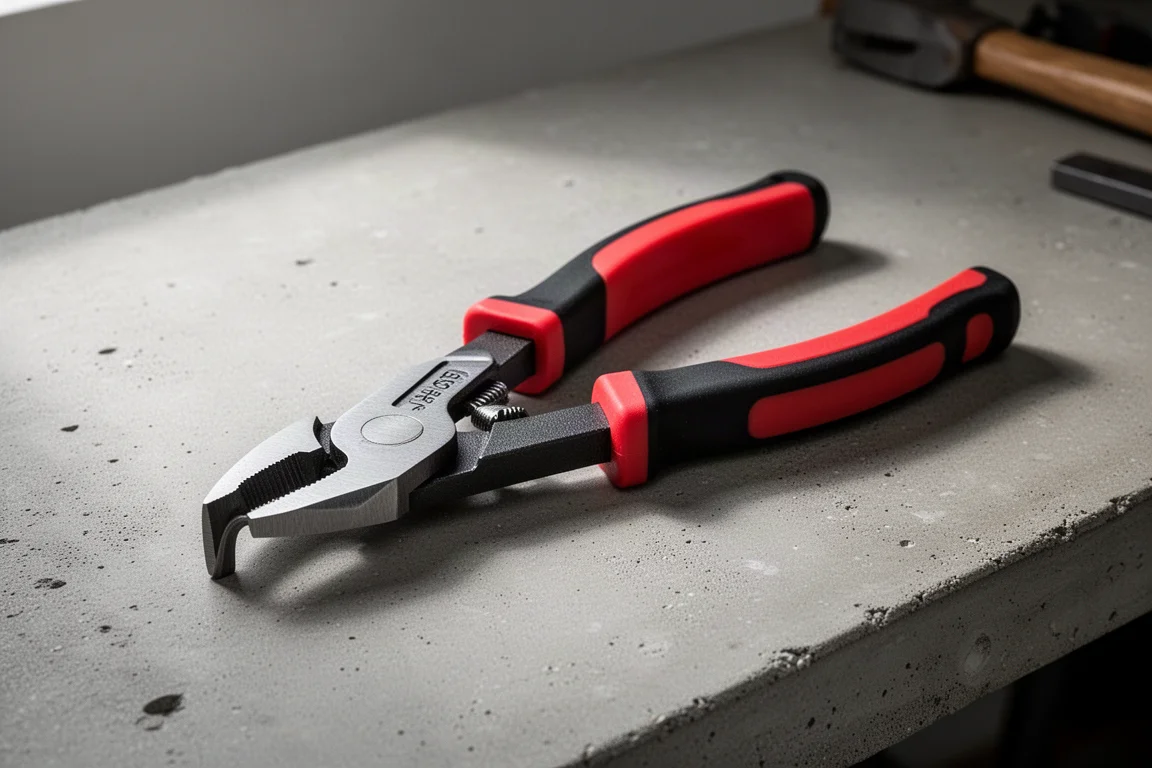
Angled pliers occupy a strange corner of the tool world. Most of us reach for a straight pair out of habit, but once you spend time with a bent-head design, you start noticing the situations where it simply works better: reaching into tight corners, changing your grip angle mid-task, or getting a cleaner line of pull on stubborn fasteners. The problem has always been price. Quality angled pliers from established brands are not cheap, which is exactly why this budget option caught attention.
The Aries angled lineman plier keeps the traditional handle layout and puts the bend at the top, on the business end. It is currently priced under $10 on Amazon, and Aries also sells a three-piece set with a needle nose, a multi-plier, and a side cutter for under $20. That works out to roughly $6 and change per plier in the set, which is an unusually low entry point for this style of tool.
Who This Product Is For
This is a tool for DIY users and occasional-use buyers who want an angled plier without committing to premium-brand money. If angled pliers are already part of your daily kit, you probably know what a higher-end pair feels like, and this one makes some compromises you will notice. But as a second or specialty plier that lives in a drawer until the right task appears, the value proposition is genuinely strong. It is not necessarily an everyday tool; many jobs still call for a straight pair, and that is what most people are used to. You do adapt to the angled design, though, and there are times when it is really outstanding.
What the Aries Angled Lineman Plier Offers
The jaw layout is traditional and familiar. You get a nut holder near the pivot, the kind of feature common on similar designs from Irwin and NWS, which lets you grab a bolt head or nut as long as you do not need much reach, since the cutting knives sit close by. Below that there is a standard bolt and hex grabbing section, plus a set of traditional jaws with a single line rather than cross-hatching. Those jaws close up quite tight, and the finish work appears to have been done carefully, likely ground to make sure the faces mate properly.
It is a similar overall jaw arrangement to comparable Knipex and Orbis designs, but at a far more affordable price. There are also two small tether points on the handles. They are functional but quite small, and honestly they can be a minor annoyance during normal handling; cutting one off is a tempting modification.
Cutting Performance
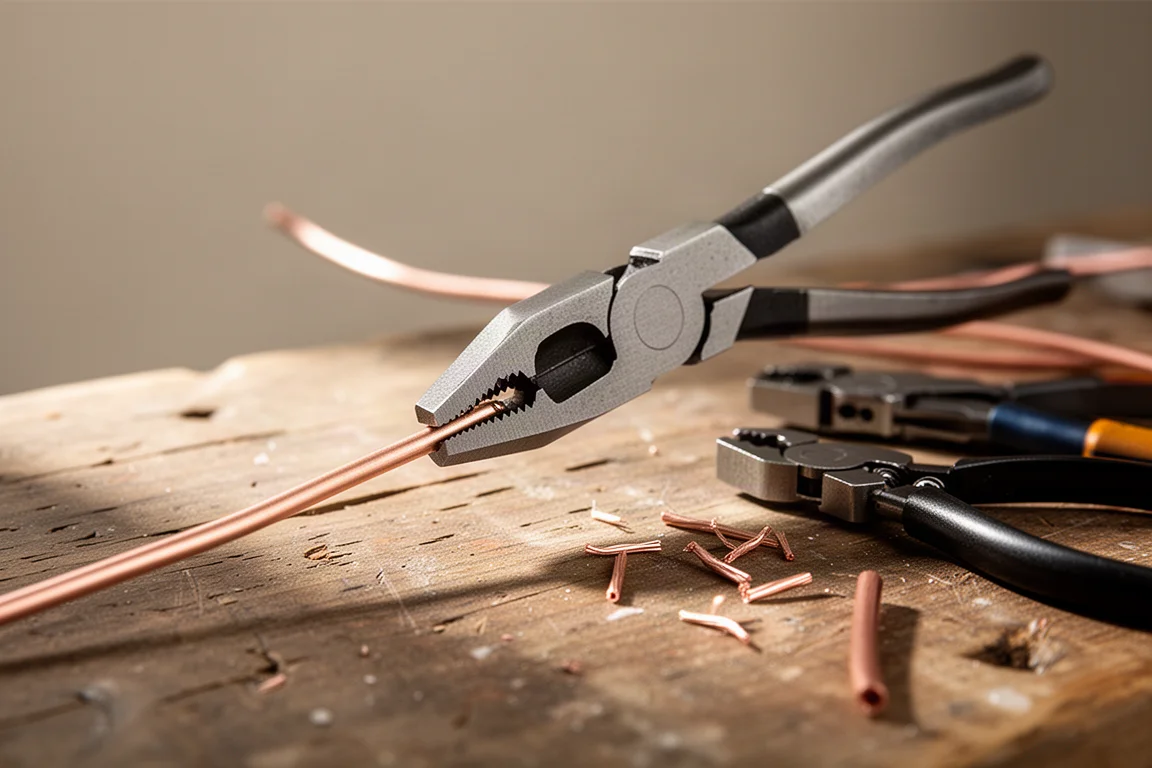
The cutting knives are the standout here, and they are quite good. The plier snips through 12 gauge wire with no problem, and it can cut tie wire one-handed with a clean pop. That is real performance for a plier at this price.
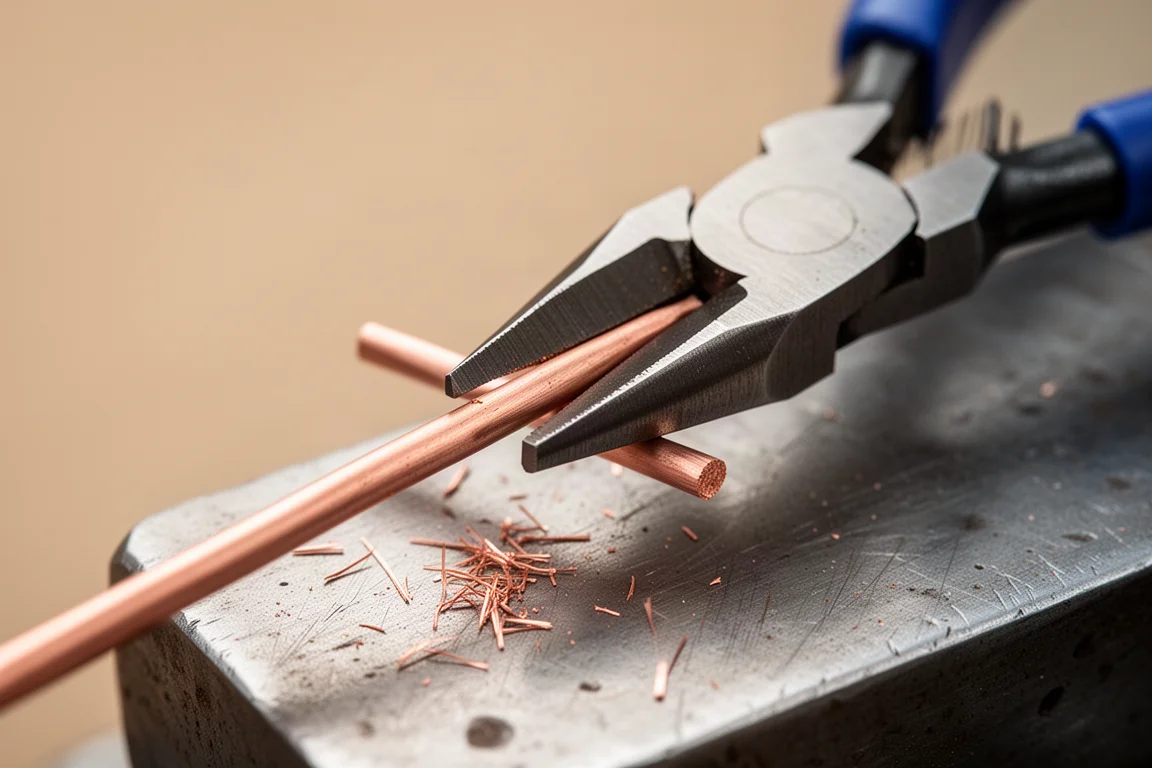
One thing to watch over time: some discoloration appears on the cutters, which looks like the black oxide wearing off and leaving exposed copper. That can be read as an indication of how hard the cutter material is, but it also hints at how the finish will age. Durability of the cutting edges is the biggest unknown with a tool like this.
The Three-Piece Set
If you buy the set of three, it comes with an inexpensive little roll-up tool pouch, which is a nice bonus even if it is fairly basic. The set includes a needle nose, a multi-plier, and a side cutter alongside the angled lineman plier design.
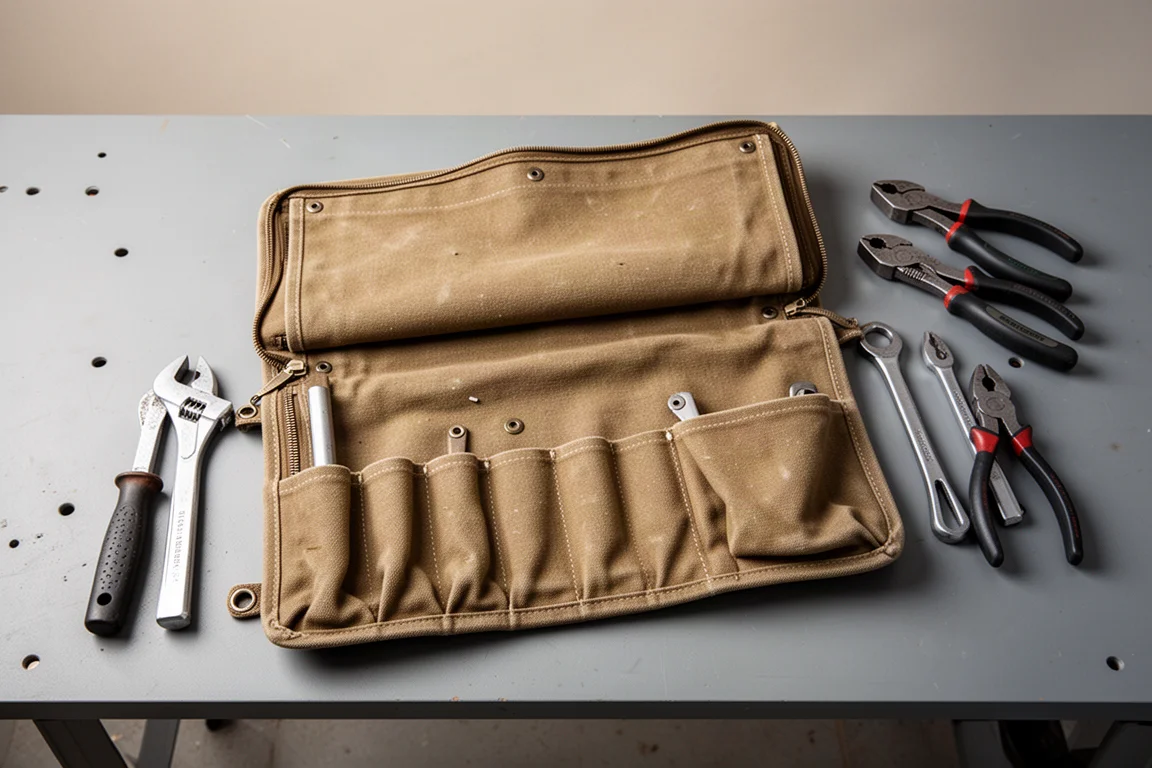
The side cutter in the set carries essentially the same strength as a traditional diagonal cutter, but the angled head may allow slightly better access in tight spots. It also has an unusual flared feature near the cutting area. It is unclear whether that is purely a design choice or meant for some kind of reaming, though reaming is not something you would normally do with side cutters.
Things to Consider Before Buying
There are a few honest caveats. From what can be observed, these are made in China, which is not automatically a problem, but it is worth knowing. There are many similarities to NWS-style designs, including some details you would not expect to see on a budget imitation, and it does perform decently for the price.
Stiffness is the main quality concern. The individual version of this plier runs a little stiffer than ideal, with noticeable hiccups through the closing motion rather than the uniform stiffness you feel on some Klein or Snap-on tools. Some of that can be worn in with use, and there is a spot near the end of the closure where resistance kicks in. That irregularity suggests the pivot may develop play over time, which is likely one of the areas where a budget plier deviates from a higher-quality one. Earlier Aries tools have also shown a tendency to rust a bit over time, even in a not especially humid environment.
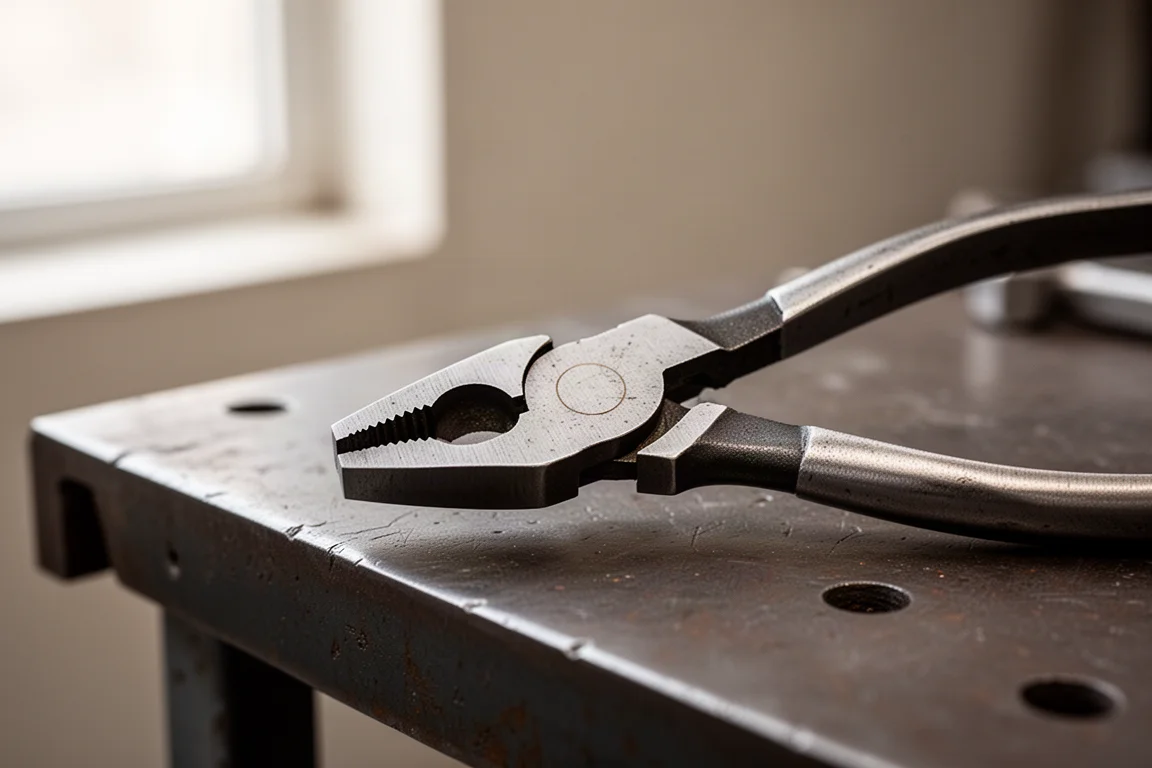
One quirk worth knowing: the pliers in the set and the individual version are the same tool, but they carry different numbers, and the number on the set version is a set identifier rather than a model number. It is a small detail, but it can make searching for the individual plier confusing.
Buying Advice
For under $10, the individual angled lineman plier is easy to recommend, especially given that this is not likely an everyday-use tool. If you want more value per dollar, the three-piece set drops the effective cost to about $6 and change per plier and adds a roll-up pouch, though the other pliers in the set cost more individually than the lineman plier does alone, which is a curious pricing quirk. How long those prices will hold is unknown, but at current levels the value is hard to beat at a DIY or occasional-use level.
If stiffness out of the box bothers you, test the action when it arrives. A little working-in can loosen an uneven pivot, but if the resistance feels uniform and persistent, that is a sign of the gap between this and premium alternatives.
Conclusion
The Aries angled lineman plier is a surprising amount of tool for the money. Good cutting performance, a useful nut holder, tight-closing jaws, and a comfortable multi-component handle make it a legitimate option for anyone curious about angled pliers. The trade-offs are real: a stiff and slightly uneven pivot, unknown long-term durability, and a finish that may not age gracefully. But as an affordable way to add an angled plier to your kit, or as a low-risk experiment with the bent-head design, it earns its place.
Aries Angled Lineman Plier
At under $10 individually or under $20 for the three-piece set, this is one of the most accessible ways to try angled pliers without a big commitment.
Product link
View more details for Aries Angled Lineman Pliers
This product is mentioned in the review. Check the specifications, options, and compatibility before buying.
View more details for Aries Angled Lineman PliersFurther reading
Related Reviews
Hand Tools
Best Diagonal Cutters 2026: 16 Pliers Tested for Cutting Power and Durability
We put 16 diagonal cutters through nail, screw, drill bit, and hex key tests to find the best value picks for your toolbox.
Hand Tools
Best Hex L Key Sets 2026: Nine Sets Tested for Real-World Torque
Nine hex L key sets from budget to premium, tested for torque, fit, and durability. See which sets deliver real performance and which ones to skip.
Hand Tools
Best Locking Pliers 2026: Top Picks Tested for Grip and Durability
We tested 18 brands of 10-inch locking pliers for grip strength, jaw bite, build quality, and ease of release to find the best options for tough jobs.