Telescopes
Apertura 102mm FCD100 Doublet Refractor Review: A Visual Astronomy Specialist
A 102mm f/11 doublet refractor built purely for visual observing, with FCD100 glass, sharp high-contrast views, and a genuinely premium feel.
Introduction
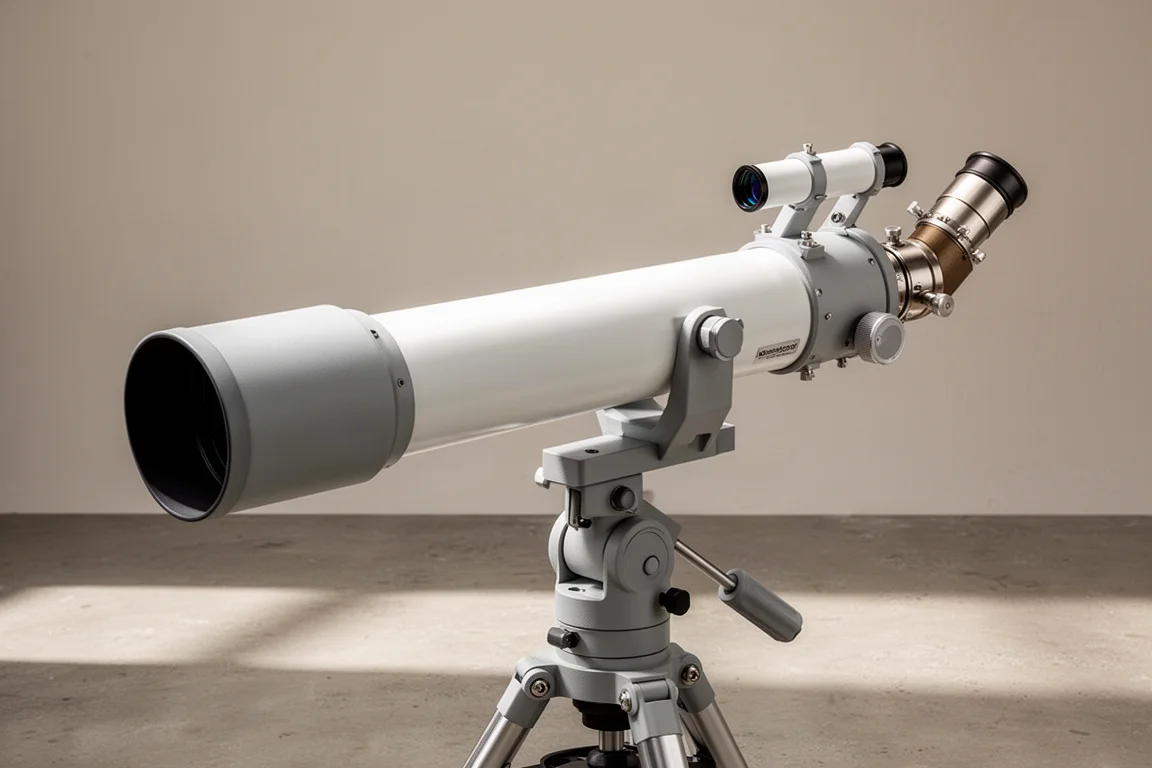
If your time under clear night skies is precious, the telescope you point upward should never be the limiting factor. That is the promise behind the 102mm f/11 FCD100 Doublet Refractor from Apertura, a telescope that makes no attempt to be everything for everyone. It is designed for visual astronomy, and it leans into that identity with confidence.
On paper, it is expensive for a purely visual telescope. What you gain in return is confidence: views limited only by the atmosphere and observing conditions, not by the optics or the telescope’s design.
Who This Telescope Is For
This is a specialist’s instrument. Amateur astronomers who want the sharpest possible visual views of the Moon, planets, and brighter deep sky targets are the clear audience. If you value predictable, high-contrast, color-accurate views night after night, the Apertura 102 EDR fits that brief precisely. In a market full of one-size-fits-all telescopes, it stands out precisely because it knows exactly what it stands for.
Build Quality and Design
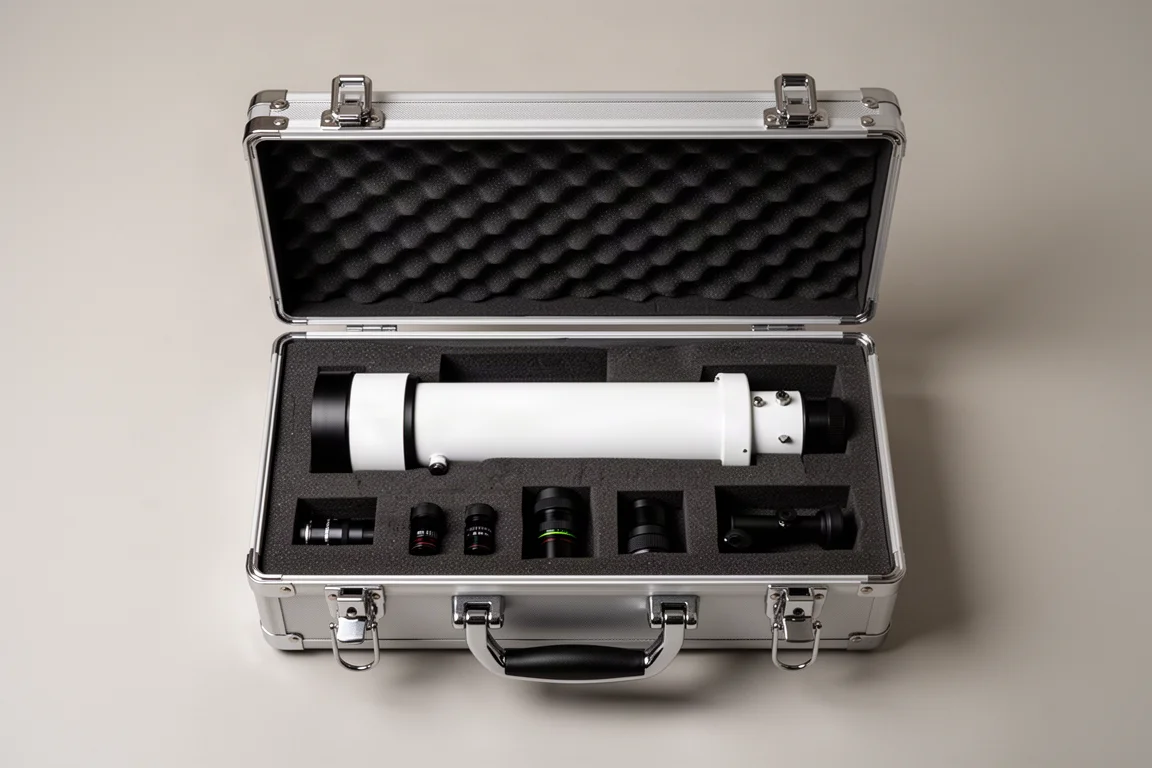
The telescope arrives in a solid aluminum hard case with three locks and a handle. Inside are custom slots for the refractor itself and for additional visual accessories, including the Apertura 2-inch diagonal and 1.25-inch and larger 2-inch eyepieces. A case like this protects the refractor’s integrity and makes traveling to dark sky sites far easier.
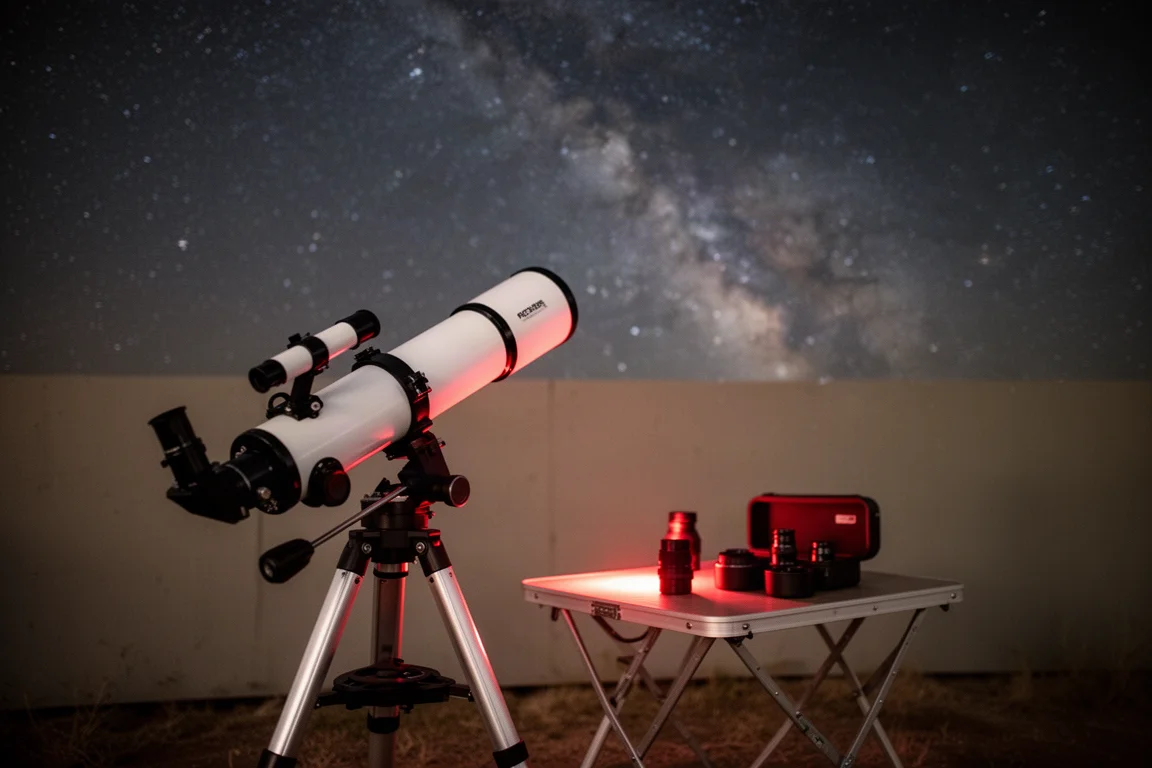
The specifications tell the story of a serious visual scope: a 102mm (4-inch) aperture, a 1,122mm focal length, and an f/11 focal ratio, ideal for high-contrast, high-magnification views. The airspace lens element uses high-quality FCD-100 extra-low dispersion glass, working alongside companion K9 crown glass elements for sharp, color-accurate views. The whole telescope weighs just 10.5 lbs, measures 39.5 inches retracted and 48.5 inches fully extended, and is easy to lift onto a mount.
The rear cell is detachable, which means the scope can be used with bino viewers for a more immersive observing experience. The dual-speed 10:1 ratio rack and pinion focuser is all metal, smooth, and free of play in the knobs, with a satisfying resistance that visual observers look for. Apertura also includes extra holes for a second finder scope or red dot finder.
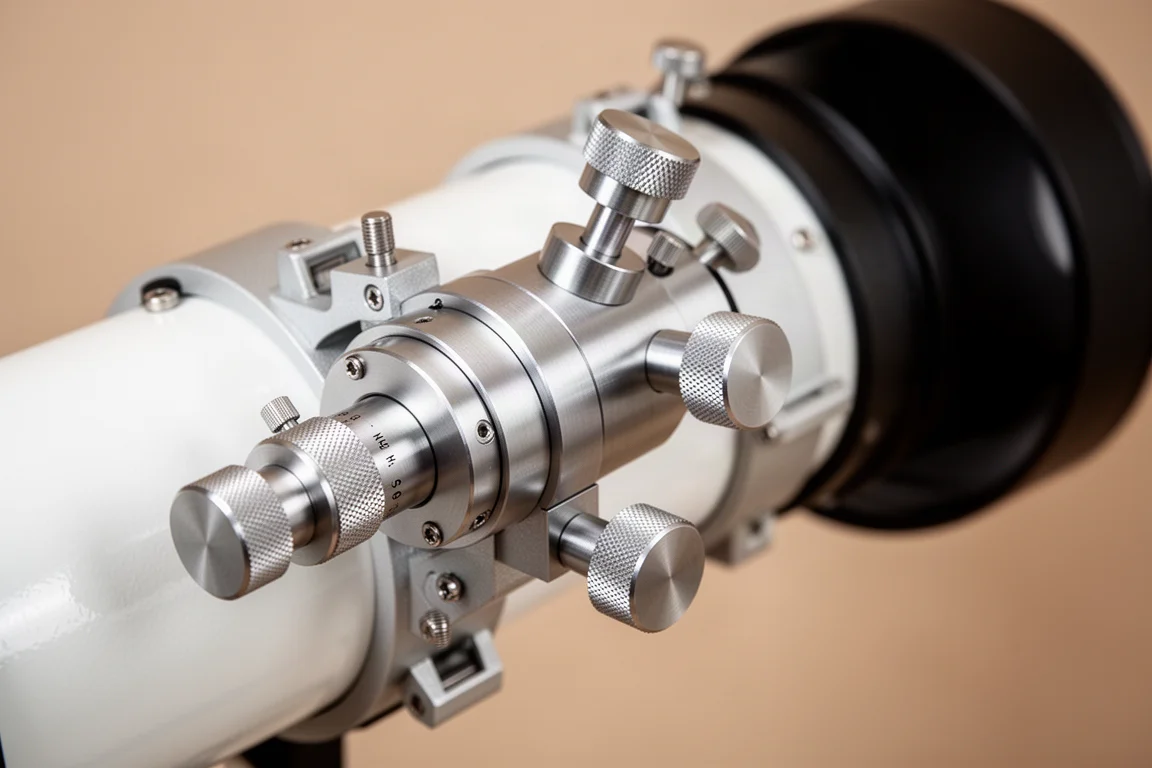
Around the tube you get stout mounting rings with accessory holes, knurled thumb screws, and a 9 5/8-inch Vixen-style dovetail compatible with most mounts on the market. The extendable dew shield with locking screws and the objective cover round things out. The color-matched 10x50 right-angle finder scope is itself a doublet, with an adjustable illuminated reticle, a helical focuser, and adjustable crosshair focus. The optional color-matched 2-inch twist-lock prism diagonal, sold with a 2-inch to 1.25-inch adapter, is available with or without the telescope.
What the Views Are Like
Describing an eyepiece view is always subjective, but some impressions here are hard to overstate. Views of Jupiter through this telescope with 7mm and 4mm eyepieces were among the sharpest ever seen through any scope. Even at high magnifications, where atmospheric disturbance can blur detail, the telescope held up and revealed subtle structure within Jupiter’s cloud bands, including a band wrapping halfway across the face of the planet. The Galilean moons looked like actual spheres rather than points of light, which is a rare thing to see.
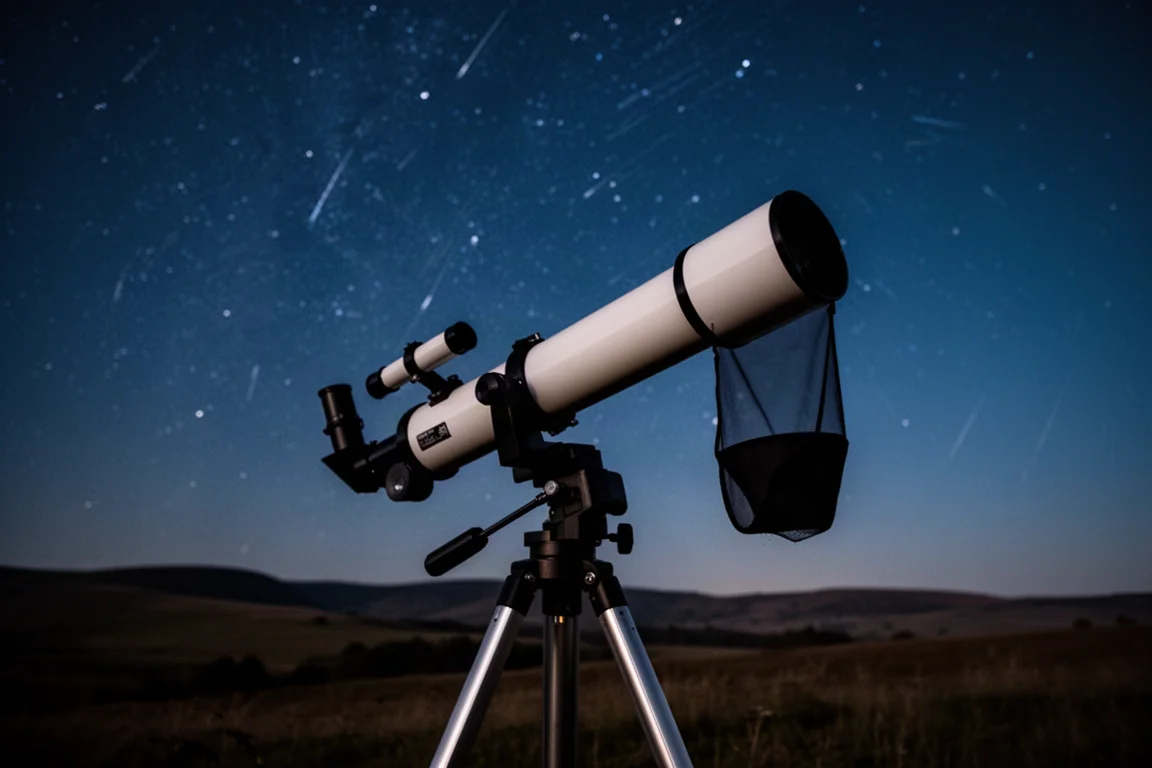
Stars remain incredibly sharp, and chromatic aberration is extremely well controlled. At this focal length with a wide 28mm eyepiece, roughly four lunar diameters fit side by side, and the refractor can reach a maximum field of about 2.45 degrees, roughly five full moons wide, in a wide-field eyepiece. A 4-inch refractor is capable of showing all 110 Messier deep sky objects under sufficiently dark skies, and a large majority of them even under light pollution. The f/11 design with FCD100 glass is built for exactly this kind of viewing, and the scope delivers high contrast and predictable performance night after night.
Things to Consider Before Buying
The honest trade-off is price. As a purely visual telescope, it is expensive, and buyers who also want an imaging platform will need to look elsewhere. It is a scope for observers, not photographers. But for those it is aimed at, the field experience was flawless. Even dedicated reflector users for visual and deep space astrophotography have found that visual sessions with this telescope were among the most fun they have had observing in a long time.
Buying Advice
If you are looking for a high-quality, high-performing, predictable visual telescope for viewing the night sky, the Apertura 102 EDR is a great choice. Factor in the optional 2-inch prism diagonal at purchase, since it is offered both with and without the scope, and make use of the included hard case for dark sky trips.
Conclusion
The Apertura 102mm FCD100 Doublet Refractor does one thing and does it exceptionally well: visual astronomy. With excellent optics, a superb focuser, thoughtful accessories, and views that live up to the FCD100 glass inside, it is an easy recommendation for serious visual observers who want their clear nights spent observing at their best.
Product link
View more details for Apertura 102mm FCD100 Doublet Refractor
This product is mentioned in the review. Check the specifications, options, and compatibility before buying.
View more details for Apertura 102mm FCD100 Doublet RefractorFurther reading
Related Reviews

Telescopes
Sightron SJ75 UF and Sky-Watcher HS125: Two Telescopes Worth Watching
A look at two notable telescopes from a recent camera and optics expo: a sharp new astrograph from Sightron Japan and a compact fast reflector from Sky-Watcher.

Telescopes
SV503 102ED Review: A Budget 102mm Refractor That Surprises
The SV503 102ED is an affordable 102mm doublet refractor that delivers surprisingly decent star shapes and a smooth focuser, despite some chromatic aberration and light falloff.

Telescopes
SVBony MK127 Review: A Compact Maksutov-Cassegrain That Surprises
The SVBony MK127 is a 127mm Maksutov-Cassegrain telescope with a unique 0.65x reducer, making it a versatile option for visual astronomy and even some deep-sky imaging.