Smartwatches
Amazfit T-Rex Dual Solar First Look: Solar Charging Meets AMOLED
A rugged smartwatch that pairs solar charging with an AMOLED display for the first time, including a full solar panel on the back. Here is what it delivers and where the trade-offs sit.
Introduction
Combining solar charging with an AMOLED display is something watchmakers have avoided for good reason. Solar charging on watches has mostly lived on memory-in-pixel displays, which sip power compared to AMOLED panels. Even on models like the Garmin Fenix solar variants, solar input generally just delays battery discharge rather than actually recharging the watch, while the Garmin Instinct Solar can gain real charge thanks to its even lower-power monochrome display.
That is what makes the new Amazfit T-Rex Dual Solar interesting. It pairs solar charging with an AMOLED display for the first time, and it does something nobody else has done: it puts an entire solar panel on the back of the watch. This is a first look rather than a full in-depth review, focused on the basics, early battery results, and how the solar charging actually behaves.
Price and What You Get
The T-Rex Dual Solar comes in at $649, which is $100 more than the T-Rex Ultra 2. Think of it as the solar counterpart to the Ultra 2, with the same general size and build approach.
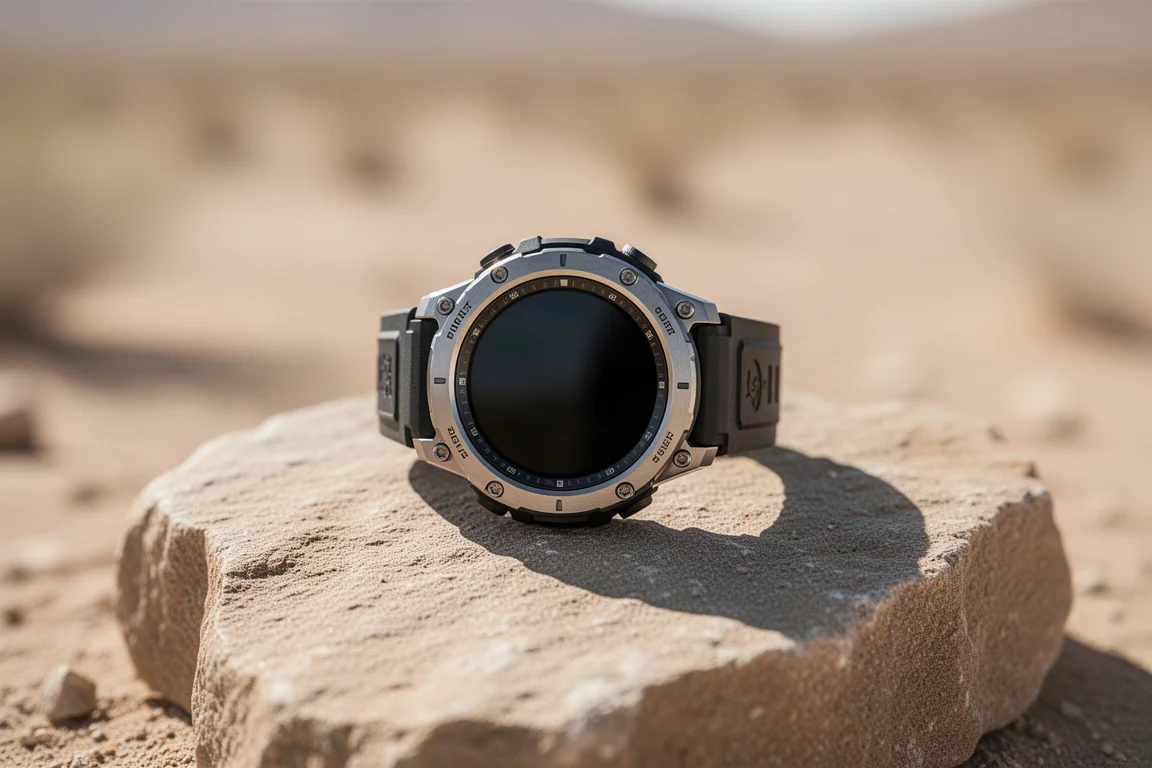
That $100 buys the solar hardware, and the trade-offs show up in the details. The display specs for brightness match the Ultra 2, but the display itself is slightly smaller because Amazfit needed room for a solar charging ring that surrounds the outside of the screen. Like the Ultra 2, you get a sapphire lens, a titanium bezel, a glass ceramic back plate, and a dedicated LED flashlight on the front. One difference: the flashlight here uses a white and red LED instead of the white and green pairing on the Ultra 2.
Design and Build
This is a beefy watch. In size and weight it sits in the same ballpark as the 51mm Fenix 9 Pro and not far off the even larger Fenix 8 Pro MicroLED, so it is among the larger watches you can buy. Wearability will depend heavily on your wrist size, and for a wrist with a 183mm circumference it runs a little big, both in case diameter and on the heavier side of things.
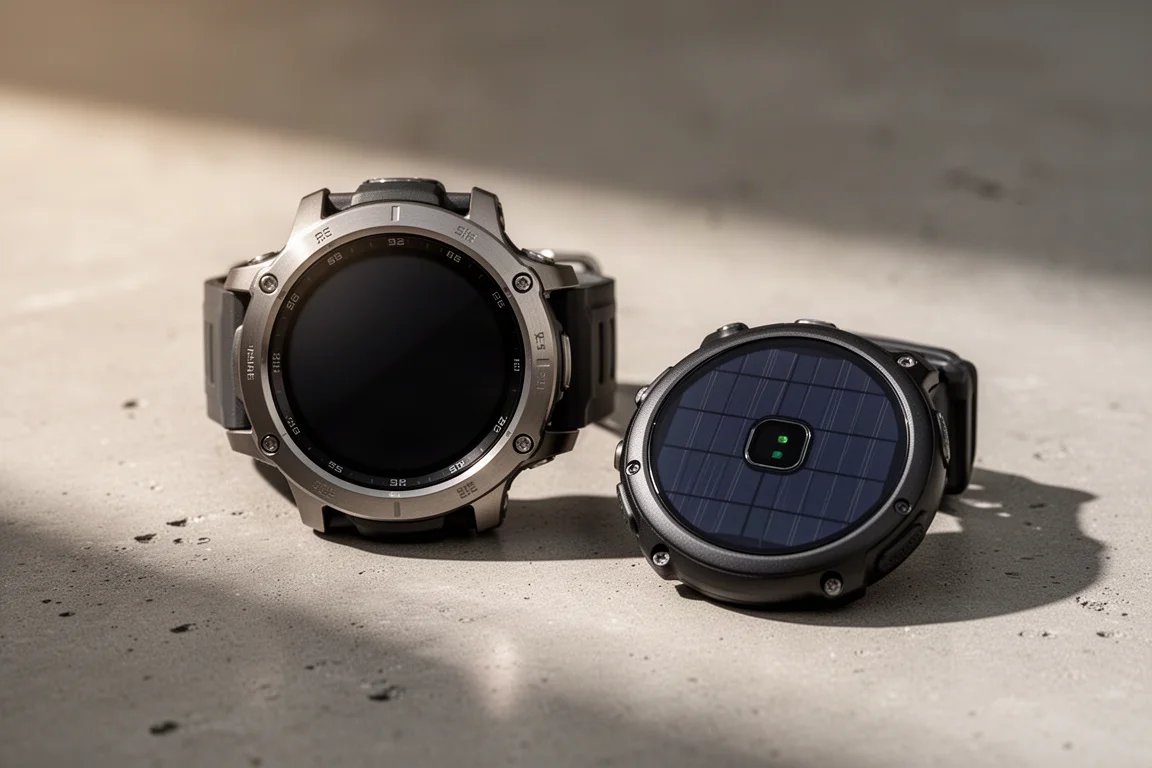
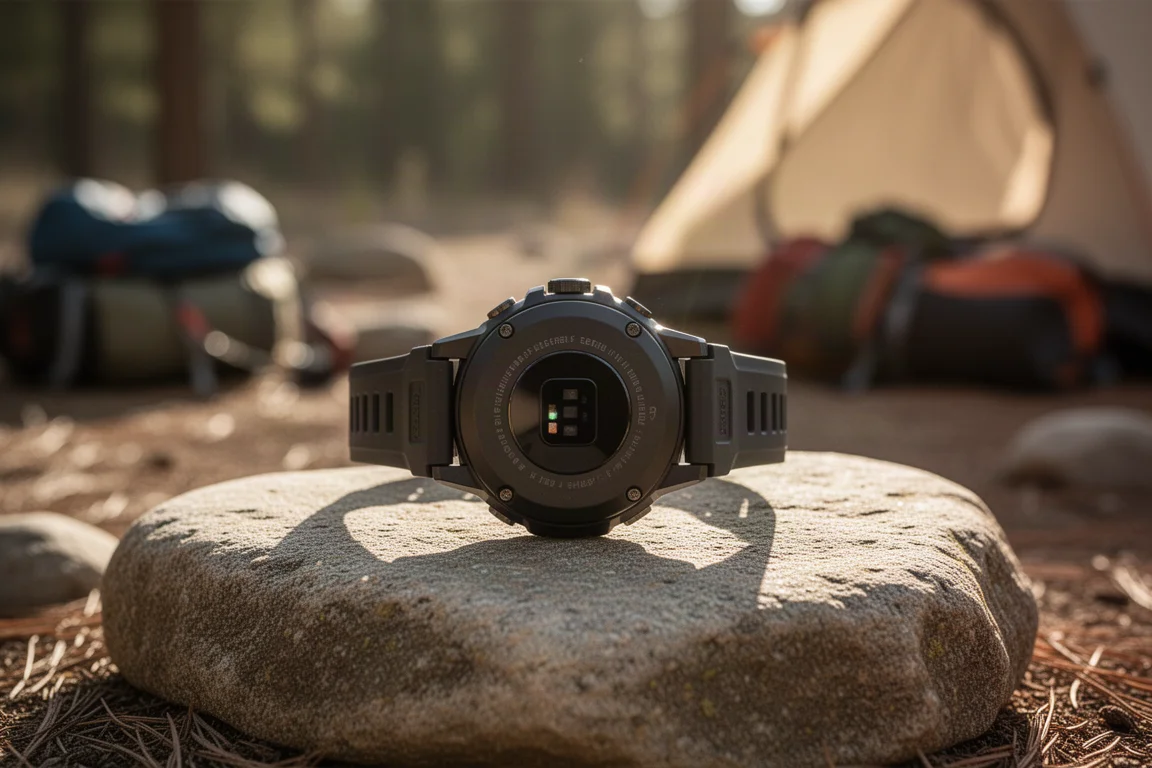
The most distinctive design element is on the back: the entire back plate is a solar charging panel, with a small cutout in the center for the heart rate sensor. Combined with the sapphire front, titanium bezel, and glass ceramic back, it should hold up well to hard use.
Battery Life Expectations
Amazfit claims up to 25 days of normal smartwatch use without solar charging, up to 34 days with the front solar panel in play, and up to 51 days if you take the watch off for about three hours a day and let the back panel work.
Here is the catch: all that solar hardware takes up internal space, so the battery is actually smaller than the Ultra 2’s. Without solar, the Ultra 2 lasts longer. Solar charging has to earn its keep by extending runtime beyond what the smaller cell could deliver alone.
How the Solar Charging Works
The front uses a solar charging ring similar to other solar watches on the market. The back panel is the genuinely clever part. The idea is that on a multi-day trek you can take the watch off while relaxing at camp, set it on the ground, and let it charge in the sun. You can also strap it to a backpack or running vest to keep tracking location and distance while it charges, though you lose wrist heart rate unless you pair an external heart rate sensor, which the watch supports.
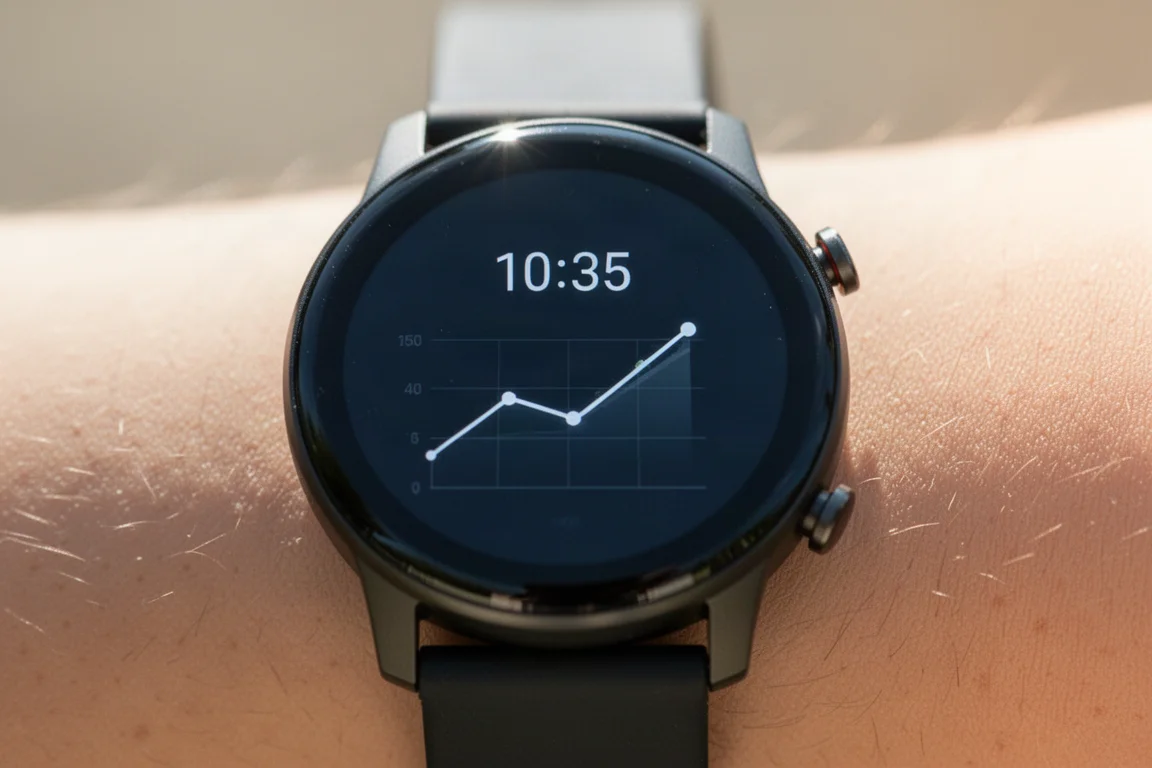
Because the back is essentially one big solar panel, this watch uses a different charging puck than other Amazfit watches, with a charger-style design that includes a small lanyard so it is less easy to lose. There is also a dedicated low-power Solar Boost mode that shuts everything down except a screen you can wake to see the time and a chart of solar charging efficiency.
Real-World Solar Test Results
Living in Colorado with plenty of sun, the conditions were close to ideal for testing. In one test, the watch started the morning at 13% battery in Solar Boost mode and sat in the sun for about five hours in mild temperatures, starting around 55 degrees and ending around 70. It gained 1%.
A second Solar Boost test at around 73 degrees saw the watch left outside after dinner, and it had charged up around 2% by the time it was collected later that evening. Without Solar Boost, in normal smartwatch mode, roughly two hours in fairly intense sun produced no measurable gain.
Temperature matters more than you might expect. In one test with intense sun and temperatures a bit over 80 degrees, the watch shut itself down after about 20 minutes as a fail-safe to prevent damage. The watch also warns you if it has been in the sun and may be warm, telling you to let it cool before wearing it, which is a sensible touch. Based on these tests, the sweet spot for charging appears to sit somewhere under 80 degrees or so. Amazfit says the watch could potentially charge from empty and turn back on via solar, but that remains untested and would likely take considerable time.
Outdoor Workout Battery Life
During outdoor workouts with the always-on display enabled, the watch used a little under 3% per hour, which works out to roughly 34.4 hours of GPS activity tracking. That was on a mostly sunny ride.
A second ride with the always-on display off fared a bit better, though with a caveat: the display was found to be on much of the time anyway. The gesture wake mode appears overly sensitive, turning the screen on with every bump in the road, which may have skewed those results.
Who This Watch Is For
Amazfit is clearly aiming this at the multi-day adventure crowd, people who need a watch that survives days of continuous activity tracking. The solar charging does help delay discharge and can add charge in Solar Boost mode, though the gains observed so far have been modest.

The honest framing: this is on par with Garmin’s Fenix solar models, which delay discharge rather than meaningfully recharge, and well short of what the monochrome Instinct Solar achieves. Even with Amazfit’s strong AMOLED battery efficiency elsewhere, the effectiveness here sits on the marginal end of things. In some ways this is a tech showcase, similar to the Fenix 8 Pro MicroLED: proof that AMOLED plus solar can exist, even if the benefits are not yet compelling. The back-panel idea is genuinely out-of-the-box thinking, and Amazfit deserves real credit for it, even while questions remain about the compromises, including potential overheating in hotter conditions and the need for fairly ideal conditions for solar to make a real difference, especially when the Ultra 2 already offers longer battery life without solar.
Buying Advice
If you regularly go on multi-day expeditions where charging is impossible and conditions are sunny and mild, the Dual Solar’s solar hardware could add meaningful runtime when used deliberately in Solar Boost mode. Pair it with an external heart rate sensor if you plan to strap it to a pack while it charges.
If your use is more everyday, the T-Rex Ultra 2 remains the safer pick: it costs $100 less, offers a slightly larger display, and lasts longer per charge since its battery is not sacrificed for solar hardware. At $649, the Dual Solar is best bought by buyers who genuinely value the solar concept rather than raw battery life.
Conclusion
The Amazfit T-Rex Dual Solar is a fascinating first: AMOLED and solar charging in one watch, plus a full rear solar panel that no competitor offers. Early testing suggests the real-world gains are modest and conditions-sensitive, making this more showcase than game-changer for now. But the core engineering ideas are clever and worth watching, and for the right multi-day adventurer, the extra days of runtime could be exactly what they need.
Product link
View more details for Amazfit T-Rex Dual Solar
This product is mentioned in the review. Check the specifications, options, and compatibility before buying.
View more details for Amazfit T-Rex Dual SolarFurther reading
Related Reviews
Smartwatches
Best Budget Smartwatches 2026: Five Affordable Options That Actually Work
Five budget smartwatches tested for real daily use. From entry-level options to premium features at fraction of the cost, here's what actually delivers.
Smartwatches
Best Smartwatches on AliExpress 2026: Five Practical Options for Different Needs
Five smartwatches with strong customer feedback and competitive pricing, each suited to different priorities: premium design, battery life, outdoor durability, advanced health tracking, and sports versatility.
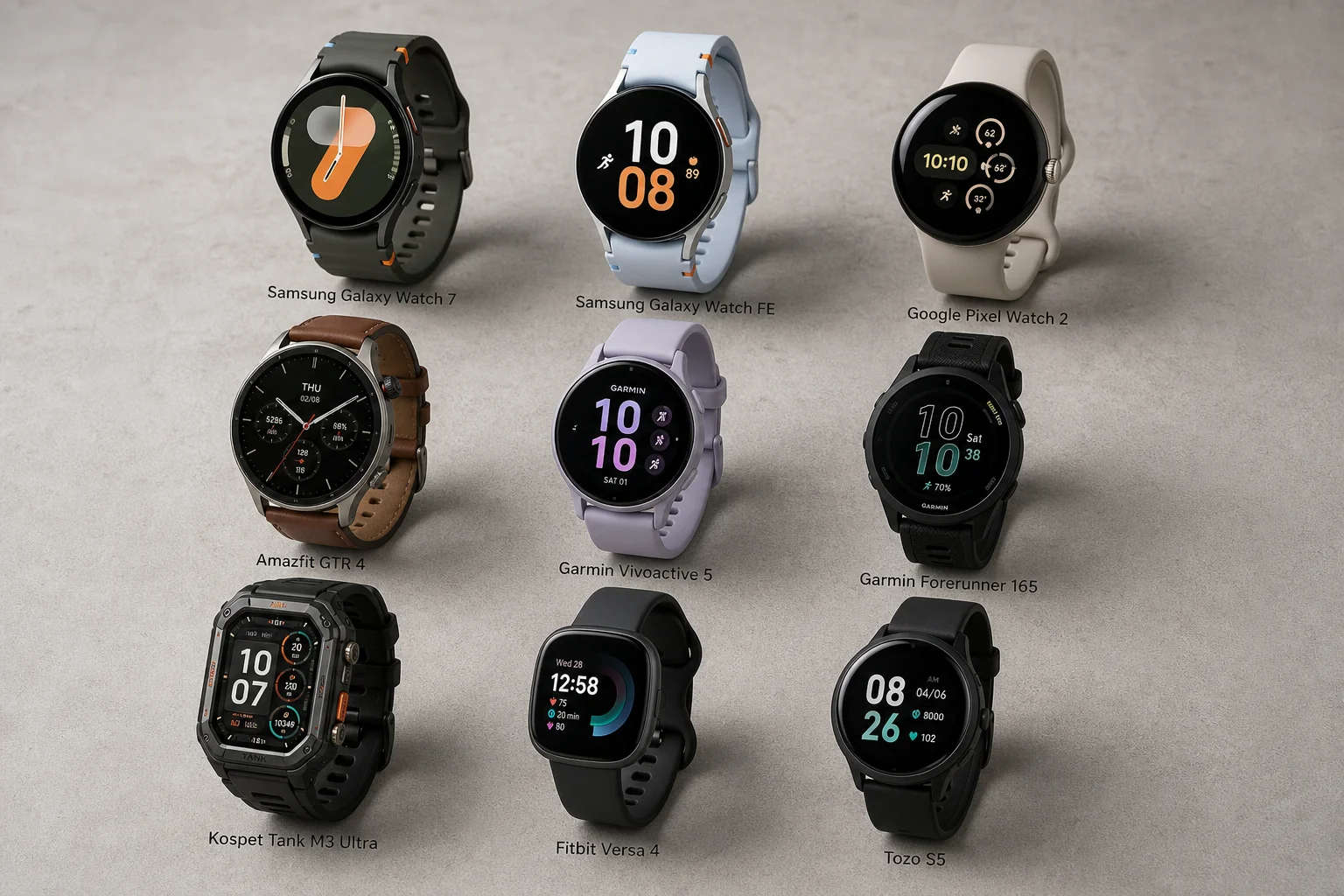
Smartwatches
Best Smartwatches Under $300: 9 Practical Options for Every Need
A curated selection of nine smartwatches under $300, each excelling in health tracking, durability, battery life, or fitness features. Find the right match for your lifestyle.