Truck Accessories
Air Lift Ultimate 5000 Review: A Practical Fix for Trailer Squat
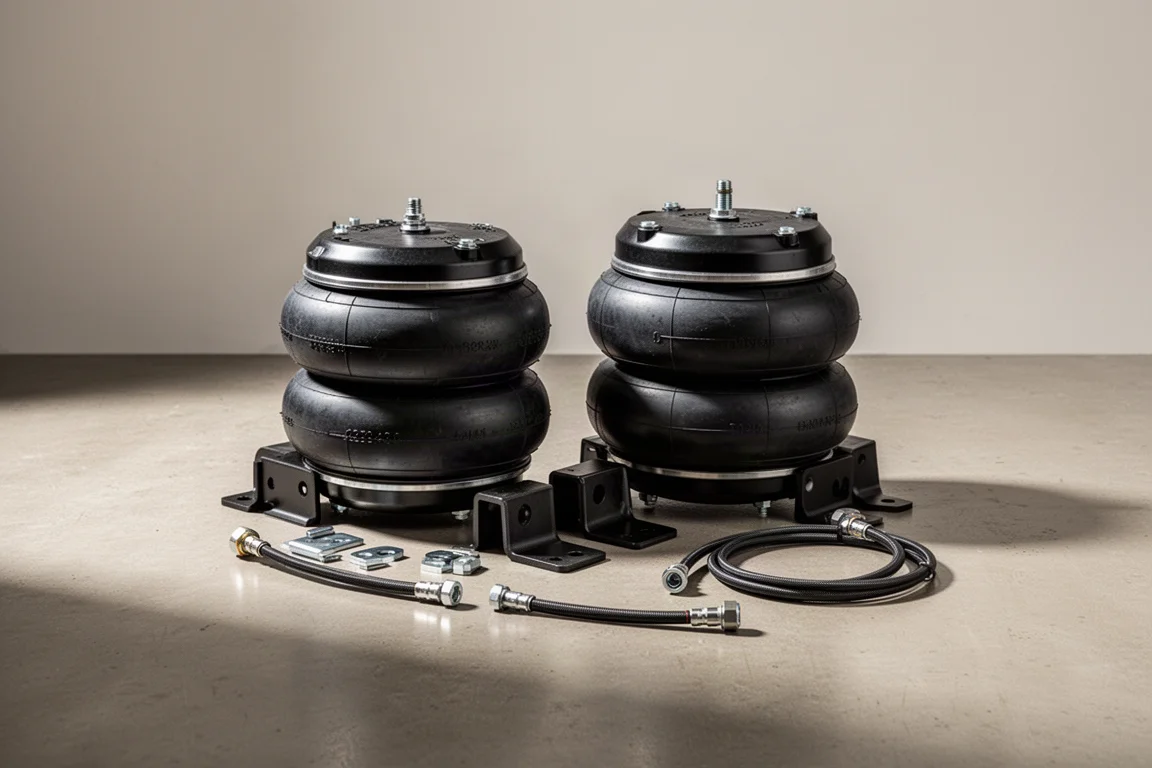
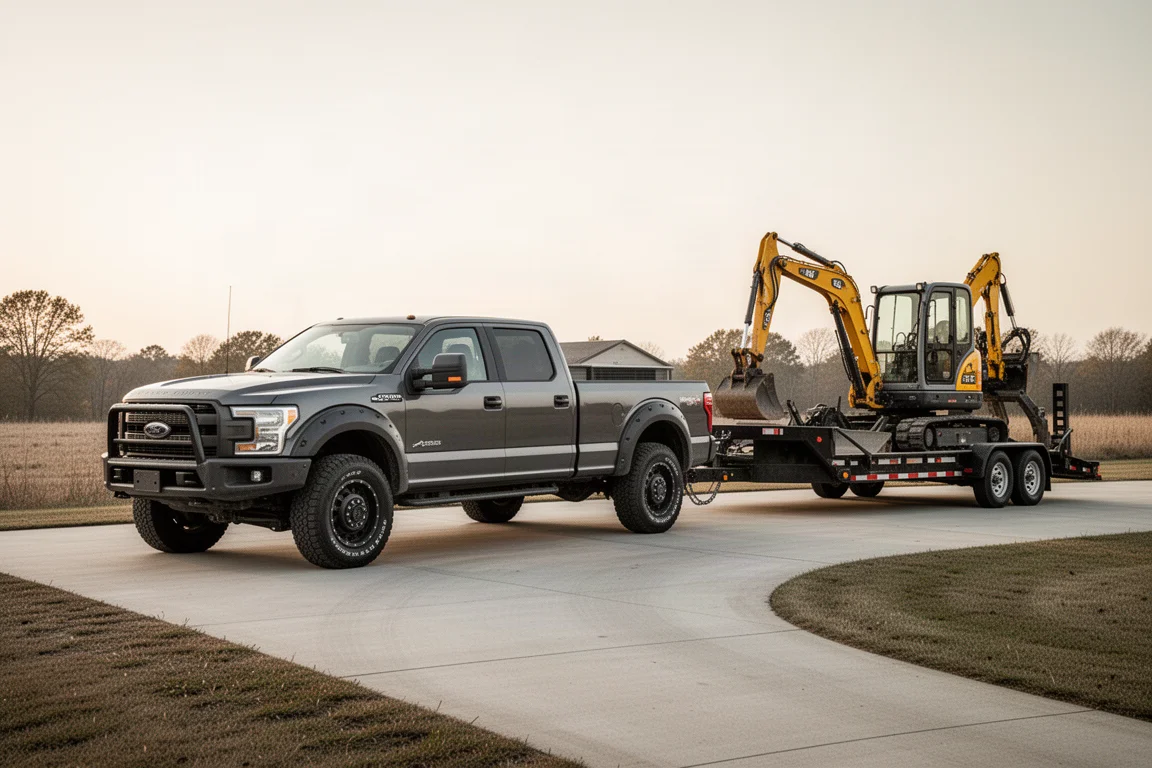
Installed on a 2026 Ford F-Series with the plow package, the Air Lift Ultimate 5000 keeps the truck level under trailer load without giving up the stock suspension.
Introduction
If you tow regularly with a heavy-duty pickup, you have probably met the problem before: the truck looks perfectly level unloaded, then squats dramatically the moment a trailer is hooked up. This review walks through one practical solution, the Air Lift Ultimate 5000 air spring kit, installed on a 2026 Ford F-Series truck with the snowplow prep package, and explains why it was chosen over several common alternatives.
The Problem: Trailer Squat on a Level Truck
The truck in question sits almost perfectly level when unloaded, with no leveling kit and everything stock apart from upgraded tires. Measurements to the bottom of the fender well showed roughly 43 and a quarter inches at the rear and 43 inches at the front, so there is very little rake to begin with.
Hooking up an empty trailer changes that quickly. With the trailer dropped onto the hitch, the rear measurement fell to about 41 and three-quarter inches while the front rose to nearly 43 and a half. That is a significant drop, and the trailer was completely empty.
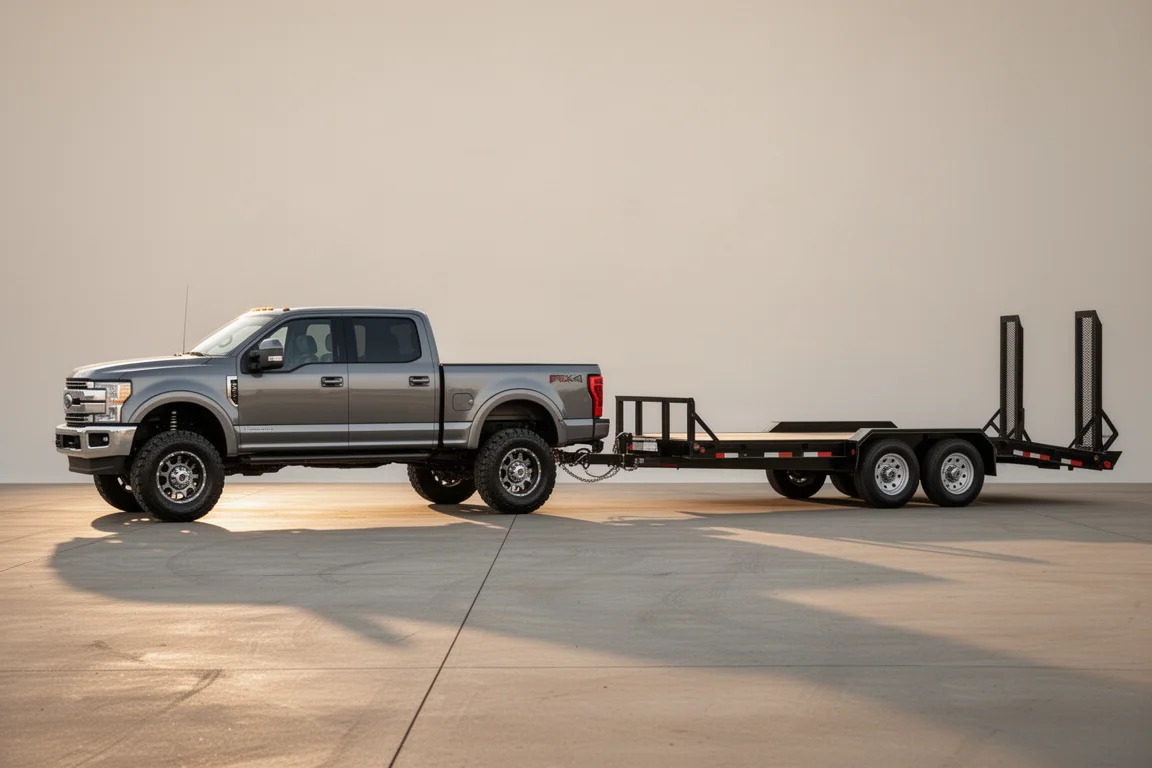
The goals for any fix were clear: restore level ride height under load, keep the truck comfortable over long distances, avoid adding road vibration, and stay virtually invisible when driving unloaded.
Alternatives That Did Not Make the Cut
Several popular options were considered and passed over, each for a specific reason.
Sumo Springs were one of the closest contenders. The deciding factors were that they become incredibly stiff and hard in winter cold, and they do nothing to help keep the front end of the truck up. They also have to be tuned for the trailer, which can compromise the ride when unloaded.
Timbren SES bump stops reportedly ride better than they used to, but once compressed they effectively connect the frame and axle directly. Any road vibration passes straight through, and the ride deteriorates noticeably when switching between asphalt and concrete.
Air Lift LoadLifter-style kits that require removing the overload spring were also considered. The hardware seems well put together, but removing the overload spring is a real trade-off. If the air system ever failed far from home, the truck would be left without that extra support, and that risk was not acceptable.
A Simpler Air Line Setup
The installation deliberately keeps things simple. Rather than running two sets of air hoses, the kit uses a single line with a cheap tee fitting and a pair of quarter-turn valves, one tucked slightly higher than the other. With one inflator, both bags can be filled together; close one valve and the bags are separated when you want independent pressures, such as in windy conditions or with uneven loads.
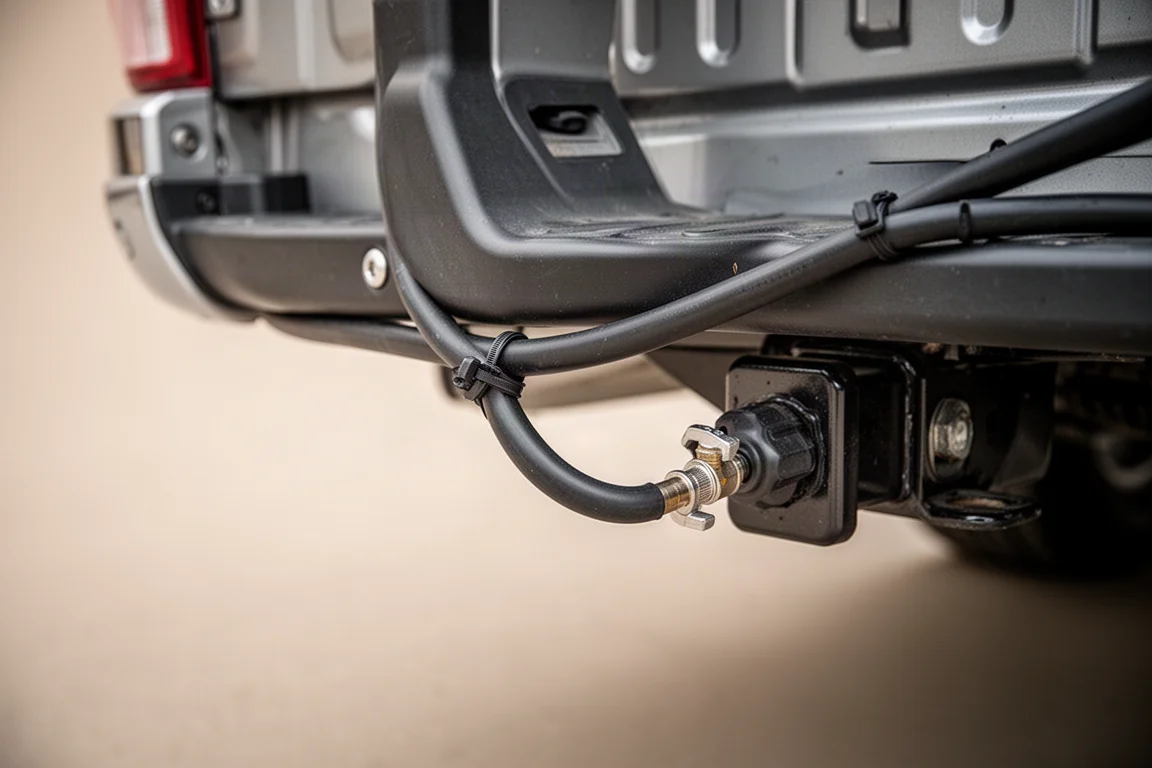
A small Firestone zip-tie bracket for the receiver hitch, purchased separately for around 11 dollars, keeps the plumbing tidy. Total added hardware cost was roughly 20 dollars beyond the kit itself. For filling, a cordless inflator works well because these bags take very little air. Pressures above about 50 psi make the ride worse, so most fills land at or below that figure. A compressor system was deliberately skipped, since onboard compressor motors are reported to fail fairly often and may need rebuilding every year or year and a half.
Running Pressures and Real-World Results
With the same empty trailer hooked up again, 20 psi in the bags brought the rear up to about 42 and a half inches, a clear improvement over the sagged stock height.
Adding a compact excavator to the trailer dropped the truck only about an inch from stock, landing at 42 and a quarter inches at 30 psi. Bumping to 35 and then 40 psi changed little; 40 psi at 42 and a half inches looks like the sweet spot, and the truck appears essentially level across its length.
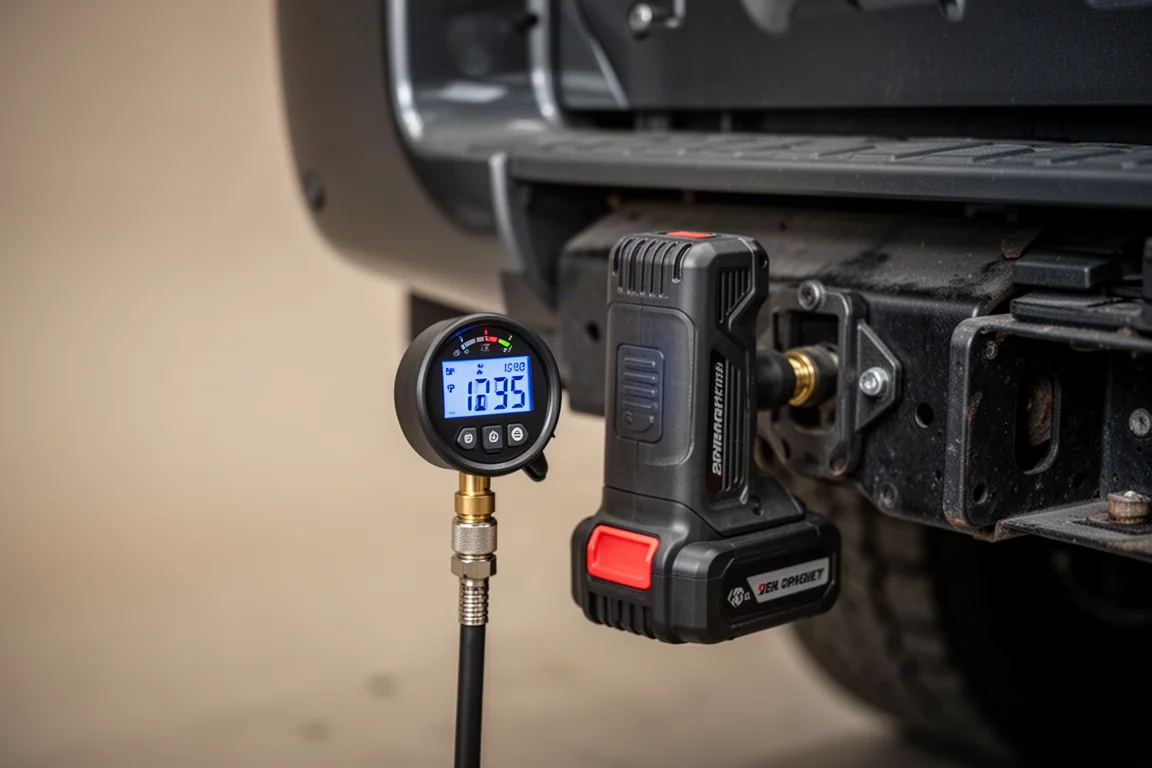
Because the air springs support the frame without replacing any stock suspension component, the truck still rides normally when the bags are at low pressure or empty, which was one of the key requirements.
Why the Ultimate 5000 Won Out
Every option in this category will level the truck to a similar degree. The real difference is how it rides and what happens if something fails.
The Ultimate 5000 keeps the factory overload spring in place, which means the truck retains its stock suspension backup even if the air system loses pressure. The trade-off is the mounting design: the bag pushes down on a lower mounting arm rather than directly on the top of the spring pack, and that arm can twist slightly under load. Kits that press on the top of the spring are arguably cleaner, but they require removing the overload spring on trucks that have one.
For owners of an F-350 or a heavy-duty F-250 with overload springs, this kit makes sense precisely because it leaves the factory suspension intact. If your truck has no overload spring, the top-mount style kits become the more straightforward choice.
Conclusion
For a heavy-duty truck that squats under trailer load, the Air Lift Ultimate 5000 offers a balanced answer: it restores a level stance, rides well unloaded, keeps the overload spring for backup, and pairs neatly with a simple single-line inflation setup. The main caveats are the lower mounting arm design and the need to stay under roughly 50 psi for a comfortable ride. For anyone towing an equipment trailer with a plow-package truck, it is a solution worth short-listing.
Product link
View more details for Air Lift Ultimate 5000
This product is mentioned in the review. Check the specifications, options, and compatibility before buying.
View more details for Air Lift Ultimate 5000Further reading
Related Reviews
Truck Accessories
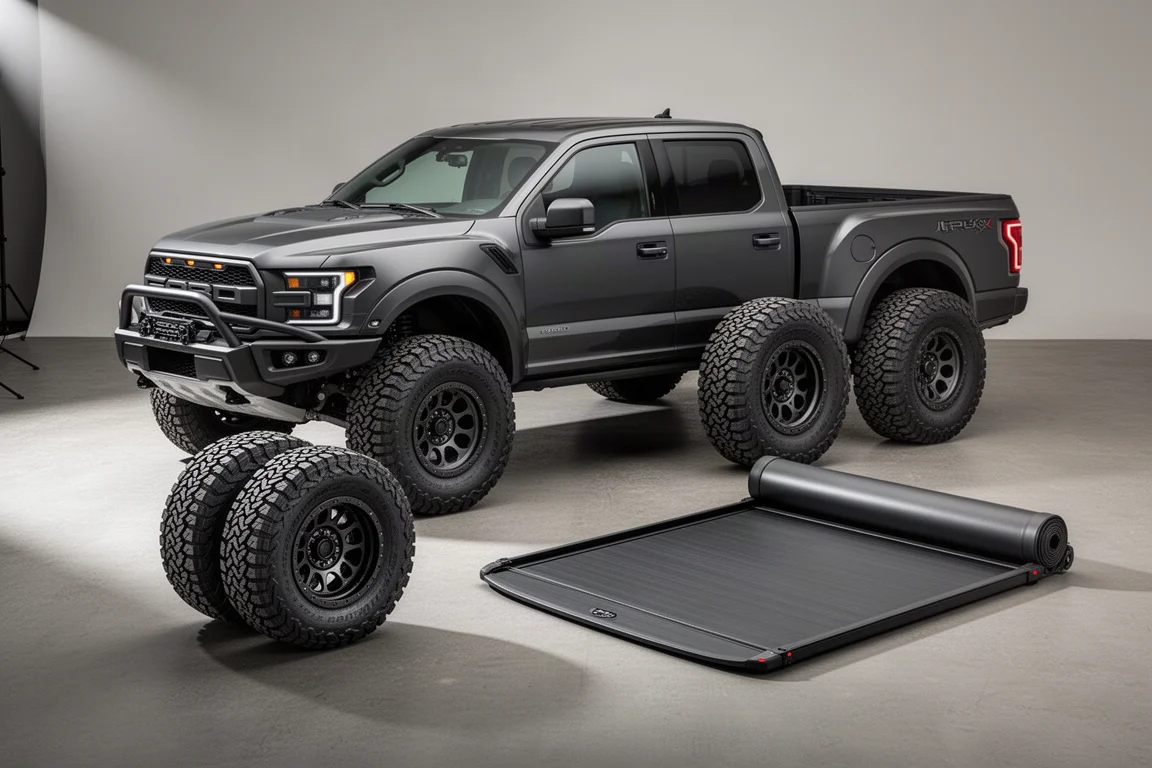
5 Smart Upgrades for a 2026 Ford F350 XL STX: Tires, Bed Cover, and More
A plow-and-tow F350 XL STX gets five practical upgrades, from Toyo Open Country RT Trail tires to a Retrax bed cover and Husky floor mats.
Truck Accessories
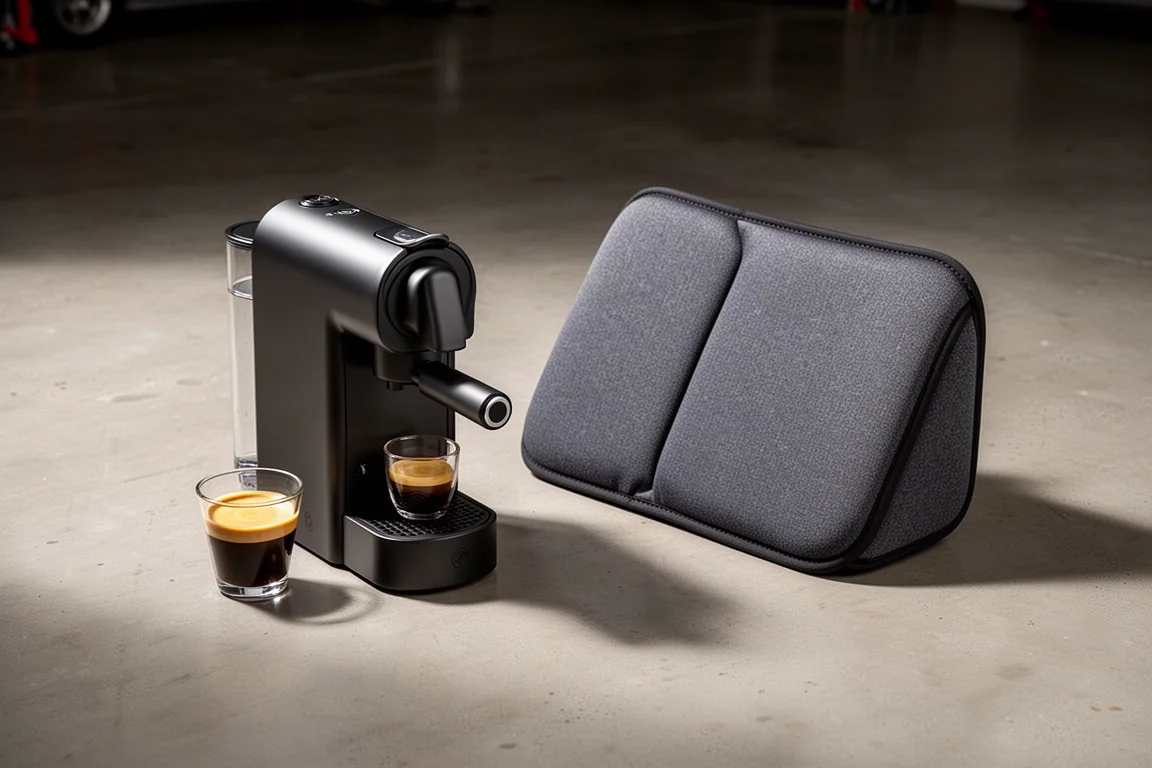
Cheap Truck Accessories Tested: Outland Nano Espresso Machine and Drop Stop Seat Gap Filler
We put two budget truck accessories through real-world testing to see if the low prices actually hold up in daily use.
Truck Accessories
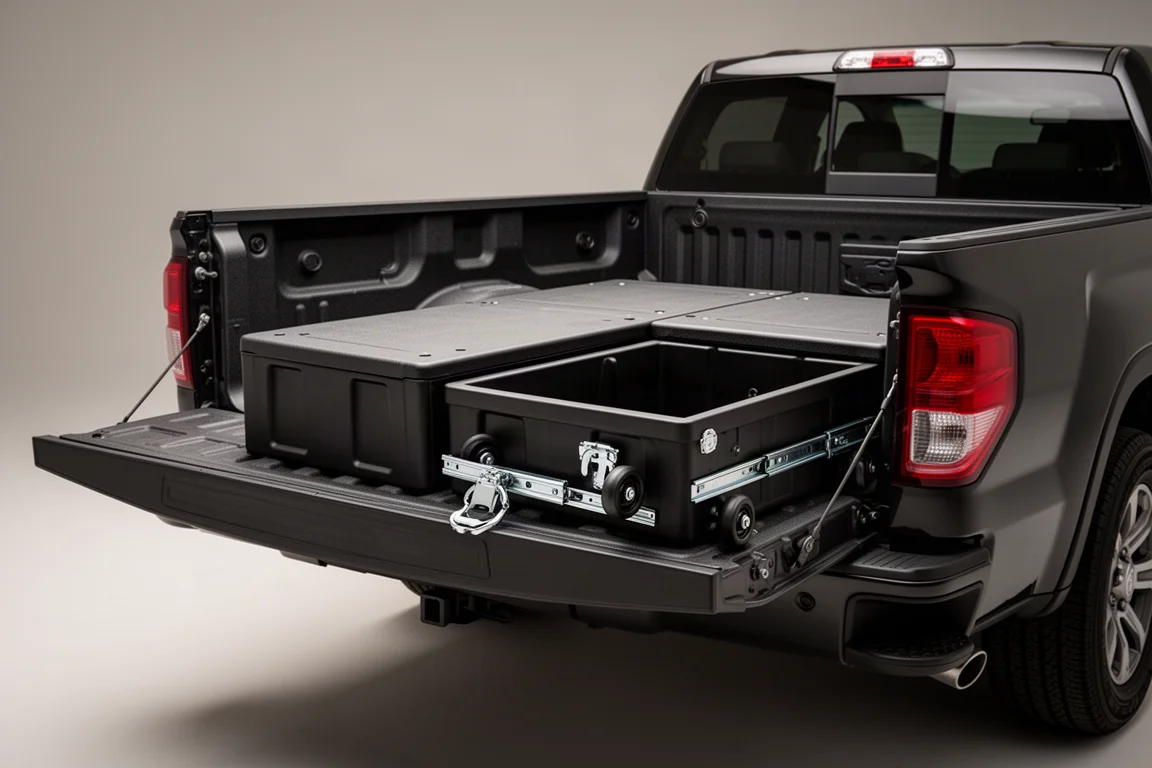
Decked Drawer System Review: Truck Bed Storage That Keeps Your Bed Usable
Installed and tested in a 2017 F-150, the Decked Drawer System adds secure drawer storage while keeping up to 2,000 lb of cargo capacity on top.