Flashlights
Acebeam X75 Review: The Best High-Performance Flashlight You Can Buy Right Now
A deep dive into the Acebeam X75, a 67,000-lumen flagship torch that balances output, runtime, build quality, and everyday usability better than anything else in its class.
Introduction
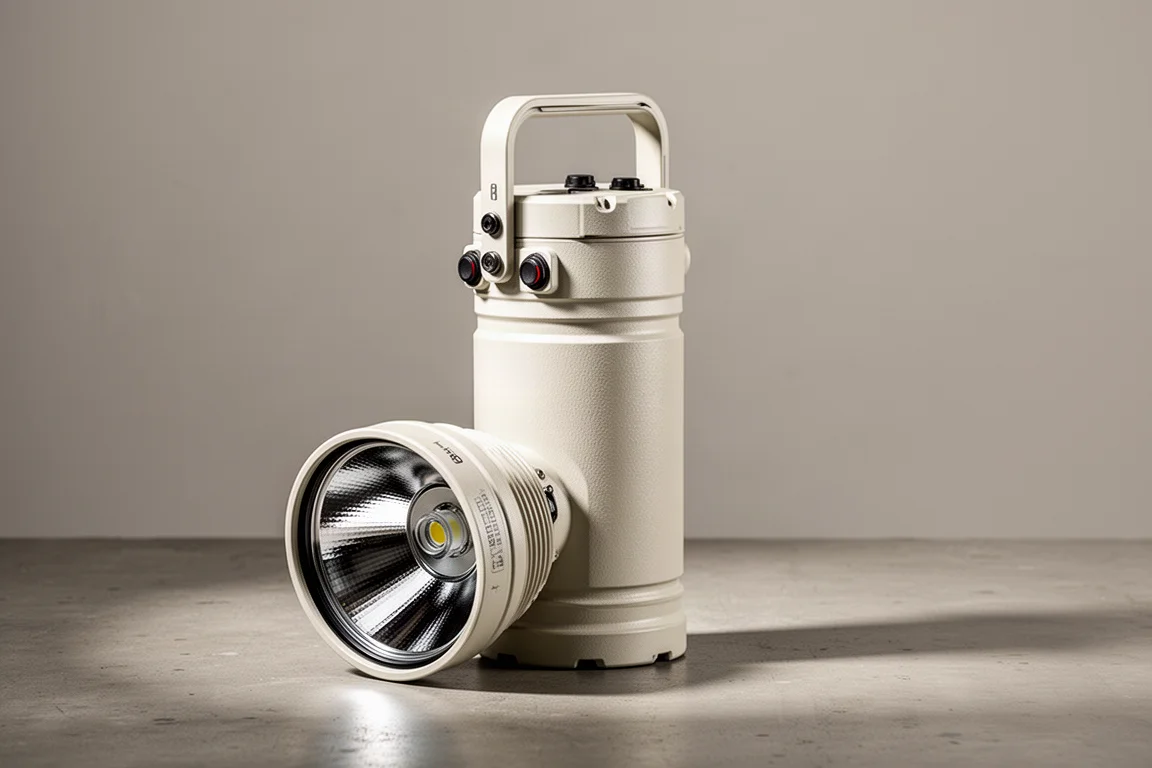
Very high output flashlights are a crowded field right now, but one model stands out as the best all-rounder you can buy today: the Acebeam X75. It is the flagship of Acebeam’s range and the only model they make above the 50,000-lumen level, which means the company has poured everything into getting this one light right. That focus shows. Rather than chasing raw numbers, the X75 delivers the most usable balance of brightness, range, runtime, and build quality in this class, and that is exactly what you should want from a light you actually plan to carry and use.
Build Quality and Design
The first thing you notice is the off-white finish. It uses micro-arc oxidization, designed to be more resistant to wear and corrosion than the black hard anodized finish used on most lights. You pay more for this finish, and it is only available with one of the LED options, but the result is striking: combined with the detailed design, it looks like something from the future.
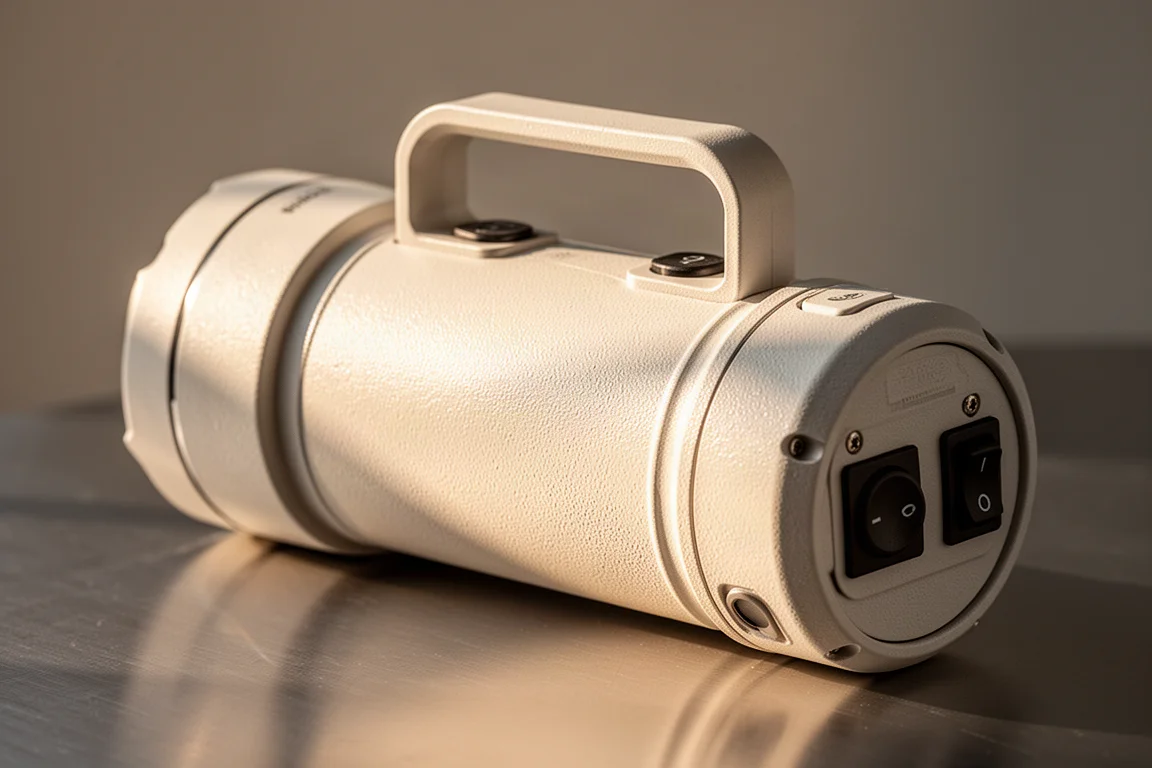
Quality is immediately evident. The light is very solid, some might say heavy, at 1,240 grams or 44 ounces, and it feels built to last. On the body there is an indicator light showing battery level, changing from green to red below 30 percent and flashing red below 10 percent. A quarter-inch tripod socket on the bottom lets you mount or secure the light if needed.
The handle carries two switches, a main switch and an auxiliary switch, plus a mechanical lockout switch that prevents accidental activation in a bag. This matters more than it sounds: a light this powerful gets hot enough that an unintended activation could be dangerous. The lockout is positive, quick, and intuitive to operate with no manual required. The handle itself is nicely balanced, keeps your hand away from the heat at the front, and makes the light comfortable to carry for extended periods.
LED Options and Beam Character
At the business end there are 12 XHP70 LEDs with three configurations to choose from. The 80,000-lumen version produces a 6,500K white light with a range of 1,150 meters. The warmer, more natural 5,000K option drops maximum output to 75,000 lumens and range to 1,082 meters. Finally, the version with the third-generation XHP70.3 LED has a lower maximum output of 67,000 lumens but a longer range at 1,306 meters. The micro-arc oxidization finish is only available with this last option, which is the model reviewed here.
The reflectors are not particularly deep or smooth, which points to more of a flood than a beam. That suits the light’s typical uses: search and rescue and exploration, where covering a wide area matters more than throwing a pencil-thin spot.
Cooling System
Behind the LEDs sits a copper heatsink and a cooling fan. All very high power lights need active cooling because they heat up rapidly at high outputs. The fan operates automatically based on temperature, though it can be manually stopped to keep things quiet; the trade-off is that output drops faster without cooling. Air is drawn in and blown out after passing over the heatsink. Undo four screws and the handle, which carries the fan unit, detaches so the fan can be replaced, and Acebeam includes a spare fan in the box.
Charging and Power Supply
The power supply at the rear comes as a sealed unit, so there is no swapping individual batteries. That may disappoint some, but at these power levels spring contacts are a liability and permanent connections make sense. Inside are four 21700 lithium-ion cells mounted to a 4,250 milliamp-hour, 14.4-volt battery unit. The battery does detach for replacement, and carrying a spare gives you extended operation.
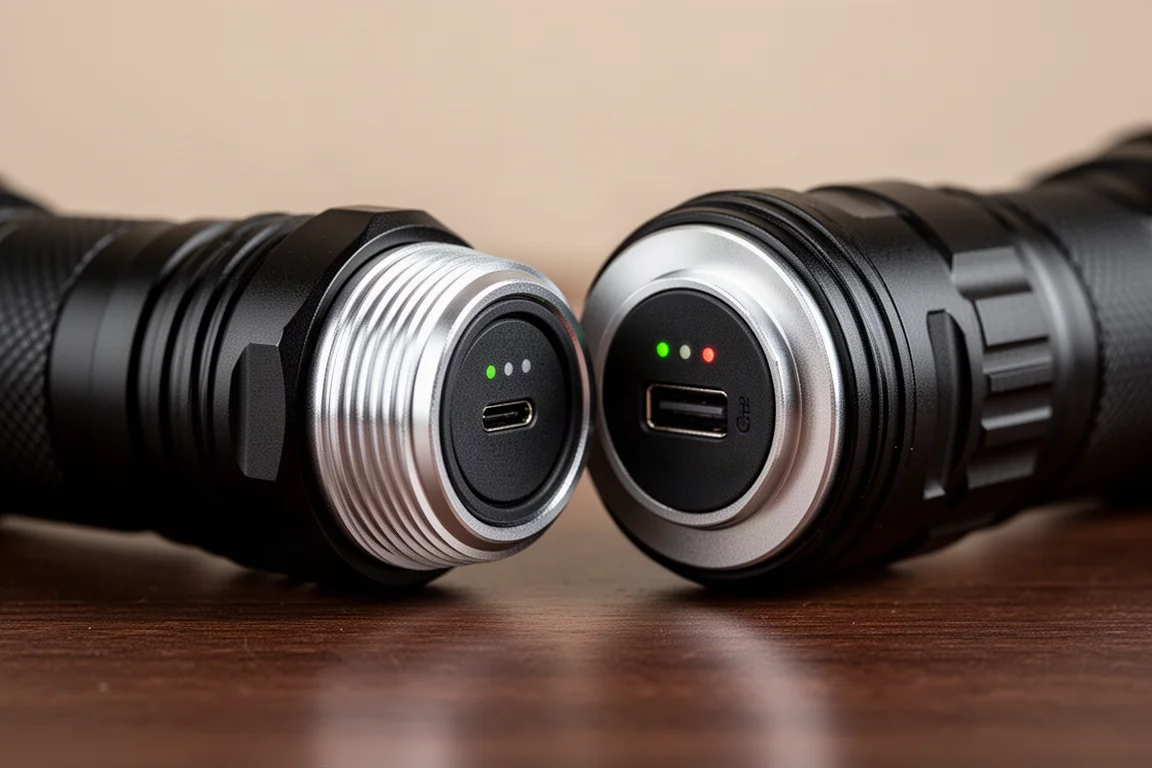
Unscrew the tail cap to reveal a USB-C fast charge port. The light fully charges in just one hour with a 100W charger, or one and a half hours with a 65W charger. Indicator lights show fast charging in blue and go from red to green when complete. The USB-C port is bi-directional, so the light can double as a power bank to charge your devices in an emergency.
Performance and Runtime
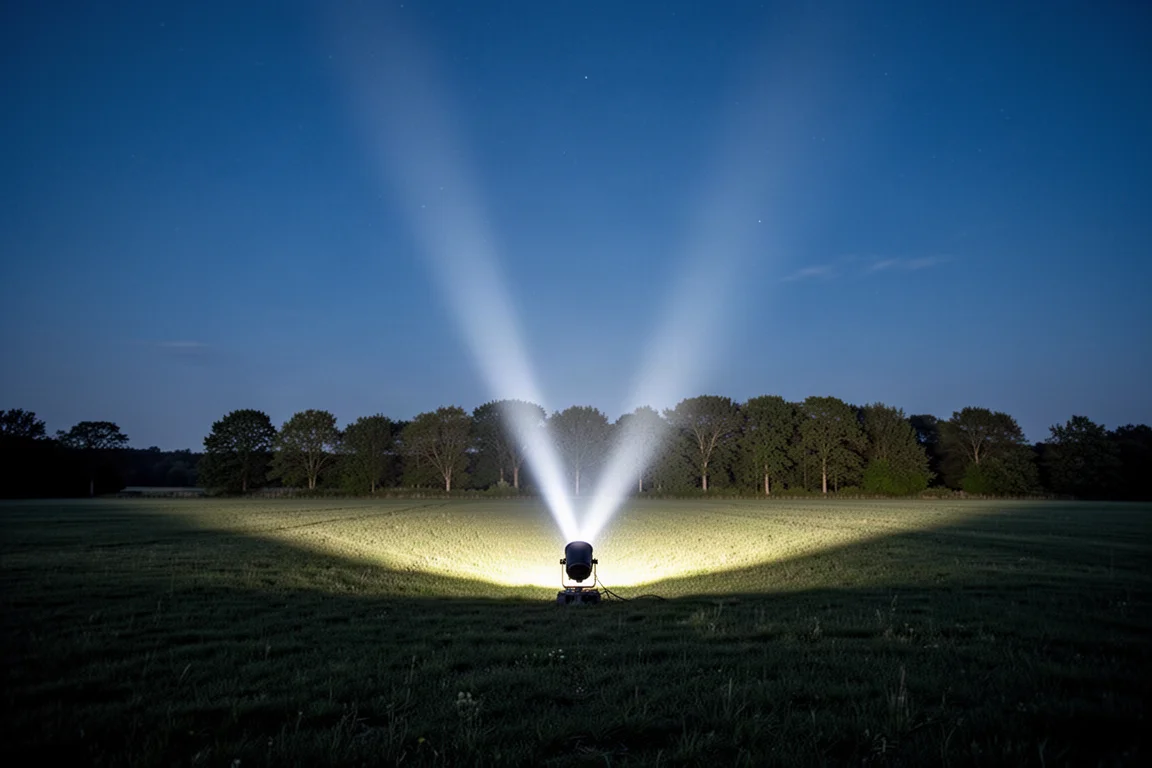
There are four main levels, low, mid one, mid two, and high, plus an ultra-low mode and the headline turbo mode. For this model those levels are 2,000, 5,000, 10,000, and 21,000 lumens, with ultra-low at 900 lumens and turbo at 67,000 lumens. Let’s be honest: a light like this is overkill for close-proximity use, but that is not its purpose. Pointed down a football field, with trees roughly 100 meters or 330 feet away at the far end, it lights up everything in between and beyond.
Runtimes are where the X75 quietly wins the argument. The 900-lumen ultra-low mode runs for over eight hours, which will get you home if you are lost at night. You also get over five hours at 2,000 lumens, over two hours at 5,000 lumens, and about an hour at a very bright 10,000 lumens.
The high mode is particularly impressive. Acebeam states its booster circuit provides 20,000 lumens for 30 minutes, and independent testing has shown the X75 on 21,000-lumen mode still holding around 16,000 lumens nearly 30 minutes in. That is very hard for any competing light to match in real-world use.
Operation and Interface
Operation is simple. Unlock, then single-press the main switch to turn on at the last used level. Press and hold to step through the four main levels, double-press for turbo, triple-press for strobe, and press and hold from off for ultra-low, which is useful to avoid blinding everyone when you first switch on.
The auxiliary switch can disable the fan, but its primary use is momentary turbo operation. Choose your level with the main switch, then instantly blast to turbo for a few seconds and release to return where you were. Direct access to ultra-low, last-used, turbo, and strobe is exactly the interface you want.
Safety, Weatherproofing, and Accessories
Despite the internal fan, the X75 carries an IP68 rating: fully dustproof and waterproof to the point it can be submerged to two meters and keep working. Just do not drop a red-hot light into water. In practical terms, it should keep running in heavy rain or rough seas, which is important if you are searching for someone or navigating home in a storm.
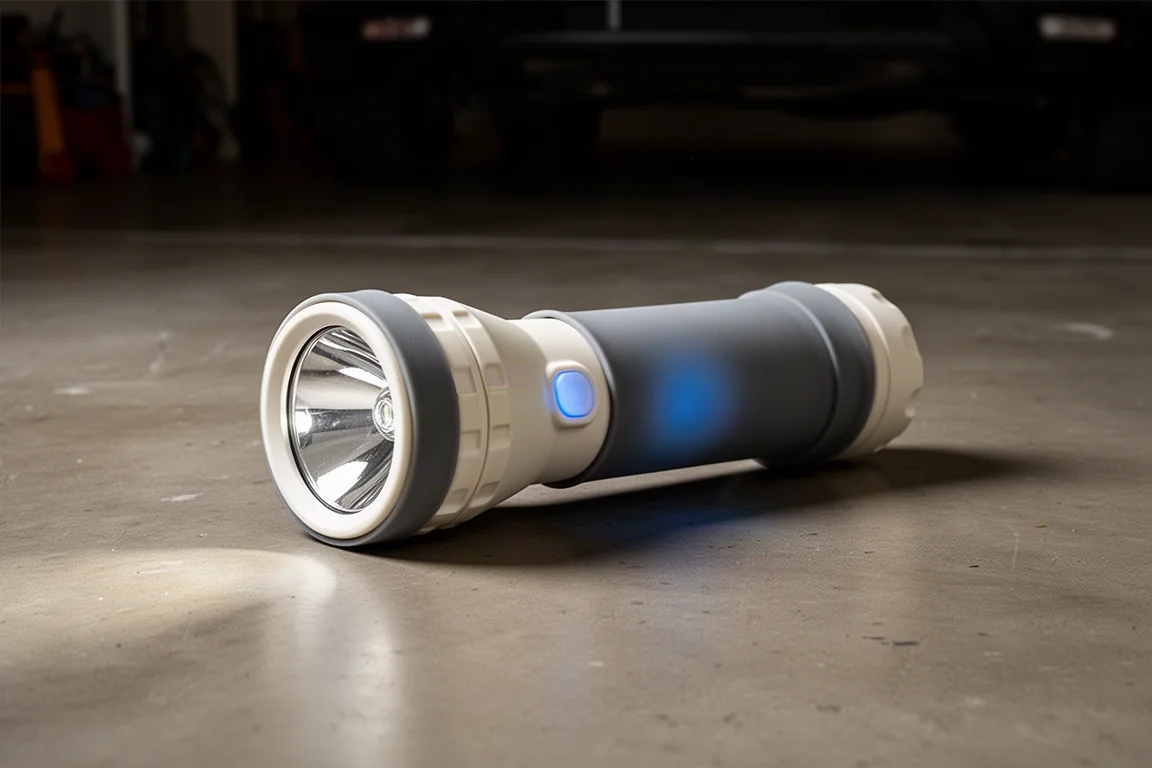
In the box you also get a silicone sleeve that protects against knocks and bumps. It changes color from grey to blue when the light’s temperature exceeds 55 degrees Centigrade or 131 degrees Fahrenheit, presumably to warn you not to touch it.
How It Compares with the Competition
Two companies dominate this market: Acebeam and Imalent. Acebeam puts all its eggs in the X75 basket above 50,000 lumens, while Imalent offers five options in that category, some bigger and brighter. Here is how the nearest rivals stack up.
Imalent MS12 Mini
The MS12 Mini is the nearest competitor: same battery capacity, same 12 LEDs of the same type, and the same price. But the Acebeam is brighter, has a longer range, and better battery life at comparable levels. The Imalent’s charging takes twice as long and uses an old-school round charging plug with an awkward proprietary mains adapter. It has no handle, and its switch can be genuinely hard to find in the dark, especially with gloves on. Its IP56 rating offers less water protection, and the interface is less intuitive: strobe requires entering turbo first with a double press and then another double press, and lockout needs four presses that could easily be forgotten or frustrate an unfamiliar user. The maintained output does not compare either. In its favor, the MS12 Mini is much smaller and lighter, and it has a moonlight mode the X75 lacks, so it is worth a look if compactness matters most. All things considered, though, the X75 is the stronger package.
Imalent MS18
The MS18 can output 100,000 lumens against the X75’s 67,000. It is clearly brighter and more powerful, although less so than you might expect: physics tells us light must deliver four times the power to appear just twice as bright to the human eye, so the jump from 67,000 to 100,000 lumens has only a moderate visual benefit. The MS18’s size, however, cannot be ignored. For practical usability that is a deal-breaker, not to mention its much higher price and the same interface and charging issues seen on the MS12 Mini.
Imalent SR32
Imalent has just released the SR32, and at 120,000 lumens maximum output it is the most powerful flashlight in the world. It addresses some criticisms of the company’s other lights, introducing USB-C charging for the first time in a light like this. But it is massive, weighing over two kilograms. If raw power above all else is your goal, this is the one, but it pushes well past what most people would want to carry and use.
Buying Advice
The idea of the best powerful flashlight is not the brightest one, or the one with the furthest range or longest duration, but the most usable: the best balance of everything, the one you would want to own and have with you in real life. Right now that title goes to the X75. On price, it is not cheap, but it is in line with the competition: starting around 400 pounds or dollars and rising to about 475 depending on the LED option and finish.
Conclusion
The Acebeam X75 is not the brightest flashlight in the world, and that is precisely why it is the best. With up to 80,000 lumens across LED variants, over eight hours of usable runtime, one-hour USB-C fast charging, IP68 waterproofing, a genuinely thoughtful interface, and a build quality that feels made to last, it outbalances every rival in this class. If you want maximum output at any cost, the Imalent SR32 or MS18 will out-flash it on a spec sheet. If you want the most powerful flashlight you will actually enjoy owning and using, the X75 is the one to buy.
Product link
View more details for Acebeam X75
This product is mentioned in the review. Check the specifications, options, and compatibility before buying.
View more details for Acebeam X75Further reading
Related Reviews
Flashlights
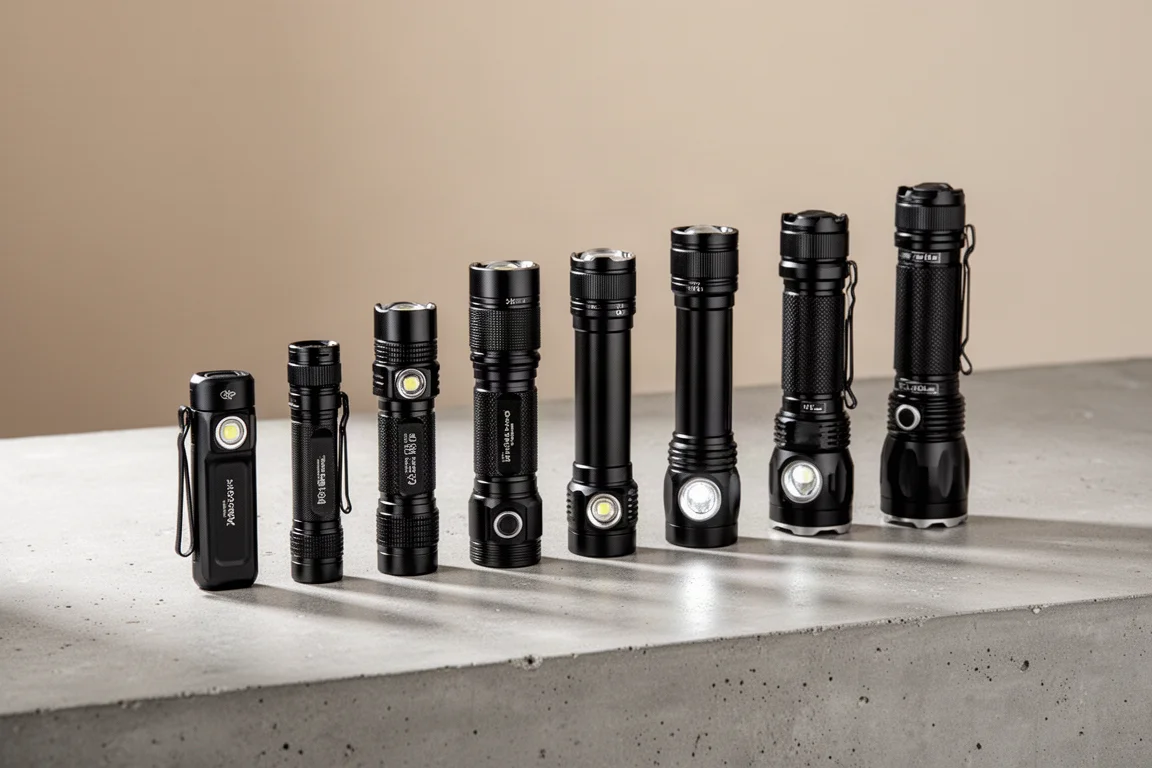
Best Flashlights 2026: Brightness, Battery, and Value Compared
We tested 18 flashlights across a wide price range to find the best performers in brightness, battery life, and durability.
Flashlights
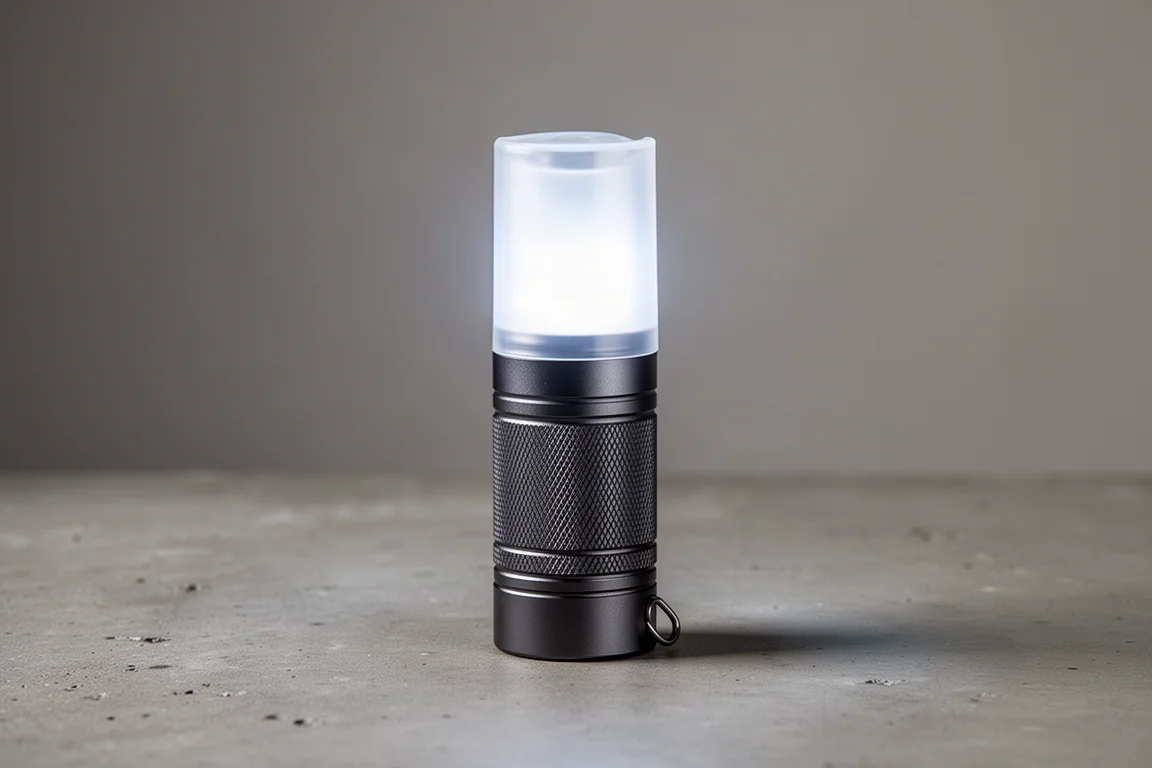
Nitecore LA10 Review: A Tiny 2-in-1 Lantern That Nails the Basics
The Nitecore LA10 pairs a pocket-sized lantern with a single AA battery, a magnetic tail cap and a five-year warranty. Here is where it shines and where it struggles.
Flashlights
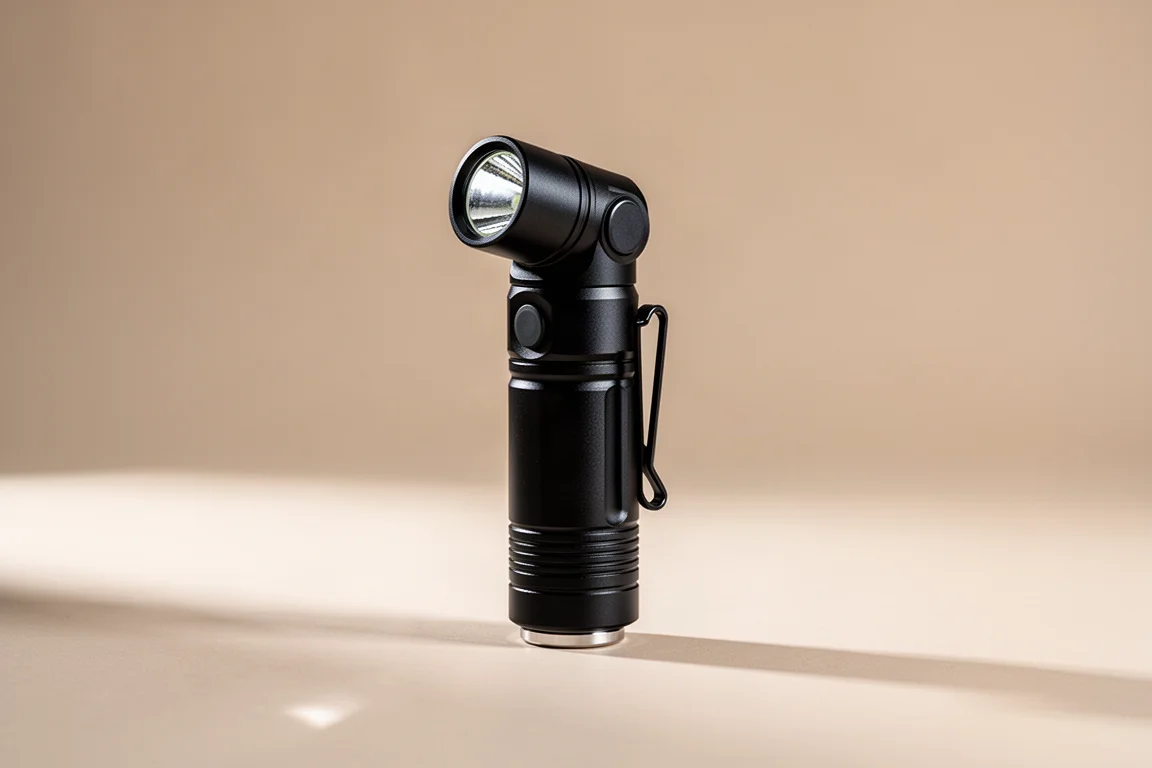
Wuben G5 Review: A Compact Everyday Carry Flashlight
The Wuben G5 is a small, rechargeable flashlight with a pivoting head, magnetic base, and color modes. Here is how it performs as an everyday carry light.