Kitchen Knives
6-Inch vs 8-Inch Chef's Knife: Which Size Should You Buy?
A practical comparison of 6-inch and 8-inch chef's knives covering versatility, weight, maneuverability, and price, featuring the Shun Classic and Wusthof Classic.
Introduction
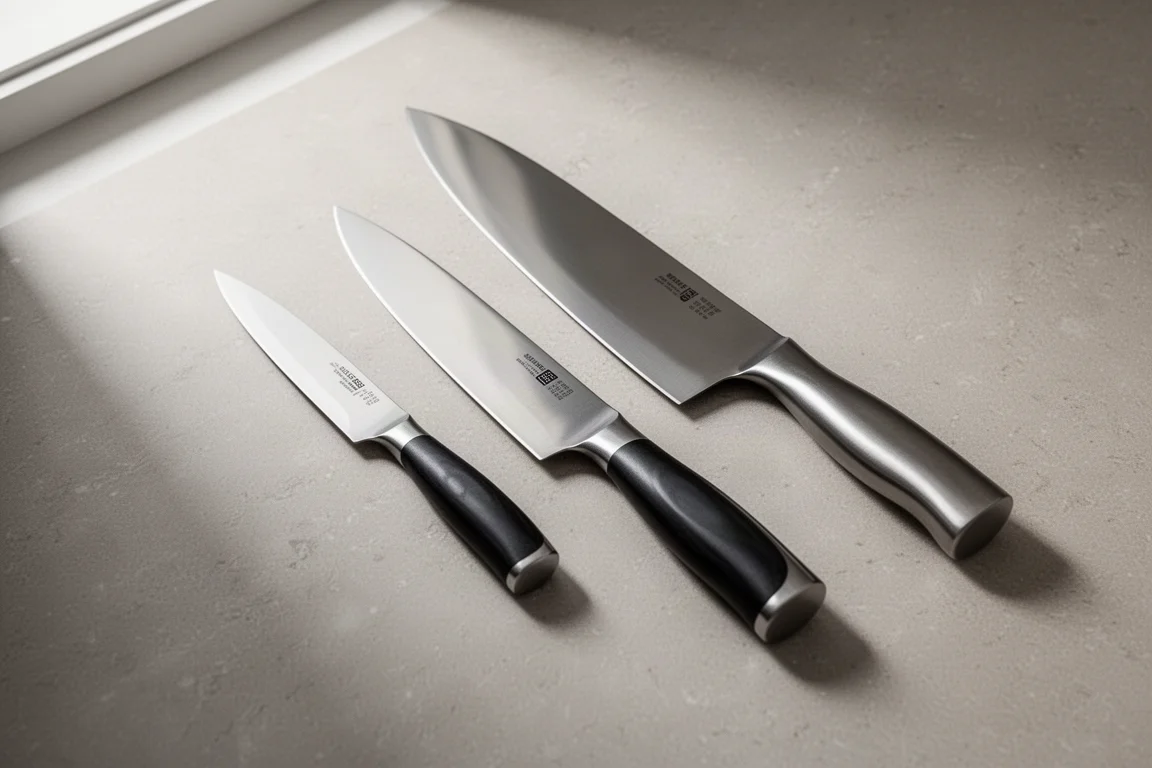
If you are shopping for a new chef’s knife and are unsure which size to buy, you are not alone. Six-inch and eight-inch chef’s knives are the most common sizes, and the right choice depends on how you cook. This guide walks through how the two sizes compare across versatility, weight, maneuverability, and price, and which size makes the most sense if you are only buying one knife. We also look at how popular models such as the Shun Classic and Wusthof Classic illustrate the differences between the two sizes.
How Chef’s Knife Sizes Work
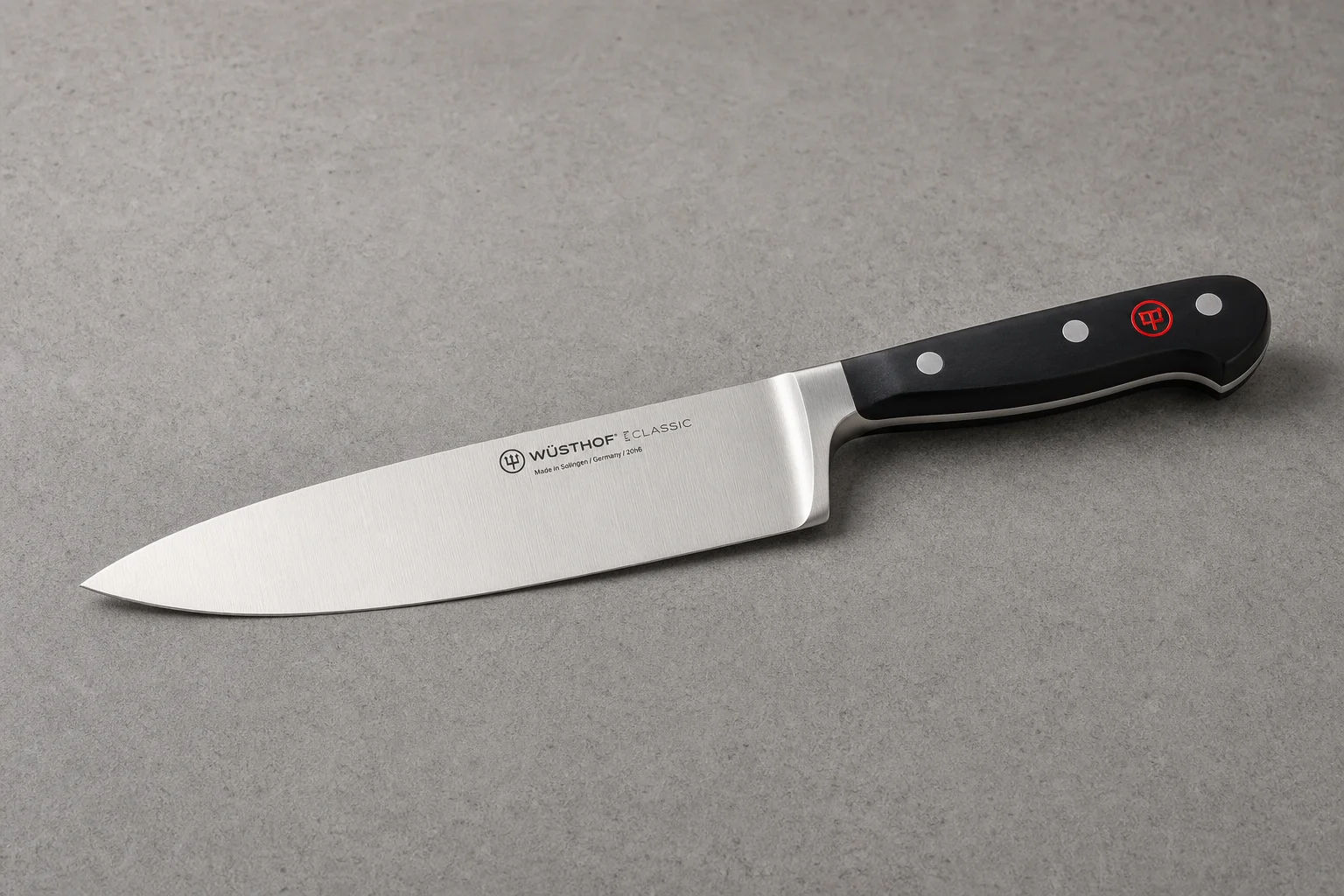
Chef’s knives usually come in blade lengths from 6 to 12 inches, though some brands go up to 14 inches. The size refers to the blade only, not the handle, so the entire knife is much longer than the stated number. Most handles measure between 4 and 5 inches, and while some makers lengthen the handle slightly for larger blades, most do not.
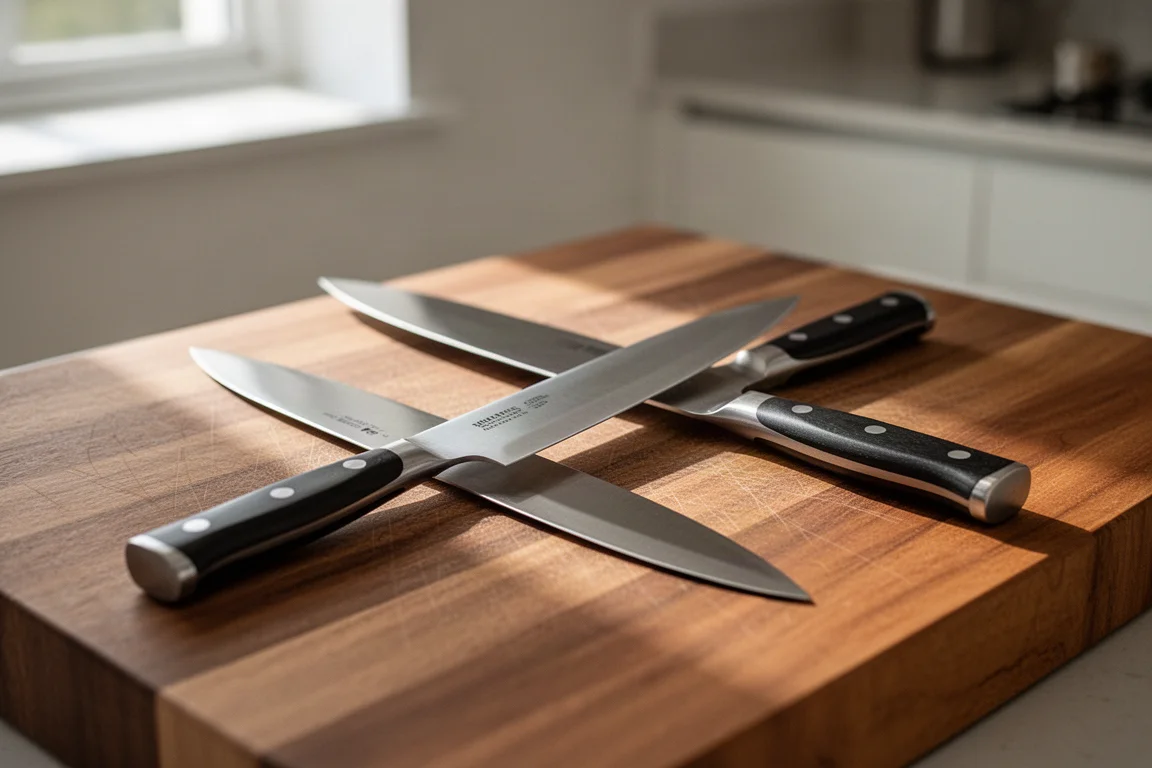
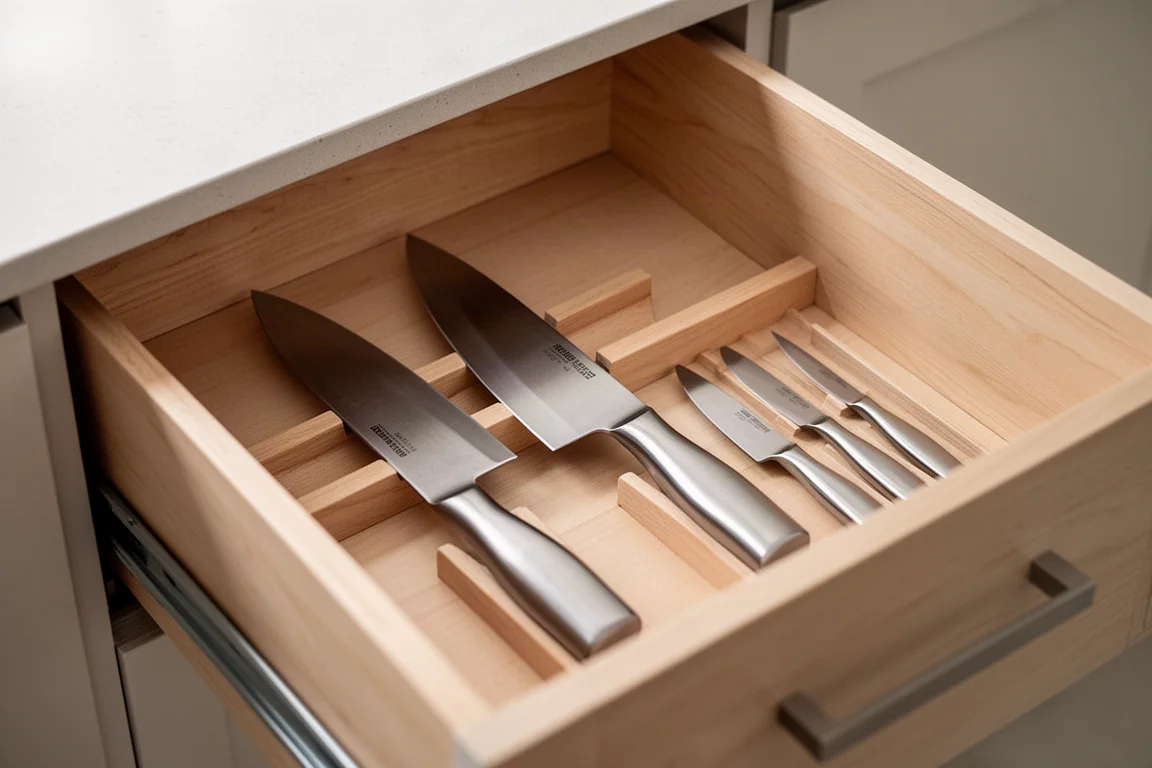
In practice, most eight-inch chef’s knives measure between 12 and 13 inches from tip to butt end, while most six-inch chef’s knives measure between 10 and 11 inches in total. It is also worth keeping your storage and prep space in mind: the difference between the sizes is only a couple of inches, but you still need the room.
Versatility: What Each Size Does Best
Chef’s knives are the ultimate all-purpose kitchen knife, handling slicing, dicing, mincing, cutting, and all types of chopping. Size, however, has a real impact on versatility.
An eight-inch chef’s knife is better suited for large ingredients such as watermelon, pineapple, lettuce heads, large cuts of meat, and butternut squash. The longer blade also slices through long ingredients like salmon, zucchini, and carrots in a single stroke. The trade-off is that it can feel large and overbearing when dicing or chopping smaller ingredients such as onions and tomatoes.
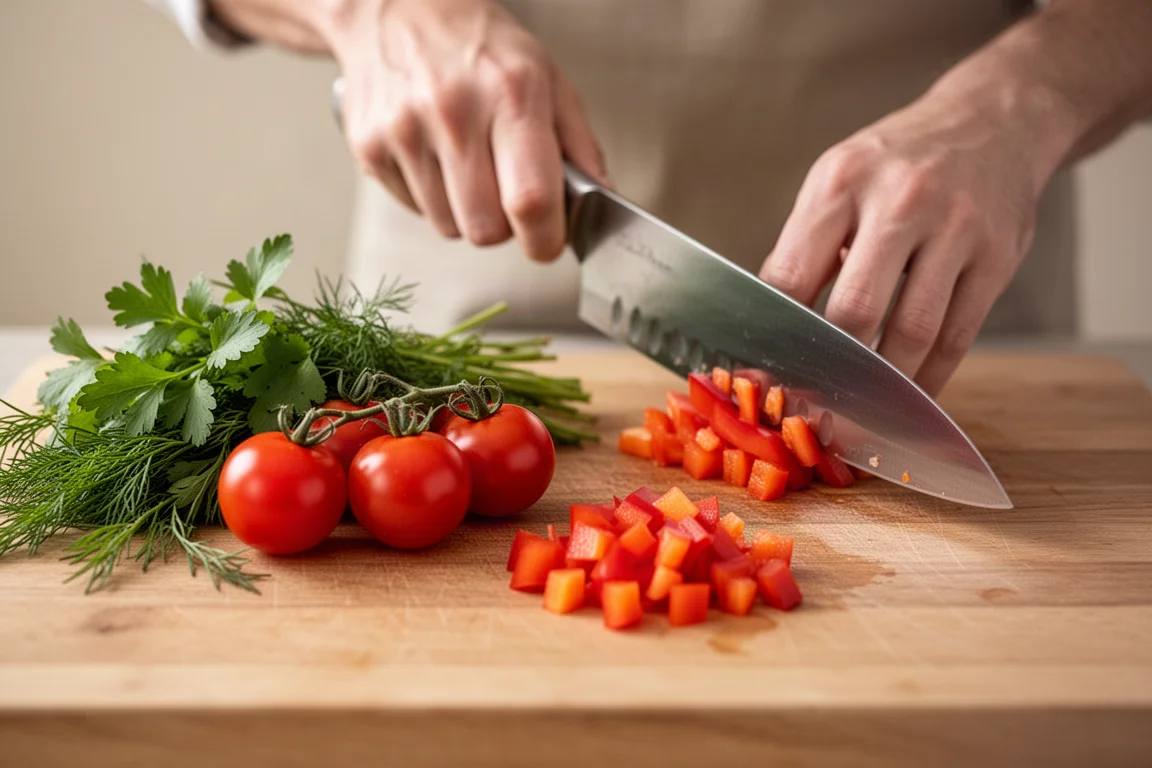
A six-inch chef’s knife is more agile and better suited to dicing and chopping smaller ingredients like fruit and vegetables. You can work faster with a shorter blade, especially with herbs, tomatoes, onions, and peppers. If you chop food into small pieces for young kids, a six-inch knife is easier to work with. It can handle most bigger jobs too, though it often takes more effort and multiple cuts.
Weight and Maneuverability
As you would expect, eight-inch chef’s knives are heavier than six-inch knives. On average, the eight-inch version is around 30 percent heavier, though the difference varies by brand and collection. The Shun Classic eight-inch chef’s knife is 27 percent heavier than its six-inch version, while the Wusthof Classic eight-inch chef’s knife weighs 47 percent more than its six-inch counterpart.
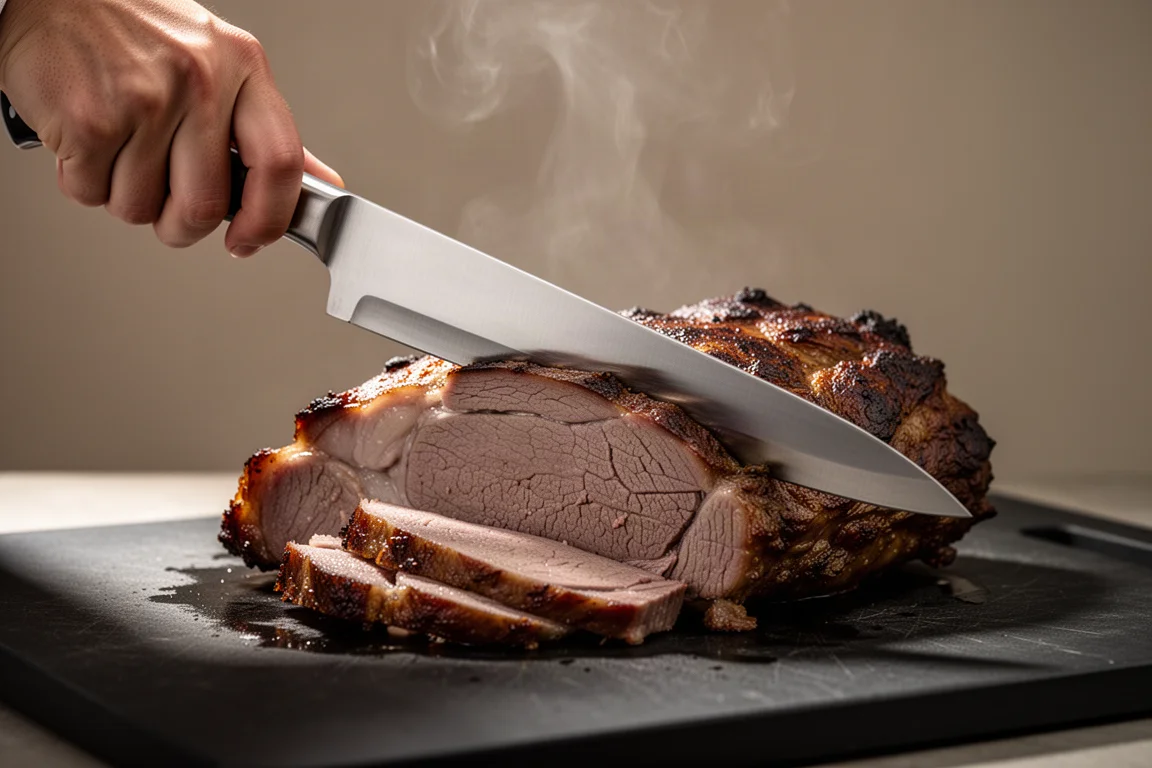
The extra weight of an eight-inch knife means it takes less effort to cut through dense ingredients, but it can become a problem if you are vigorously chopping for long periods. A six-inch knife, with its lighter weight and shorter handle, is easier to control. That maneuverability makes it ideal for finer work such as mincing garlic, chopping ginger, and breaking down a small chicken, and the extra control adds a safety margin since the tip stays closer to your hand. Eight-inch knives remain easy and safe to use, but they are longer, heavier, and often have wider blades, which makes them harder to maneuver.
Price: What to Expect
Prices vary from brand to brand, but when you compare six-inch versus eight-inch chef’s knives within the same brand and the same collection, the eight-inch version is always more expensive. On average, the eight-inch version runs around 30 percent more than the six-inch version. Comparing prices side by side within the same collection, such as the Shun Classic or Wusthof Classic lines, is the fairest way to judge the difference.
Which Size Should You Buy?
If you are planning to buy only one knife, an eight-inch chef’s knife is the strongest recommendation. It handles ingredients of all sizes and is nimble enough for the small stuff. Six-inch knives are lighter and easier to maneuver, but they make big ingredients like heads of lettuce, watermelon, and squash a little more difficult to handle.
If you have the budget and space, buy both. With a six-inch and an eight-inch chef’s knife, you will have the range to handle any job in the kitchen.

Conclusion
Choosing between a six-inch and eight-inch chef’s knife comes down to versatility, weight, maneuverability, and price. The eight-inch is the better single-knife choice for most kitchens, while the six-inch rewards cooks who do lots of fine, small-ingredient work. Ideally, owning both gives you the range to handle anything on the cutting board.
Further reading
Related Reviews

Kitchen Knives
Best Chef's Knives 2026: 27 Popular Options Tested and Ranked
A comprehensive review of 27 chef's knives ranging from $18 to $380, with honest assessments of handle comfort, blade balance, and real-world performance.

Kitchen Knives
Best Chef's Knives Under $75: Two Tested Recommendations
Two practical 8-inch chef's knives that balance sharpness, comfort, and durability without premium pricing.

Kitchen Knives
Best Chef's Knives 2026: 27 Options Tested and Ranked
A comprehensive review of 27 chef's knives ranging from $18 to $380, with honest assessments of handle design, balance, blade profile, and real-world performance.